
Bahia, Bahia! We’ve been dreaming about you for months… Salvador, the Bay of All Saints, Brazil, the South—we’ve finally made it. It’s the turn of a brand-new, major page in our journey.
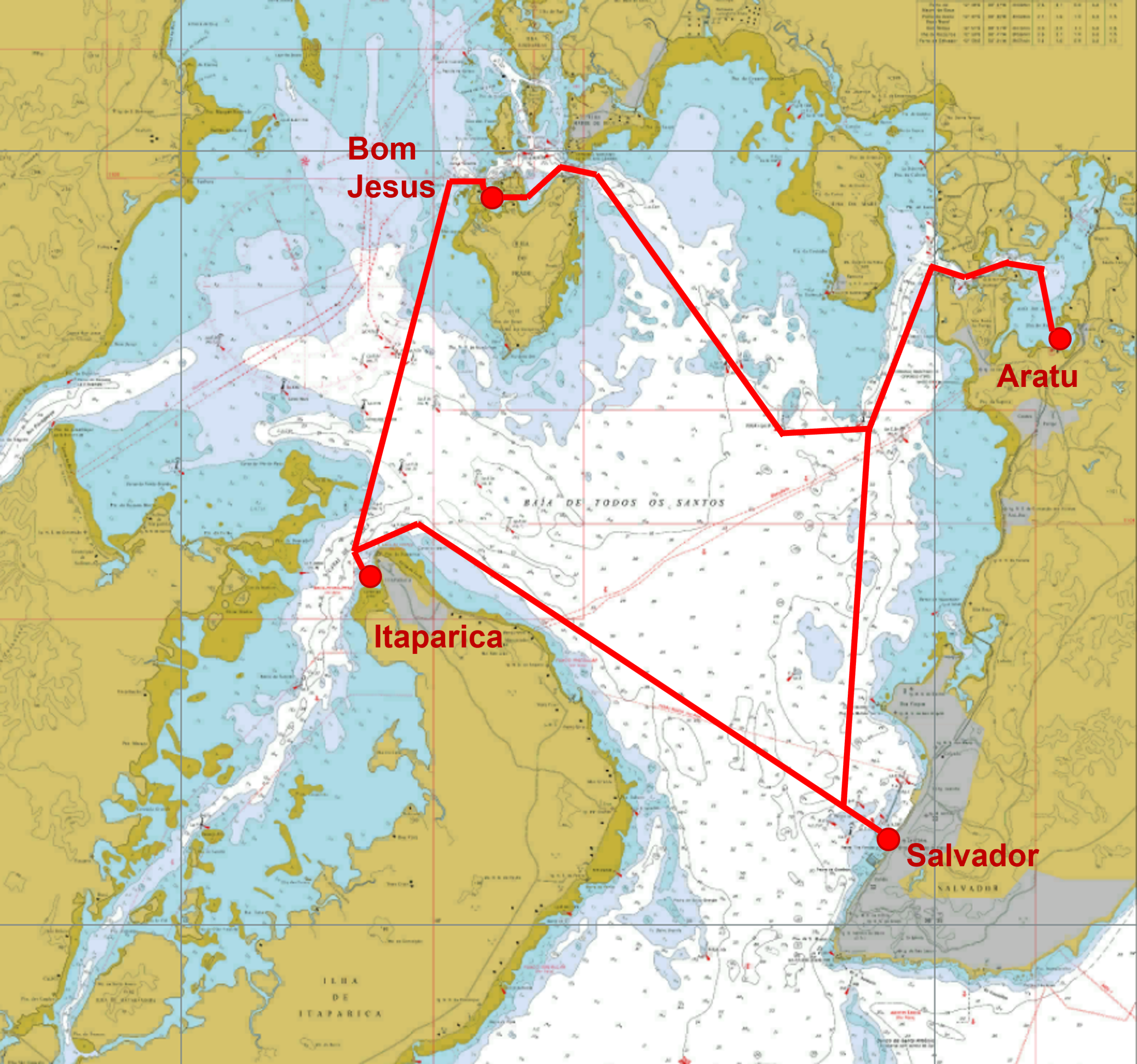
88 nautical miles sailed– 11 032 NM in total on UtPåTur
The full photo album here.
14th to 20th July: Stopover in Salvador de Bahia
What a relief to finally dock in Salvador! The promise of a safe harbour, enough yacht-serving companies to solve our shroud troubles, proper chandleries, and well-stocked supermarkets… We’re shattered after a month of almost non-stop sailing from Cape Verde, and we’re dying to just stop and chill in this vast bay for a few weeks.
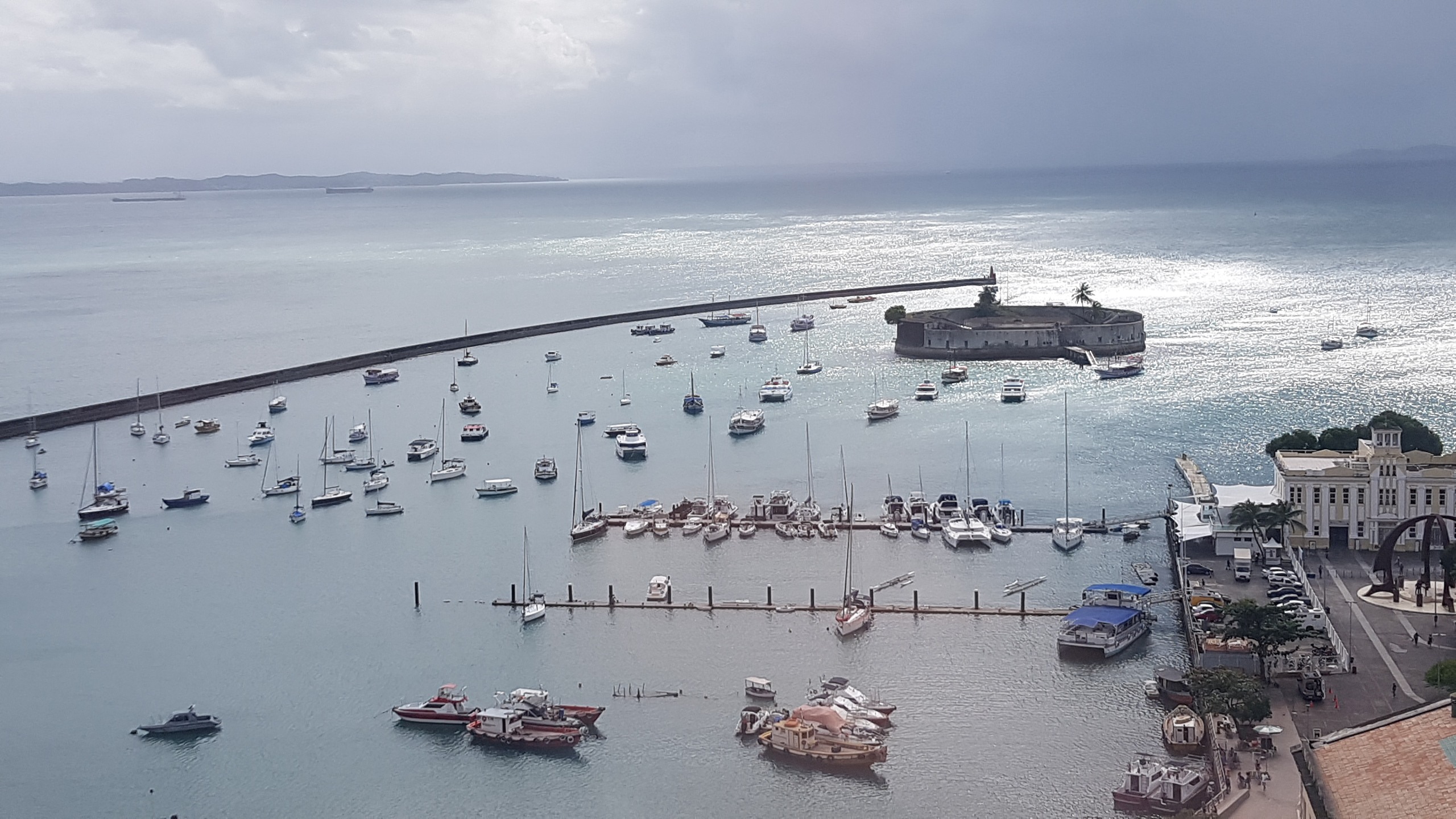
UtPåTur is finally moored in Salvador!
Besides, there’s no way we’re moving a mile further without replacing at least our two aft lower shrouds—and ideally all the 8mm shrouds from the same batch. Between contacts from Sueli (the harbourmaster in Recife), Dominique (the harbourmaster here in Salvador), Jean-François, Marc whom we met in Mindelo, and whatever a good amount of Googling will yield, we ought to find what we need. Laure, who spent her entire transatlantic crossing diligently studying Portuguese, calls them up one by one, adding extremely useful vocabulary to her repertoire like esticador (turnbuckle), rosca esquerda (left-hand thread), or terminais prensados (swaged fittings). It doesn’t take us long to realise, however, that the local infrastructure is actually incredibly basic. When it comes to our specific need for swaging the shroud fittings, the reality dawns fast: there is no swaging press in Salvador…
After two days of intense research and phone calls, it becomes clear there are only two options in the whole country: buy the complete shroud assemblies including turnbuckles from Nautos (the big Brazilian chandlery brand based in Rio), or post our turnbuckles and fittings to Mastros Manotaço—a rigger and mast maker based in Porto Alegre, a mere 3,000 km south of Salvador—so they can manufacture matching fittings, swage them onto a wire, and air-freight the whole lot back to us… In the end, we go with option two: great contact with the company (via WhatsApp), reasonable lead times (10 days including postage of our original parts), and a price that—while twice as expensive as France—is half the price of Nautos! It’s still hardly ideal, so we choose to replace only our two aft lower shrouds for now. If we’re happy with the work, we can always order the rest from them later and have them delivered to another Brazilian port more to the South. So, off our parts go to Porto Alegre; all we can do now is wait. After all, there is neither swaging press – nor rush – in Salvador…
And just as well, really, because everything is so mind-bogglingly complicated here that the smallest task eats up an eternity! The culture shock compared to Europe is real, even for us seasoned travellers with a decent grasp of Portuguese. For instance, it’s impossible to buy a local SIM card without a Brazilian tax ID number (the famous CPF). Nor can you spend over €100 at the supermarket, buy anything online, or even post a parcel at the post office! Naturally, we file an online request for tax numbers the moment we land, and pop over to the tax office at the far end of town a few days later to collect them, as instructed on the website. But nope! Once there, no one gives a look at the online application number. We have to start completely from scratch with a real-life clerk who painfully pecks out our details and address using two fingers. We’re told we’ll receive the golden ticket via email. Miraculously, it actually works: Camille receives her CPF that evening, and Laure gets hers a few days later. With that sorted, we can finally get local 4G, pay online on some Brazilian websites (not all, as some demand a local ID documentation or reject foreign credit cards…), and register our Starlink dish in Brazil.
The local SIM card means we have internet on an old mobile phone we’d wisely kept as a backup. There’s practically nothing on this device—no personal data, just the indispensable Uber app to get around a city where walking the streets is rarely safe. It means we can step out without carrying our “real” phones, eliminating the risk of getting them snatched. We’re still constantly on guard, however, and being unable to explore on foot really gets us down—we feel completely trapped.
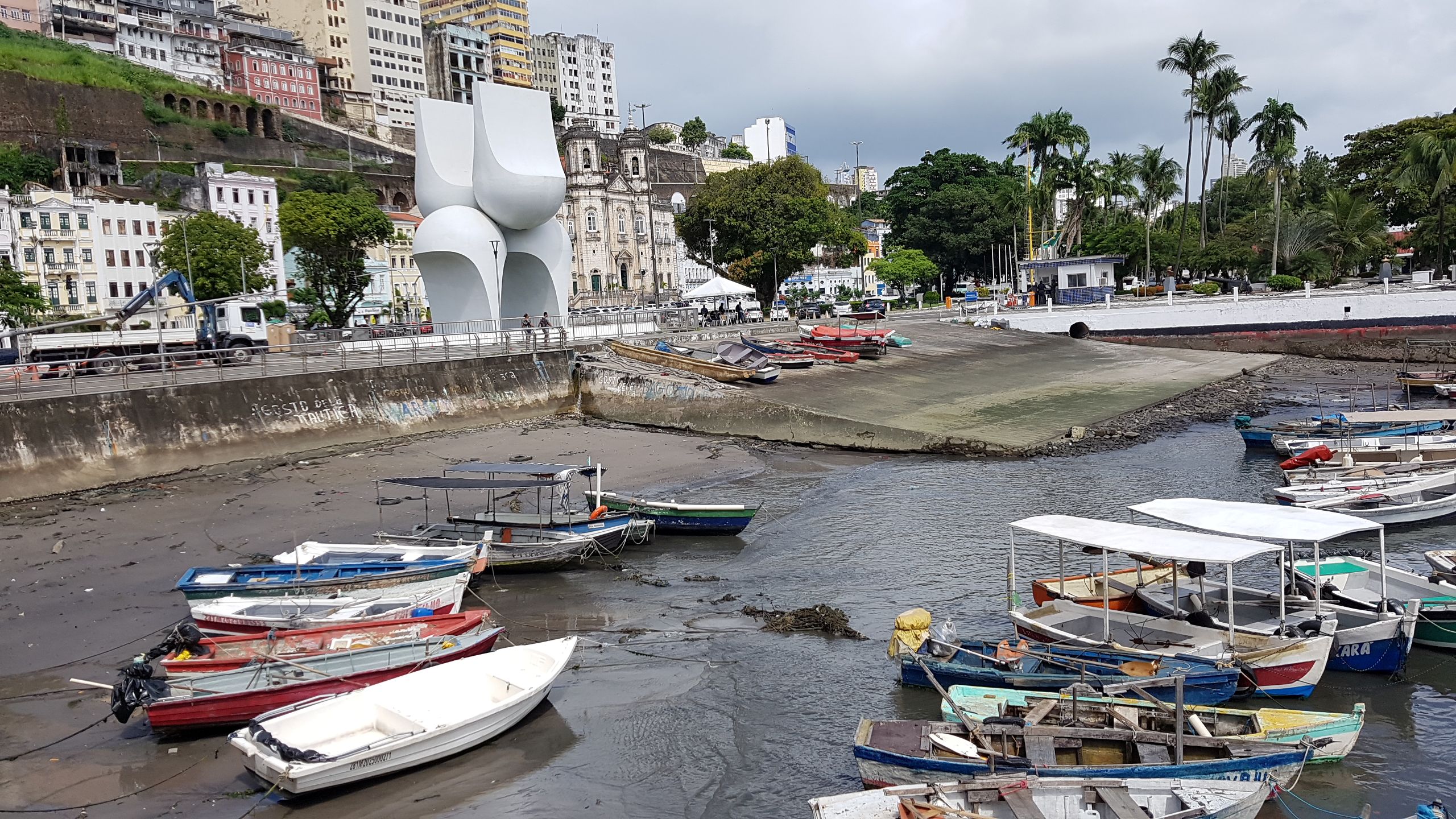
Small fishing boats at the end of Salvador’s harbour
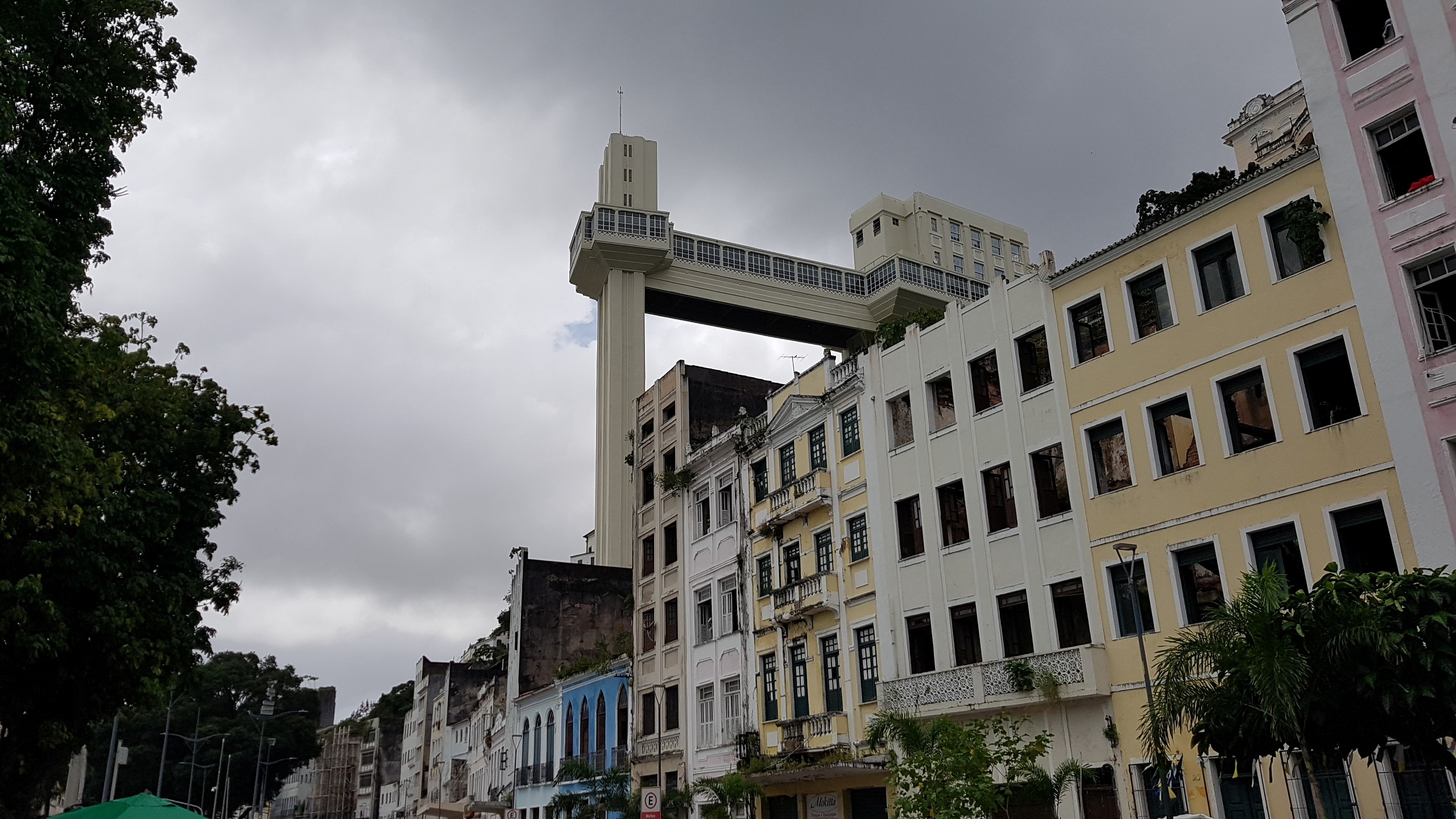
The Lacerda elevator which connects the port to the upper town
Within walking distance of the port, you’ll find two or three fisherman’s shops, a chandlery stocking a handful of ropes, blocks, and an astronomical quantity of bilge pumps (?!), a welding workshop that conveniently refills any gas bottle, a little street where market stalls sell exquisite, super-cheap fruit (€2 for 5 mangoes, €1.20 for a bunch of bananas, and barely any more for papayas, pinhas, and cashew apples—we’re living like royalty!!!), the Mercado Modelo (a super-touristy craft market), and the lift leading up to the historic Unesco-listed Pelourinho district. And that’s it. No market nor supermarket, no DIY shop, no mechanics, no laundrette… We are very far from the handy infrastructure we’d imagined. Case in point: hunting down 5 litres of 15W40 engine oil to restock after an oil change turns into a several-day quest. After we’ve gone to every single petrol station in a 5km radius, the manager of the local dive club takes pity on us and goes to fetch a jerrycan from his supplier. While everything here is absurdly complicated, the people here are the kindest, going out of their ways to help the second we mention a snag! A good summary for our first days in Brazil: Everything is complicated, everyone tries to help.
In addition the harbour rolls like a washing machine, the boat snorts and jerks violently against its mooring lines keeping us awake all night. We’re struggling to find the rest and relaxation we so desperately need!
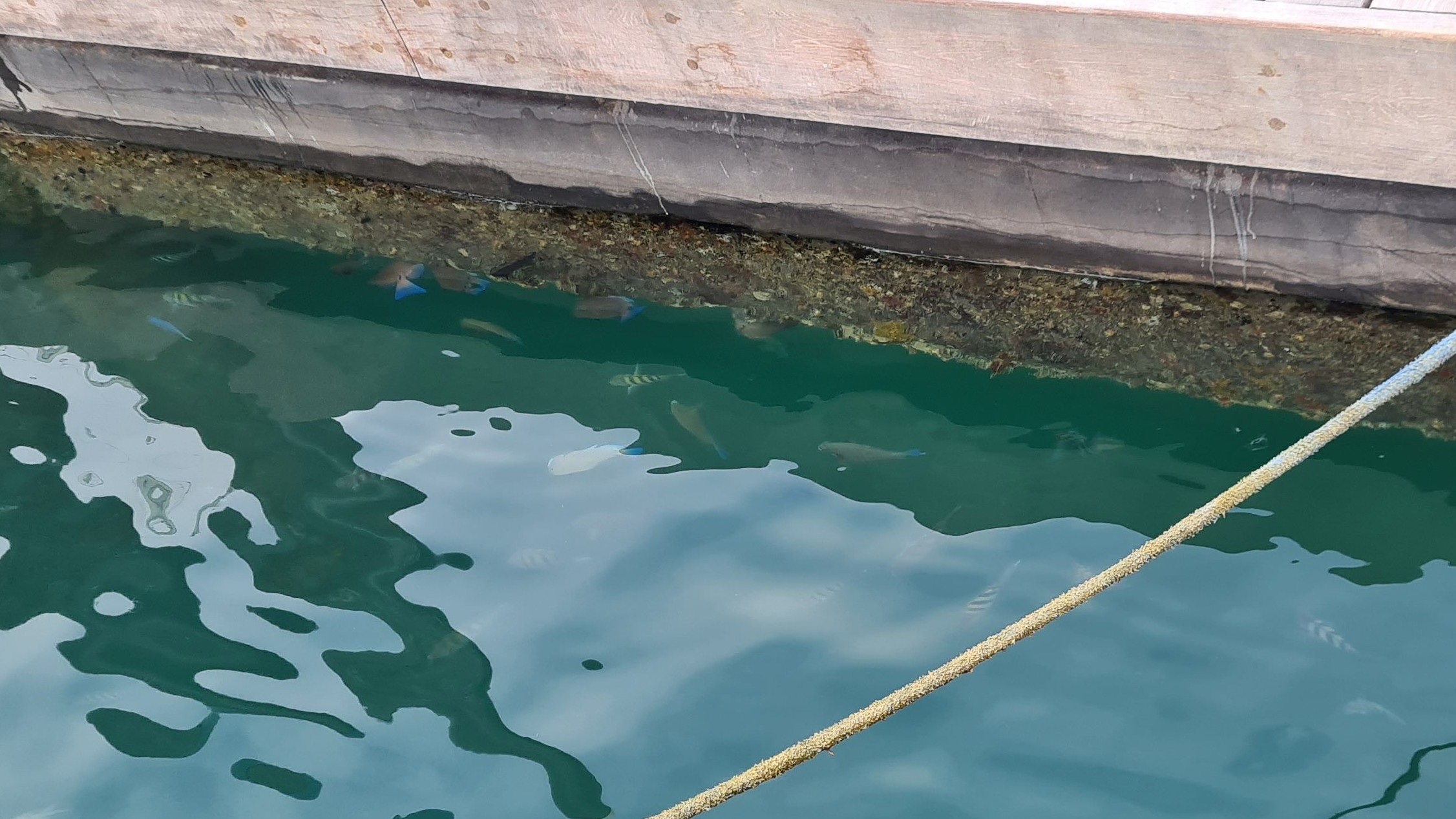
On the bright side, here the fish in the port are not grey mullets but blue surgeonfish and yellow and black sergeant majors!
On the positive side, our social life gets a boost. We meet Marcos and Ludmilla on Aurora, a Brazilian couple from Paraty returning from a 3-year Atlantic circuit, who generously share local tips and get us dreaming of the idyllic anchorages of the Costa Verde. Then there’s Ariane and Fredrik, two young Swiss sailors heading south on their Hallberg-Rassy 35. They set sail again pretty quickly after we arrive, but we’ll no doubt meet them again further south!
We still manage to squeeze in some sightseeing. The historic Pelourinho district right above the harbour is well worth the climb: lovely winding cobbled streets lined with vibrant houses, a rich African heritage, and a touristy vibe surprisingly reminiscent of Montmartre—it’s brilliant, and truly unique. Salvador was Brazil’s very first capital, and the largest entry port for enslaved people in the Americas. Its architecture and culture heavily reflect this deep, turbulent past. The animist religion of Yoruba origin, for example, is still very much alive here; its deities are the Orishas, the most famous being Yemanjá, goddess of the sea, celebrated every February with a massive grand naval parade.
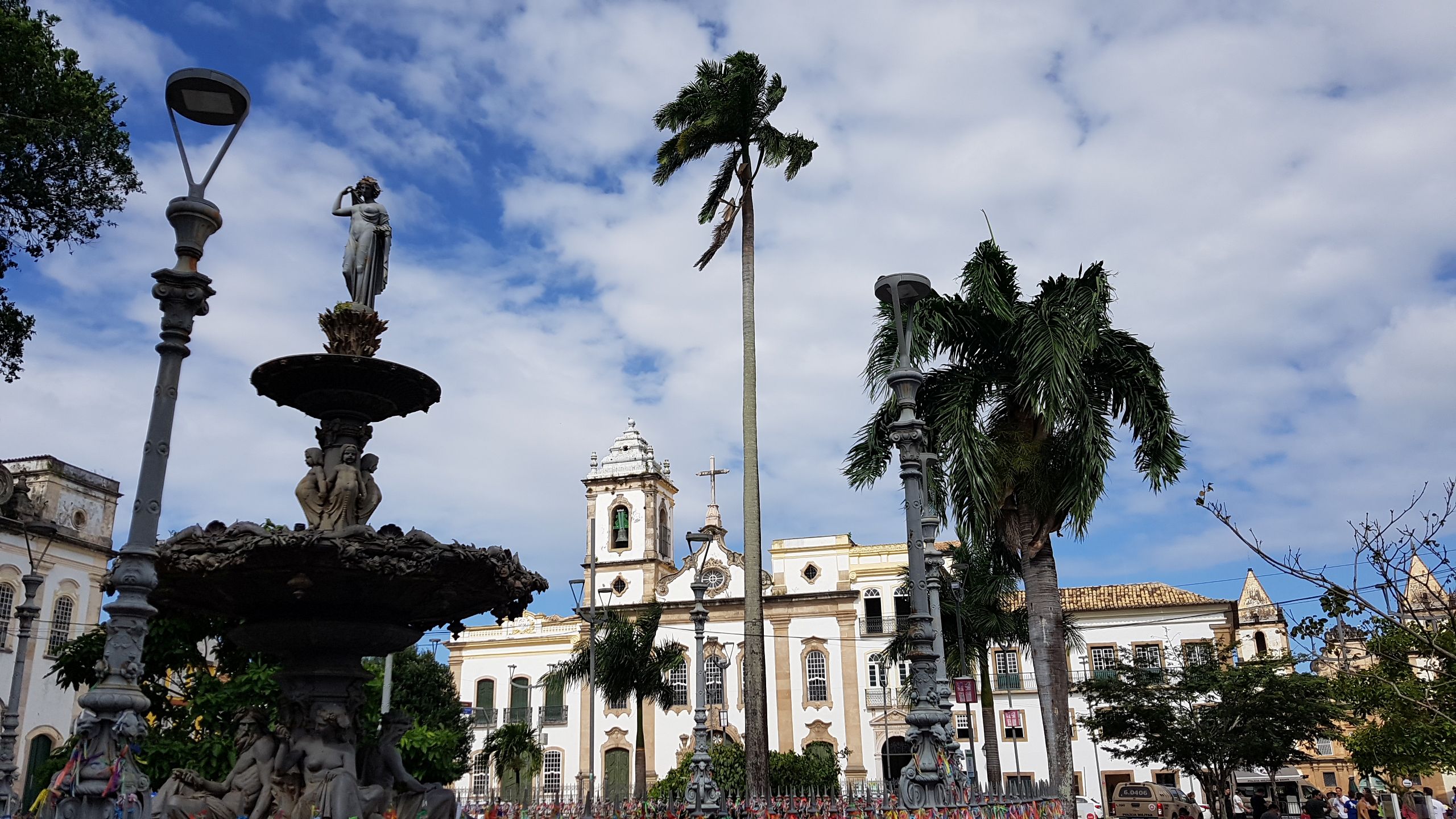
The historic Pelourinho district, with churches,…
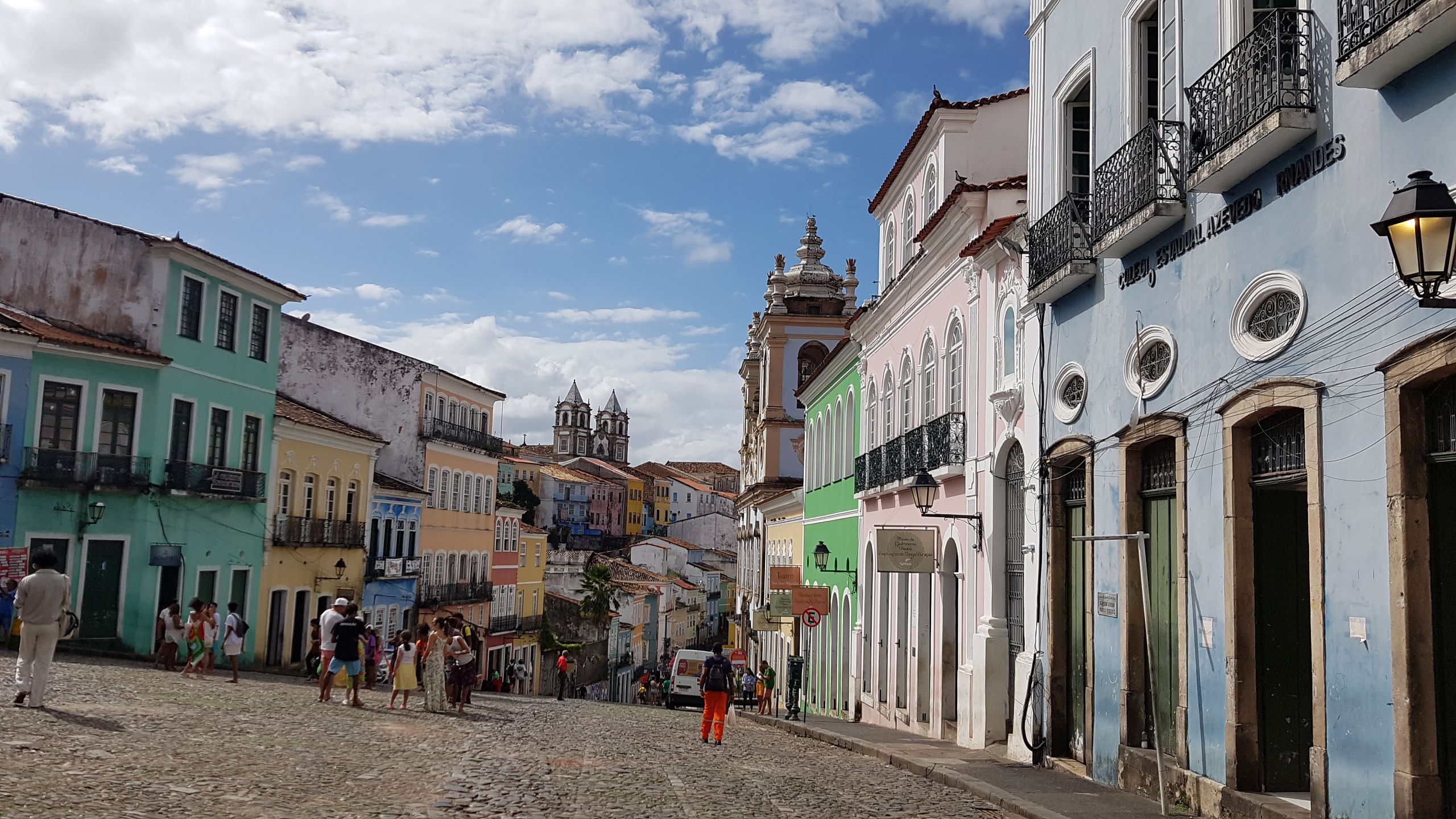
…, cute hilly streets…
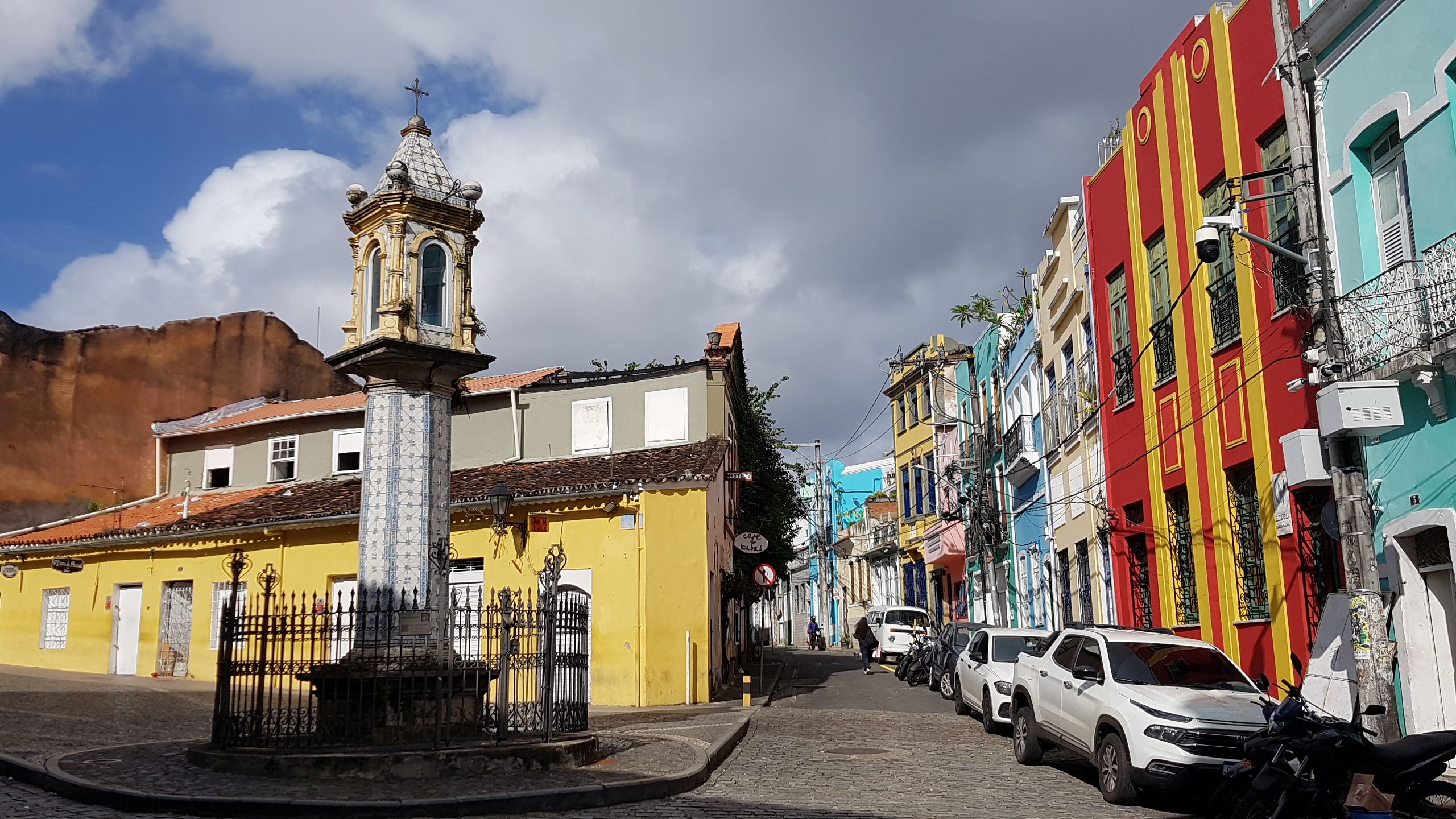
… nice and colourful!
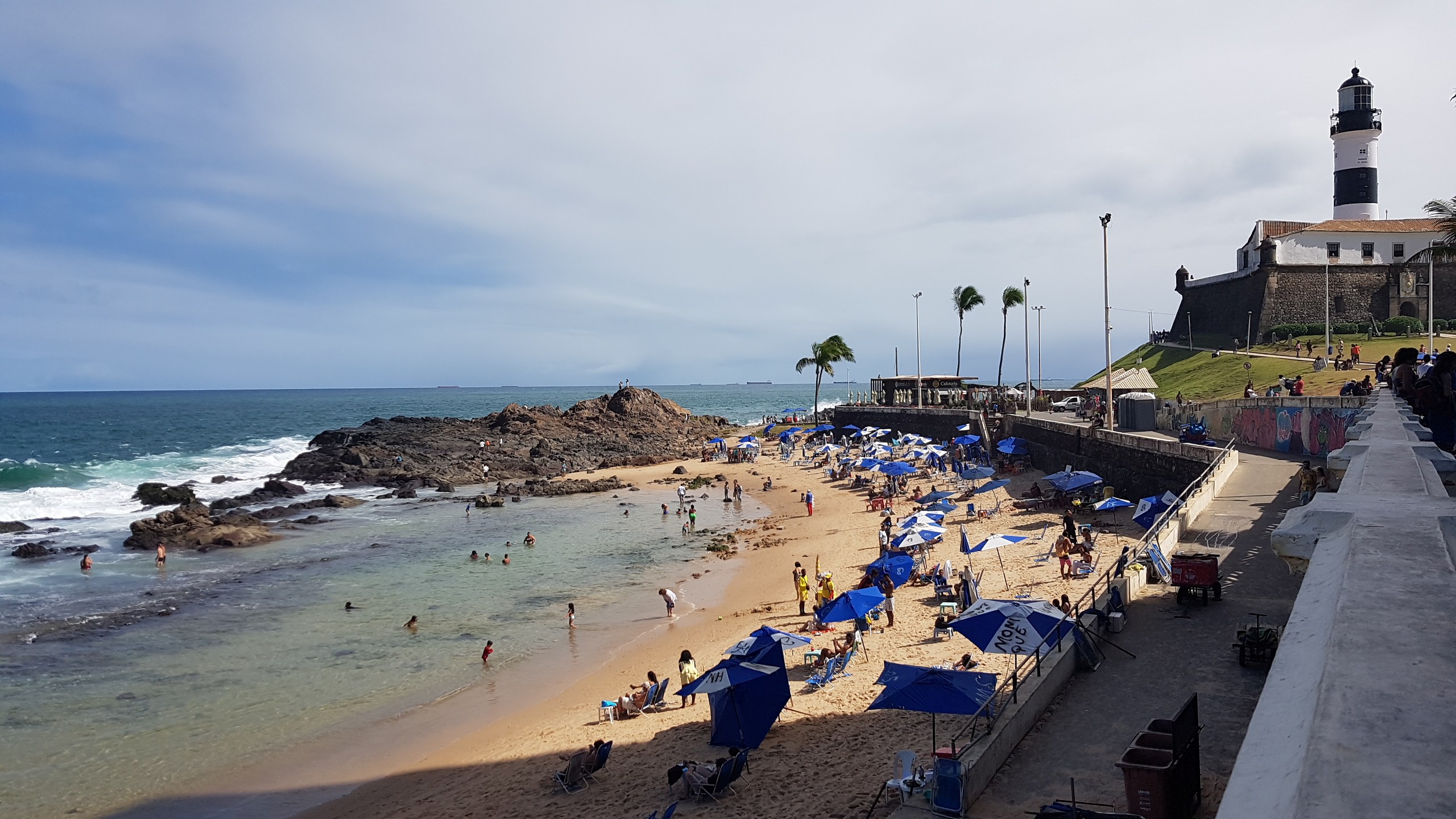
The Barra district, nice beaches and old lighthouse (1698)
We also take a stroll through the seaside district of Barra, where we catch up with Daniel, a former colleague and friend of Laure’s, and his wife Suelem—a true Bahiana! The rock-lined beaches aren’t quite paradise (especially under the rather violent tropical squalls hammering us that day), but the visit to the Barra Lighthouse—the oldest lighthouse in the Americas—is a real treat for anyone who loves antique navigational gear and old charts. There’s also an exhibit on humpback whales, which pass along the Brazilian coast by the thousands at this time of year… we even spot a few spouts from the top of the tower!
We wrap up the day in the bohemian quarter of Rio Vermelho, sampling Bahia’s famous Acarajés—another Yoruba tradition. It’s a deep-fried fritter made from mashed black-eyed peas cooked in dendê (palm oil), stuffed with a spicy shrimp and coconut milk paste (vatapá), and a serious kick of chilli. Absolutely delicious, though it takes a sweet coconut dessert to help digest!
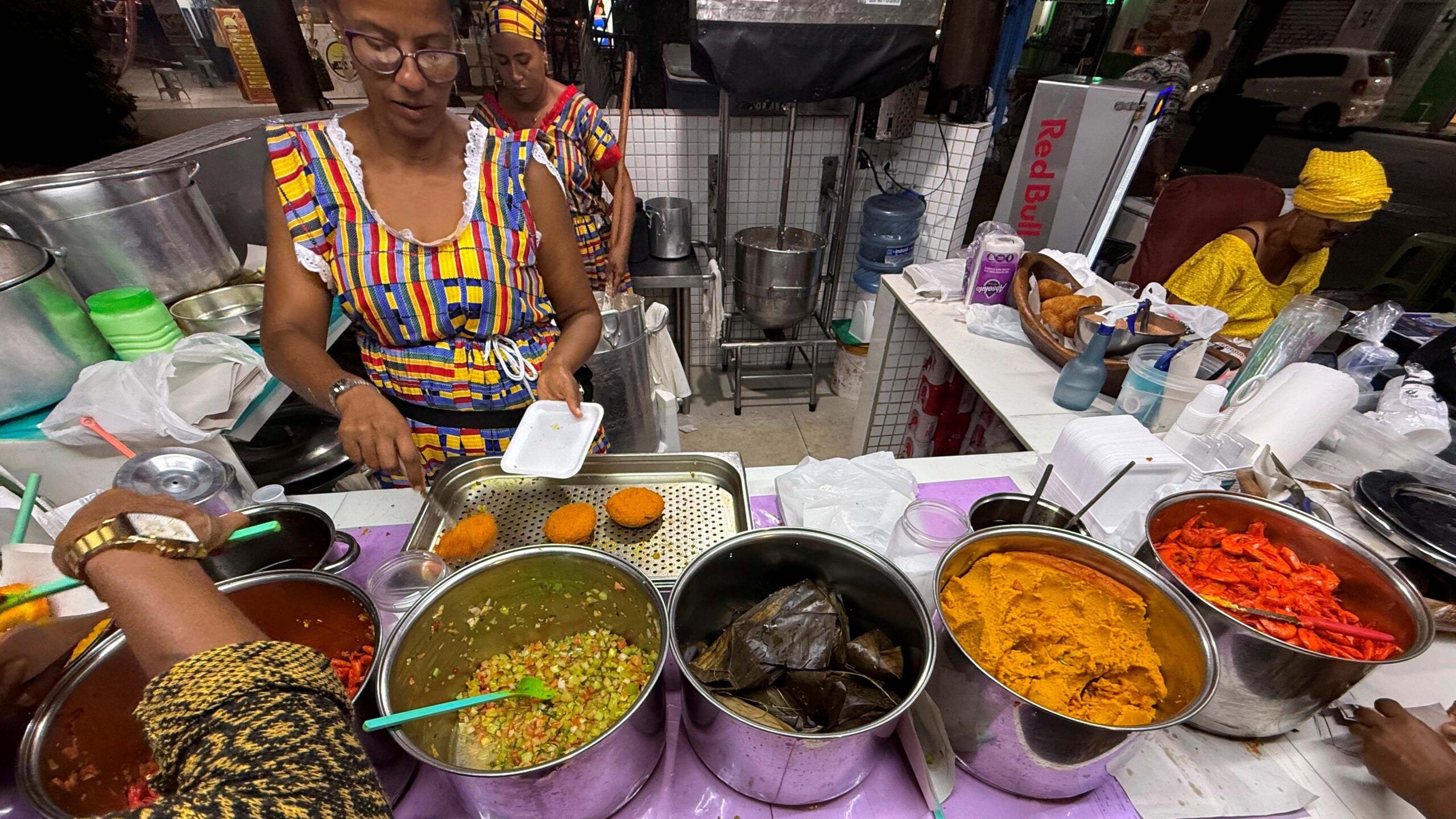
Acarajé ingredients, from right to left: dried shrimp, vatapa, banana leaves, small vegetables, and behind them the famous fritters
21st to 26th July: The Bay of All Saints (40NM)
Shrouds ordered, oil changed, DIY supplies topped up as best we can—it’s high time we escaped this rock-and-rolling harbour to go and enjoy the Bay of All Saints!
First stop: Itaparica Island to the west of the bay. A peaceful (and deliciously flat!) anchorage with simple goals: swim, rest, and scout out the sandbank we want to dry out on next week during the spring tides. Proper holiday vibes!
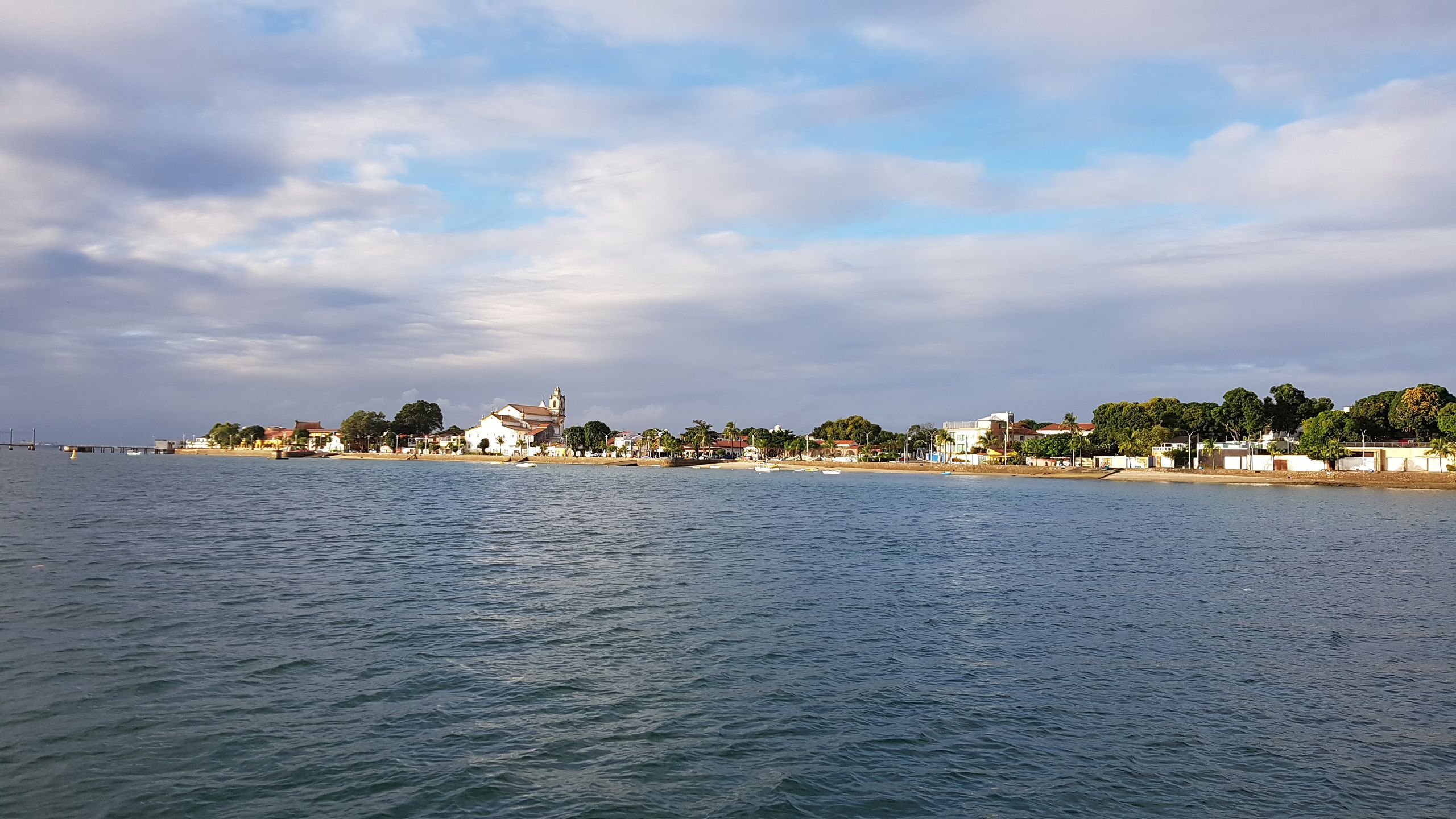
Anchored in front of Itaparica
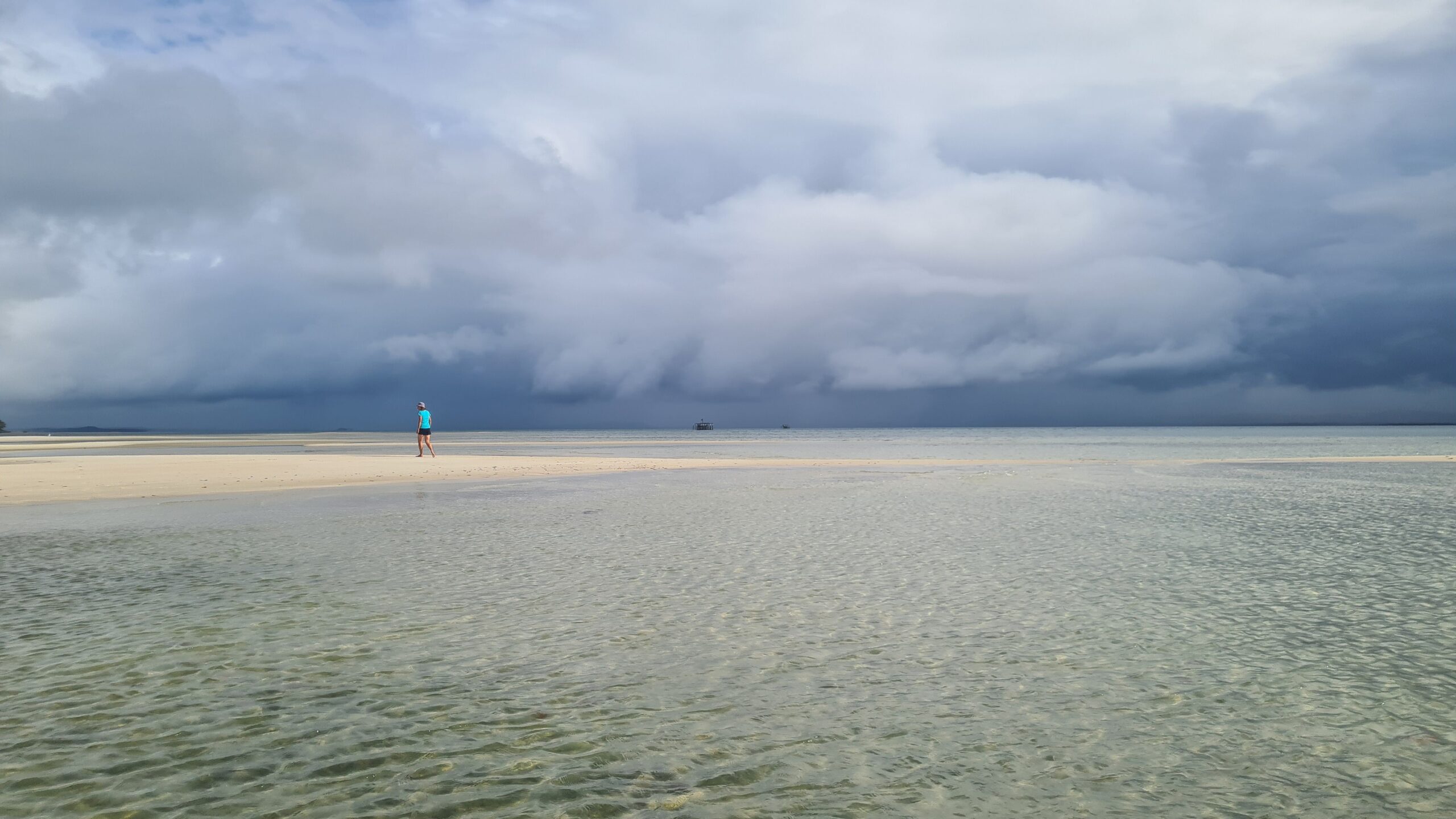
Scouting the sandbank for a future beaching
At long last, a peaceful day in nature—considering we haven’t been swimming since Fernando de Noronha three weeks ago! The water isn’t crystal clear, but it’s warm as a bath, and just jumping in the water is a bliss. We’re just about to relax over a sunset drink when… the wind turbine starts making a dodgy noise… clack, clack, clack. Yep, the blades have play around the rotor axis. We’ve got a problem…
After a night spent overthinking, we set to work dismantling our brand-new blades without dropping anything overboard or breaking a piece. The fix seems simple enough: the screws holding the hub to the rotor shaft have worked themselves loose. We tighten them up, and within two hours the turbine is spinning happily again—hurrah! Mind you, it’s vibrating a bit more than before… strange… Sure enough, after a few days, it gets worse, so we shut it down until we can figure out a proper fix. Thankfully, the sun is shining to keep the batteries topped up, though the solar panels are barely enough in these warm waters where the fridge works overtime…
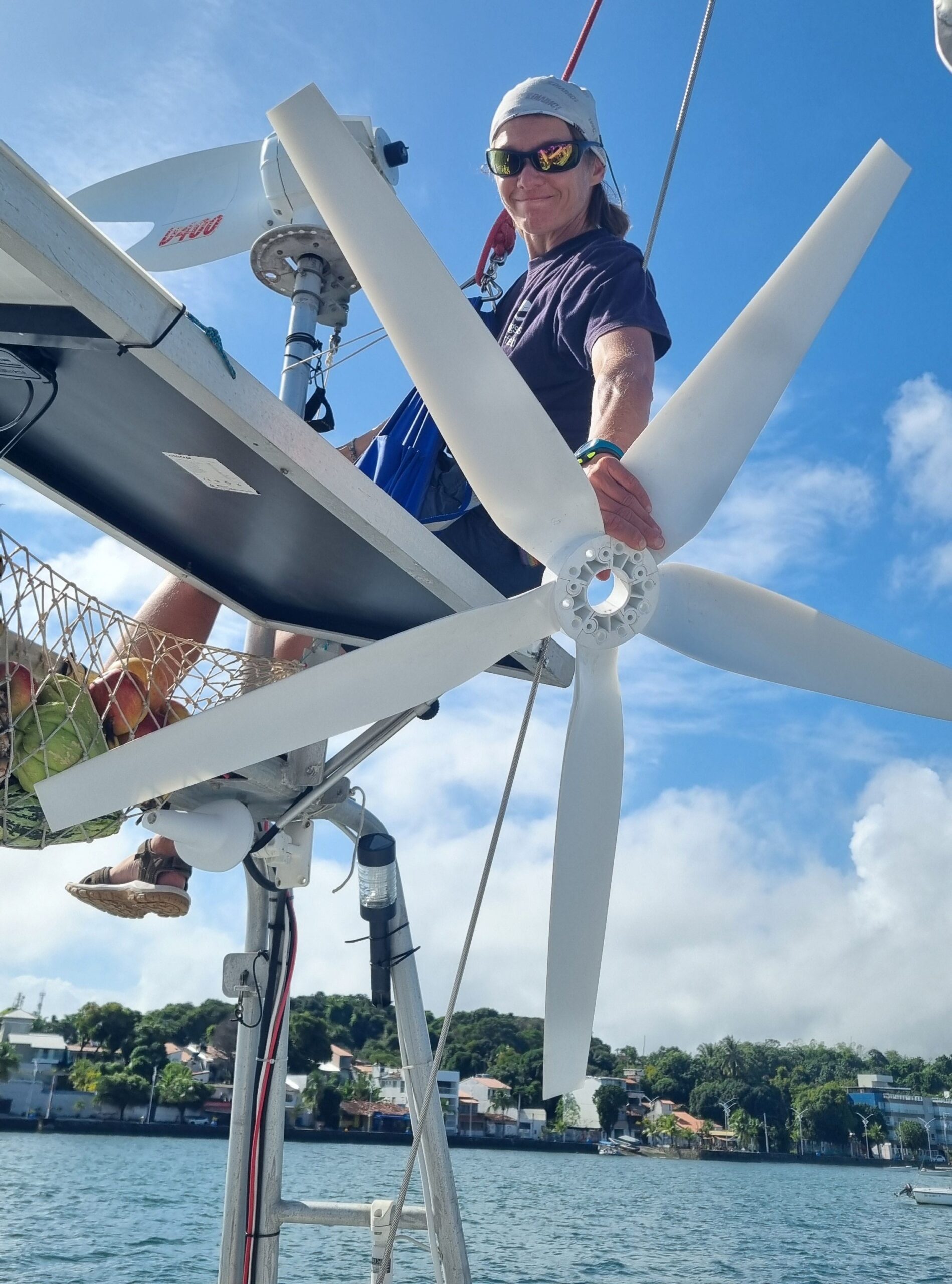
We have become experts in wind gen maintenance!
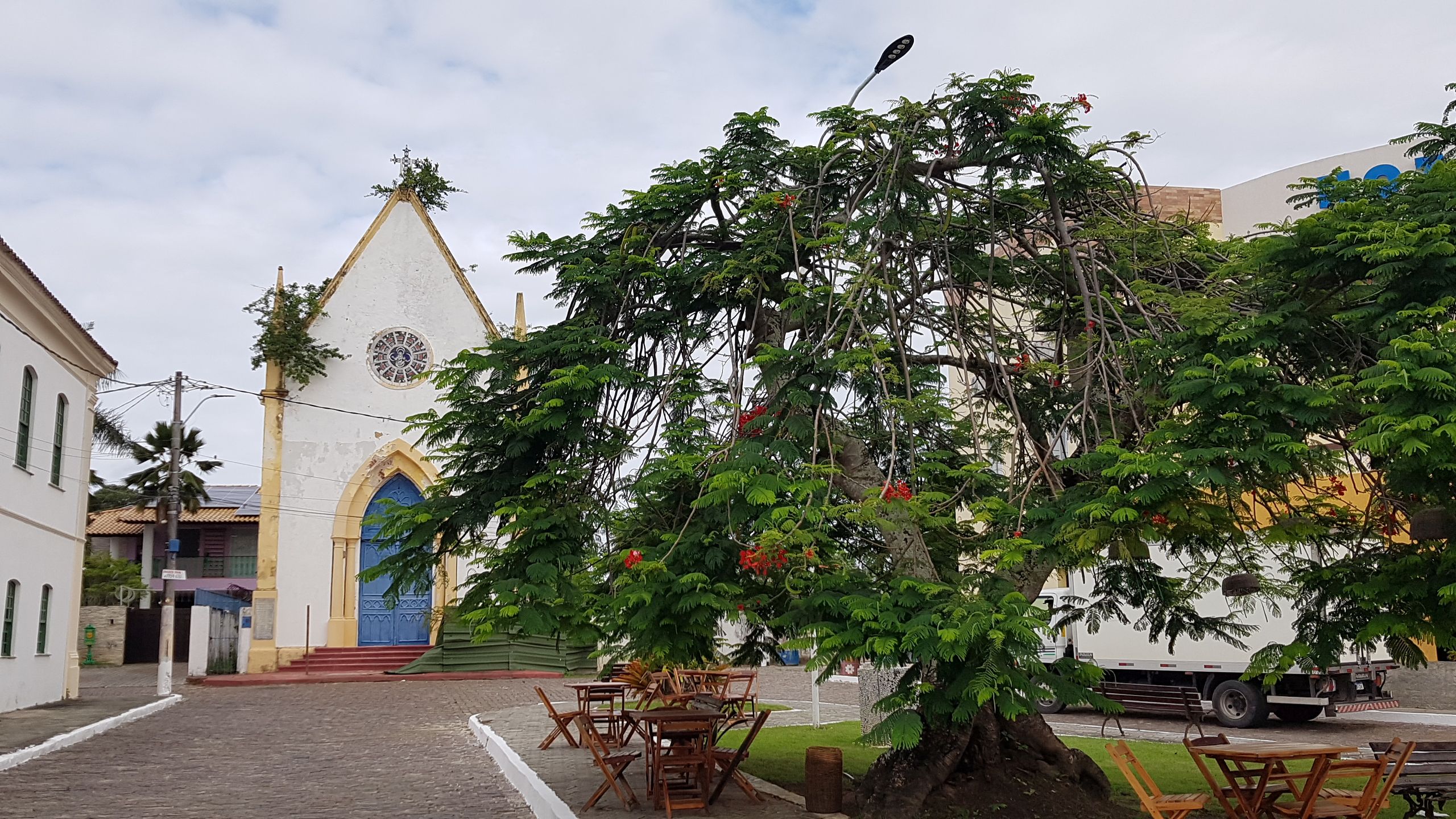
Tiny place in the charming village of Itaparica
In the meantime, we do our best to get back to “holiday mode” and pop ashore to explore the village. Itaparica is a seaside resort for folks from Salvador, just an hour away by ferry. Suffice it to say that on a weekday in the dead of winter (don’t worry, it’s still 30°C!), it’s very quiet. We enjoy the lovely beaches, where we even find three little cowrie shells —our personal lucky charms, which we could bloody well use more of with right now… The village itself is charming and boasts a couple of surprisingly well-stocked supermarkets. And what do we spot nestled between the loaves of bread and the toothbrushes? An entire shelf of engine oil packed with cheap 15W40!! After hunting high and low across the big city, all we had to do was cross the water. The irony…
Our second stop in the bay is the island of Bom Jesus, about ten miles north. we grab one of the ten free mooring buoys south-west of the island near a fishing village set against a mangrove backdrop. We’ve barely picked up the buoy when a flock of scarlet ibises sweeps over the boat—what a welcome gift!
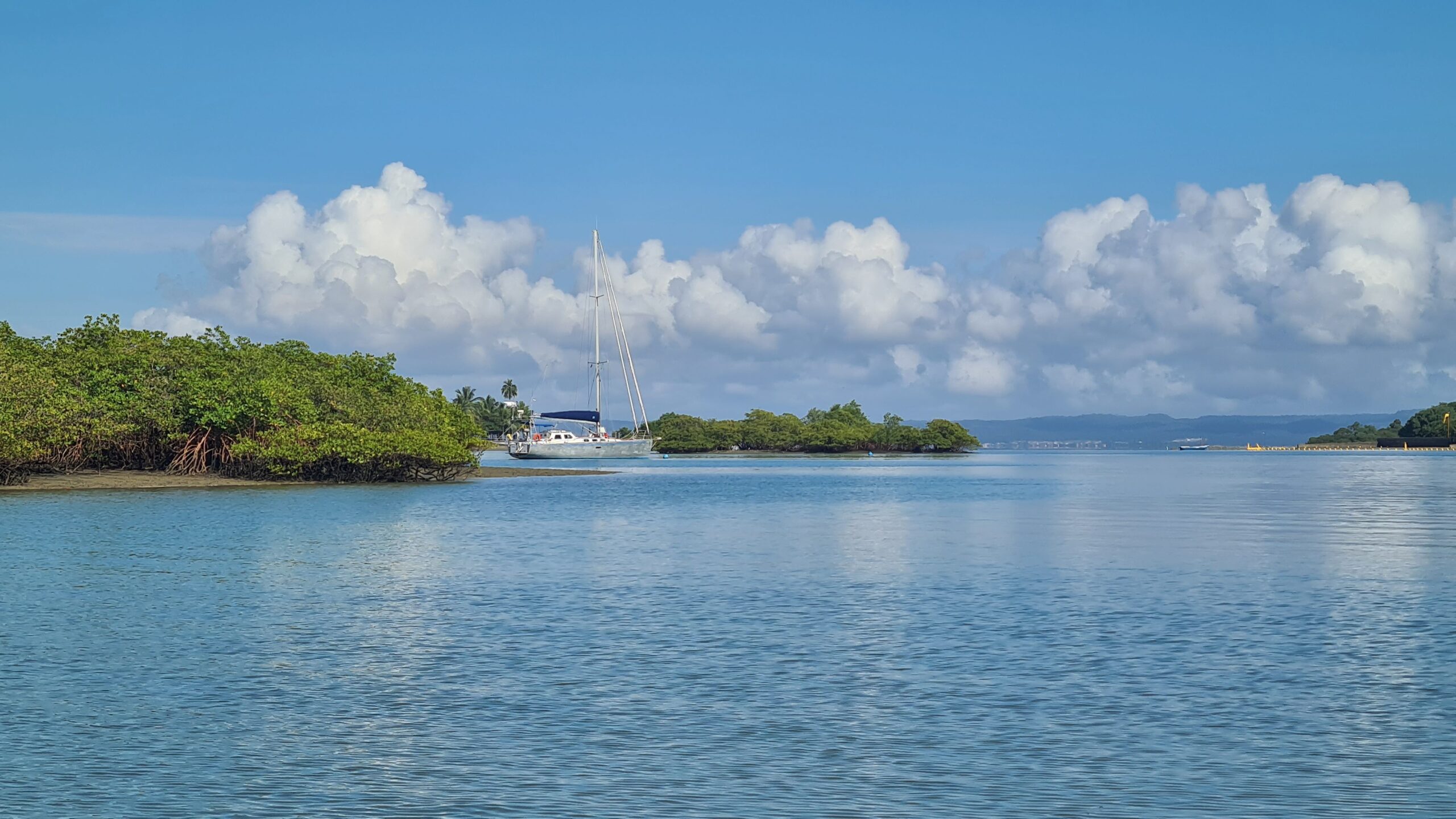
UtPåTur deep in the mangrove around Bom Jesus
We can’t wait to explore, but first, we have to tackle the daily round of breakdown bingo: the 3rd reef block has fallen off the sail (the split ring holding the pin vanished into thin air!), the anchor washdown hose has burst (we use the opportunity to replace the bilge pump hose, which was also leaking), and, far more annoyingly, while nipping up a weeping fitting on the watermaker, we managed to make the leak infinitely worse, rendering the watermaker completely unusable. It’s just standard hydraulic plumbing, but finding stainless marine compression fittings seems improbable… We’ll have to pickle the system until we find parts—likely not before Rio in a few weeks’ time—whereas back in Lorient this would be sorted in half a day. Ah well, no press nor rush in Salvador, we said!
So, there’s nothing else to do but to enjoy this gorgeous anchorage. We take the dinghy out to explore the mangroves. It’s not entirely wild, squeezed between a holiday resort and the fishing village, but we still find the famous mangrove oysters and birds aplenty. You can’t miss the scarlet ibises of course, but we also spot white and blue herons. Cormorants circle over the boat—feels like ages since we last saw one—along with large black-and-white birds of prey, likely black vultures called “Urubu”. On the island itself, we spot green parakeets, and best of all, a flock of blue-and-yellow macaws—the exact same species we saw at the zoo in Tenerife! Magical moments that remind us why we put up with all the boat maintenance drama…
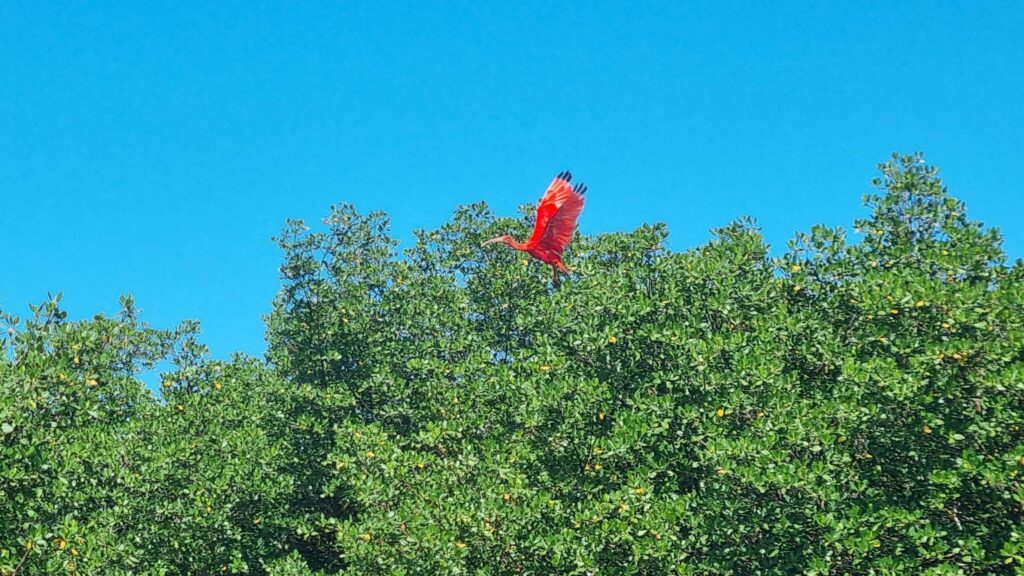
A scarlet ibis takes off
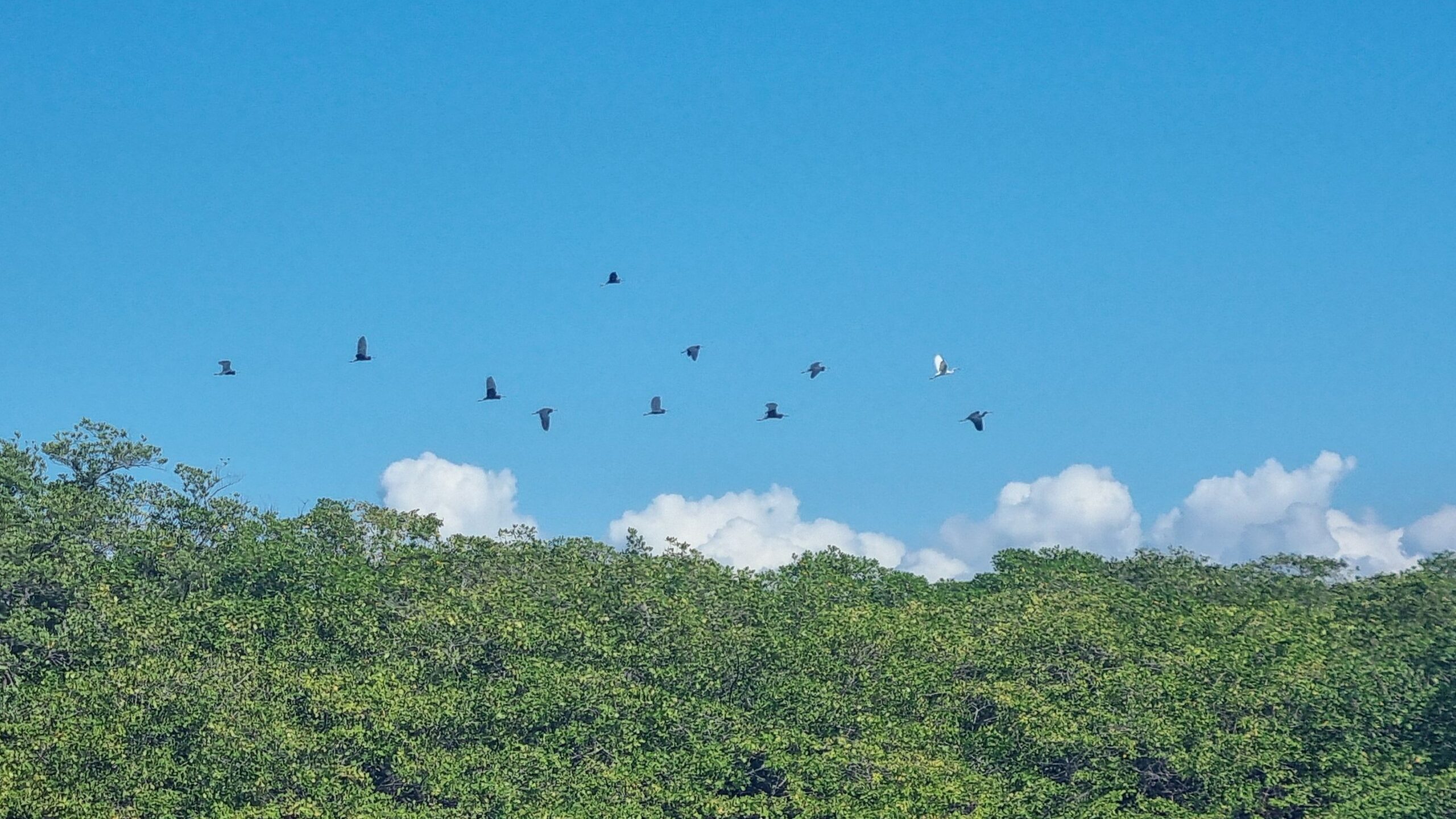
White and blue herons ahoy!
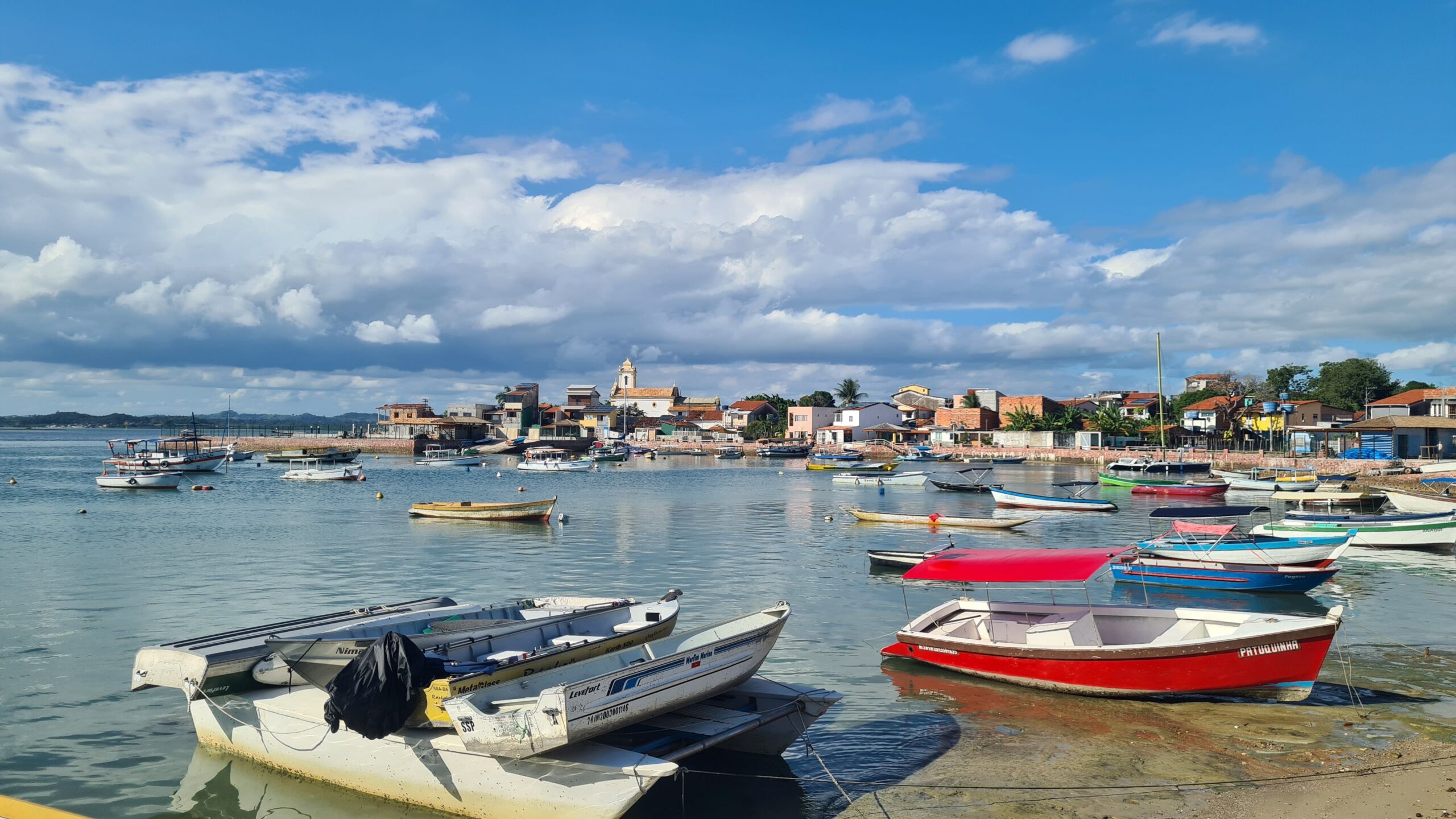
Fishing boats in Bom Jesus
We wrap up this lovely stopover with a stroll around the island’s sleepy fishing village, where for once we feel completely safe. Then it’s back for a swim around the boat—a perfect end to a not-too-bad day. What a stunning anchorage!
Our third stop in the bay: Aratu, a massive, sheltered inlet where most of the local yachts hang out. It’s the weekend, so the water is overrun with motorboats and swarms of jet skis. Add the commercial traffic from the heavy industry nearby, and you could almost mistake it for the Oslo Fjord on a sunny day in July! The Iate Clube welcomes us onto a mooring buoy for two days for a quick logistics pit stop. We came mainly to fill up on diesel, which here is the exact grade we want (S10). Most Brazilian ports sell either high-sulphur commercial diesel (diesel marítimo), which ruins light marine engines, or premium diesel (Verenium), which contains powerful cleaning additives that strip the dirt off fuel tanks and clog up filters and lines. We even do our laundry in the club’s washing machines, top off our fresh water, and have a lovely chat with Daniel, a Brazilian live-aboard dreaming of his own big offshore adventure with his family.
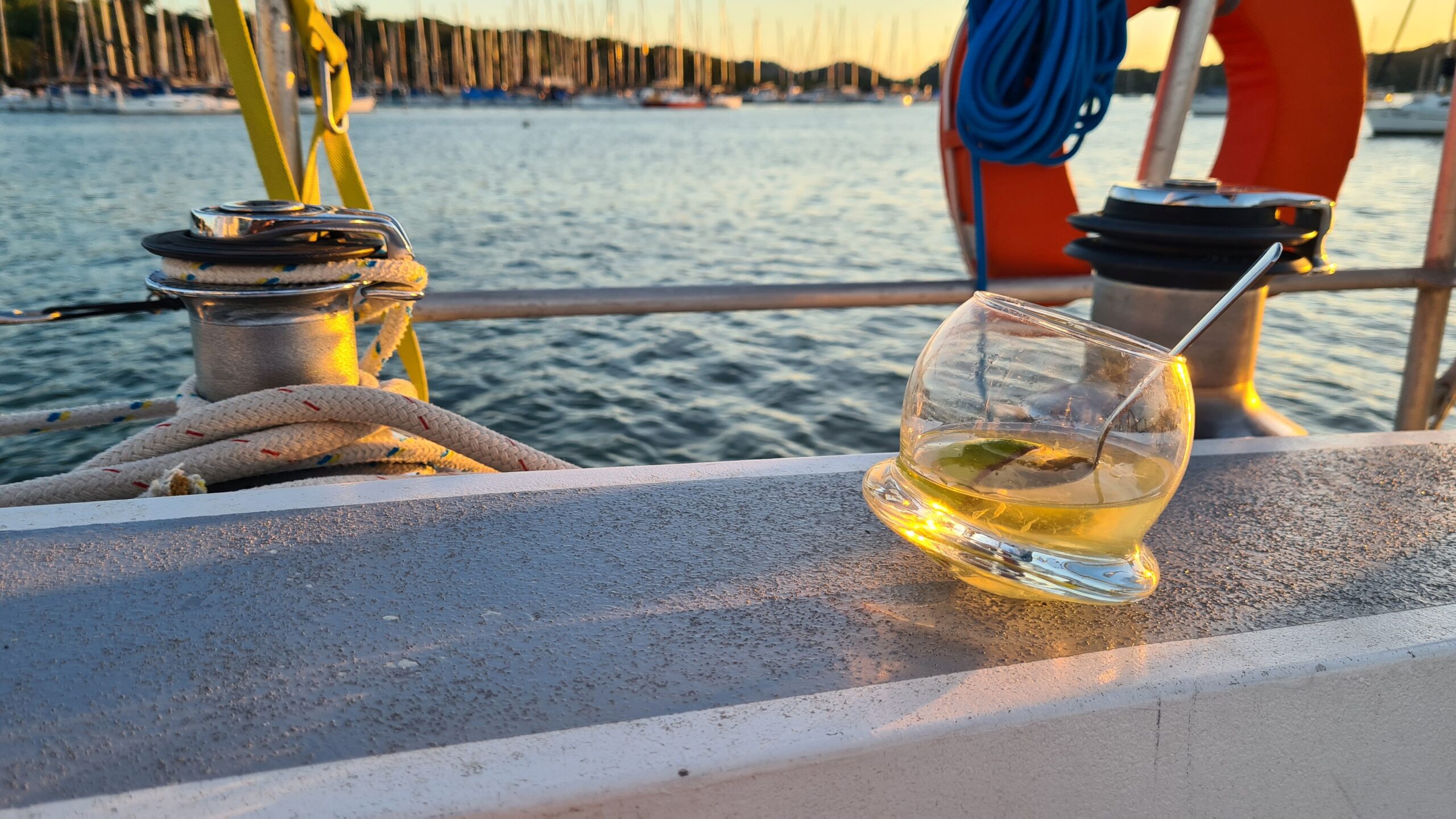
Our first Brazilian Iate Club certainly deserved a Caipirinha at sunset!
27th July to 2nd August: Final week in Bahia (48NM)
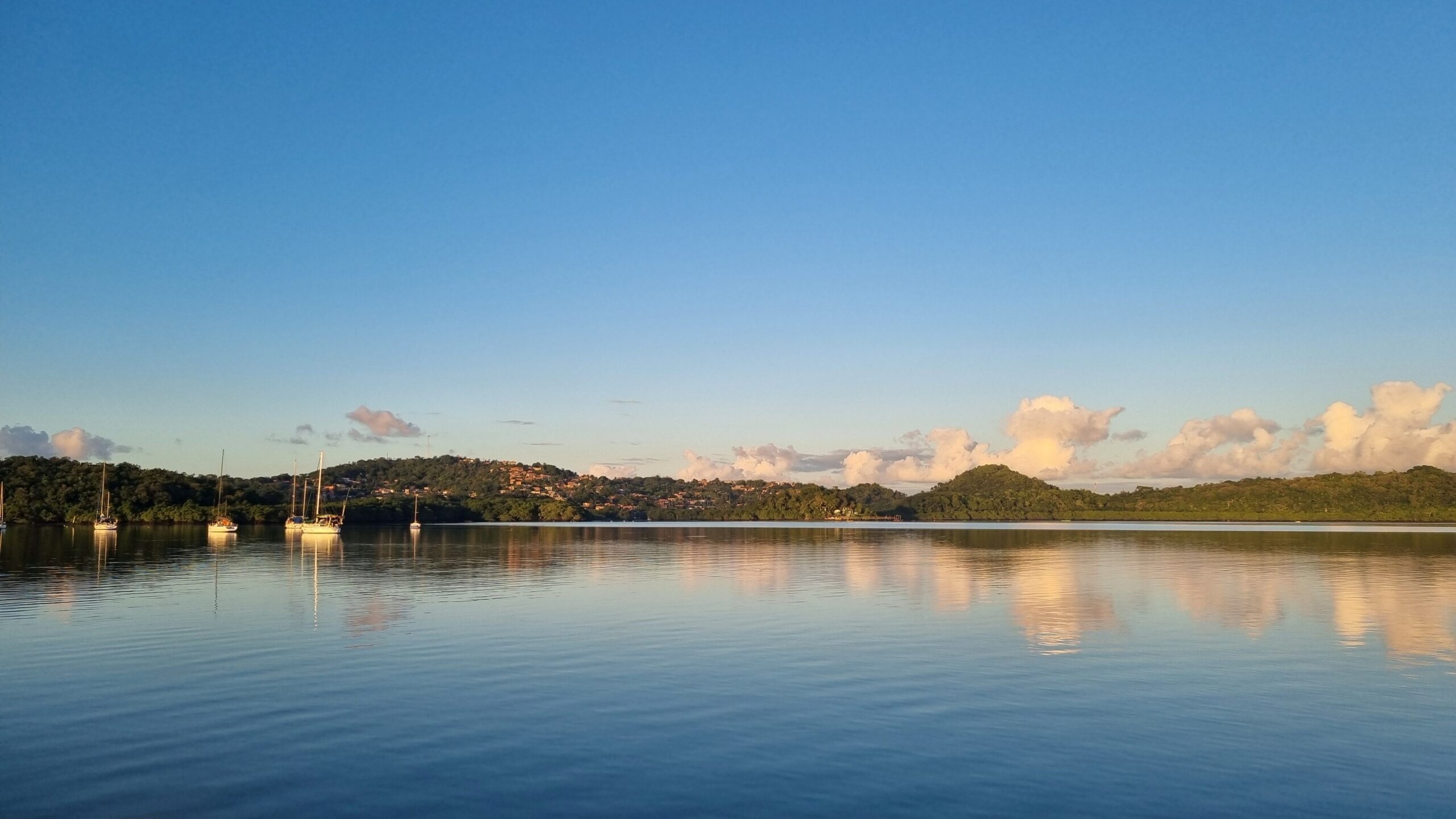
Leaving Aratu bay at dawn
Monday, 5:00 am: the alarm rings. Back to the grind! First, we have to commute to work—which for us means a peaceful morning sail towards Salvador under a rising sun, on a bay infinitely calmer than the day before.
The second we tie up it’s straight back to business. All three parcels we’ve been waiting for arrive at once: glycol to pickle the watermaker, a few blocks, and—oh, joy!—our lower shrouds! We install them the very next morning, they fit well even though they turn out to be 5cm shorter than the originals. Thankfully we had plenty of adjustment thread left on the turnbuckles! It’s a bit baffling, as both we and the rigger were meticulous with the measurements, and it doesn’t bide well for the six remaining wires we still need to order remotely…
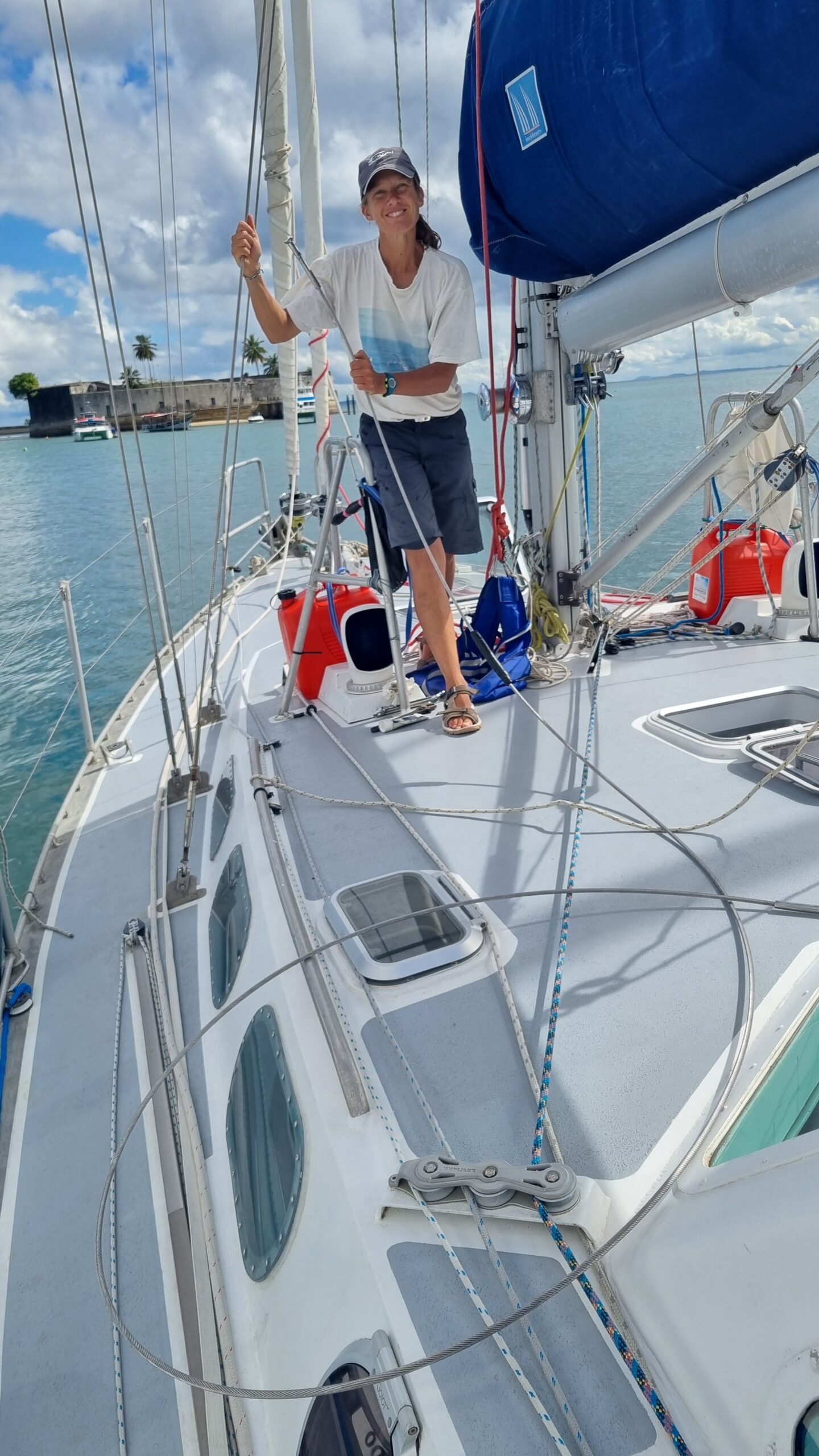
We are also becoming experts in changing lower shrouds…
We also find a temporary fix for the wind turbine: we flip the ovalized hub around, which reduces the vibrations significantly. For a permanent fix, we order a spare part from the UK manufacturer to be shipped to Norway, to one of Laure’s former colleagues. He should be crossing paths with us in Rio on his next business trip. In a country that taxes imports through the roof, getting marine parts delivered is complex and pricey, so most cruisers rely on the luggage of traveling acquaintances… still no rush nor press in Salvador, after all!
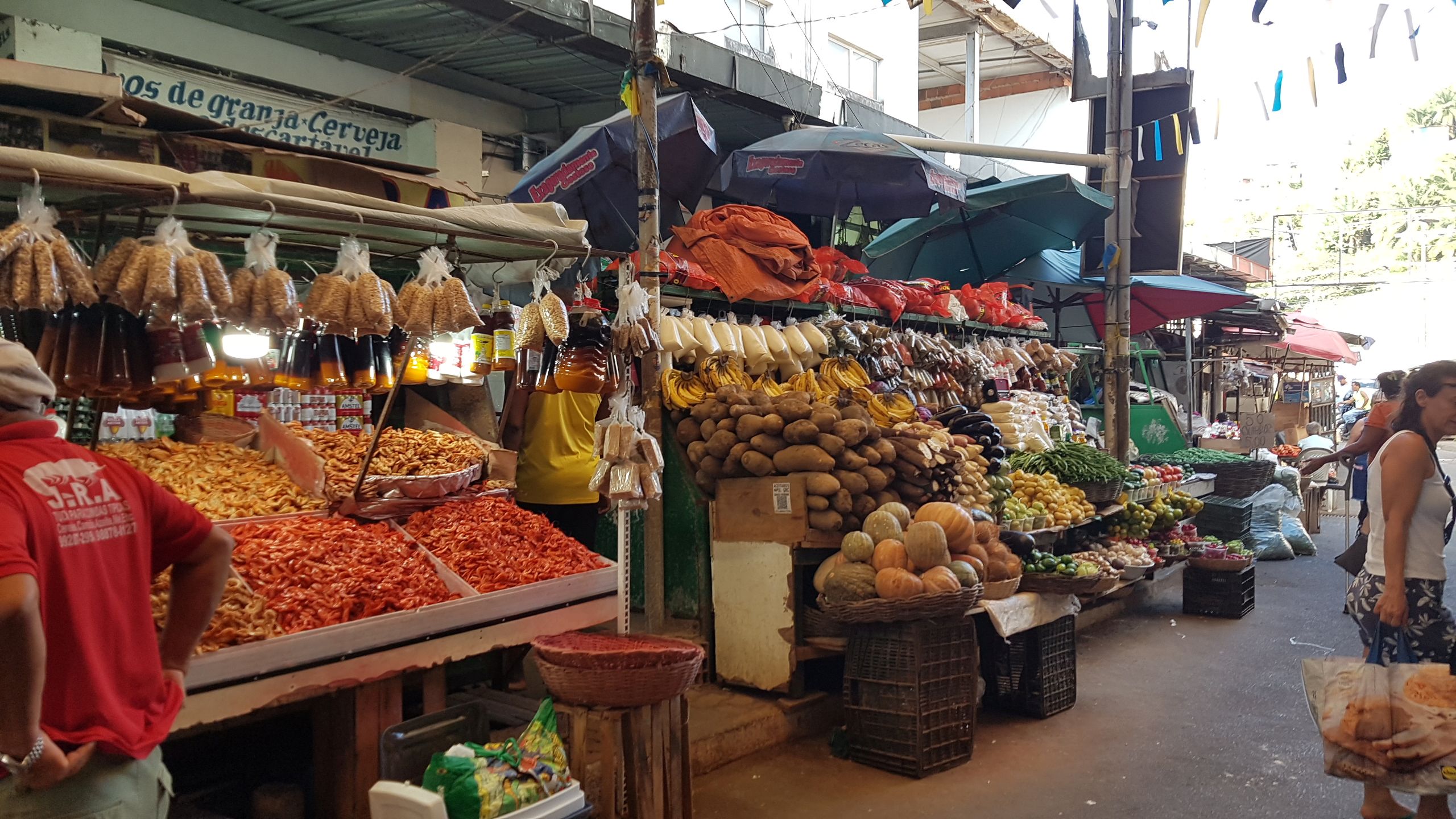
Sao Joaquim Market, dried shrimp and various vegetables
That leaves the watermaker. Now more confident navigating the city, we go and investigate the mechanics’ quarter a bit further north. We duck into shabby little workshops, chat with salesmen, and lo and behold: we find the exact hydraulic fittings needed to stop the leak! That leaves the stainless pipe to be sourced, but we’d have to take the old one off and bring it in to get a duplicate made—we won’t have time to deal with that right away. It’s always wise to leave something on the job list anyway; nature abhors vacuum, so if you finish your list, something far more annoying is guaranteed to break!
Great! We wrap up the day at the São Joaquim market to stock the bilges with fish, fruit, veg, and cashew nuts, then prep for our next mission…
…heading back to Itaparica to dry the boat out on the sandbank we spotted last week. The tide times line up so we can ground and float off in broad daylight—which doesn’t happen every day given the small tidal range around here (barely over two metres). Another 5:00 am wake-up call, setting course for the sandbank at first light. The weather isn’t cooperating, surprising us with a north-westerly morning wind that kicks up a nasty, uncomfortable chop. We manage to lay UtPåTur perfectly perpendicular to the beach using a stern anchor, though she bumps a bit as she settles down. Nothing catastrophic—we’re on lovely soft sand—but it’s hardly pleasant…
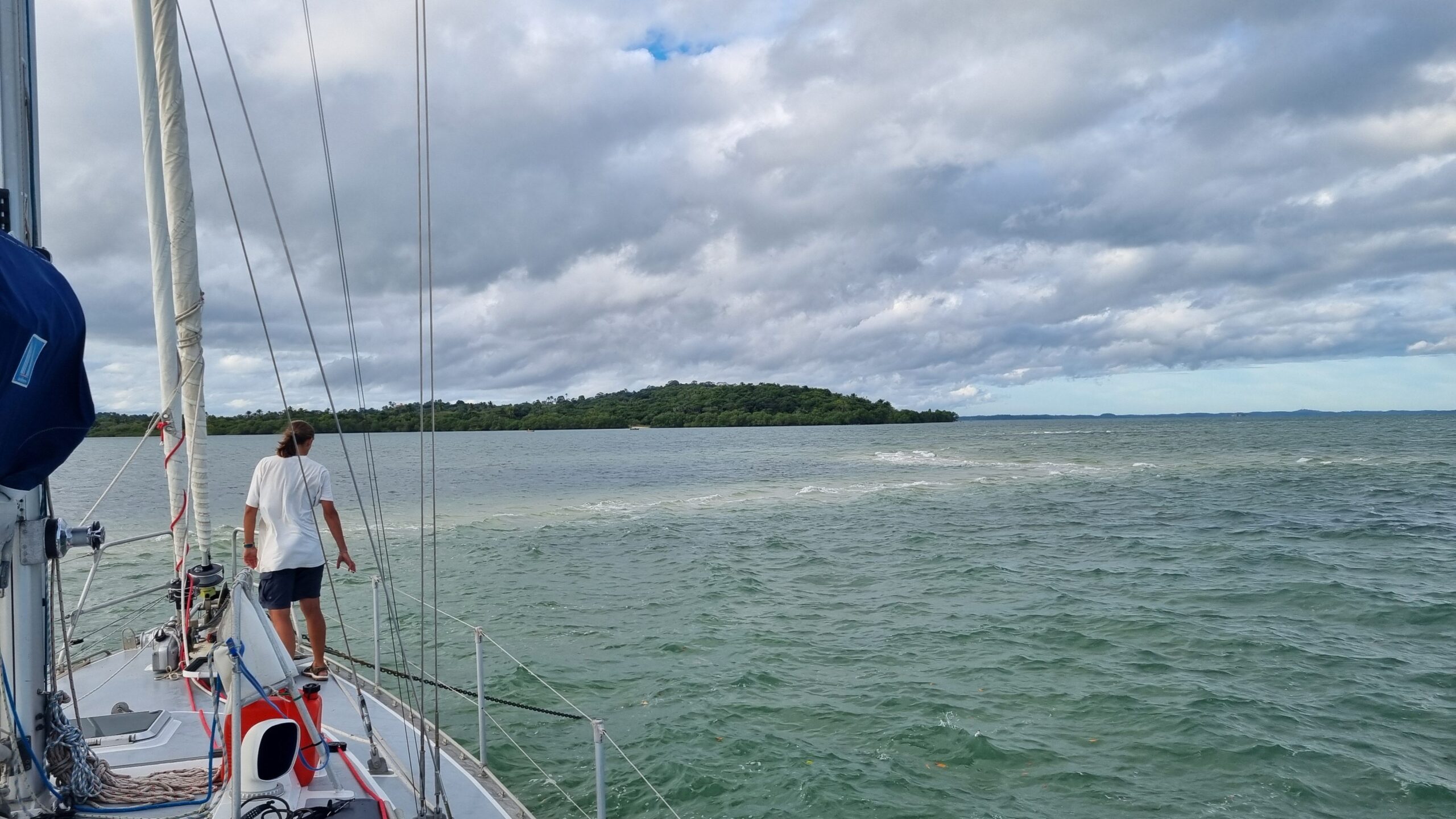
On the sandbank at high tide, UtPåTur is ready to beach…
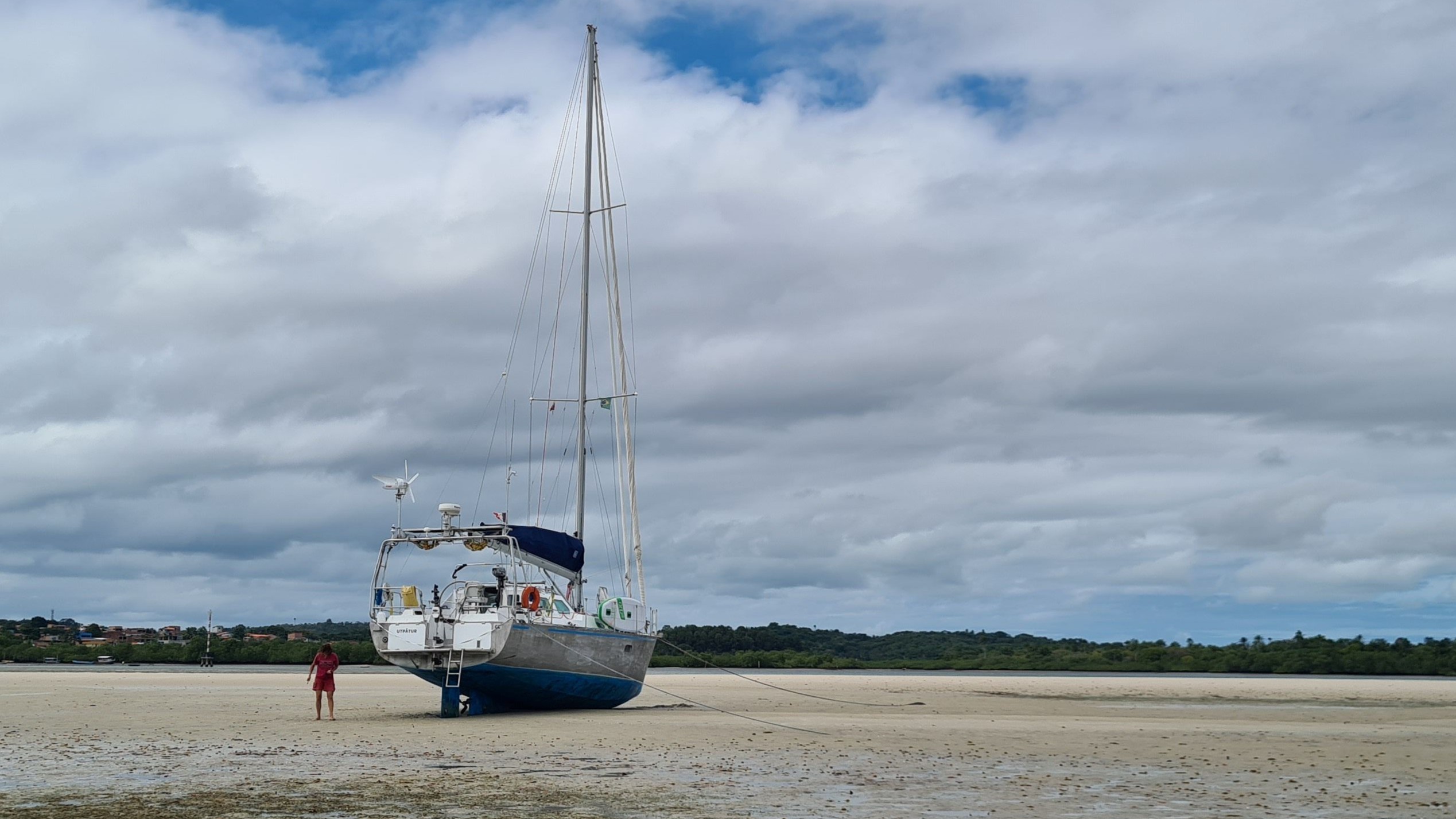
And voilà, UtPåTur is dry for a few hours! Magic!
The tide drops and the miracle happens once more: the boat settles, sitting safe and snug on the beach! The joy of a float bottom centerboarder boat… We scrub the hull a bit, but it is surprisingly clean with hardly any barnacles, likely thanks to our ultrasonic antifouling system. Our main reason for drying out was to inspect the anodes. Ever since we replaced the propeller shaft this winter, the shaft anode has been burning away instead of the propeller anode. We were worried about a bad electrical bond on the prop anode and wanted to test everything with a multi-meter. We’re quickly reassured: all anodes are making perfect contact, as are all metal parts of the boat (hull, rudder, shaft, prop). We swap out the shaft anode to be safe for the next 8 months, then dig for tiny clams in the sand while waiting for the tide to come back.
The wind picks up as forecast, but thankfully swings back to its standard south-easterly direction. Floating off is much smoother, even if the boat executes a graceful 180° turn in the sand before lifting off entirely and coming to rest on the anchor we’d laid out on the back earlier.
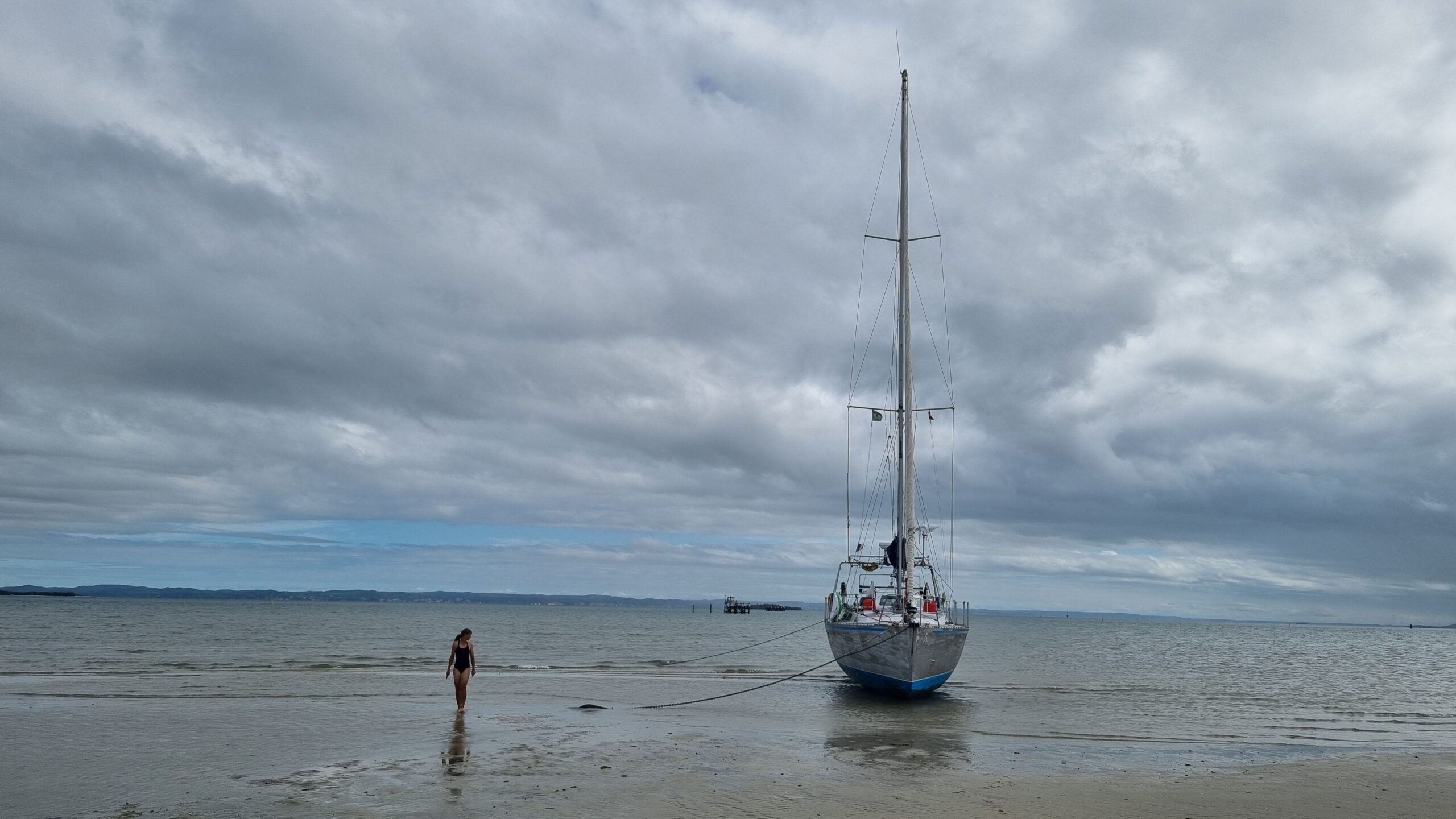
It’s still impressive to land the boat on the beach, though…
Mission accomplished, but we are absolutely knackered! It’s barely 8:00 pm when we crash out that night. We’ve naturally shifted into an early-to-bed, early-to-rise rhythm anyway, since the sun is up at 5:30 am and sets 12 hours later. That works out brilliantly for heading back to Salvador the next morning on the ebb tide at first light!
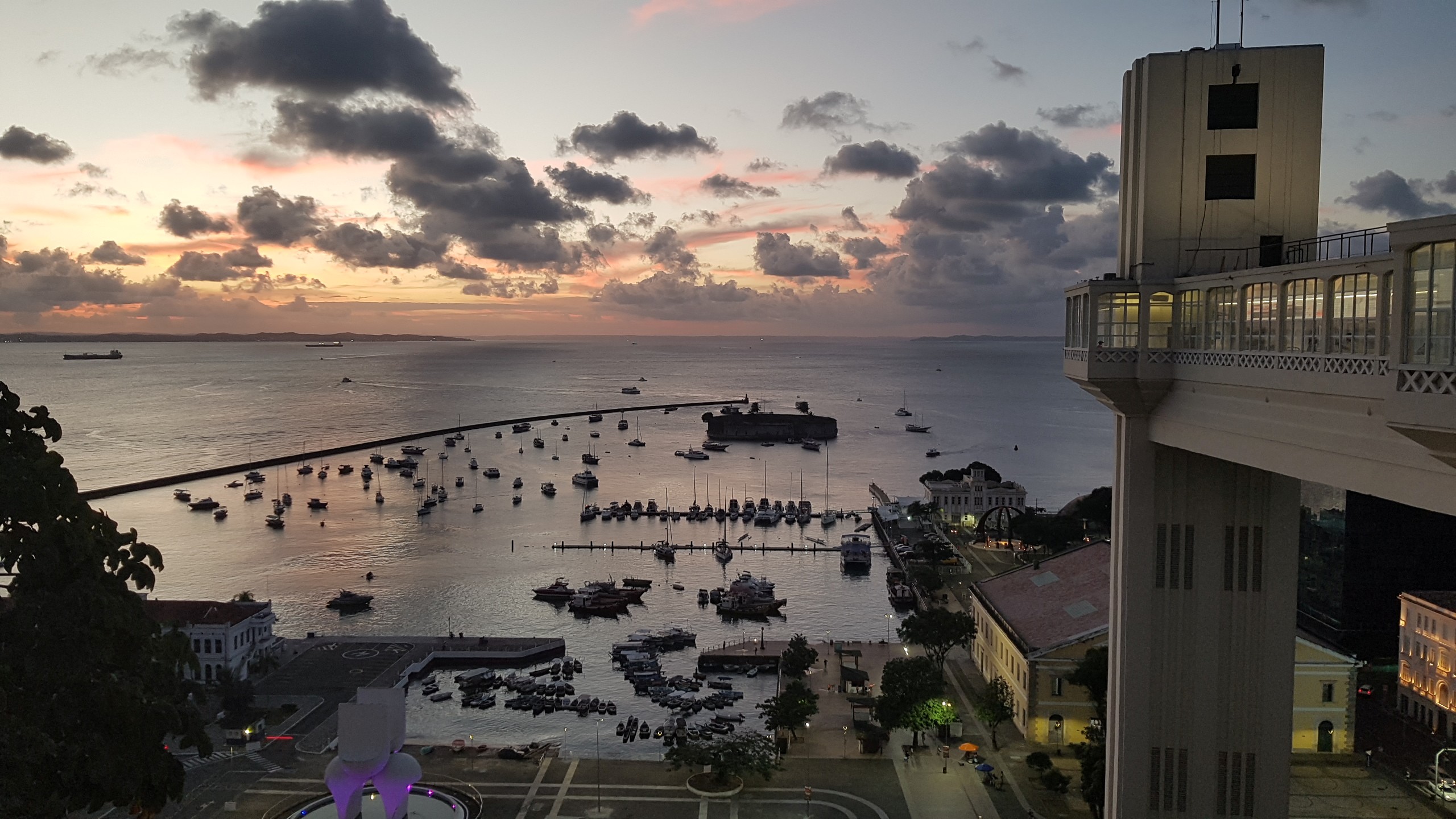
Sunset from the Pelourinho
Back in Salvador by Saturday lunchtime, our minds finally free enough of technical headaches to just play tourists and enjoy the city. We visit the Music Museum and the History Museum, take a stroll around Pelourinho at sunset, and head back down at dusk for a lovely evening with the crew of Namaste—a young French couple on an RM 12.60 who sailed all the way down to Rio and are now heading back north towards the Caribbean.
On Sunday, we spend the day with Daniel and Suelem again. But before taking us out to Rio Vermelho to feast on moquecas (a rich fish stew) and pão de queijo (cheesy tapioca bread rolls), they present us with a gorgeous Bahian gift: to ensure Yemanjá smiles upon us, they’ve put together a whole lucky package of figurines, cups, necklaces, holy pictures, a candle, purifying spray, and lucky ribbon ties—all packed into a tiny boat-shaped basket, straight out of the traditions for the festival of the sea goddess. We are deeply touched, and every single item now has its dedicated spot on board.
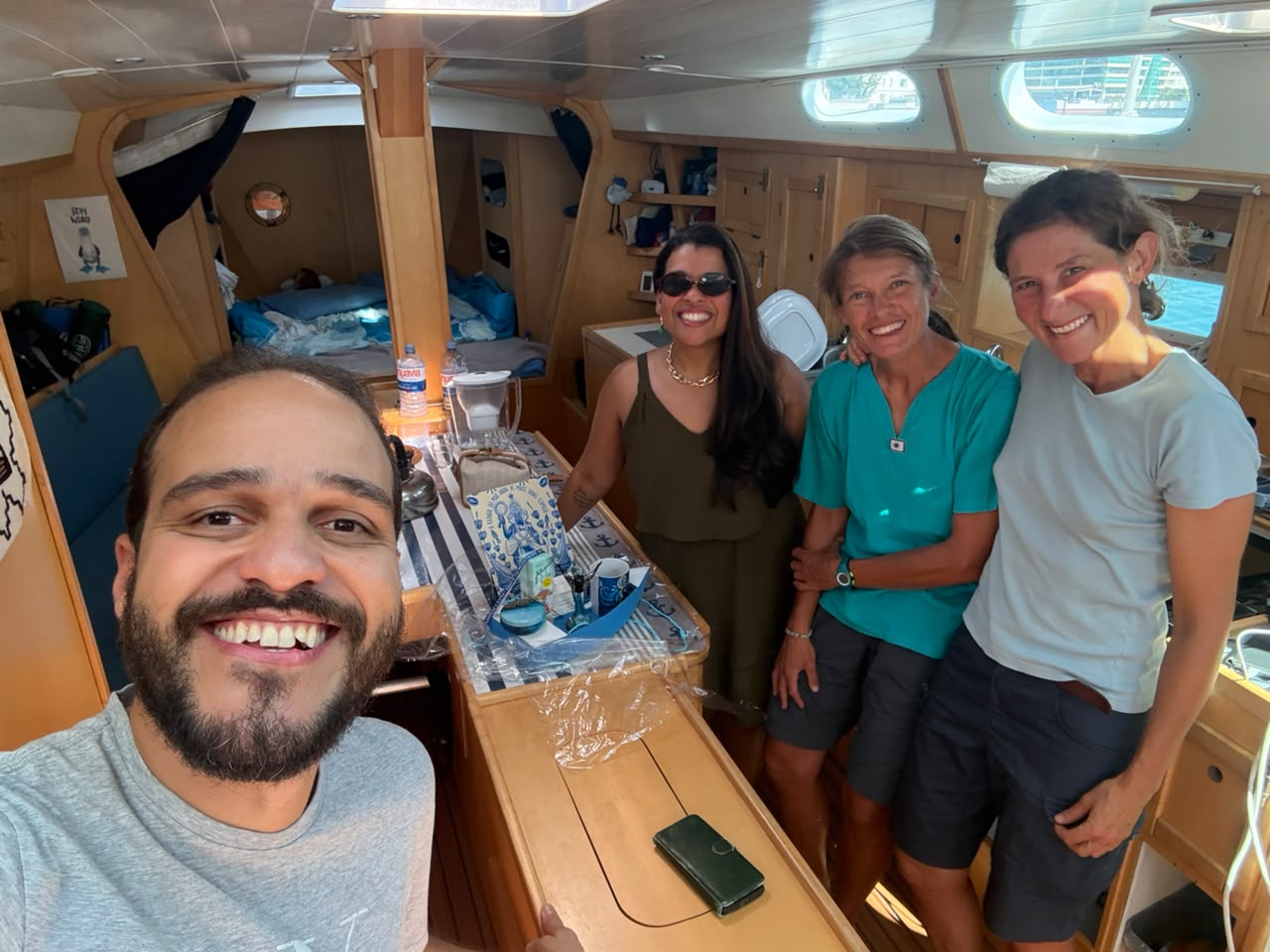
With our Bahian friends around the offerings to Yemenja
With an ally like that on our side, our next leg should go swimmingly! A rather fierce cold front is forecast in a week’s time, so we need to get going and escape Bahia as soon as possible if we don’t want to be stuck here for another fortnight. And as it turns out, we’re suddenly in a proper rush to leave Salvador!
 PDF
Loving your vernacular English…only hoping it’s not all my bad influence 🤭 What a mixed bag of experiences in that beautiful bay. Visually I thought how like places familiar to me it looked…until you describe the security issues, and even more intense challenges of sourcing chandlery than in most of Europe. As always, I love the mix of subjects you discuss, especially the wildlife and stunning scenery, ashore and afloat. May all the sea goddesses continue to shower you and Utpatur with blessings and safe adventures