
Since relaunching the boat after our winter refit, one mission has been on top of our minds: reaching the Canary Islands in time to meet our families who are arriving in Tenerife on 9 April… The first legs (the Bay of Biscay and the northern Spanish coast) are behind us, but time is flying and the weather is still far from settled—we can’t afford to linger!
The full photo album here.
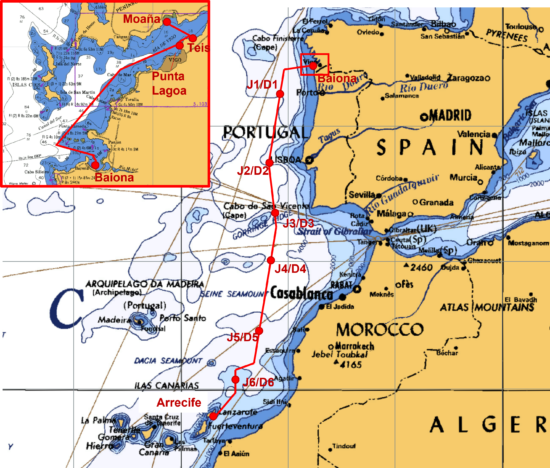
907 nautical milles sailed – 7083 NM in total on UtPåTur
15–19 March: Ría de Vigo (22 NM)
After these last few damp and windy days, waking up at anchor in flat calm under a bright, already warm sun feels like a blessing. Of course, we’re still eager to continue south, but the weather doesn’t quite agree at the moment: light winds, then on the nose, and a heavy swell—conditions that force us to pause for a few days in the Ría de Vigo.
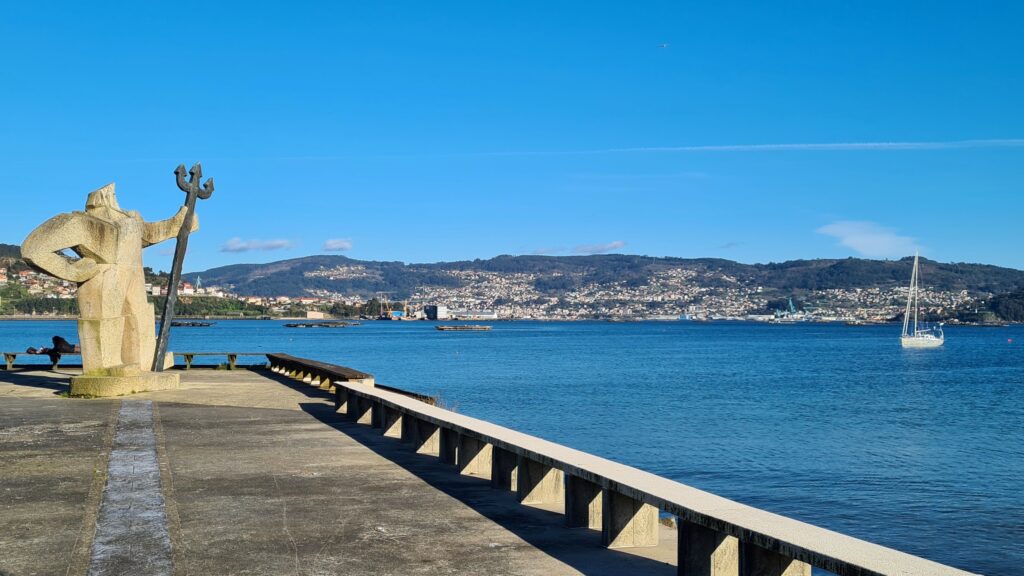
Neptune said: you shall not cross (at least not right now)
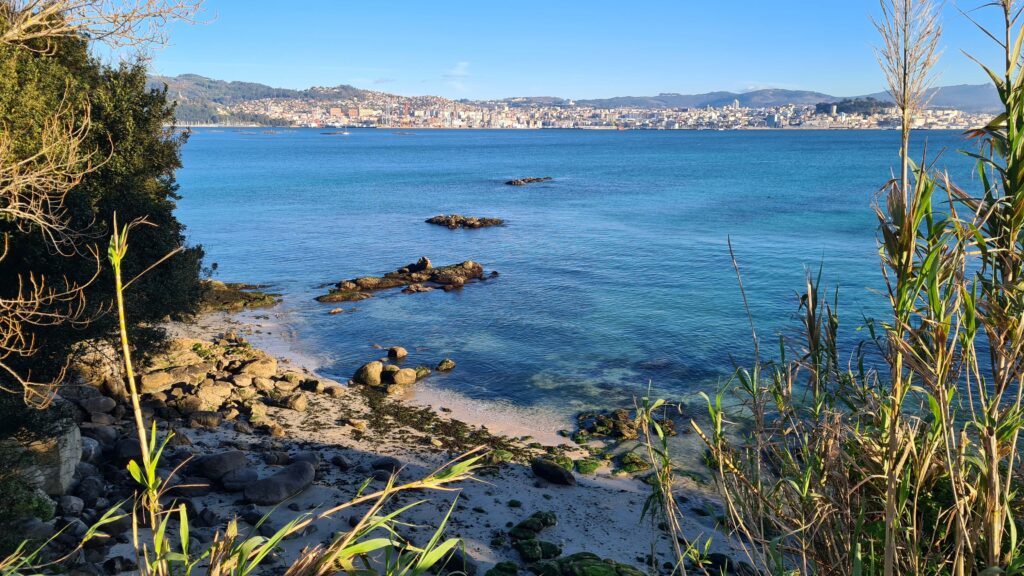
Moaña coastline, view over Vigo
First stop: Moaña on the northern shore. A lovely anchorage, well sheltered from the still lingering north-easterlies. The programme is fairly relaxed: laundry, small repairs, a bit of work on our laptops (website writing and admin), and a pleasant walk exploring an ordinary little town full of real people and entirely devoid of tourists (or tourist attractions, for that matter). The weather turns summery again, much to our delight, and we make the most of the mild evenings stretching long into the western horizon.
A small wind shift is forecast: from predominantly northerly to southerly. So, we move anchorage, heading to the southern side of the ria, into the enseada of Teis. This former military area has been redeveloped into a leisure space, with fine beaches, playgrounds, and two magnificent preserved breakwaters to dampen the swell. The anchorage is excellent!
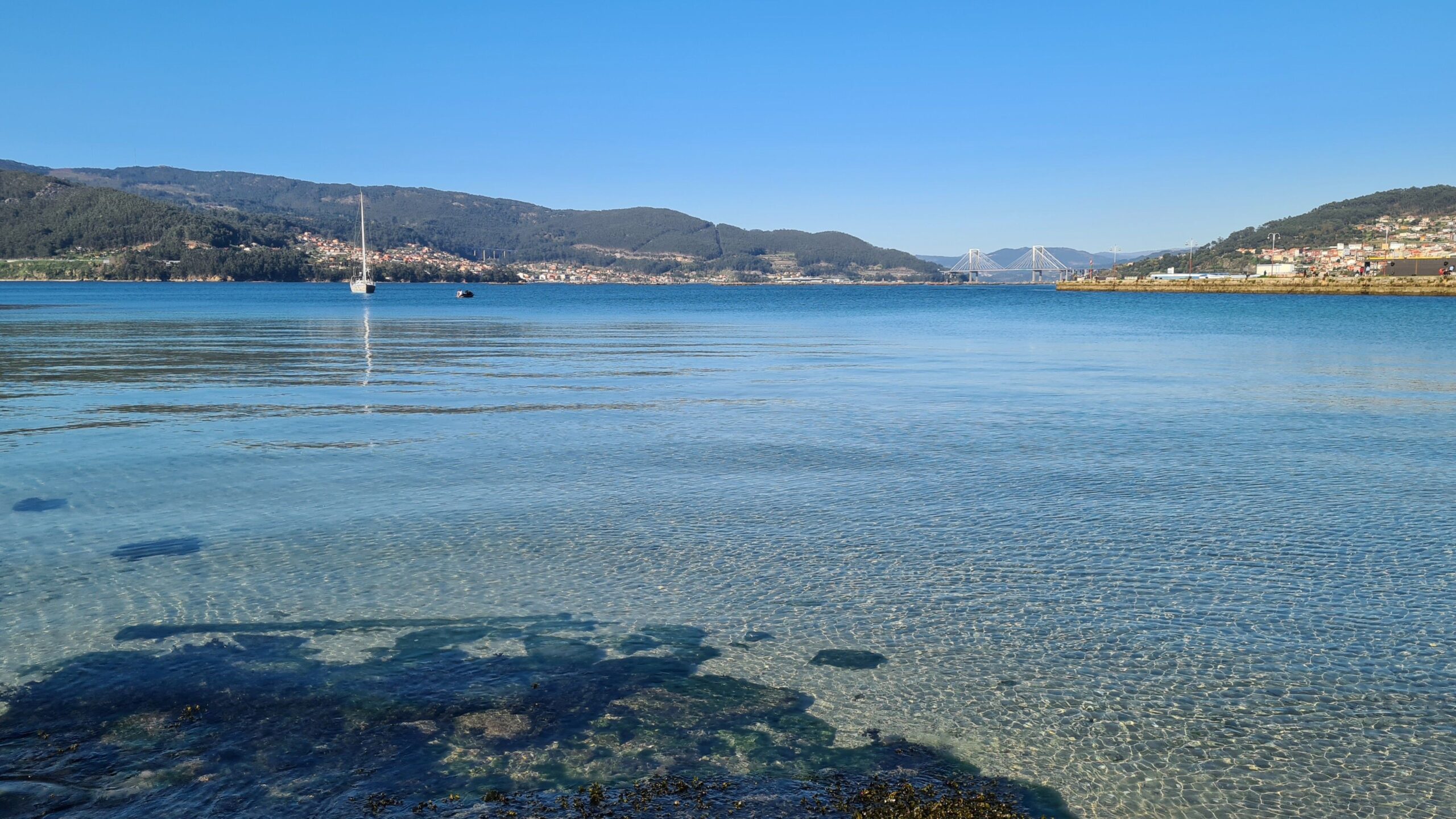
Crystal clear water in Enseada de Teis
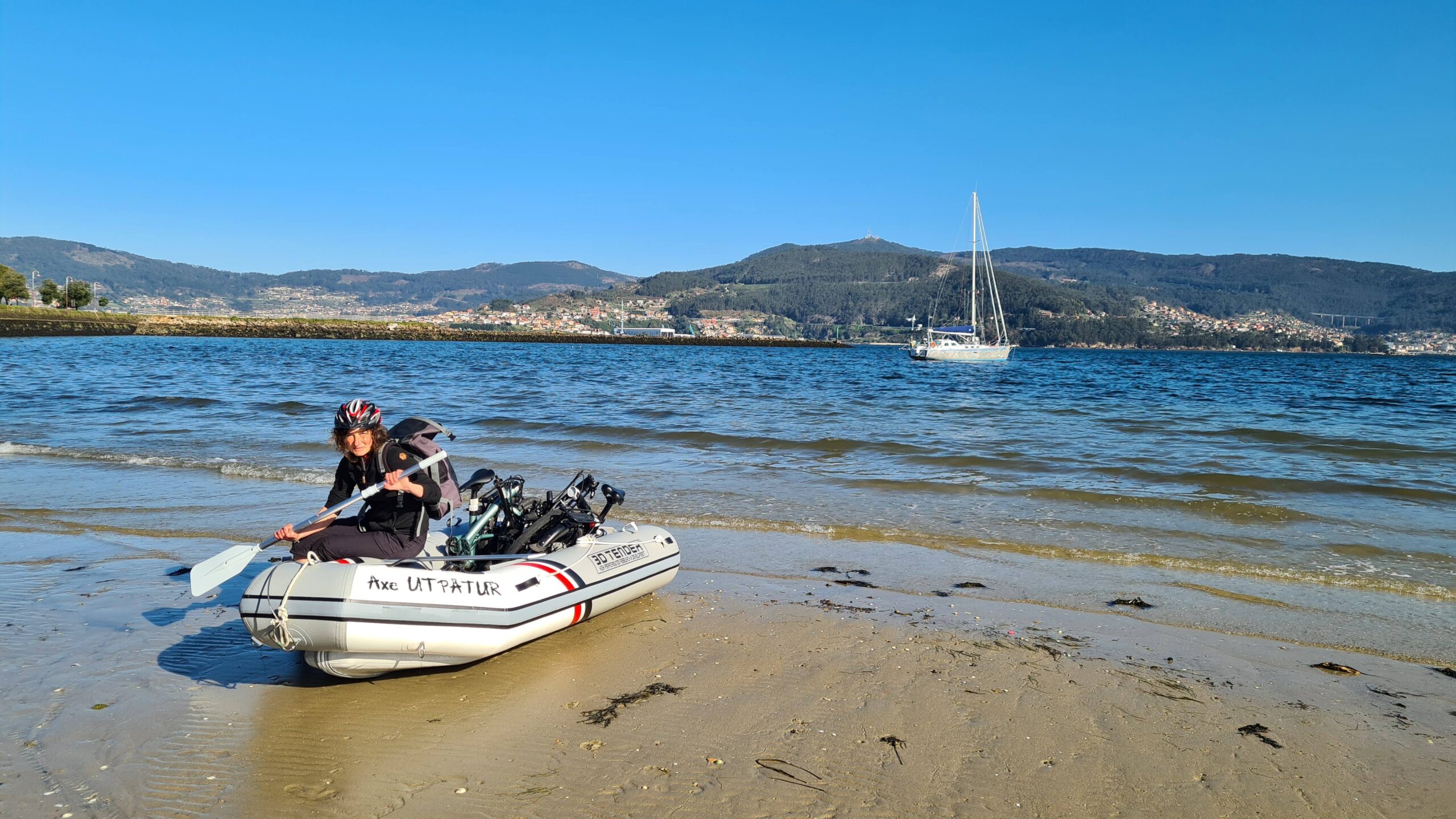
The bikes fit easily in our new tender
It’s also reasonably close to Vigo—at least by bicycle. Getting ashore with our new large tender is child’s play; we’re really pleased with that investment.
Cycling around Vigo under glorious sunshine is a joy—the city is far more welcoming than we remembered. Fine eclectic architecture, pleasant parks scented with eucalyptus, a winding old town, and above all we finally fulfil our ultimate Spanish fantasy: eating tapas on a sunny terrace!!! At last!
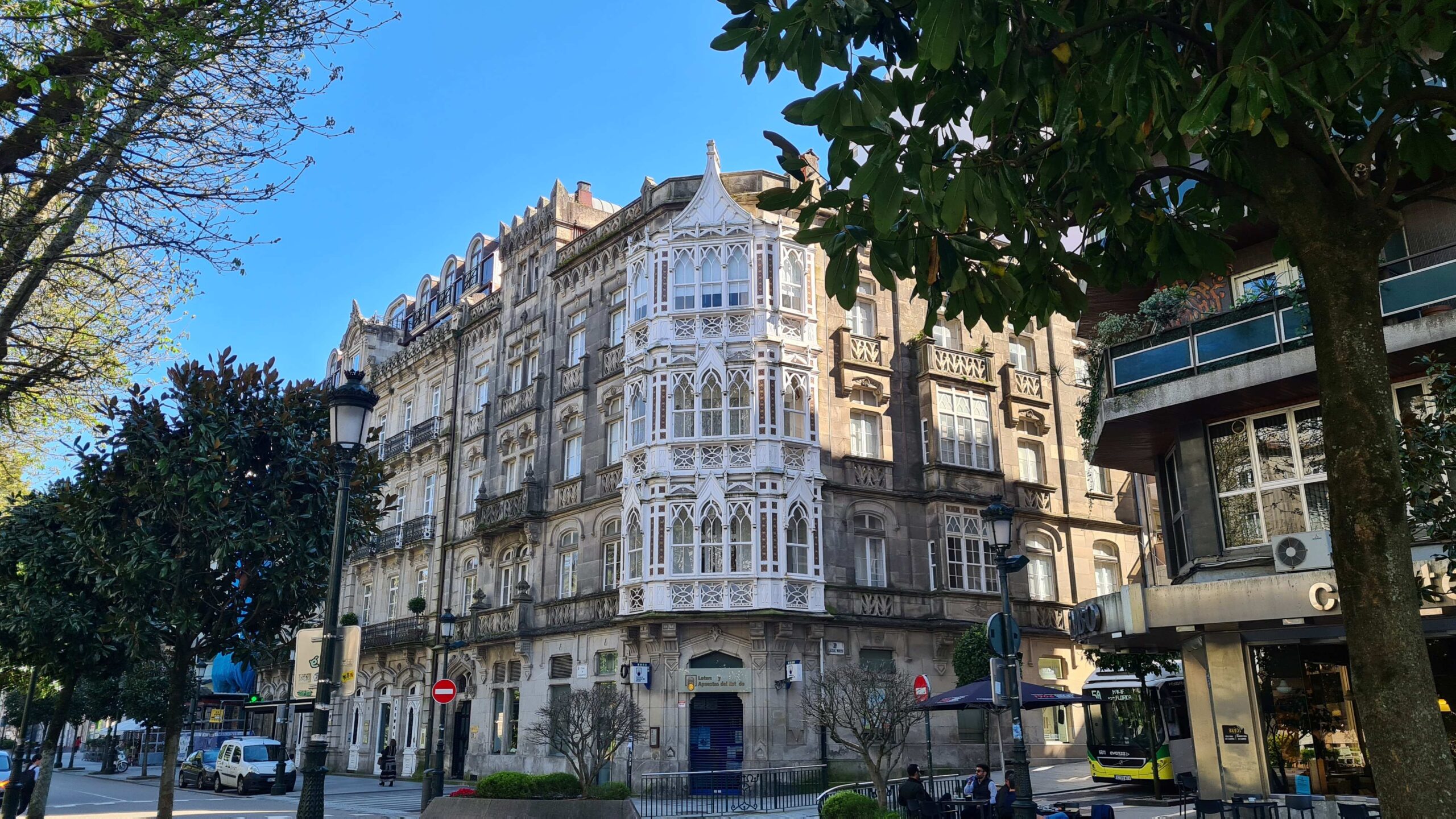
Vigo, beautiful architecture among the camellias and orange trees
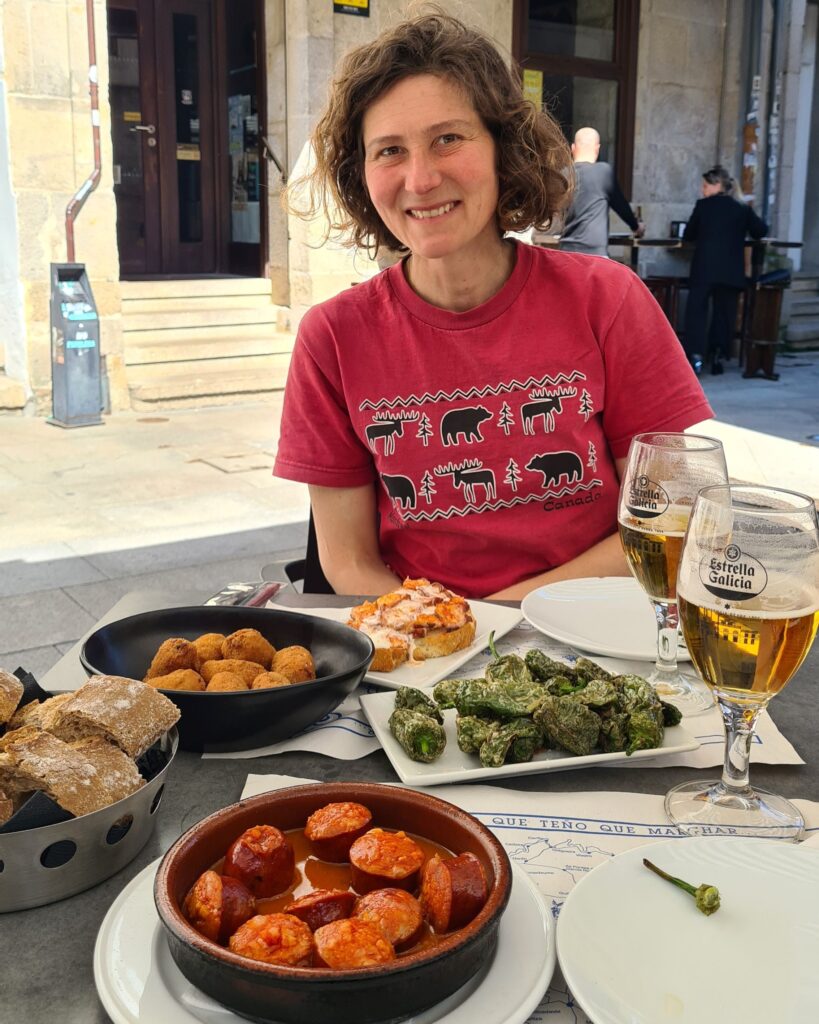
Eating tapas outside, done!
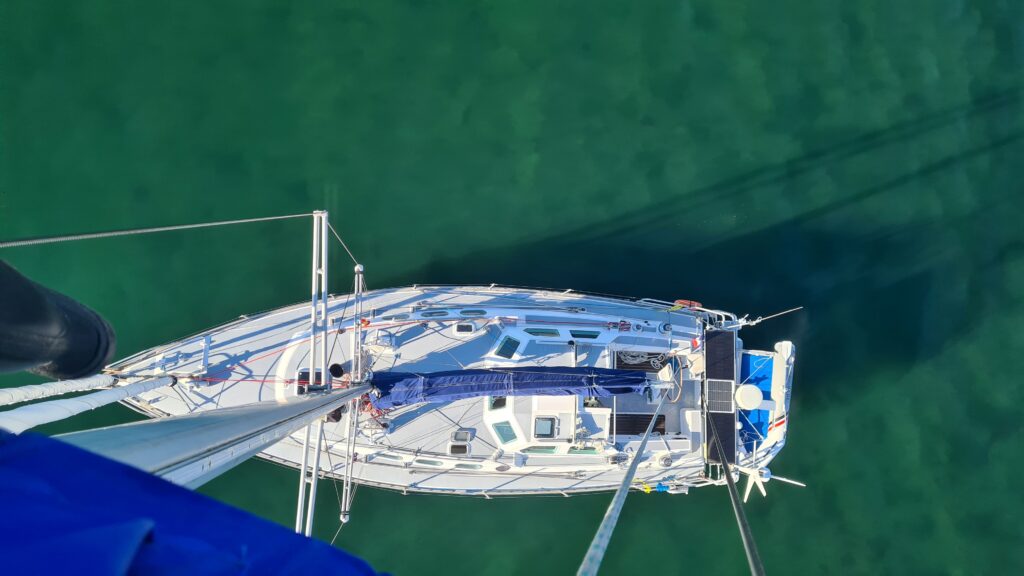
Rigging check, eveything looks good at 18m high
Between gastronomic and cultural outings, we prepare the boat for the crossing we are still hoping for: checking the rigging, the engine, restocking pasta and rice, and so on. These few quieter days of enforced stopover have done us the world of good—we feel well rested and ready to head back to sea as soon as possible. After all, we still have quite a few miles to cover!!
A weather window finally seems to be opening towards the end of the week, which could allow us to reach Porto Santo in the Madeira archipelago. So we move into Punta Lagoa marina to fill up with water, do the last shopping, charge everything on 220V, enjoy a proper long shower, and sleep a full night without rolling.
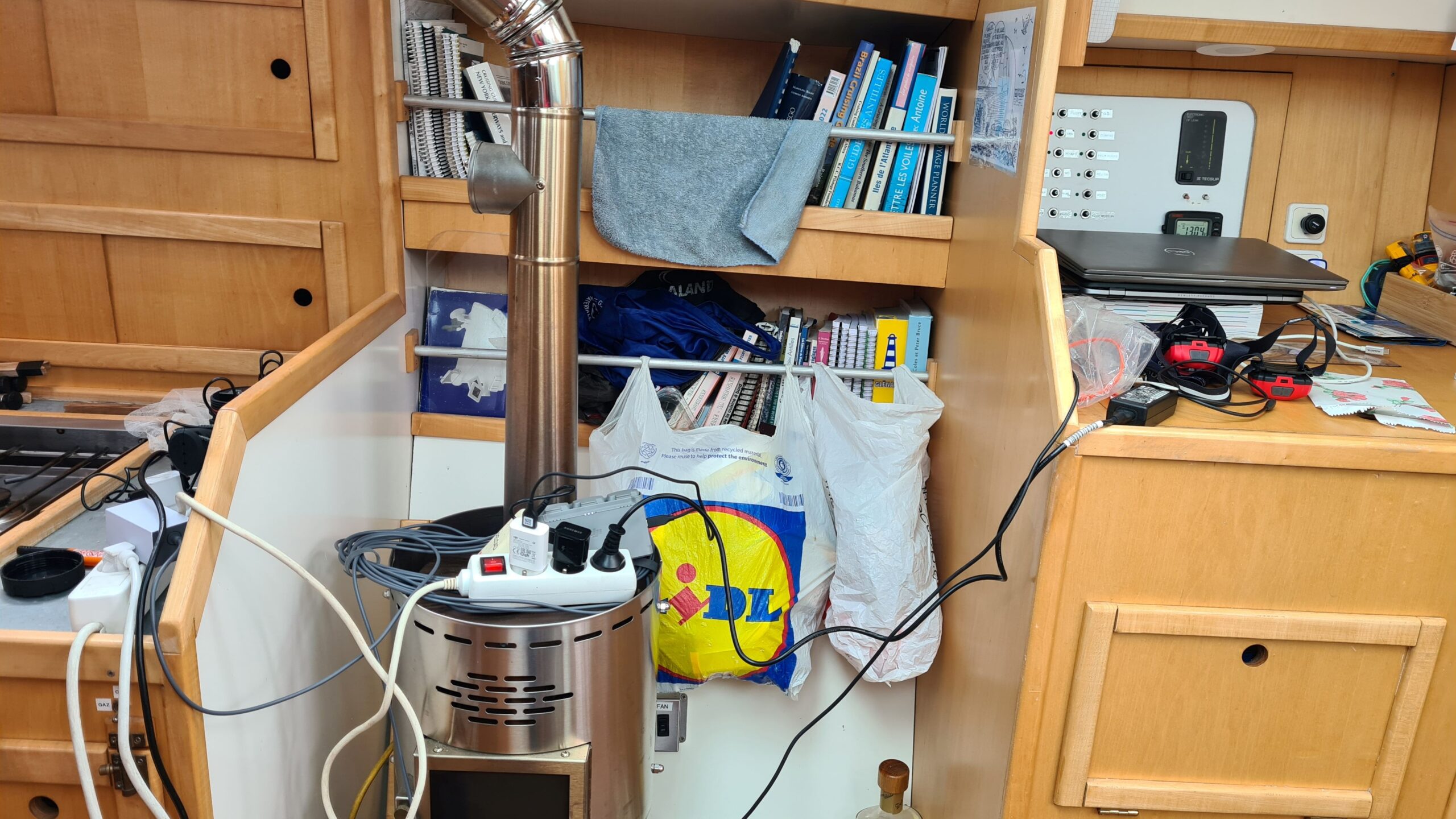
Stocking up on Watts
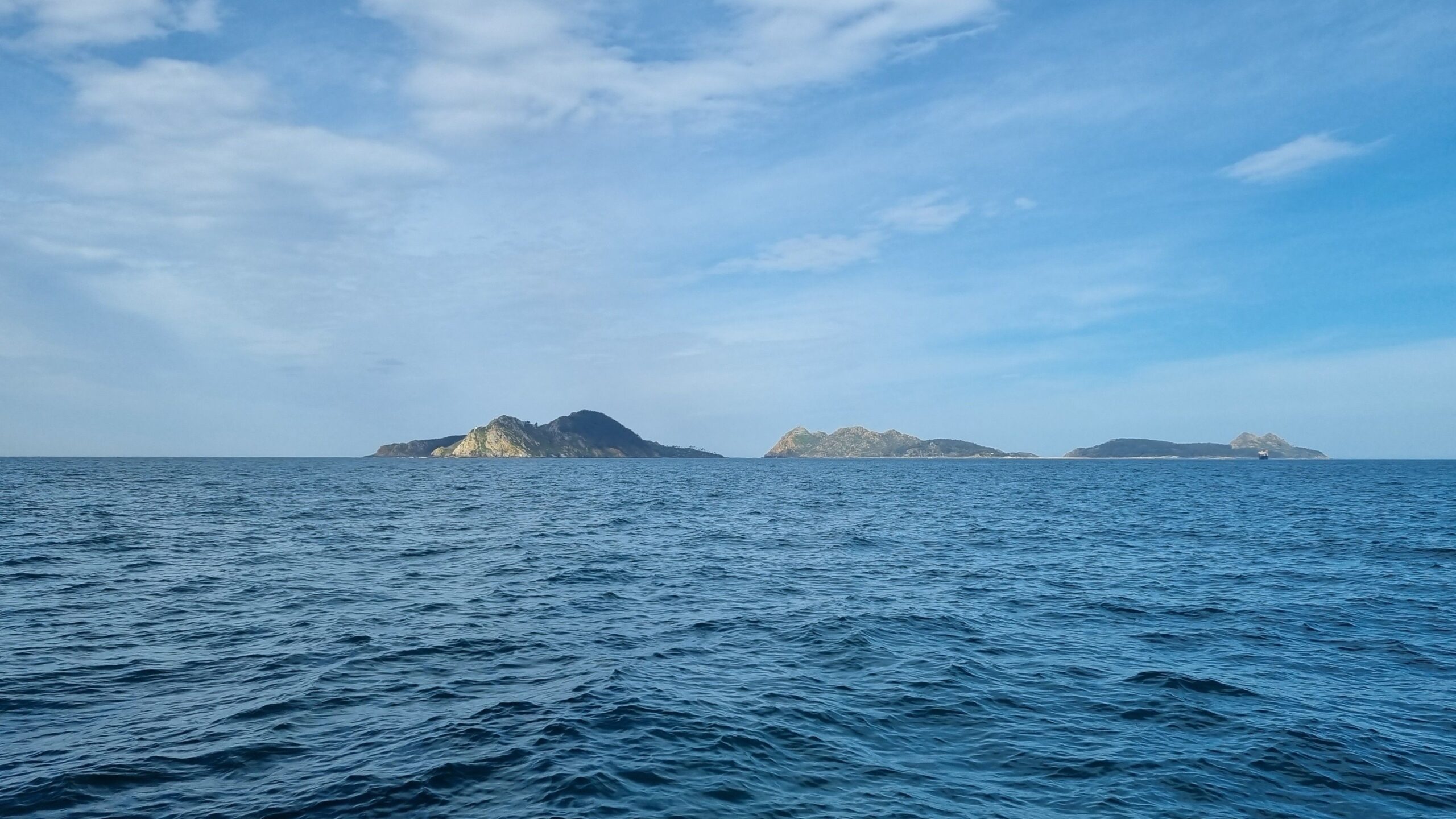
This is not the right season to visit the Cíes Islands (too much swell…)
Once the boat is laden with everything civilisation can offer, we leave the back of the ria for Baiona, at the mouth of the bay. As is often the case in Galician rias, we encounter bottlenose dolphins hunting. Today they’re not the only ones fishing—we catch our first mackerel of the year! The anchor eventually drops off the beautiful beach behind the town, which we share with one other yacht—intolerable crowding! This time, that’s it—we’re at the end of the diving board, the very one from which Christopher Columbus set off into the blue—and we too are ready for the great leap of the crossing…
However, the forecast is no longer quite as favourable as before. Strong winds are possible in 4 to 5 days—precisely when we would be arriving in Porto Santo. We study every possible scenario and conclude it would probably be wiser to head directly for Lanzarote, 200 miles further. It makes for a significantly longer passage, but after all, it’s the Canaries we’re aiming for, not Madeira! It also allows us to stay to the east of the strongest winds, while keeping the option of putting in along the southern Portuguese coast if conditions deteriorate further. In short, we’re setting off… but not entirely sure where to! Not the easiest of starts for our longest passage in 15 years…
20 March: S then NE 2–3 bft, sea moderate, rain (120 NM)
Our crossings often begin to windward, and this one is no exception. A few hours of the southerly headwind remain, and we want to use it to make a long tack westwards to clear the continental shelf. Why not stay closer inshore, you might ask? First because of the lobster pots and fishing nets everywhere, demanding constant vigilance—but above all to avoid orcas. In recent years, Iberian orcas have taken to biting rudders off passing yachts, causing serious damage—from loss of steering to loss of the vessel. The further south we go, the higher the risk of an encounter. So we prefer to head offshore as quickly as possible, into deep water where we are, in principle, safer. At the edge of the continental shelf, where depths drop from 100 to 3,000 metres, the sea is teeming with life: dolphins, gannets, gulls—we even spot a puffin, which also seems to think Galicia under this persistent rain feels rather like Scotland.
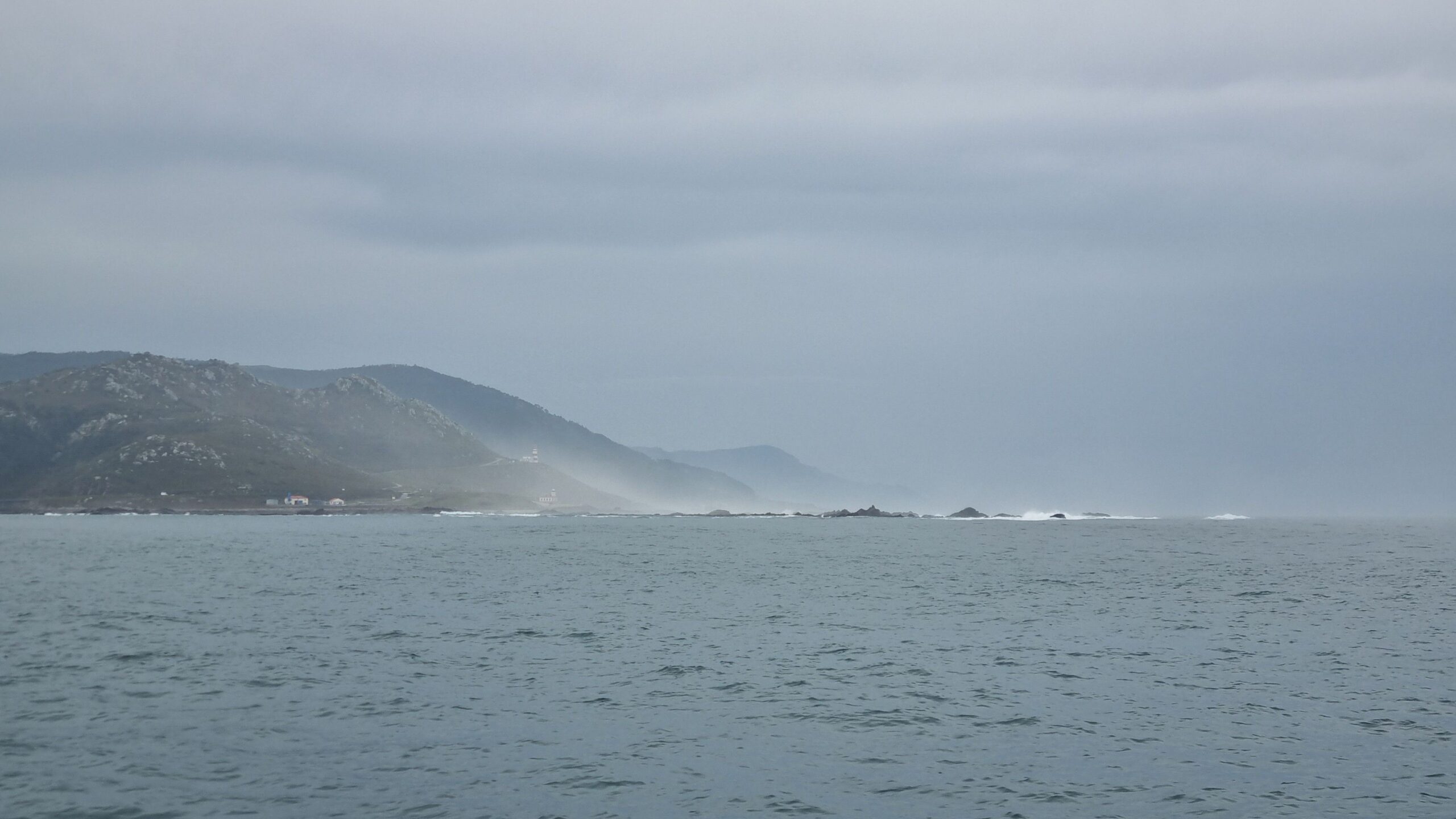
We leave the European continent and its swell that crashes into a fog of foam.
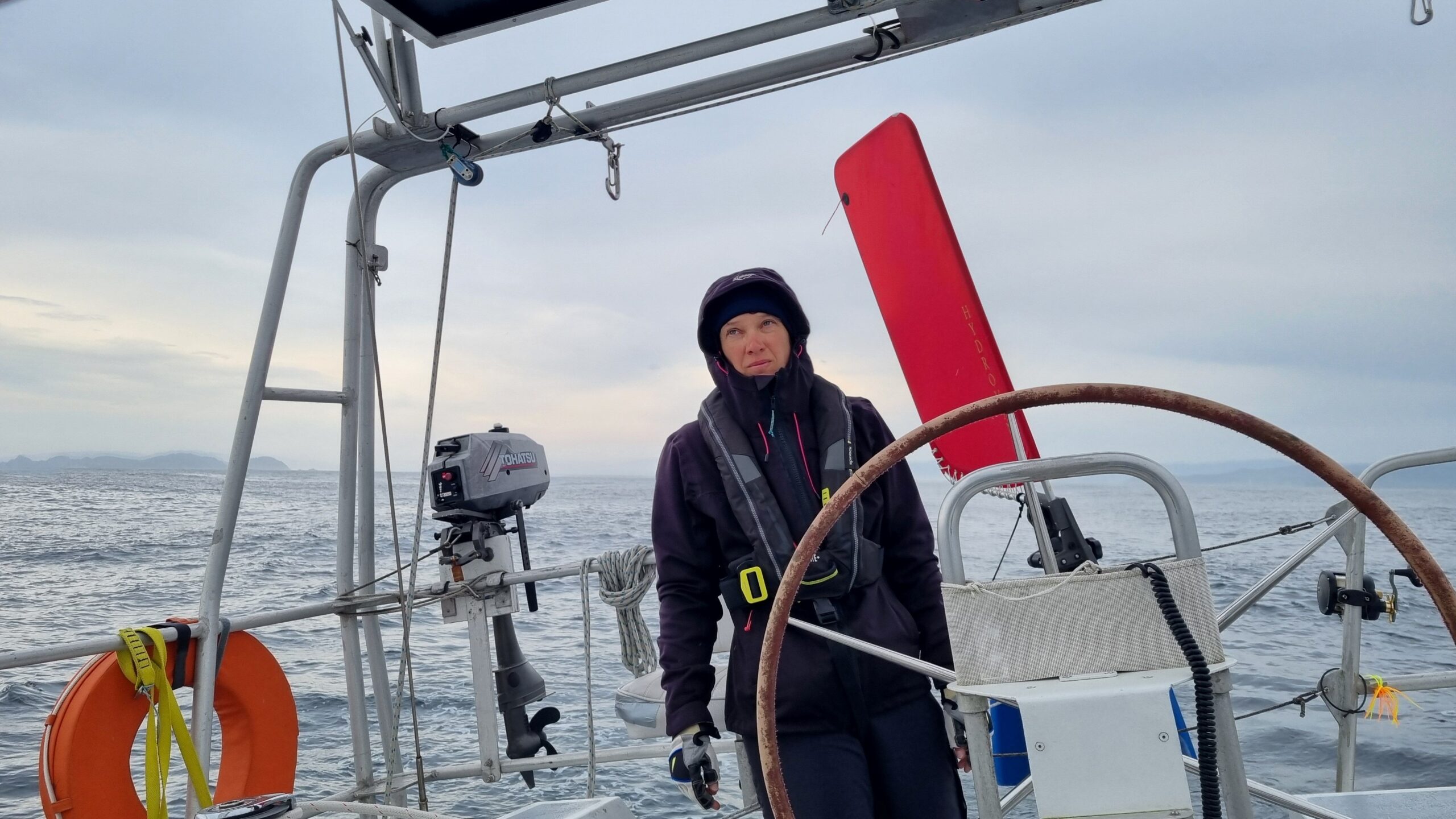
Let’s start crossing seas
The rain stops by late afternoon, and after a calm transition, the wind settles into its classic north-easterly direction. This time, we’re properly off—heading due south! We pole out the genoa at sunset and begin our three-hour watches through the night. We happily rediscover the brilliantly luminous phosphorescent plankton that had already fascinated us in these waters…
21 March: E–NE 2–3 bft, sea slight (120 NM)
Today is officially spring, and the weather clears nicely. It’s also the equinox, with daylight finally reaching 12 hours out of 24—darkness has lost! A fun fact: our planned route would have us crossing the equator around the June solstice, just as days begin shortening in the north and lengthening in the south. So we shouldn’t see nights longer than 12 hours again until… March 2027! A full year of solar summer :o)
For now, we sail quietly between a beam reach and a poled-out run in light winds (Force 3) and a gentle swell. As soon as the night watches end, around 9 a.m., we nervously switch on the Starlink antenna… what will the forecast say?? Hooray—no model predicts the strong winds we feared! The route to Lanzarote seems to be opening!
We hardly dare believe it yet and focus on the day’s main topic: cargo ships. We’re clearly following a shipping lane and spend the day avoiding some and admiring others. With AIS and excellent visibility, it’s not really an issue.
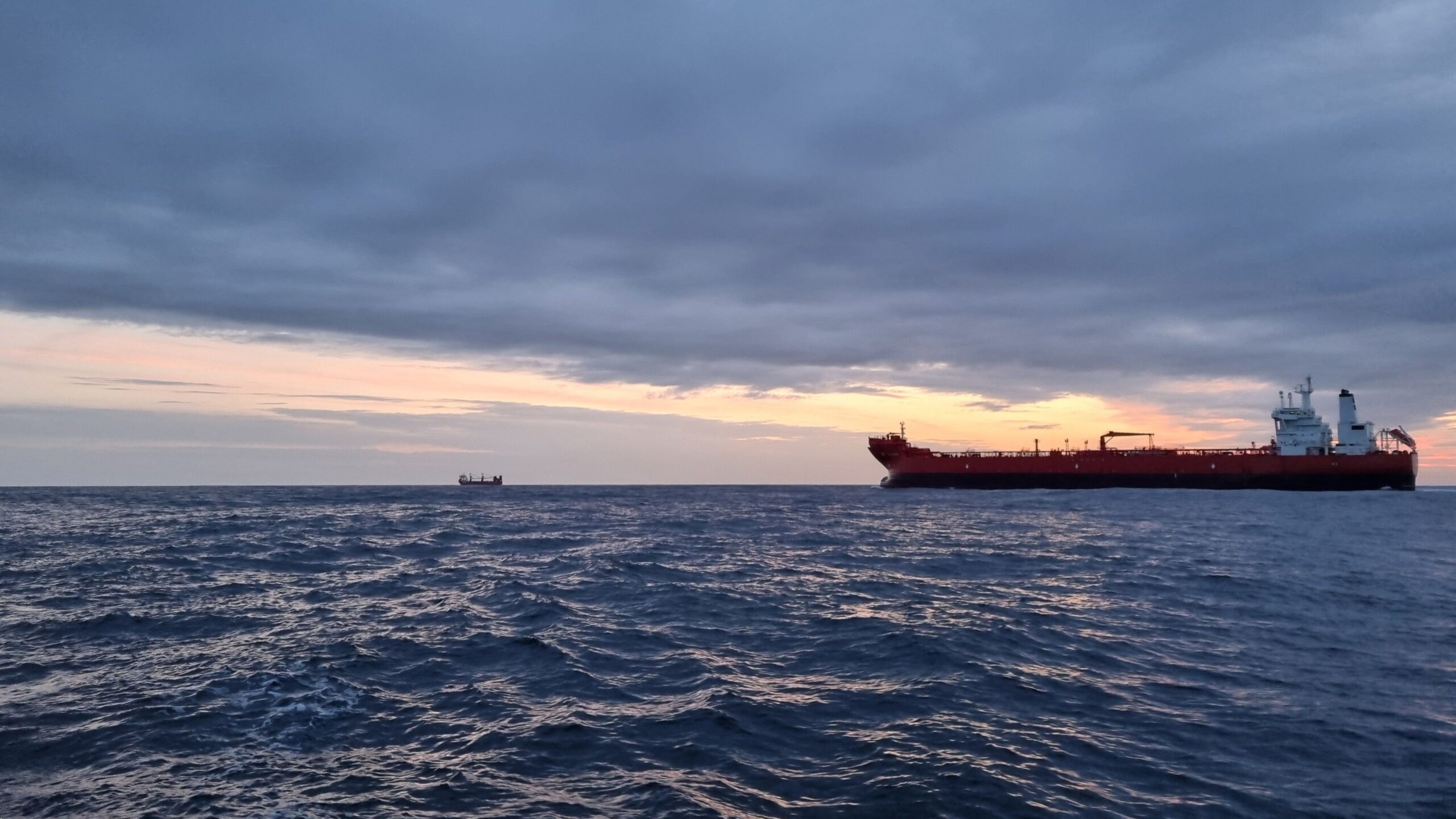
We won’t be alone at sea today
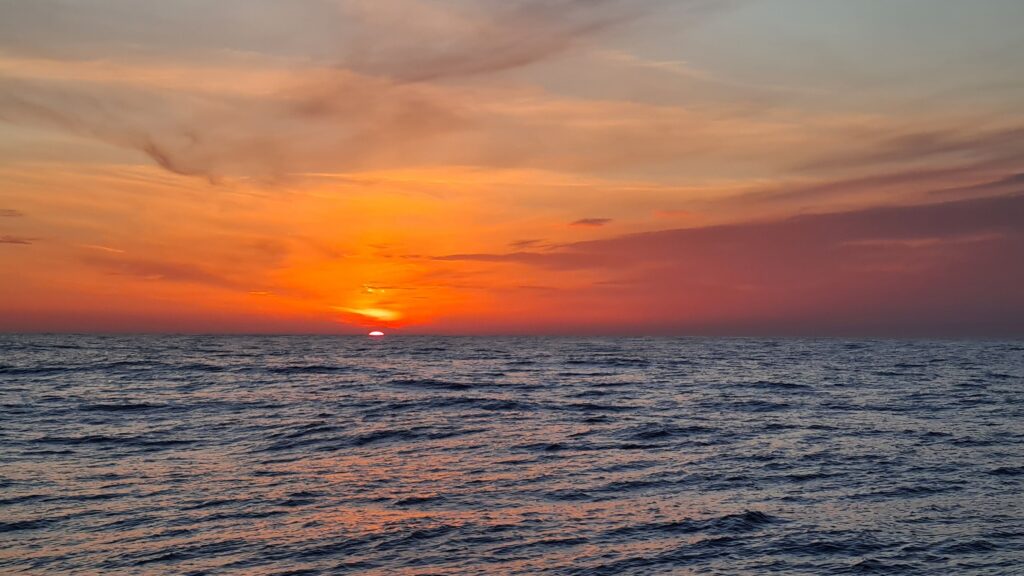
Ready for the night
Second night at sea, still between broad reach and run—we’re becoming quite proficient at poling out the genoa. We even manage to adjust Oscar, our faithful windvane self-steering gear, so it can steer the boat with the sails goose-winged. We’re ready to be pushed along by the wind for days!
With no moonlight, the sky is filled with millions of stars. It’s been a long time since we’ve seen such a sky! The temperature has risen noticeably, and although we still wear oilskins at night due to the damp, we can now stay outside for long stretches simply watching the elements…
22 March: E 3 bft, sea slight (115 NM)
We summon the satellites for the morning weather update with at least as much anxiety as the day before. Phew—the forecast hasn’t changed and still confirms a window. The passage does, however, look rather lively in its second half, with a fairly strong easterly flow coming out of Gibraltar, and powerful trade winds as we approach the Canaries. All the more reason to make the most of today’s idyllic conditions!
Every mile gained to the south takes us further from winter, and this warm day under a wide blue sky, reaching along in 10 knots of breeze, is the perfect demonstration! Today we crossed 38°23’N—30 degrees of latitude south of the northernmost point reached by UtPåTur last year—already one sixth of the planet covered since the Lofoten…
We celebrate with a shower, then read and tinker in the cockpit in the sunshine, music playing. Bliss! All that’s missing is a tuna to complete the moment, but nothing takes the bait on the poulpi lure we’re towing astern.
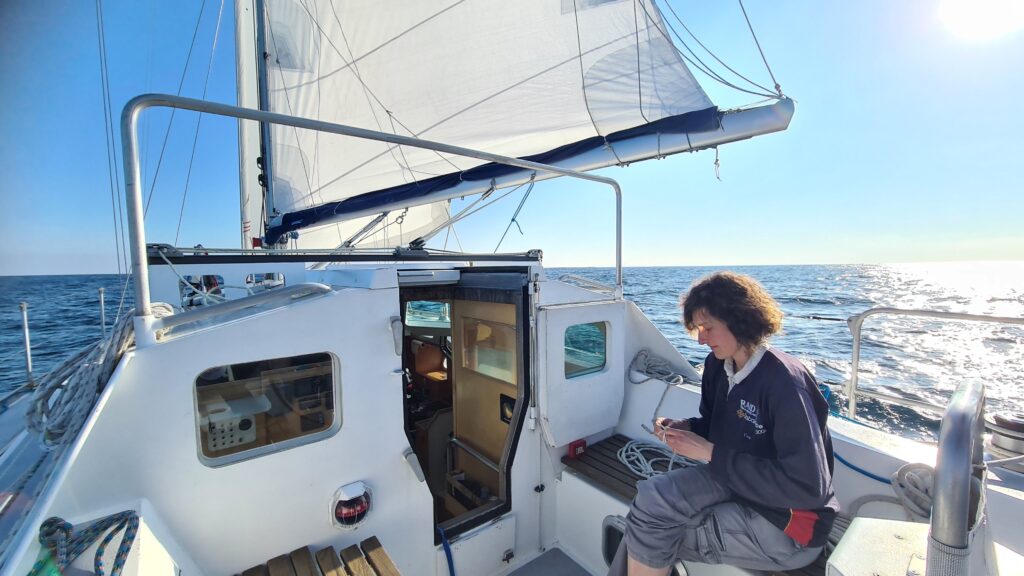
Making soft Dyneema shackles under the sun
The night passes uneventfully, still goose-winged under the stars…
23 March: ENE 3 bft, sea moderate (114 NM)
This morning we pass the latitude of southern Portugal. One final weather check confirms the window—open, though a bit breezy towards the end. We leave the continent and our last possible bolt-hole behind and set a firm course south. This time there’s no turning back—we are definitely heading for the Canaries!
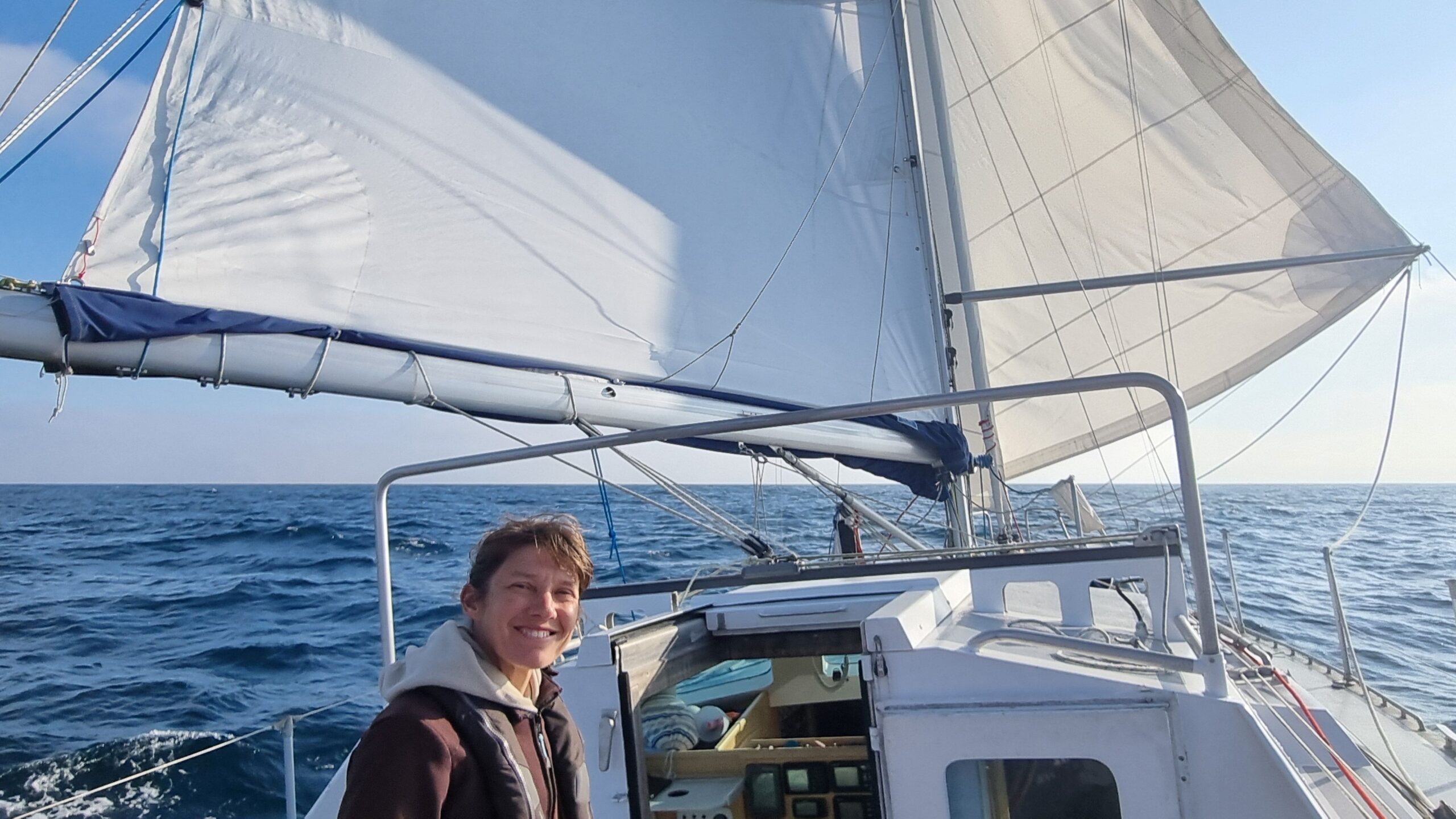
With the genoa held open by a spinnaker pole, we can sail completely downwind.
The sunshine is less bright than yesterday, the wind (still aft of the beam) a little lighter still, and the swell is building. So we make our way at a rather stately—if bumpy—pace. The sky still lacks the classic trade wind cumulus, but the colour of the water and the quality of the light leave no doubt: we are no longer in northern Europe! The air is growing steadily warmer, and during the day we’re down to trousers and a long-sleeved T-shirt.
And then—turtles! A change from seals! We also spot these curious hydrozoan creatures, colonies of polyps with a sail-like cartilage: Velella. Birds are rather scarce out here, apart from a lost sparrow that rests aboard for a few hours, huddled in the staysail sheet.
The night is once again superb, with stars above and phosphorescent plankton below. Laure watches ghostly dolphins escorting the boat wrapped in their glowing shroud of plankton, while Camille marvels at the full constellation of Scorpius…
24 March: NE 4–7 bft, sea moderate to rough (150 NM)
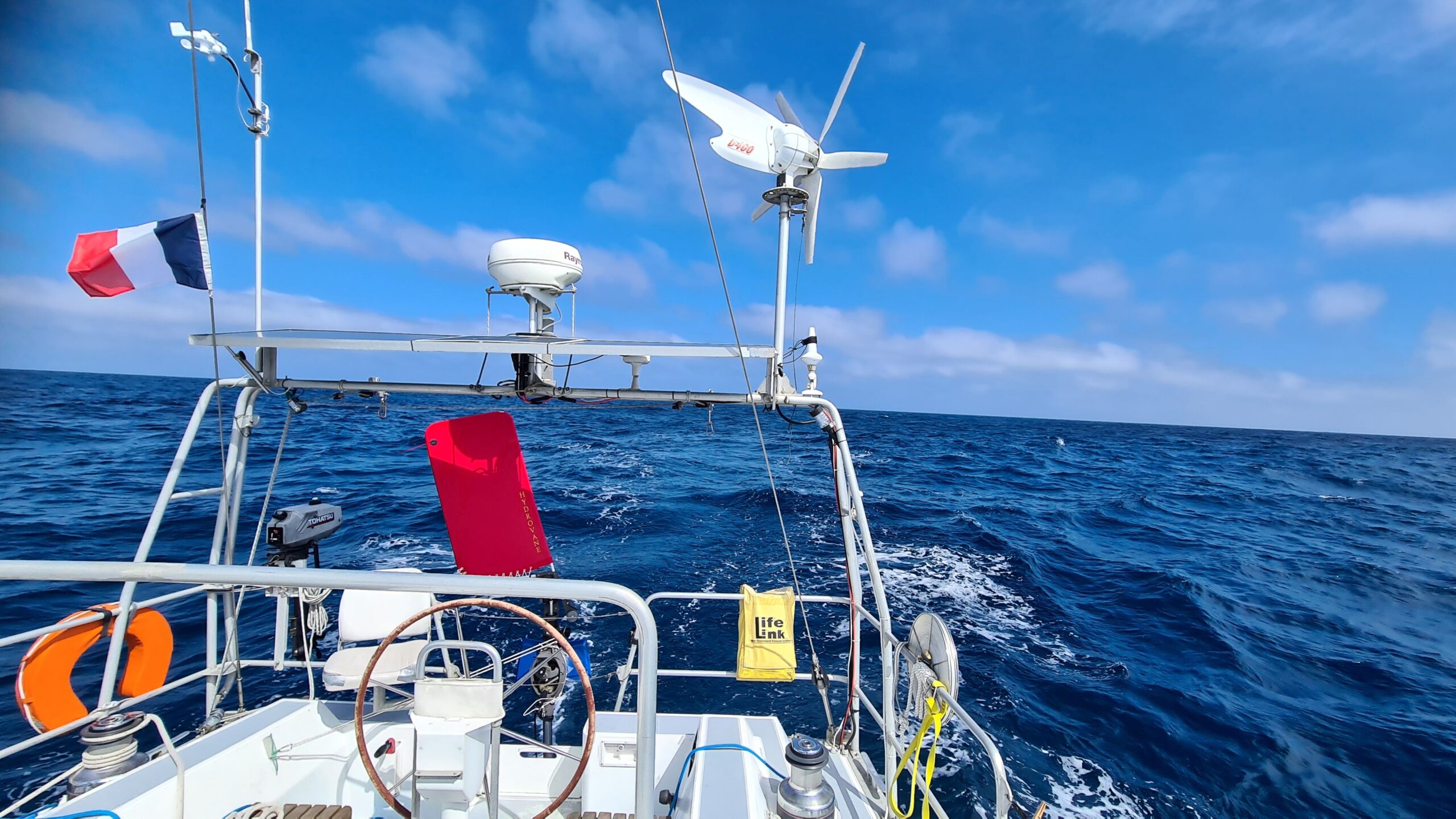
Now it really feels like the trade winds
If we’re not quite in the trades yet, it certainly feels very much like it. Rather than the excitement of discovery from our first voyage, we feel a deep emotion at sailing in these waters again at last… The sun is now properly hot, and even though we only have cold water on board (the engine hasn’t run for days), a cockpit shower is delightful. Well—until the deck shower head gives up on us, but that’s a minor failure!
The wind gradually builds, ruffling the deep blue sea with bright whitecaps. We’ve now passed the latitude of Gibraltar, and marine life suddenly becomes more abundant: dolphins, shearwaters, storm petrels (little swallows of the open ocean), numerous turtles—and even a small cuttlefish that lands straight on deck!
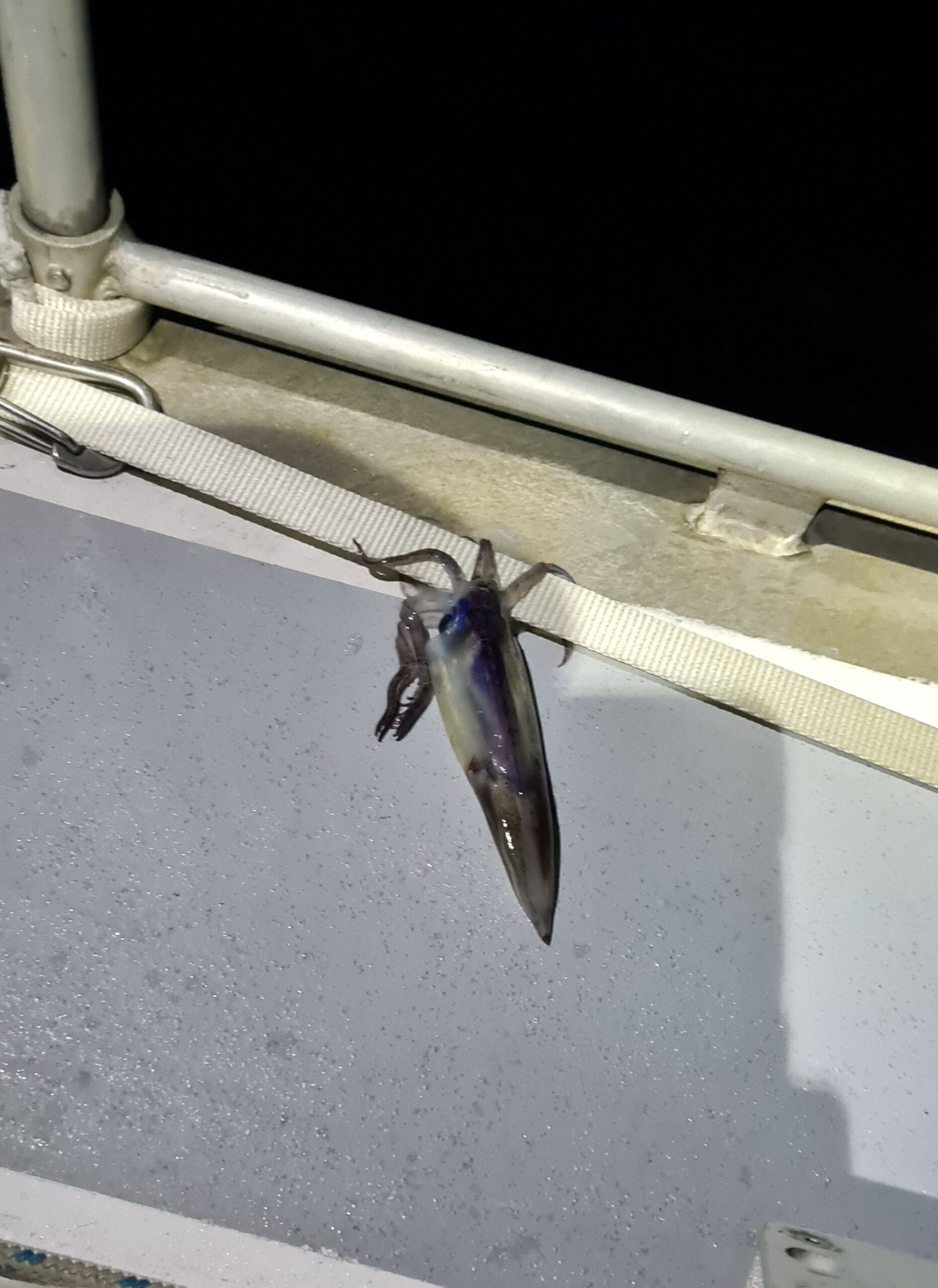
Splotch
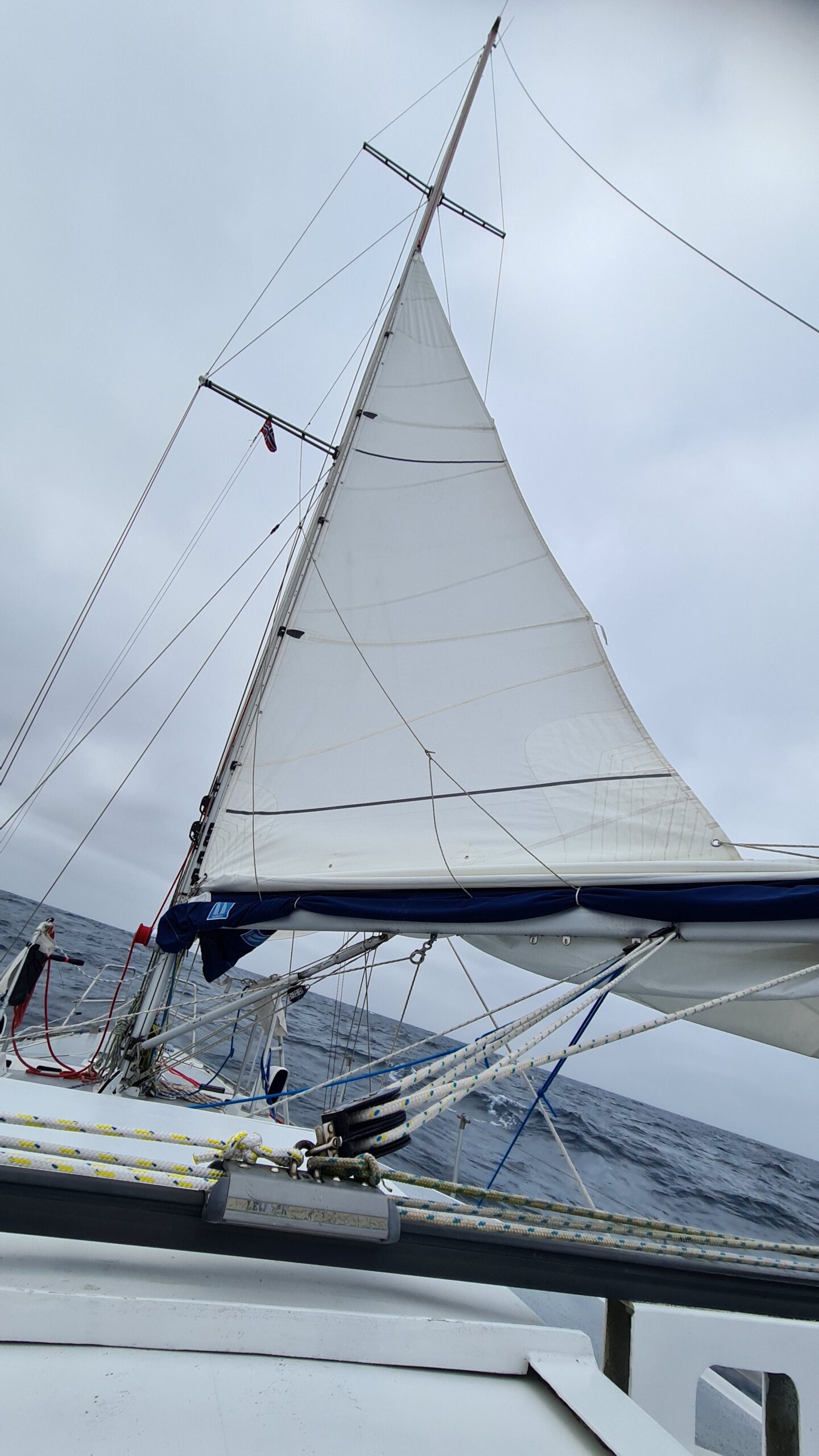
Change of tempo…
Yes, life is good aboard UtPåTur… but it won’t last. The weather is deteriorating, and the wind is due to increase overnight. We put in the first two reefs in the mainsail early, so that we’ll only need to adjust sail area by furling or unfurling the genoa, which is easier to handle. In the end, the wind rises abruptly in the middle of the night. It’s hard to measure its exact strength (our anemometer only shows apparent wind and the flow is often perturbed by other objects around), but we’re well above the forecast 20–25 knots, and we take the third and final reef—slightly surprised to find ourselves suddenly carrying so little sail… After those calm early days, it takes a few hours to get used to these new conditions…
The sea also builds—a steep, confused swell, part coming from the Mediterranean through Gibraltar, part from the Atlantic. We fully grasp it at first light, when we see walls of water rolling around us…
25 March: NE 5–7 bft, sea rough (149 NM)
The morning forecast tells us that between our position and Madeira—just over a hundred miles to the west—winds of 50 knots were recorded last night… We are very glad to have chosen an easterly route towards Lanzarote rather than aiming for Porto Santo as originally planned, and—even though we’ve had much less wind than that—we have no regrets about putting in the third reef!
Conditions remain fairly strong, generally around 20–25 knots, with a brief spike to 30 in the afternoon (properly measured this time!). We decide to keep the mainsail heavily reefed and mainly adjust sail area using the genoa, to see how this setup works for long trade wind passages. It proves quite comfortable and safe, although we would need to pole out the genoa for a true run. With this short, confused sea, we prefer sailing slightly off the wind on broad reaches…
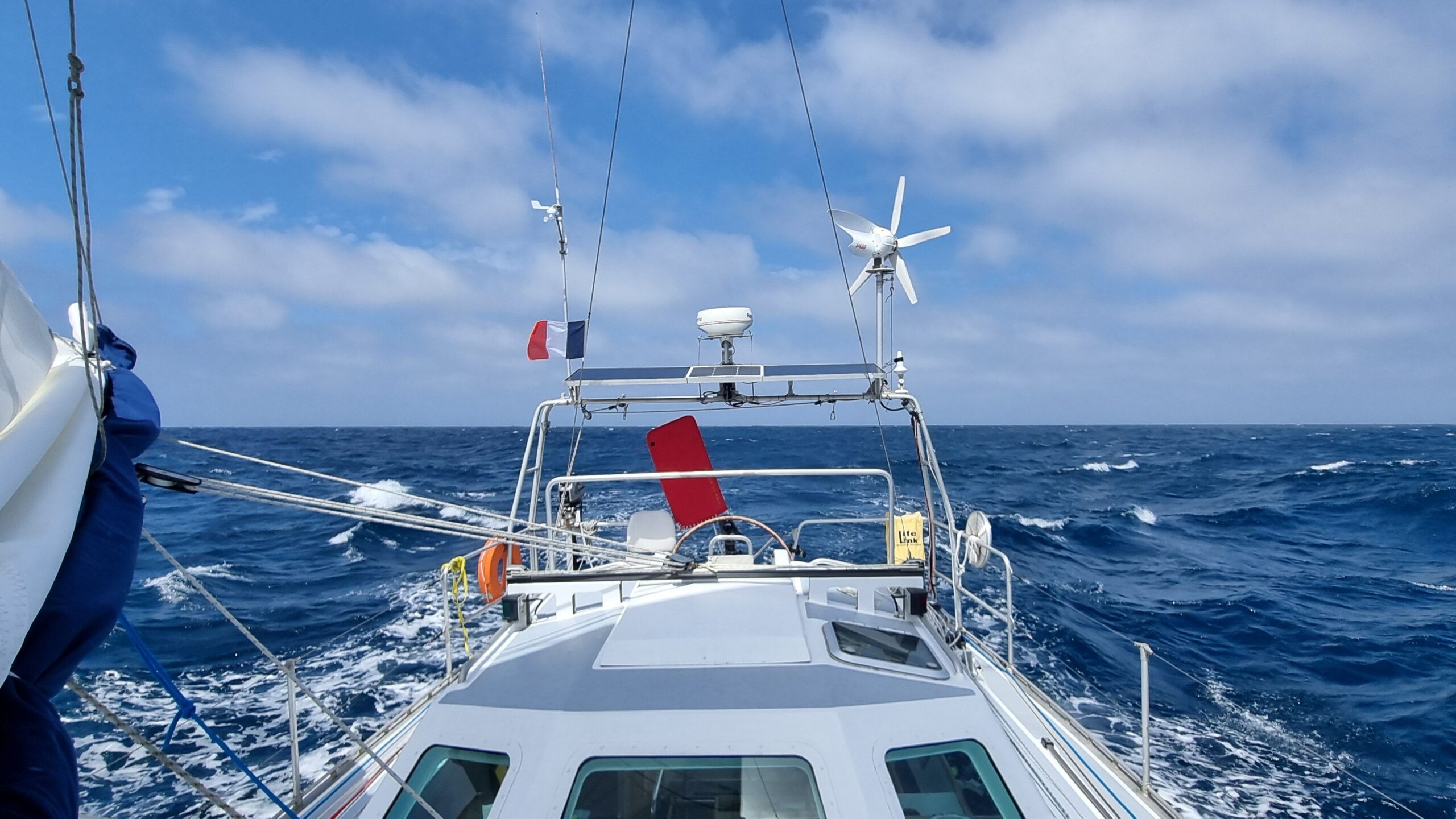
Full speed in powerful trade winds
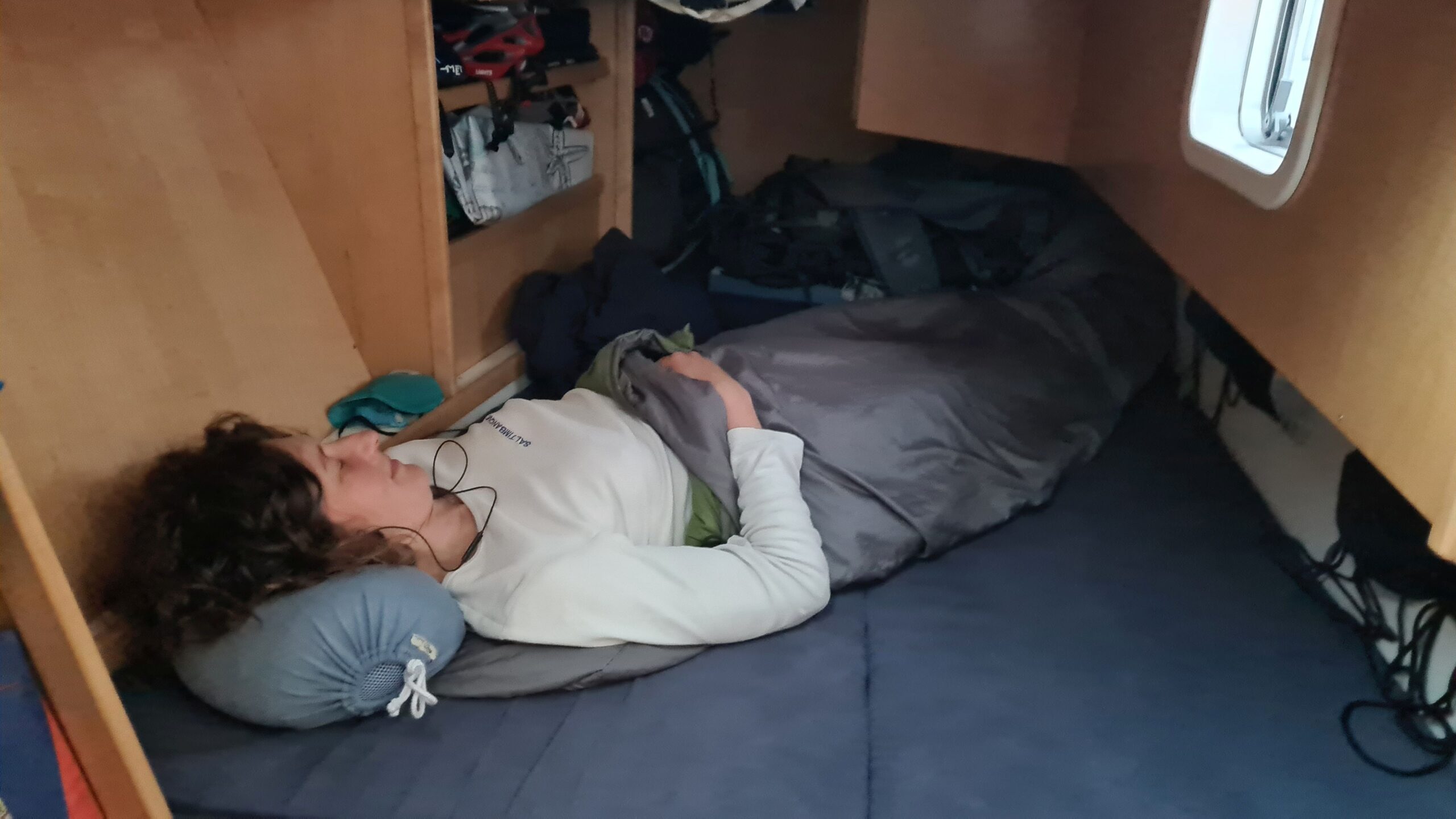
At sea we sleep in the aft cabin
UtPåTur powers along, now at a far more respectable speed since the wind has picked up, still steered flawlessly by our tireless Oscar. As for the crew, although the boat moves quite a bit in the swell, conditions are actually far more restful than our recent semi-coastal sailing in northern Europe: no land to worry about, little traffic, a much steadier wind without land effects, plenty of room to manoeuvre, and above all warm, dry weather—which saves a lot of energy! We sleep two three-hour watches at night plus a two-hour nap during the day—eight hours’ rest over 24 hours, which is perfectly acceptable. The rest of the time is shared between meals, watchkeeping, and leisure (reading, writing, podcasts, etc.).
26 March: N 5–6 bft, sea rough (117 NM)
Last day of the passage. The wind has settled around a steady 20 knots and the swell around a solid two metres—conditions that now feel like our normal existence. We barely notice the surfs down the larger waves or the whistling wind anymore. Our big blue sky has given way to plenty of cloud, and there are even a few drops of rain.
We prepare for our landfall in Lanzarote. The trades will continue blowing at 20–25 knots and are expected to strengthen further in two days. We’re longing for some rest and, somewhat regretfully, decide to skip the magnificent anchorage at La Graciosa in favour of the harbour at Arrecife. Just like Porto Santo, our memories of those legendary anchorages with Saltimbanque will remain untouched…
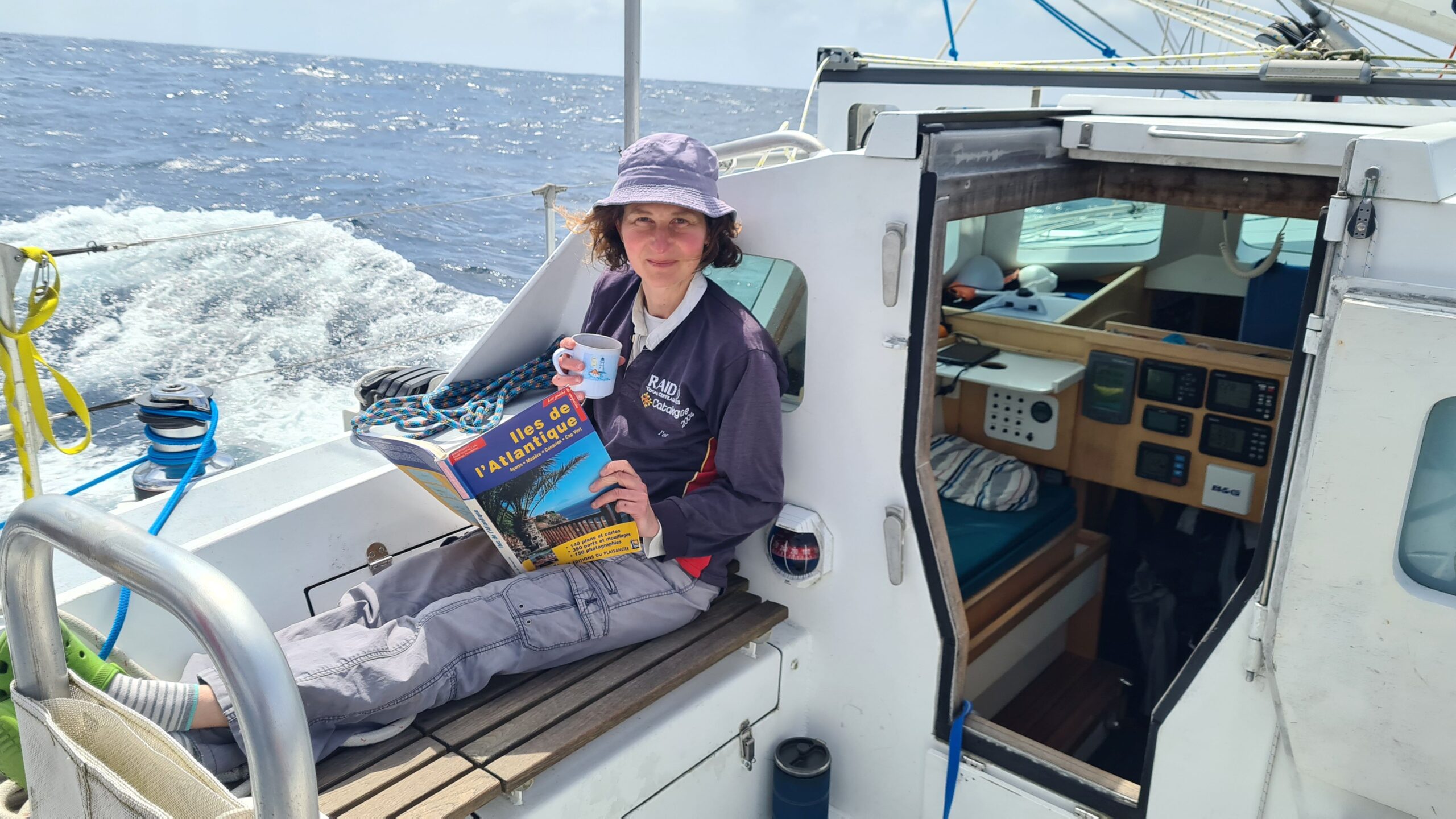
Preparing the landing
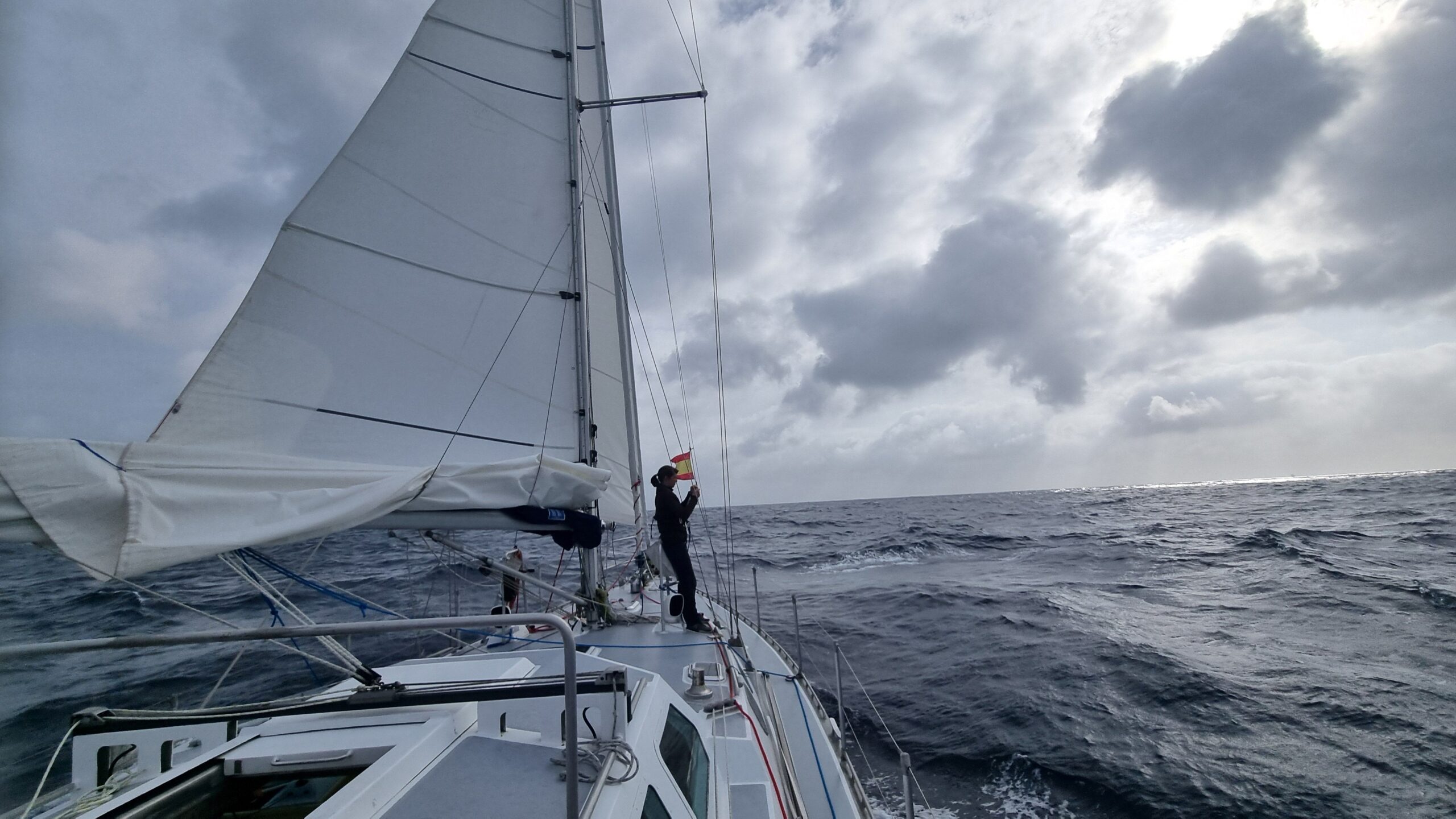
Our Canary Islands province flag, made on Saltimbanque, joins the Spanish courtesy flag.
Arrival is planned for the end of the night (early on 27 March), so there’s not much time left to enjoy these long trade wind surfs… It’s not our first crossing, and we know the final hours will feel the longest—watching for land with sleep-heavy eyes… Still, we’re pleasantly surprised at how easily we’ve slipped back into the unique rhythm of offshore passages. It must be said: downwind sailing in the sunshine is a safe bet—trade winds are the best!
Final night watches, slightly shortened… The island’s lights gradually spread across the horizon, the swell eases behind the first shoals, the wind accelerates in the island’s lee—one can smell the land… Only a few miles from the harbour do we finally shake out the third reef, then the other two in quick succession, before dropping all sail in the harbour basin.
At night, all harbours look alike. And yet, there are clear signs: here the silhouette of a palm tree, there small white square houses, and on the quay the marinero welcoming us is wearing shorts and tshirt… One berthing manoeuvre and an arrival declaration form later (yes—at 4 a.m.!), we can finally switch off the engine and say it: we’ve arrived in the Canaries!
And there we are, after a wonderful crossing, we have arrived!
 PDF