
After her magnificent crossing of the Bay of Biscay, UtPåTur arrives in Spain! The land of tapas, siestas, eucalyptus trees and warm sunshine… or at least, that’s what we’re hoping for. We explore the lovely coasts of Asturias and Galicia, on our way South, to the promised land of Summer…
The full photo album here.
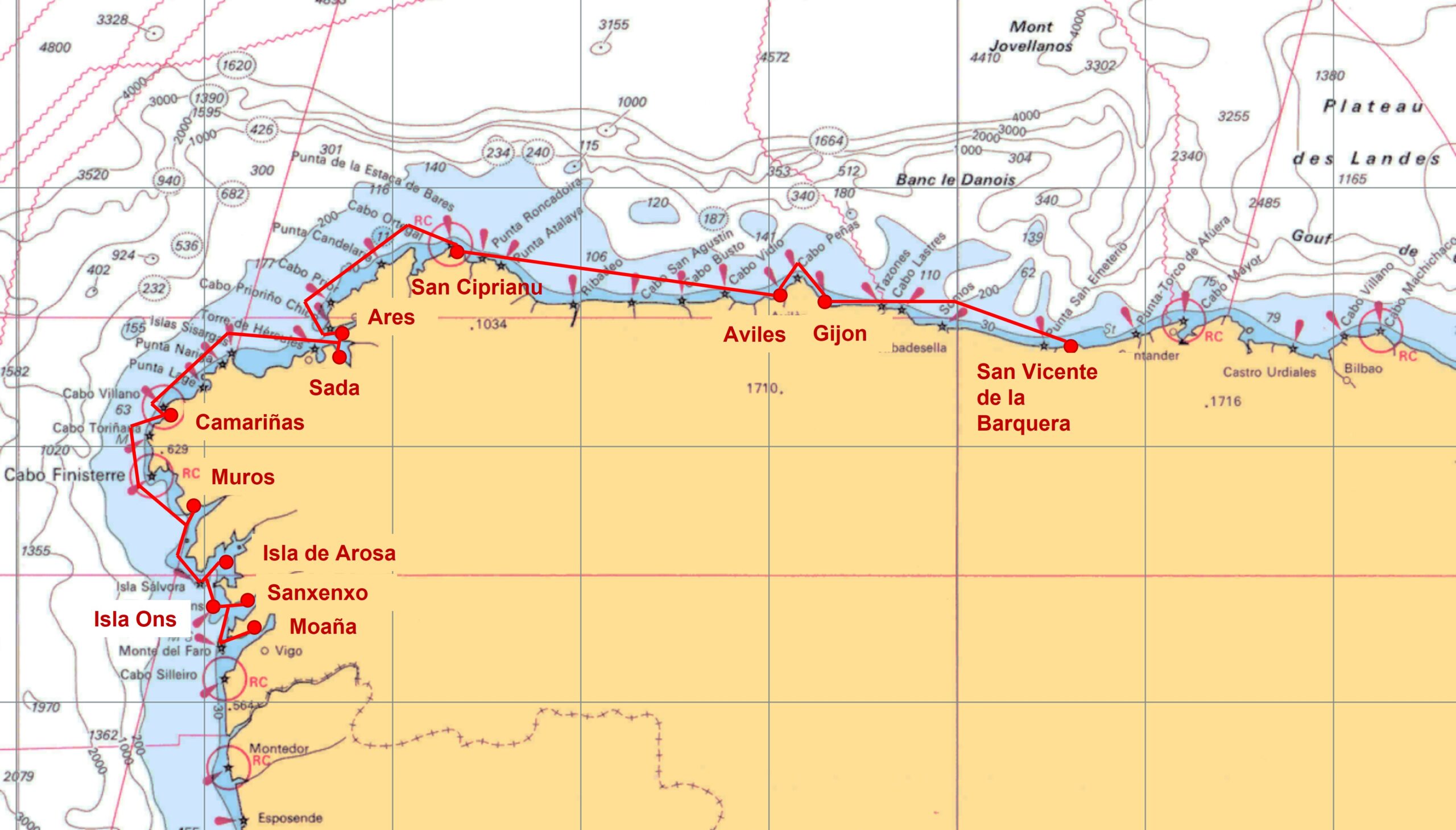
414 nautical milles sailed – 6176 NM in total on UtPåTur
February 24–25: Stopover in San Vicente de la Barquera
We left France in the depths of winter and arrive in Spain in the middle of summer. A stream of air from the Sahara sends the thermometers soaring—we see up to 27°C in the afternoon! But that’s normal, right? It’s Spain, the South, the land of siestas and tapas—always sunny and warm ;o) So out come the T-shirts and shorts from the back of the locker, ready to enjoy the heatwave at our peaceful anchorage.
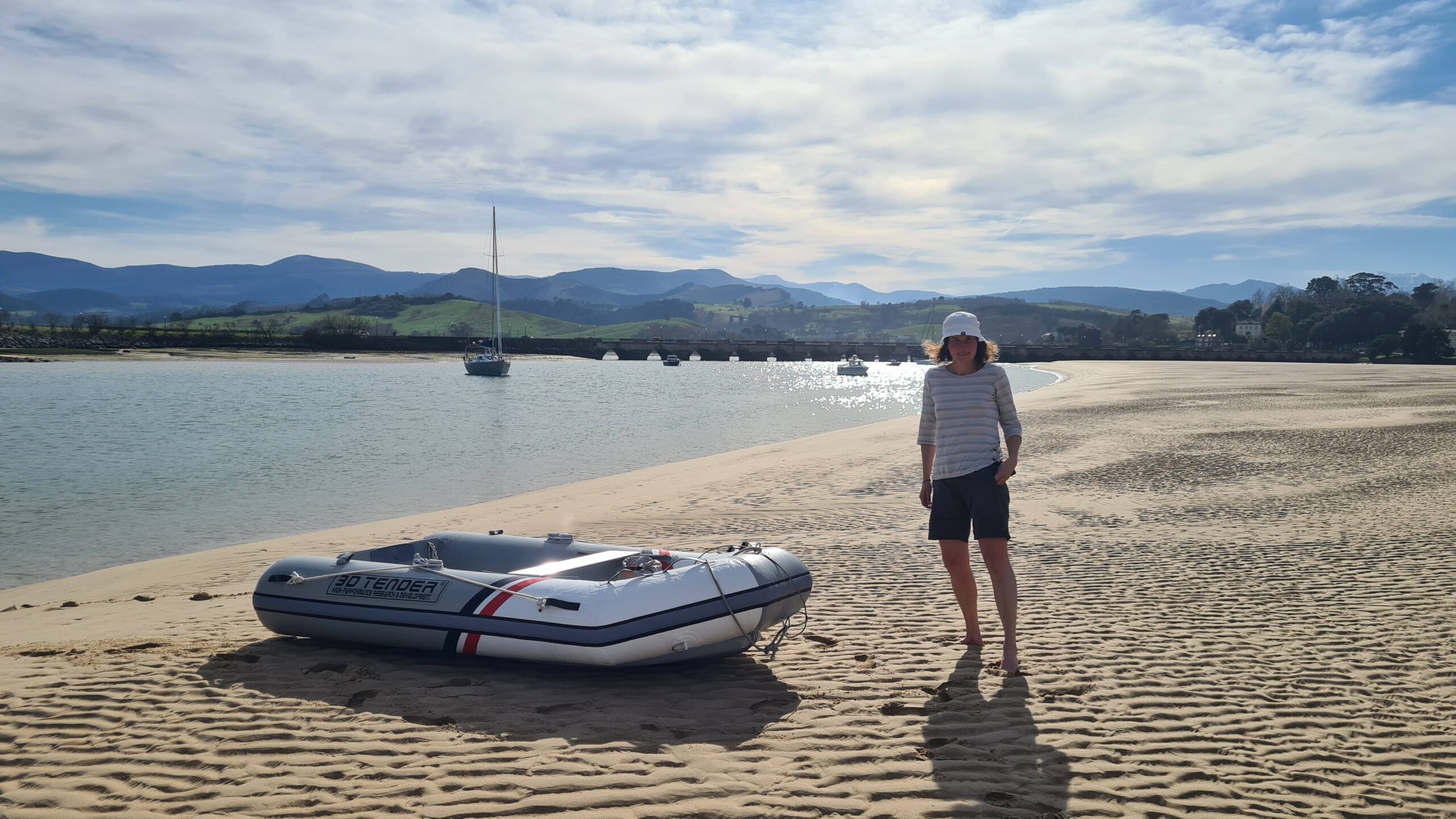
Welcome to Spain!
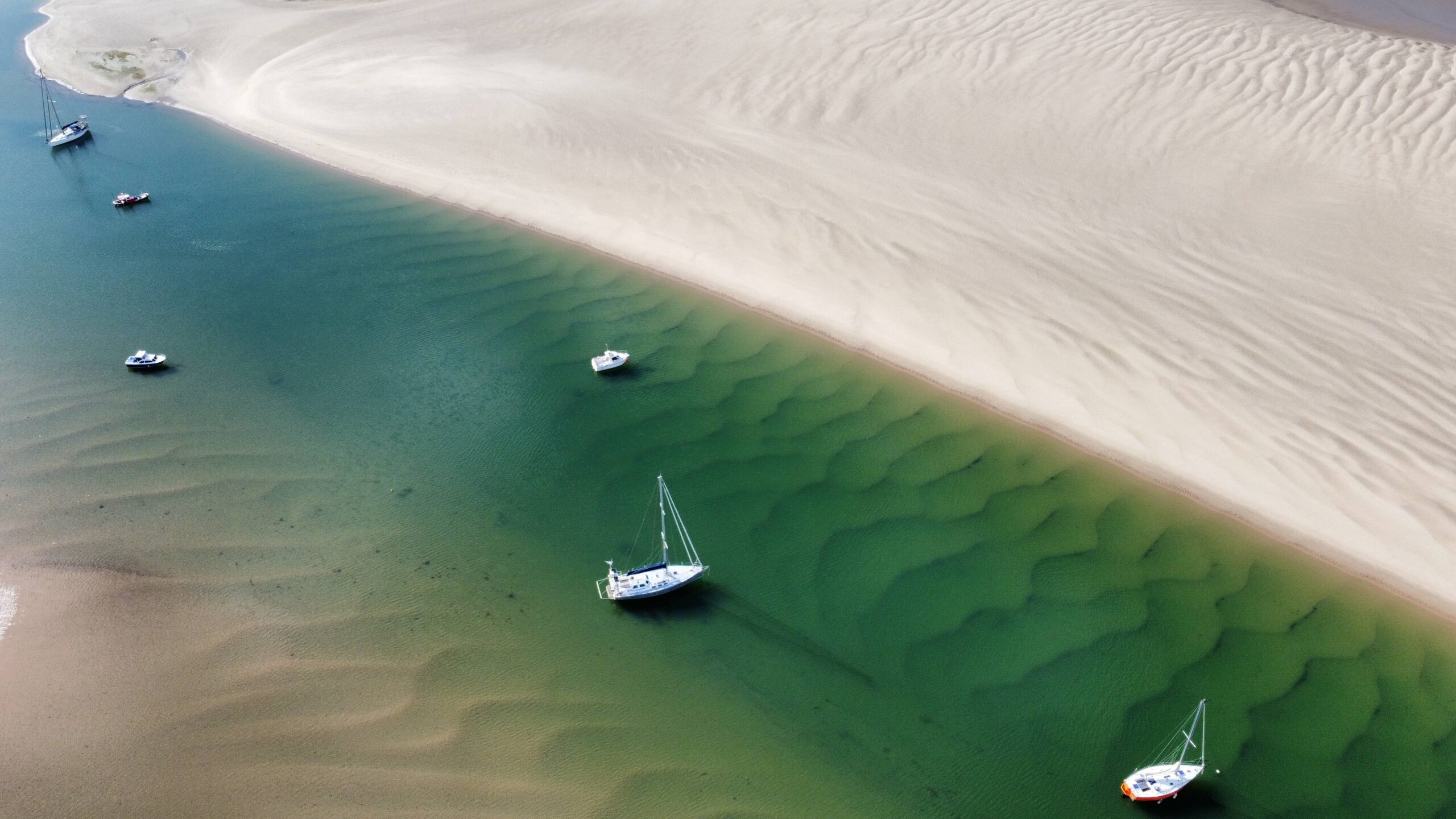
The anchorage isn’t very wide, glad we have a centreboarder!
But we are in Cantabria, a mountainous region of Spain. And if you’ve been following our adventures, you know that downwind of mountains you get… indeed, katabatic gusts! Barely half an hour after anchoring, despite a forecast of complete calm, a squall appears out of nowhere… 15 knots, 20 knots, 25 knots—up to 27 knots of southerly wind now sweeping across the water! We veer more chain despite the tight anchorage, even if it means risking to settle onto the surrounding sandbanks at low tide. The wind eventually drops fairly quickly—a sort of “welcome to the anchorage” gust—but it doesn’t inspire much confidence about leaving the boat unattended…
So, we cautiously begin our explorations with the nearby sandbank. At low tide, the whole bay turns into a desert, except for the river channel where boats remain—almost—afloat. A very beautiful beach!
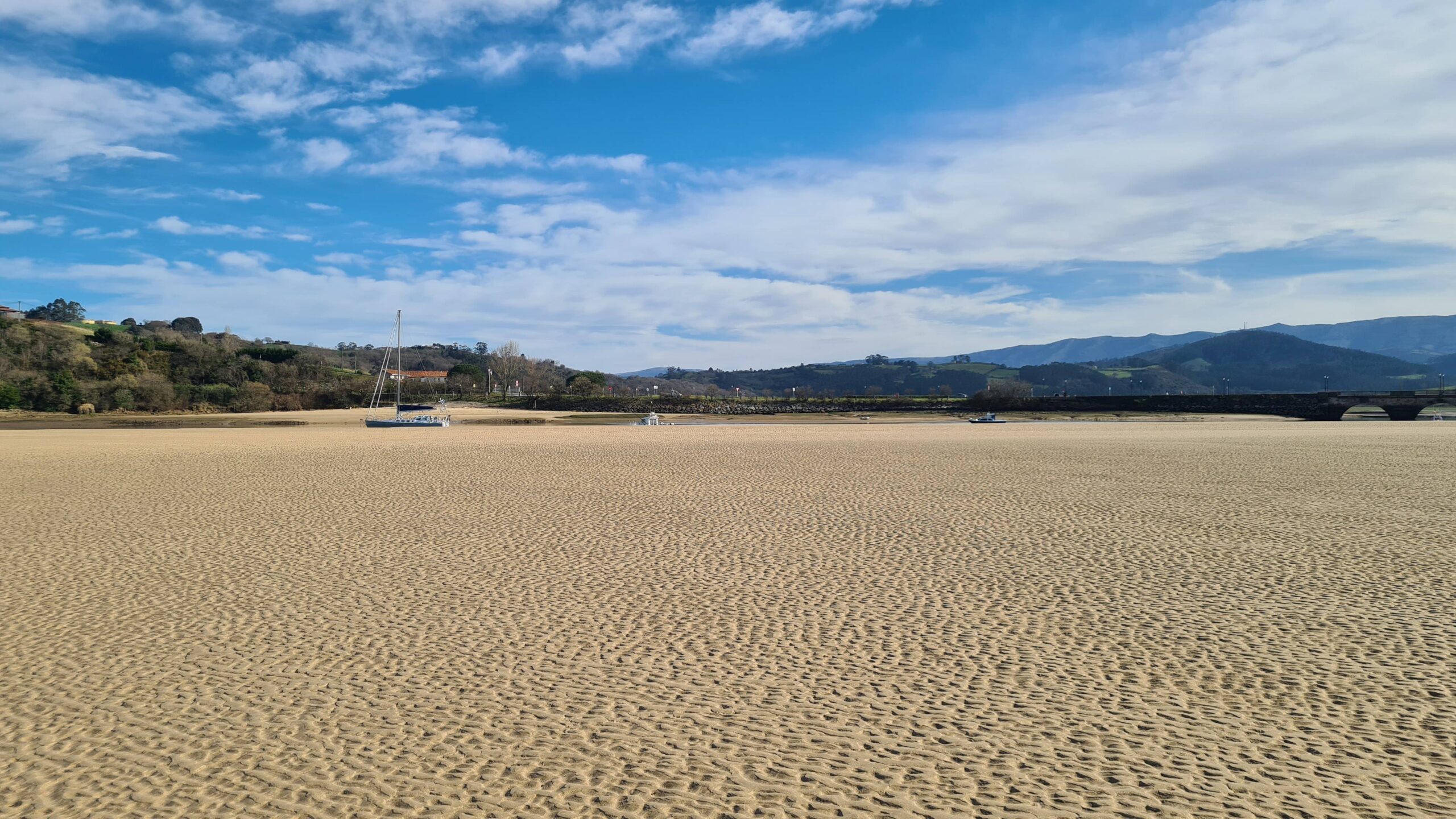
UtPåTur in the desert!
The wind seems done playing tricks, so we venture a bit further to explore the town. We’ve got a wild craving for tapas (octopus, to be precise) to celebrate our arrival! The little town is charming; it had its golden age in the 15th and 16th centuries as a hub for Atlantic fishing and trade with England and the Mediterranean. It is organized around its two rivers, offering countless viewpoints over small harbours, each prettier than the last.
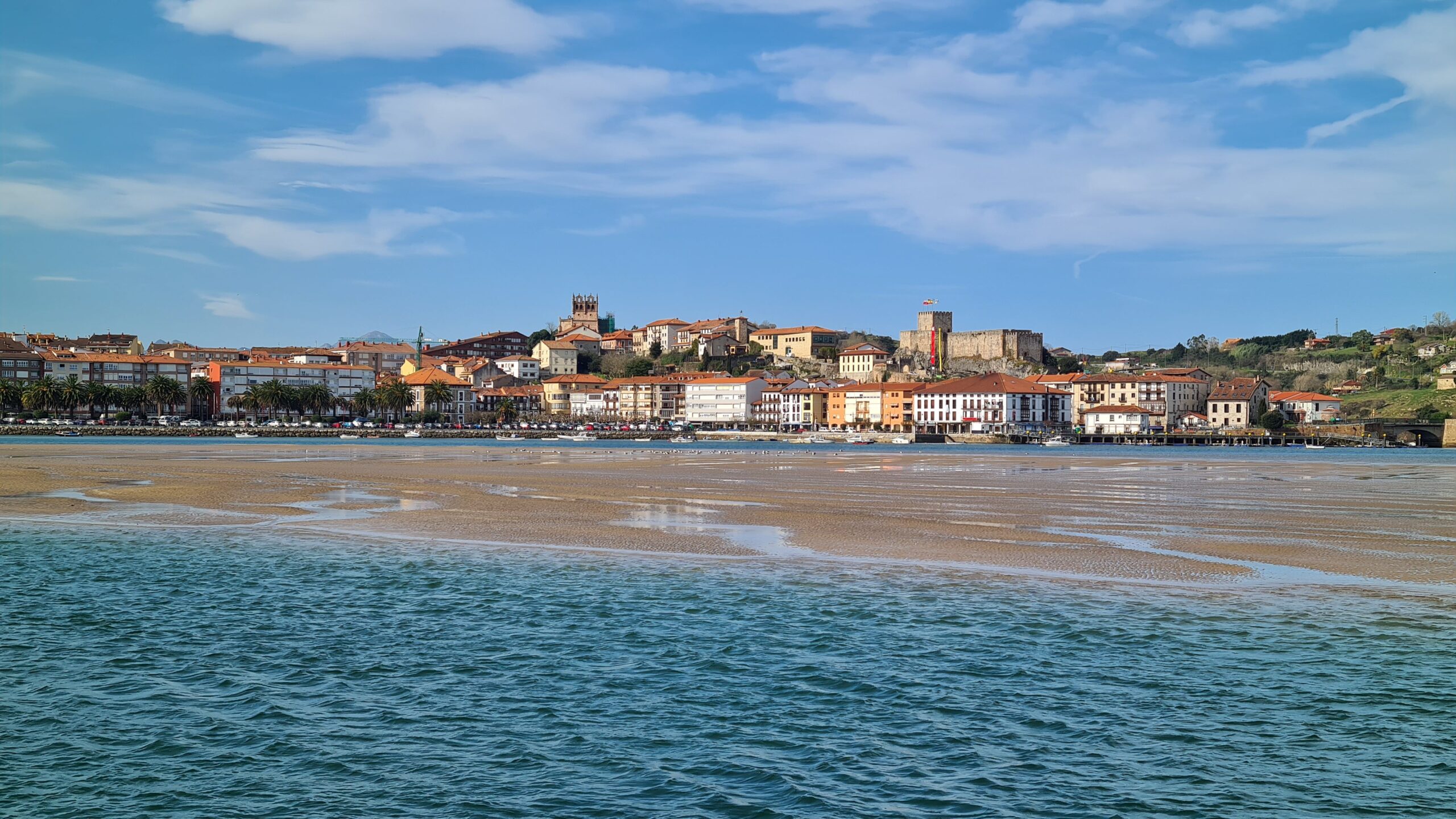
View of the village from the anchorage, at mid-tide
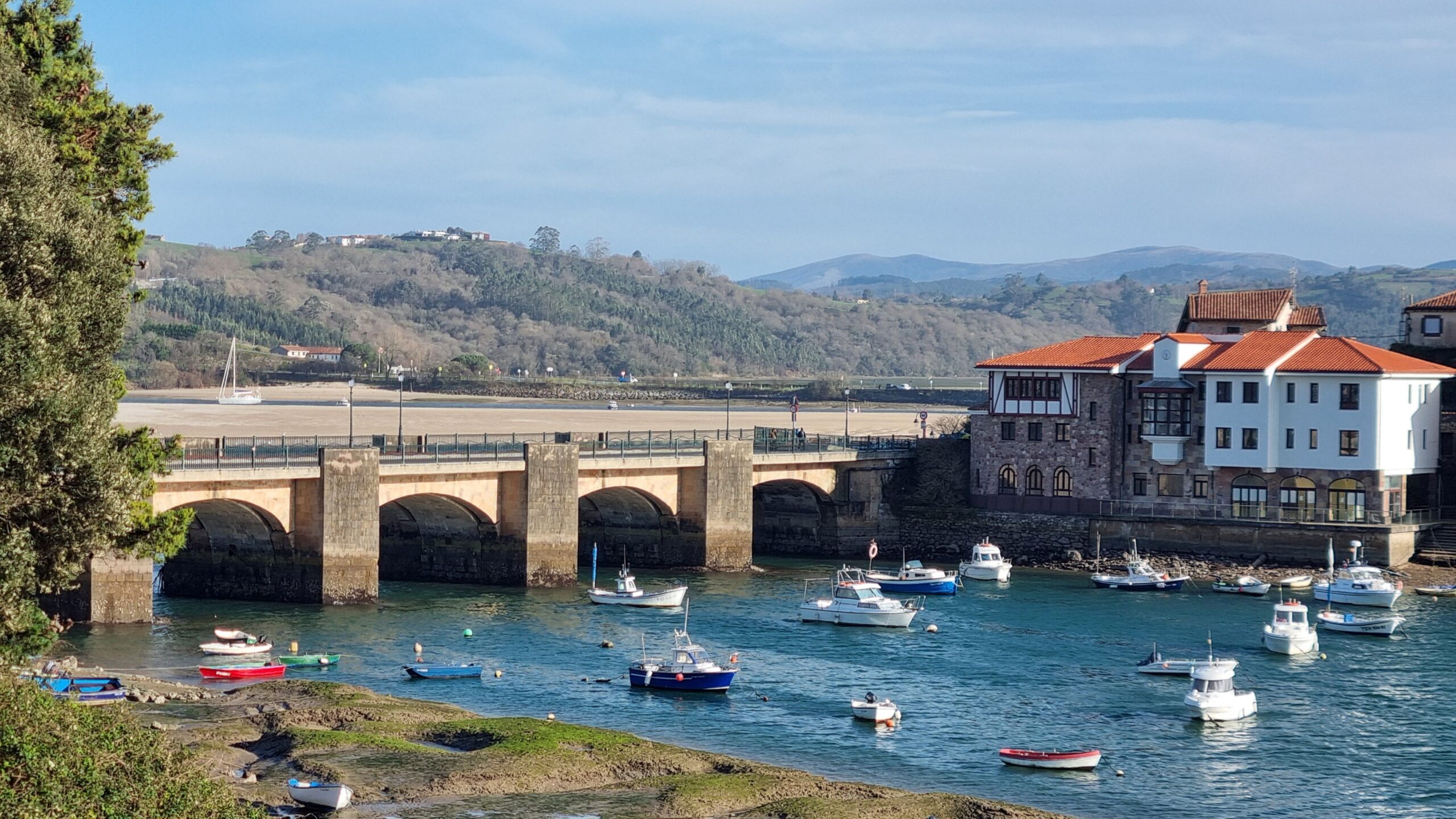
UtPåTur seems to be sailing on the bridge!
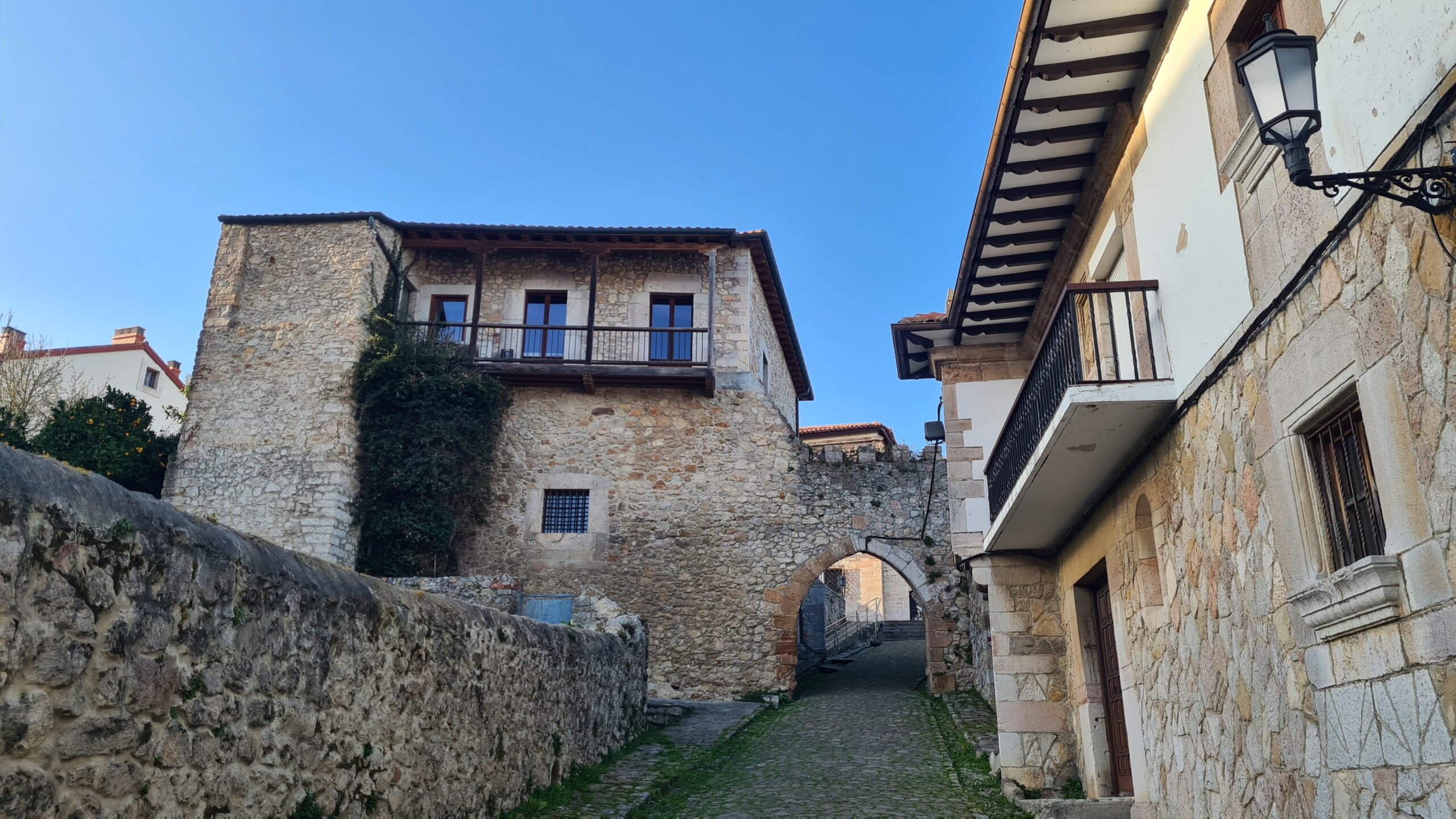
The old street of San Vicente
One street conveniently gathers all the historic buildings: the old citadel, the equally old church (13th century), and a few ancient houses.
The other streets are more anonymous but we marvel at all this exoticism: the colours, the smells, the vegetation (like those tall palm trees in the square)—everything feels so different! And yet… everything is so closed! This tourist town is busier getting ready for the season than welcoming visitors… No one in the streets except workers renovating sidewalks and painting hotels, the pontoons in the small harbour are winterised, cafés are closed…
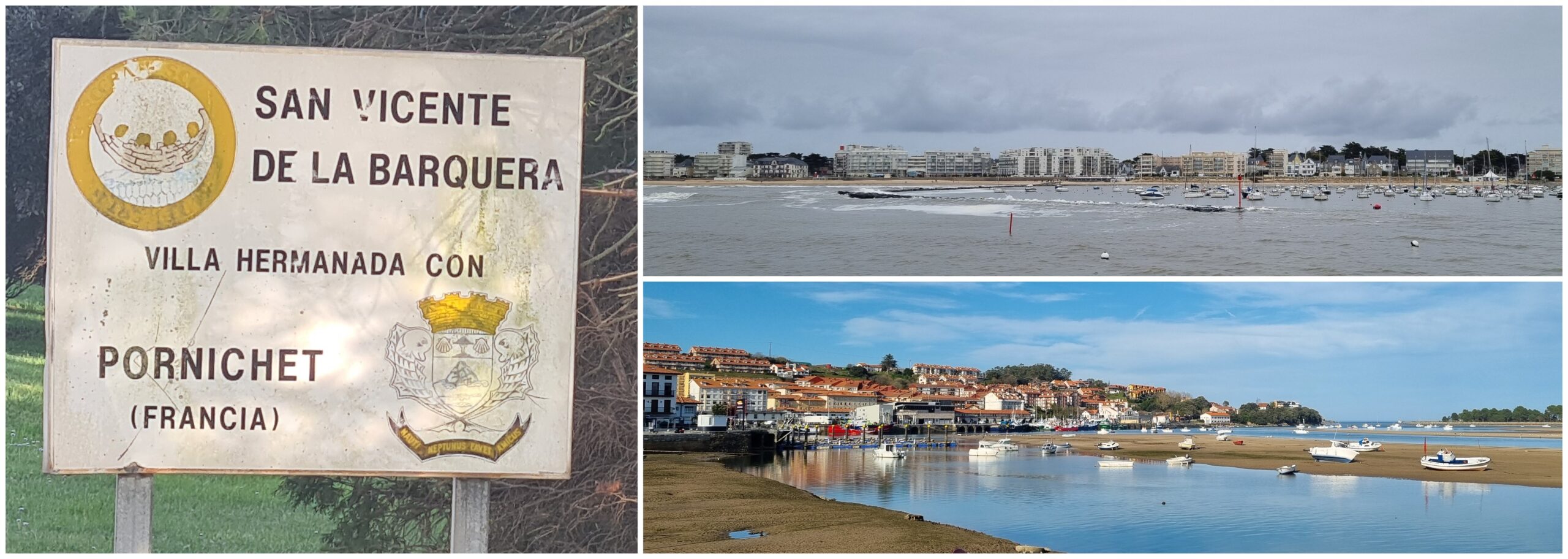
And San Vicente is twin city to … Pornichet ! What a contrast!
The wind has picked up again—this time from the west, go figure… Our dreams of tapas are blown away in fresh 25-knot gusts, against which we struggle to paddle back aboard. In the end, celebrating with drinks onboard works just as well!
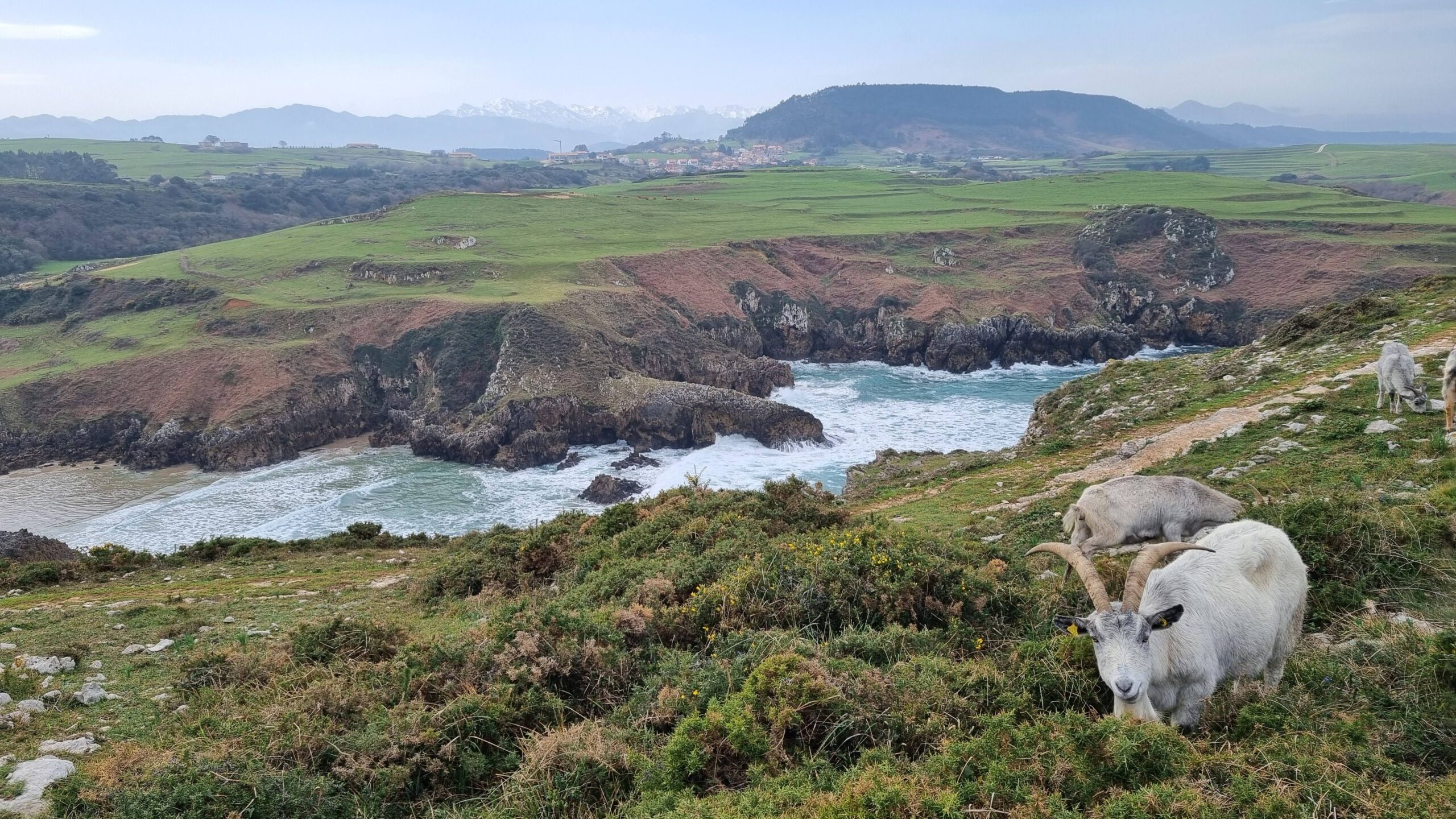
Walking the Cantabrian coast
The next day is calmer, and we feel more relaxed heading ashore. Our steps take us along the coastal path for a superb walk along the cliffs, always with mountain peaks in the background—we never tire of this view!
Back aboard at low tide, we find UtPåTur almost brushing the riverbanks. Very glad our flat-bottomed boat allowed us to consider this stop—it will remain a memorable one!
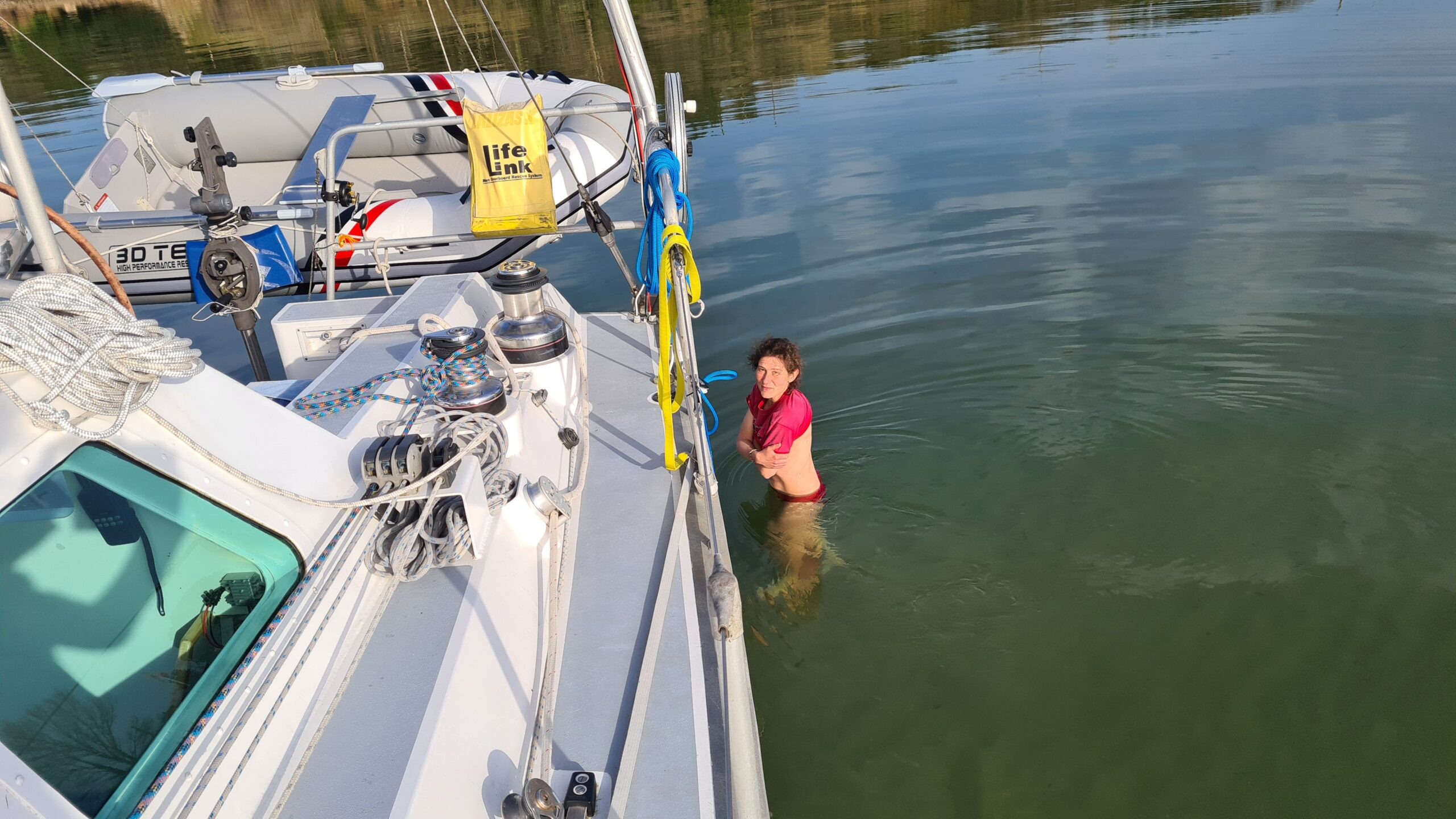
And yet she’s still floating… it takes very little water for us to float…
February 26–28: San Vicente – Gijón (60 NM)
After weeks of lows and storms, a high-pressure system finally builds over the region, bringing drier and calmer conditions. Too calm… We’re making way under engine alone. That said, the alternative would be beating into headwinds and a heavy swell (two to four meters) that never seems to subside—an echo of storms still raging offshore. It may be warm here, but winter isn’t that far away… So, we deal with it and call on Musclor, our trusty engine.
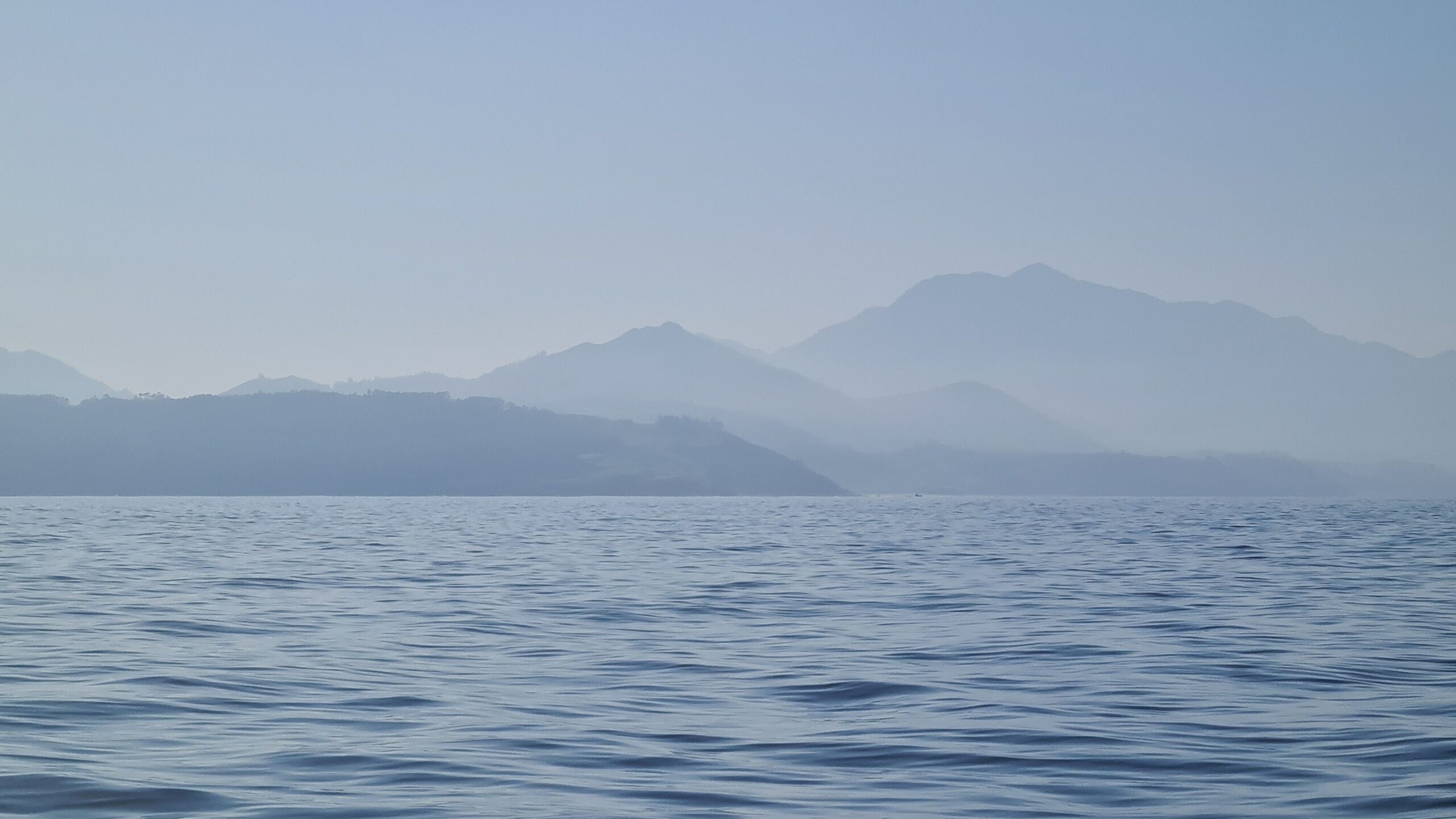
The Asturian coast is less welcoming than it seems in the winter…
The Cantabrian and Asturian coasts offer very few shelters. The heavy swell makes anchoring impossible except in rivers—but you still have to get into them: that same swell, meeting current and rising seabed creates dangerous bars, and not all rias are accessible. That leaves harbours, some of which are under maintenance… with all that, we end up in Gijón after ten hours of teeth-grinding motoring…
In Gijón, we skip the downtown harbour and head to Marina Yates, in the middle of the coal port. It’s cheaper, and more importantly Camille’s uncle left his boat there for the winter. It gives us the chance to visit the proud An Draezhenn, an Atlante Camille sailed on a few times in her childhood. Next to UtPåTur, she looks so small!! We also have a lovely meeting with Michel, who lives aboard in the harbour and shares his experience of the region.
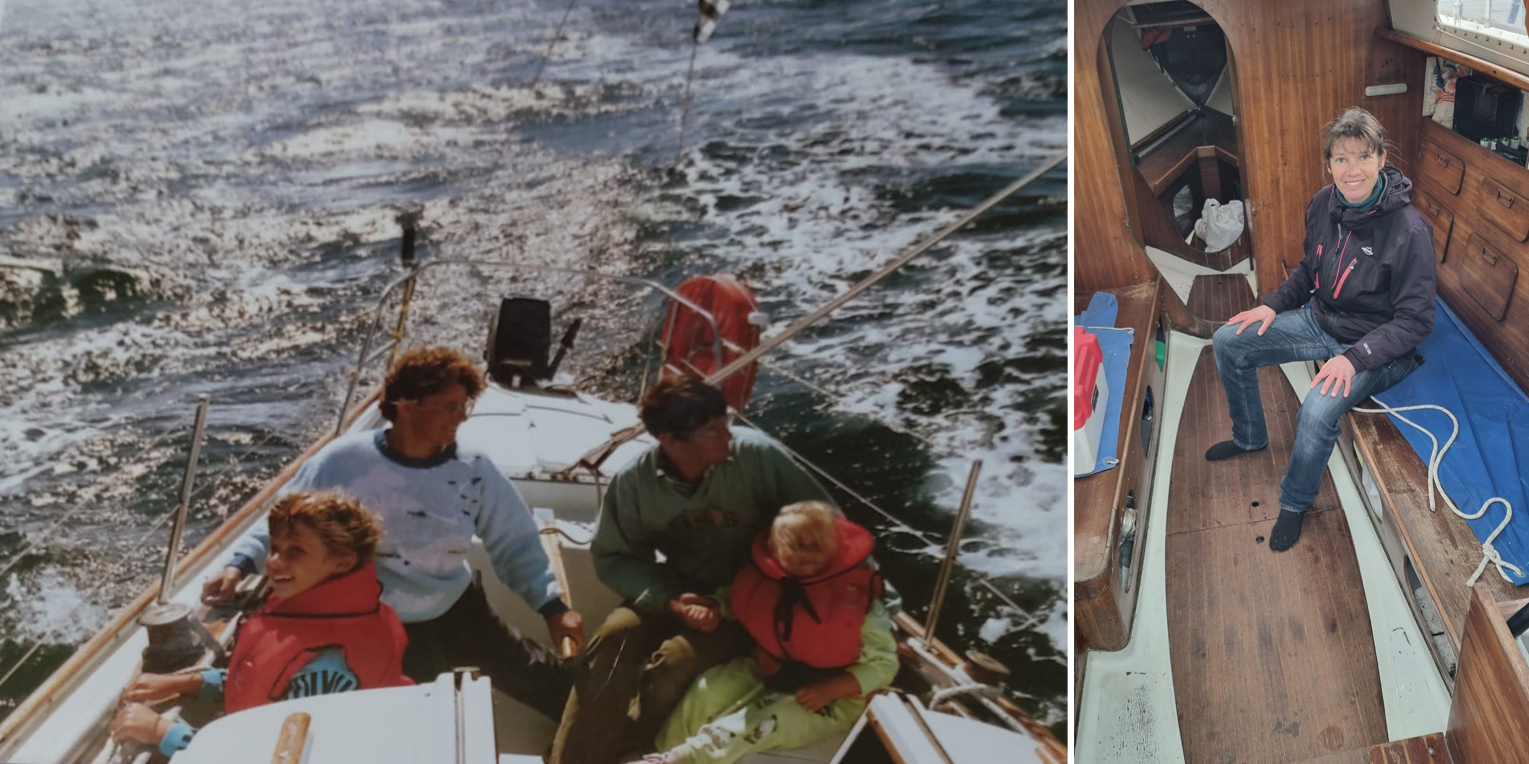
The boat, however, hasn’t grown…
The city centre is easily reachable by bike, and this time there’s a bit of life. After a cultural morning, visiting the art nouveau city centre and the ruins of the Roman baths—we finally satisfy our craving for pulpo! To quench our thirst, we head to the cider houses found on every street corner. Asturias, a Celtic land, proudly produces cider. Very different from Breton cider, it is quite bitter and has no bubbles. You have to pour it from high above to aerate it and create a bit of froth in the glass… while trying not to wash the pavement in the process! The setting is delightful, sitting on a bench in the sun—we’re not the only ones already imagining it’s summer.
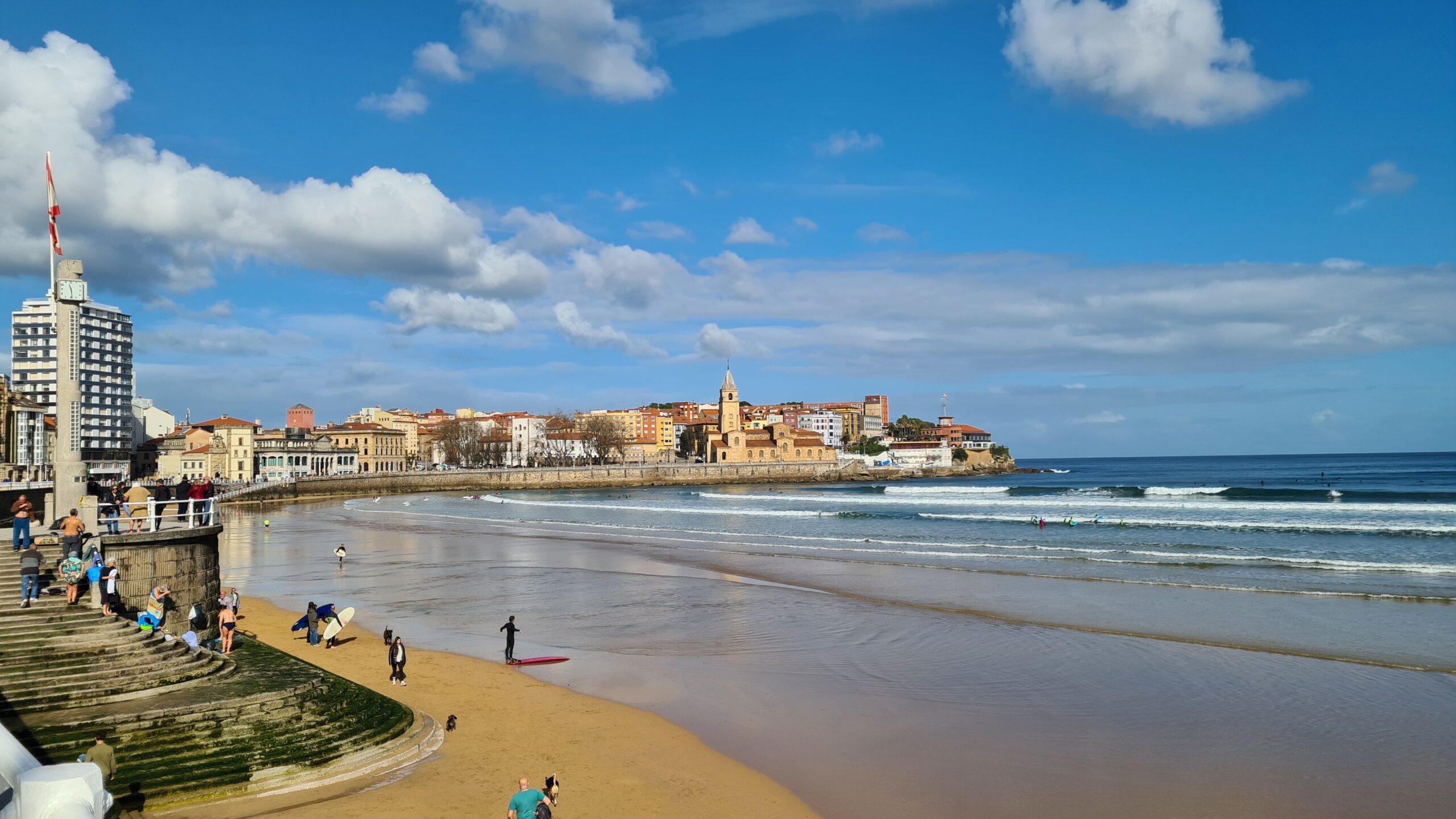
Gijon’s beach full of surfers
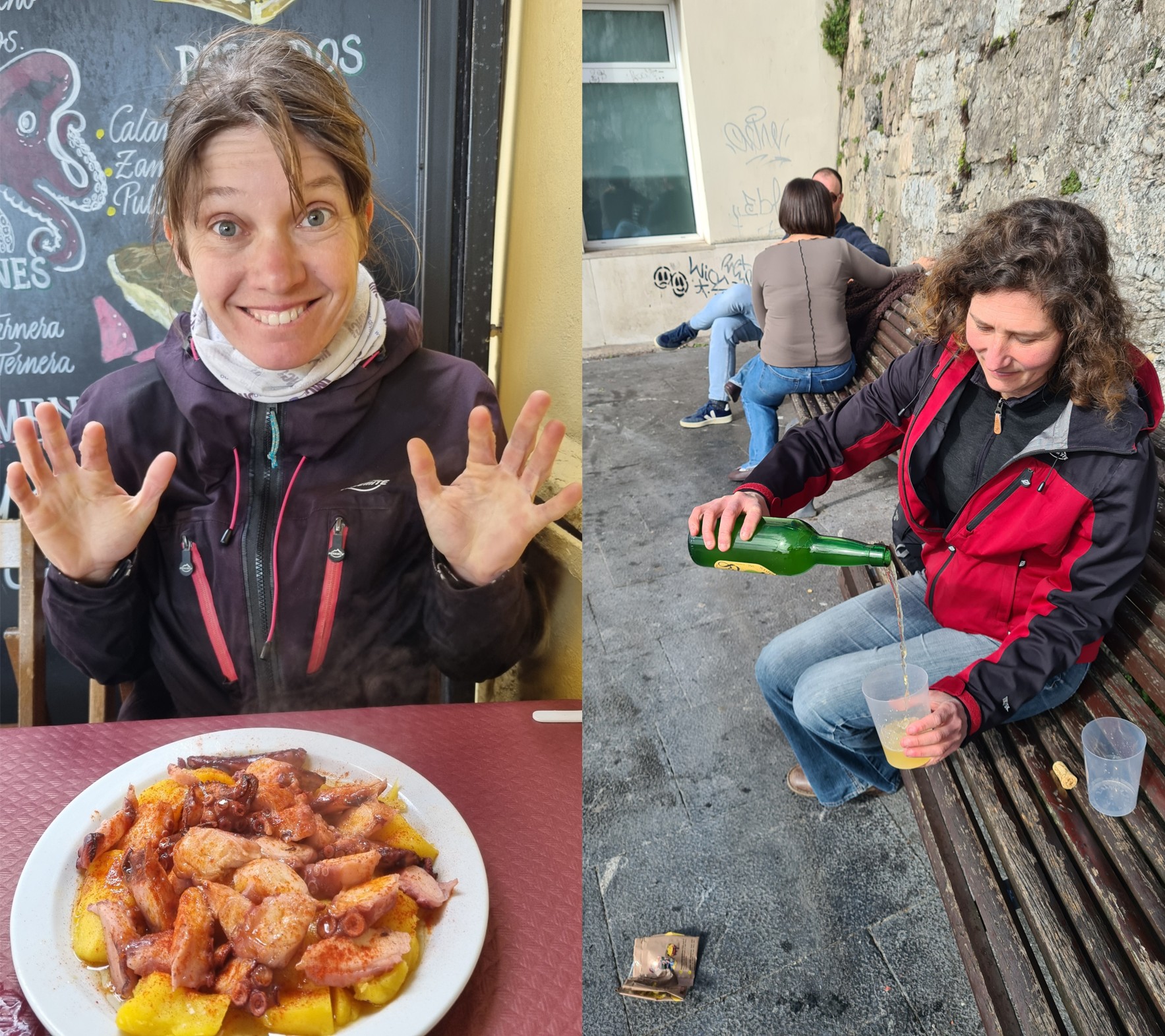
Local delicacies
Besides sightseeing, Gijón is a great logistical stop, and we leave with full lockers and clean laundry!
March 1: Gijón – Avilés (23 NM)
A short leg today to round Cabo de Peñas—Cape of Sorrows—which we pass without difficulty in very calm conditions before heading into the Avilés ria, largely industrial but accessible even in heavy swell.
It’s calm, the dolphins are escorting us in slow motion!
Once moored in the small marina, we head into town. What a lovely surprise! Behind the rows of cranes and container terminals, the city centre reveals medieval streets opening onto beautiful sunlit squares. The architecture is typical: arcaded sidewalks and balconies above, with blooming magnolias adding a touch of colour. We are delighted by the visit!
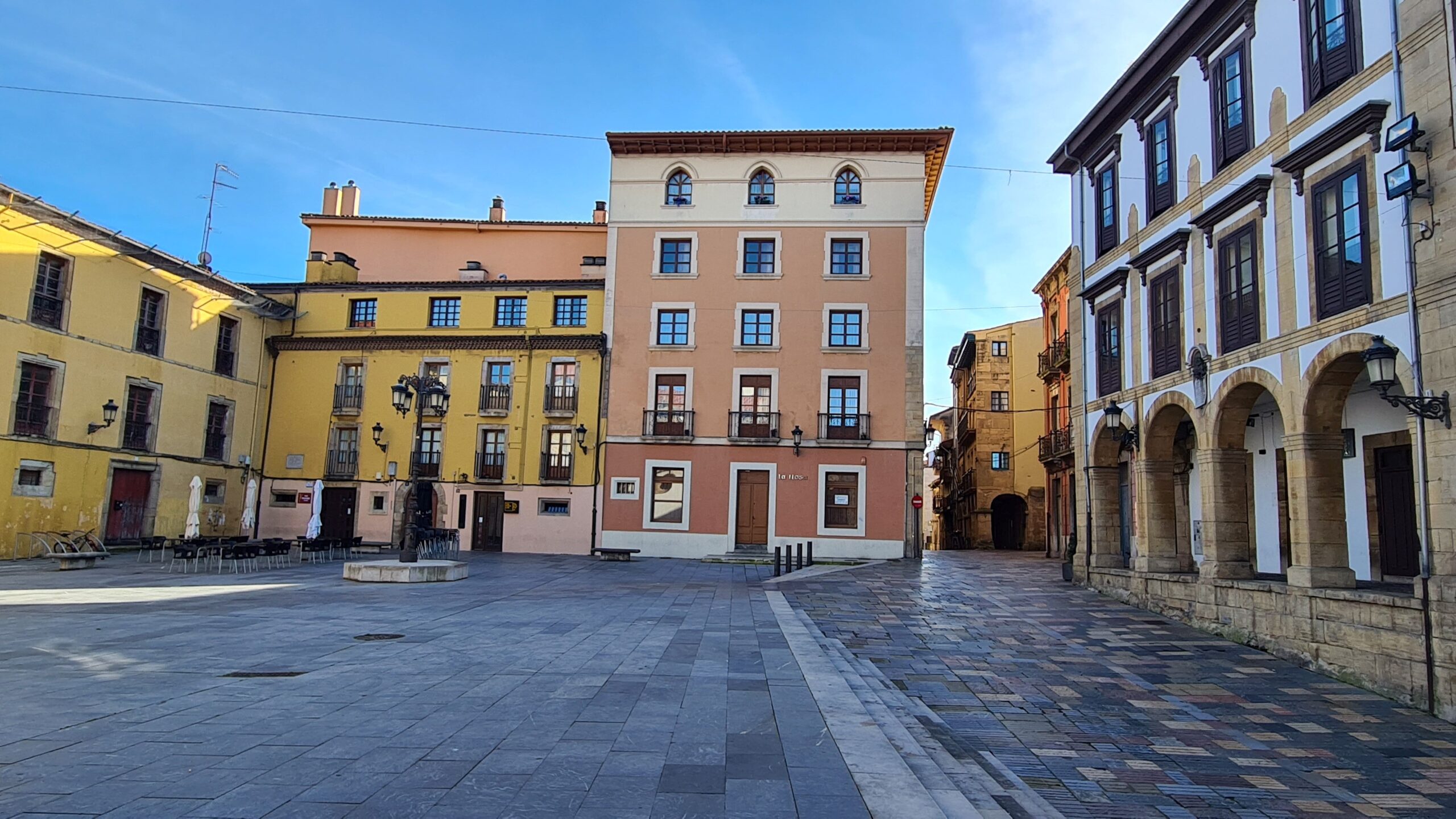
Avilés on a beautiful Sunday afternoon (yes, but 4:30 pm is siesta time, come back at 6 pm!)
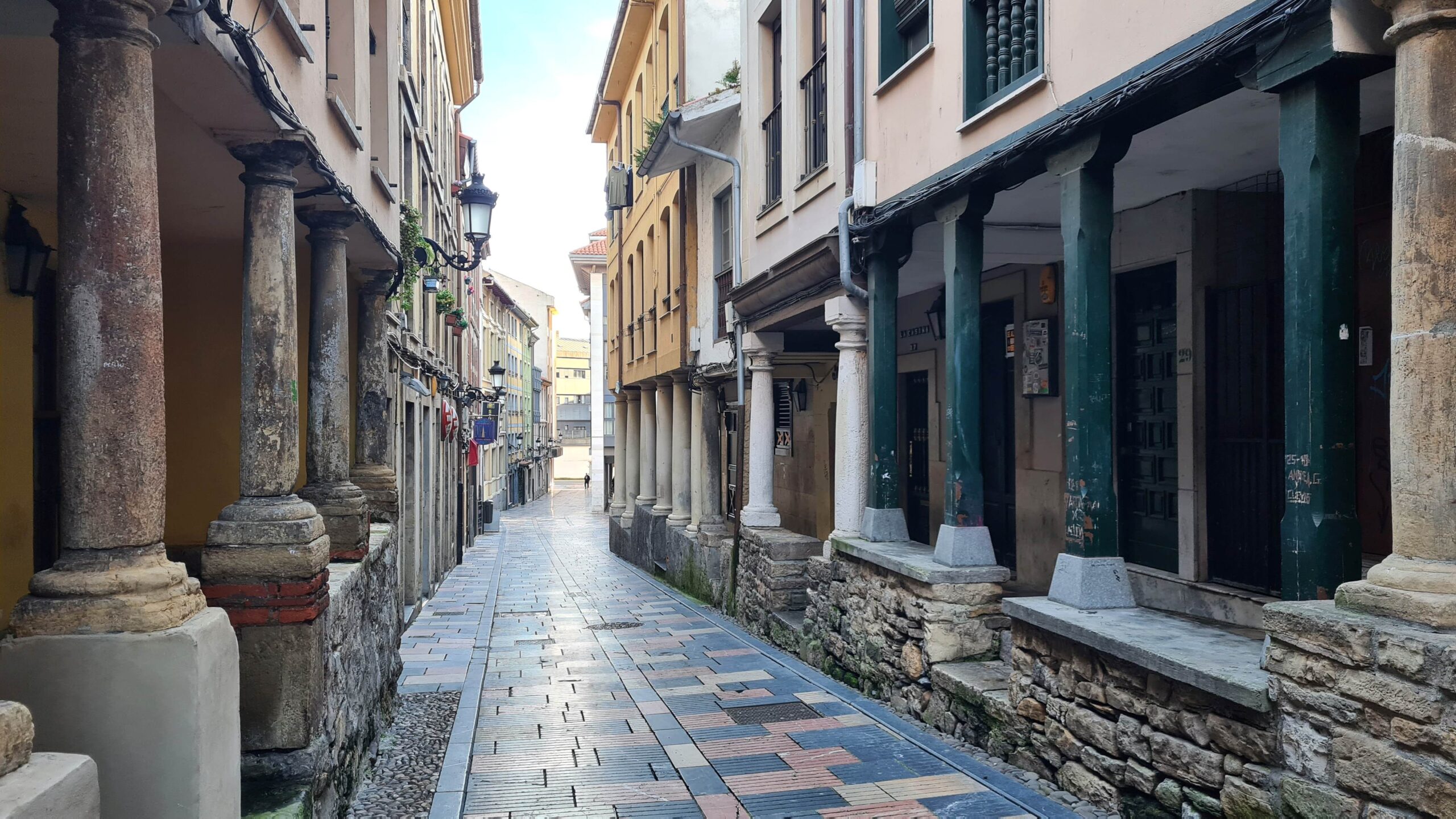
The narrow streets of the working-class neighborhood and their shaded sidewalks
March 2–5: Avilés – Sada (142 NM)
High-pressure conditions persist for a few more days before a new low arrives and we’d really like to round Cape Ortegal before then. But the route is long, the wind is light, the swell is strong, and we’re a bit concerned about the engine after finding a drop of coolant in the bilge… So, we pore over weather files from every angle, trying to catch elusive light airs to maximize sailing time… with mixed success…
A first leg takes us (75% motoring) to the bay of San Ciprián. The site hosts a large aluminium plant and breakwaters have been built so bulk carriers can dock in all conditions. Behind these massive walls lies a small fishing harbour and a magnificent white sand beach, where it’s easy to anchor, sheltered from the swell.
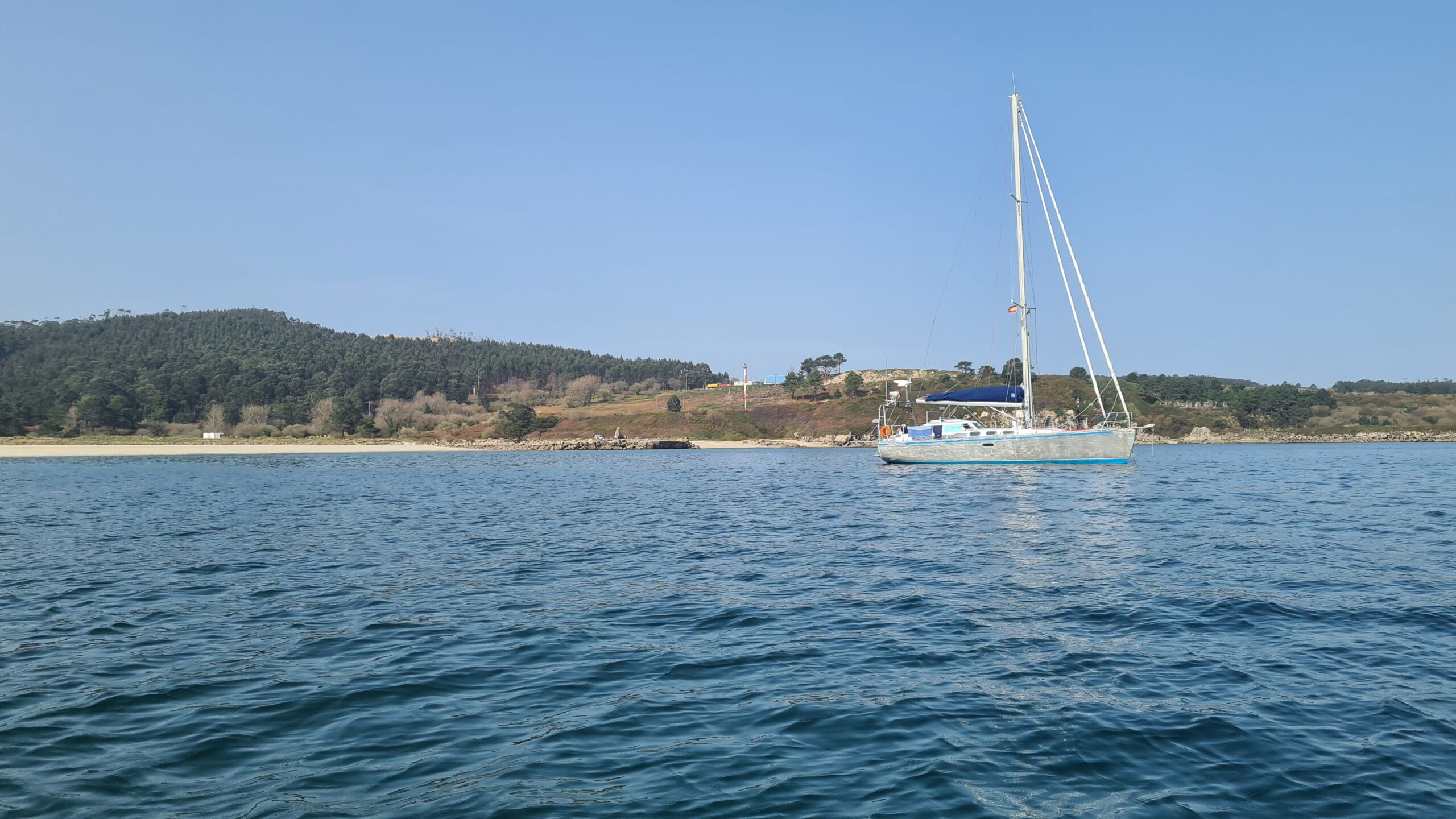
A very convenient and not-so-ugly anchorage behind the breakwaters of the industrial complex…
And swell there is! So much so that Spanish weather services issue a warning for heavy seas (over 5 meters…). Forced to wait 24 hours at anchor under the sun for things to calm down—it’s a hard life :o)
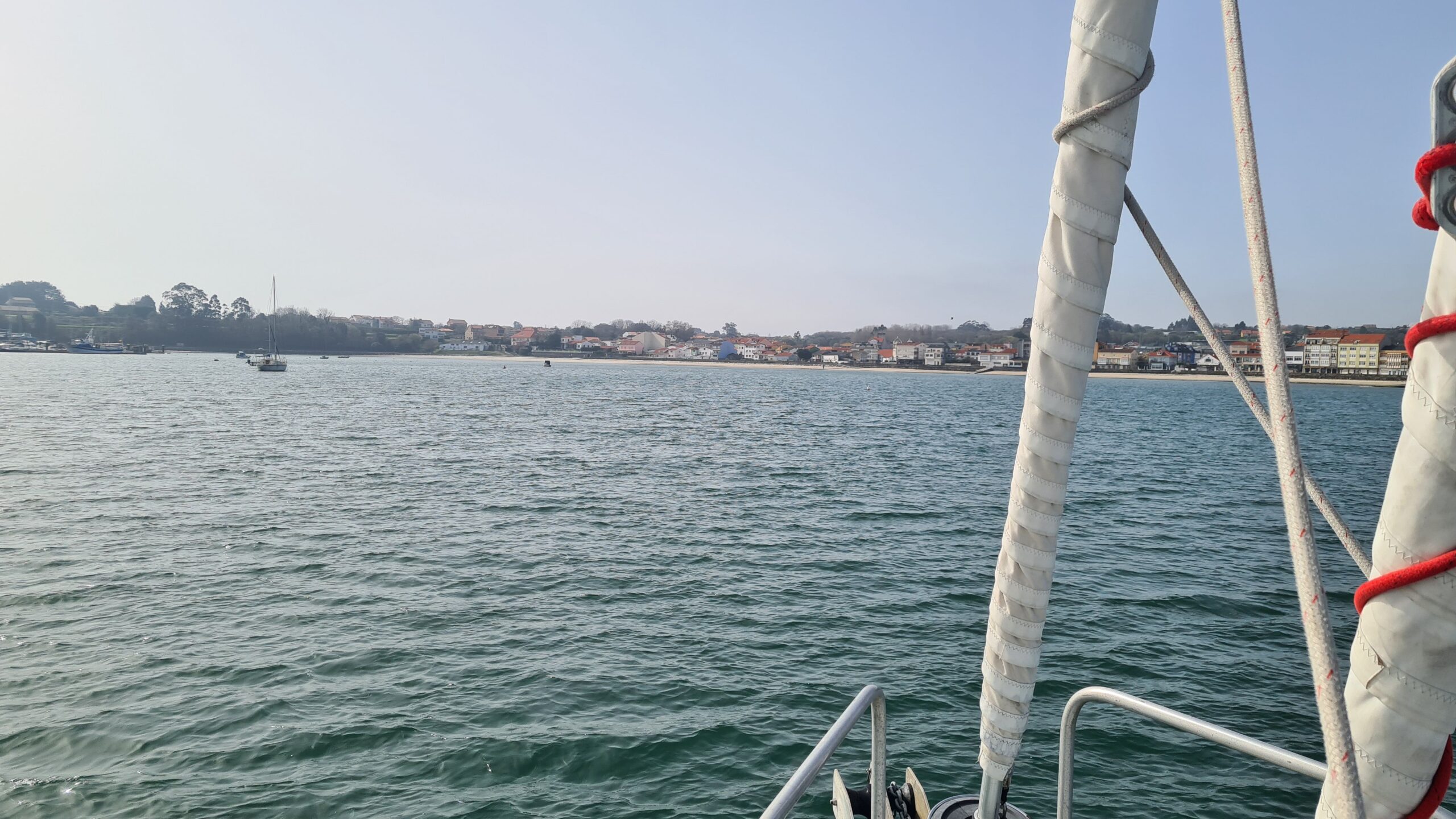
Anchorage at Arès on the beach opposite the small village.
The second leg, half sailing this time, lets us round Cape Ortegal. At night, in thick fog, with fishing boats everywhere, running before the wind in a good three meters of swell is anything but comfortable—sails slatting all over the place… But we make it! With about twenty hours’ lead on the low, we anchor for the night in the bay of Ares, finally sheltered from that infernal swell. We make the most of the last hours of sunshine before the bad weather arrives… A quiet program: rest, washing the shower curtain, and scrubbing the deck to remove all the coal dust from Gijón. The rain will finish the job soon enough…
The final leg takes us to the Club Náutico de Sada, four miles away, early in the morning.
March 5–6: Stopover in Sada
We could have done like everyone else and gone to La Coruña, but we’ve already been there with Saltimbanque, and the harbour is quite expensive… So, we choose Sada, in the neighbouring bay, and its Yacht Club—much more affordable and with an excellent reputation. We’re not disappointed: a marinero welcomes us, insists on mooring our boat (kind—but we redo all the knots our way afterwards…), and even gives us vouchers for a drink at the clubhouse bar—that’s service!
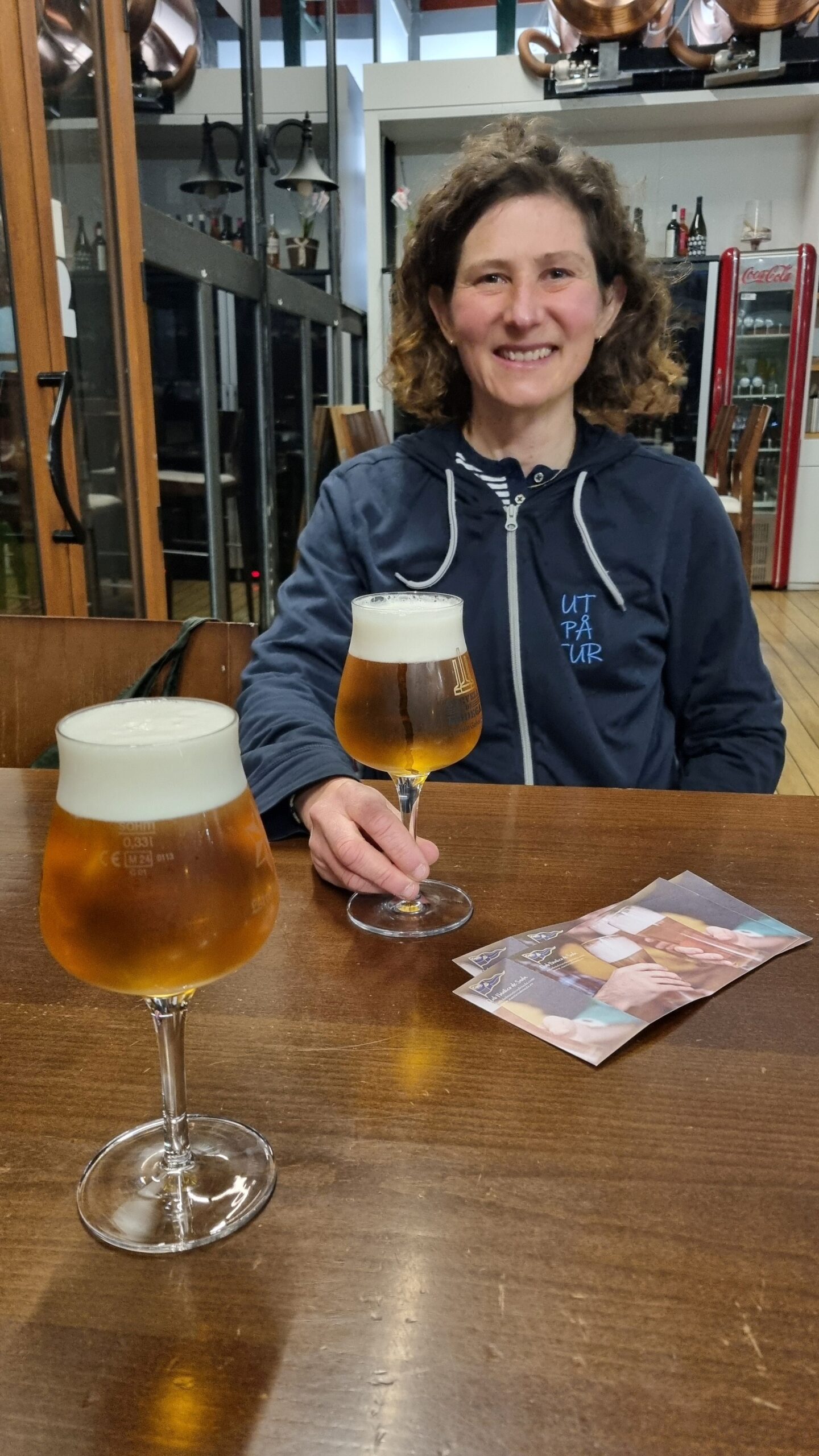
Laure put on her special Yacht Clubs uniform for the occasion!
We barely finish tying up before the rain starts falling, the wind picks up, temperatures drop—it’s the end of summer… The stopover is shared between chilly walks and the delightful task of unclogging the blackwater tank. (Note to sailors: don’t try cleaning pipes with a long brush—it goes in very easily but never comes back out!)
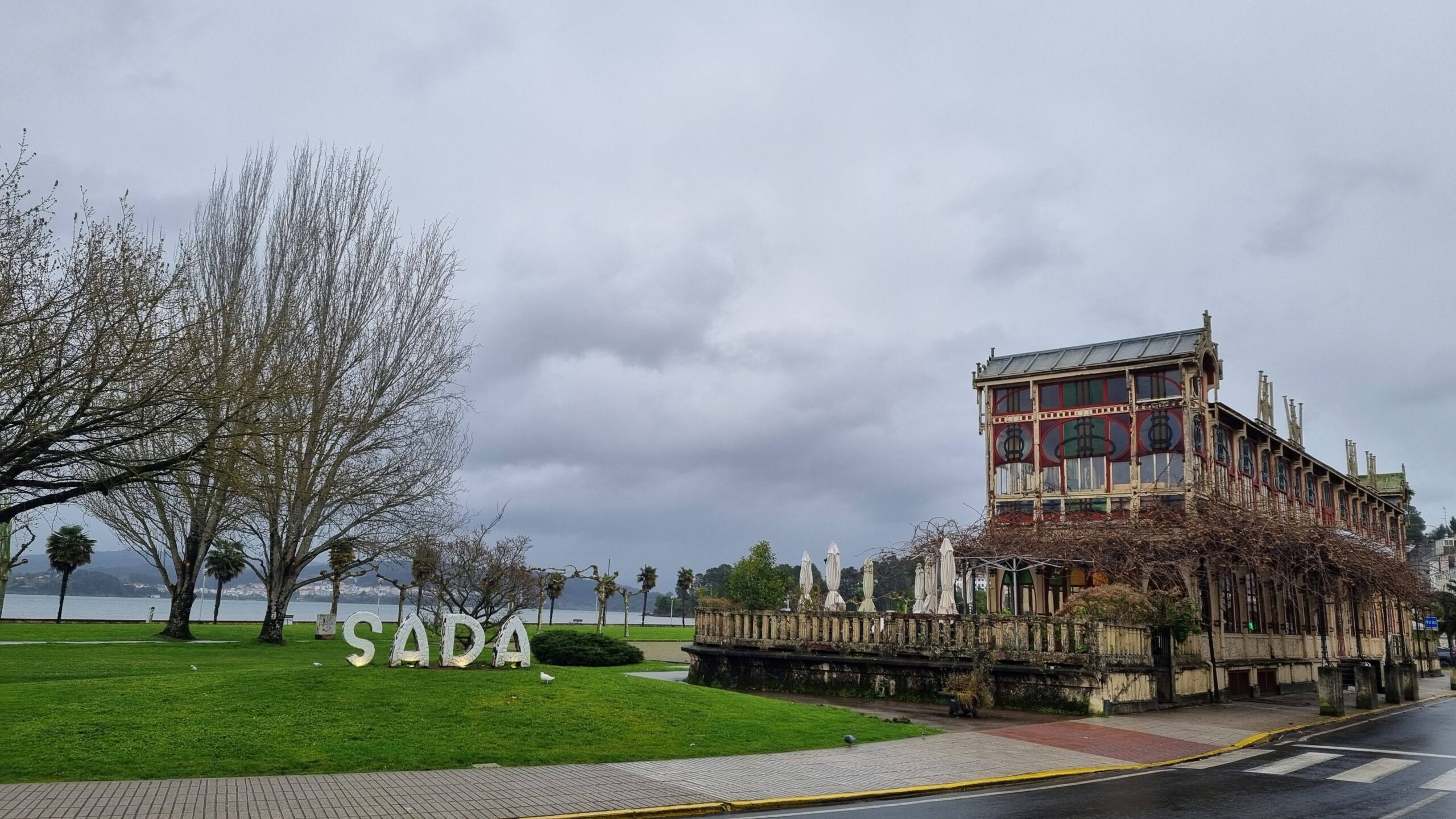
Welcome to Sada!
Sada is an authentic Galician town with all its hallmarks: a seafront promenade dotted with palm trees, a few old buildings (an early 20th-century tram station and an ancient chapel), a handful of cafés and restaurants with terraces stacked on the sidewalks waiting for better days—and at least three Chinese bazaars. We discovered the concept during our first visit to Galicia 15 years ago and are happy to find them again: shops that sell absolutely everything for cheap, even in the age of online shopping.
When the gale subsides, we venture onto the coastal path. Beautiful white sand beaches and… eucalyptus forests! Imported from Oceania in the 19th century and planted everywhere to drain the land, these trees thrive here and give our hiking shoes a wonderfully pleasant scent—a welcome change!
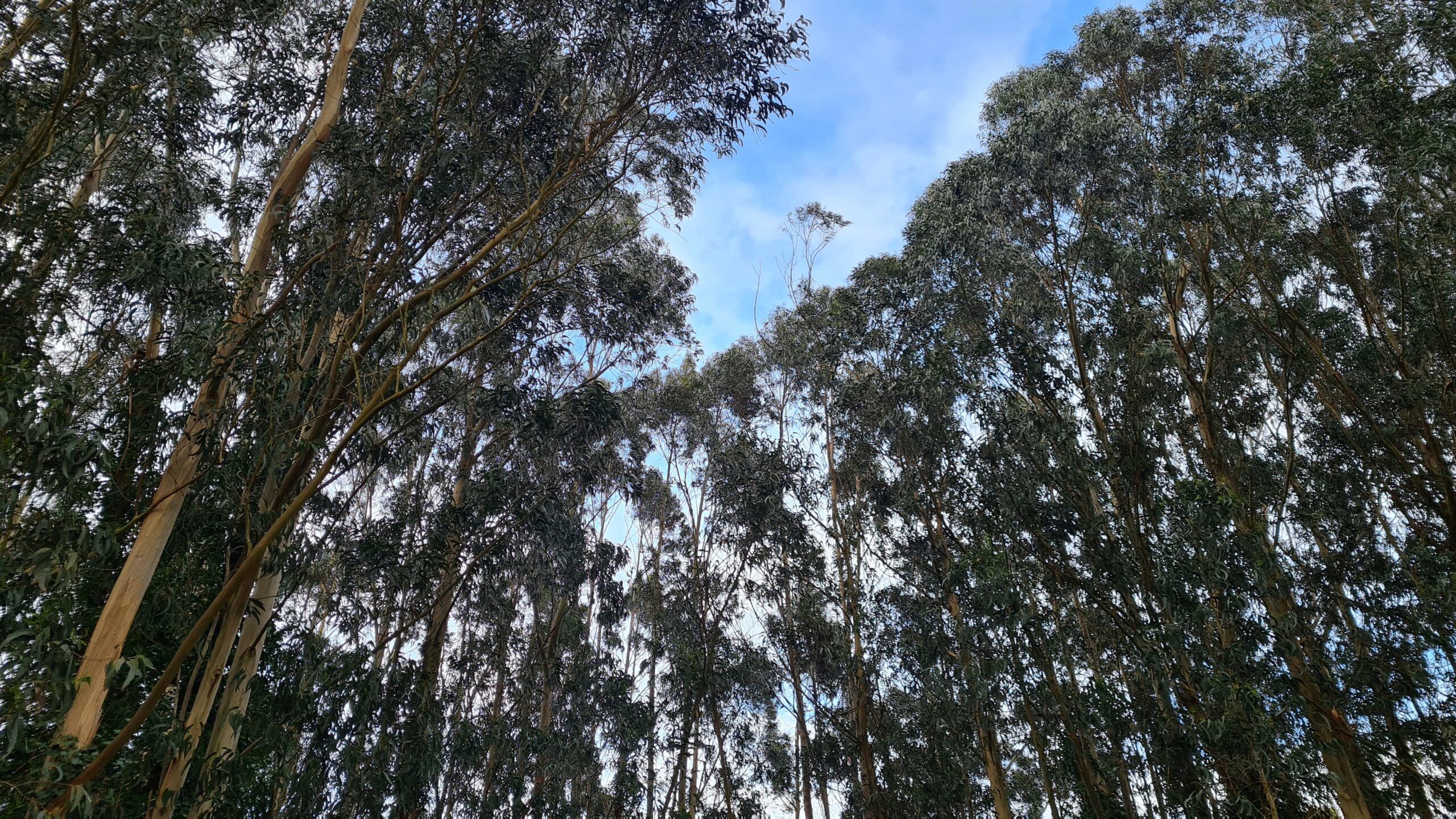
The eucalyptus forest, an olfactory paradise!
A lovely, authentic stopover, still very much out of season—we haven’t seen a single sailboat since arriving in Spain…
March 7–9: Sada – Camariñas – Muros (101 NM)
Finally wind—and in the right direction! Force 5 to 6 from the northeast. With two reefs and plenty of genoa, we charge along on a broad reach. The sea is quite rough: 3.5 meters of NW swell combined with NE wind waves—but no matter, the boat flies ahead at 7 to 8 knots, surfing over 10 knots on the biggest waves! Never before had we gone this fast for so long.
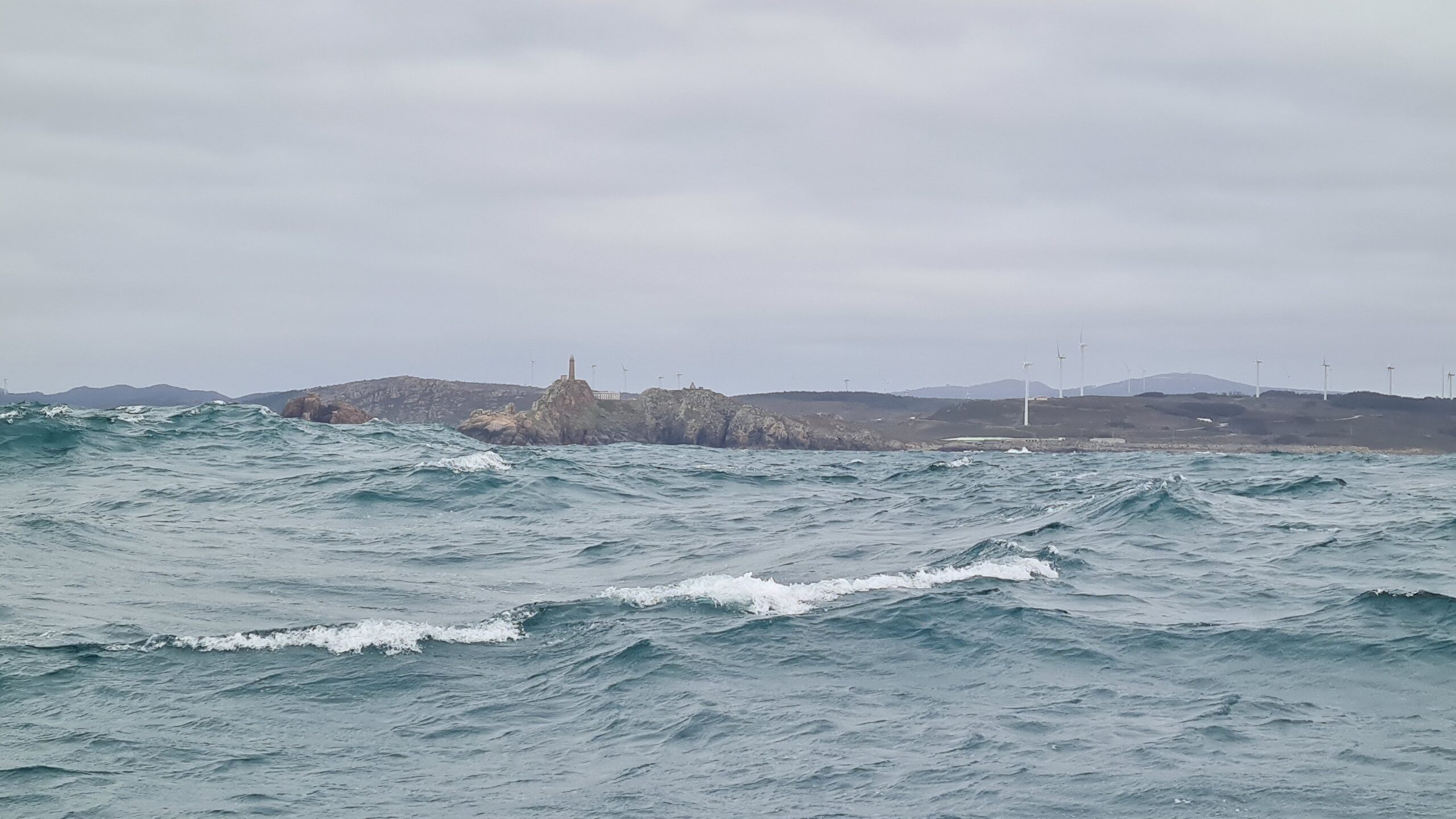
Passage of Cabo Vilan, the entrance to the Camariñas ria
At this pace, it’s still daylight when we enter the ria of Camariñas, with winds now over 25 knots. We’re a bit worried about conditions inside—NE winds can be accelerated by the terrain… But to our great relief, we find a beach sheltered from both wind and swell—perfect! 60 miles in 8 hours, averaging 7.5 knots— efficient sailing!
The next day, the northeast wind is still there, though more moderate (force 3–4). These NE winds along the west coast of the Iberian Peninsula are called the Portuguese Trades and usually establish in early spring. So, we’re not surprised to find them—everything is going according to plan. Summer even seems to return, with sunshine accompanying us past Cape Finisterre (running downwind under poled-out genoa).
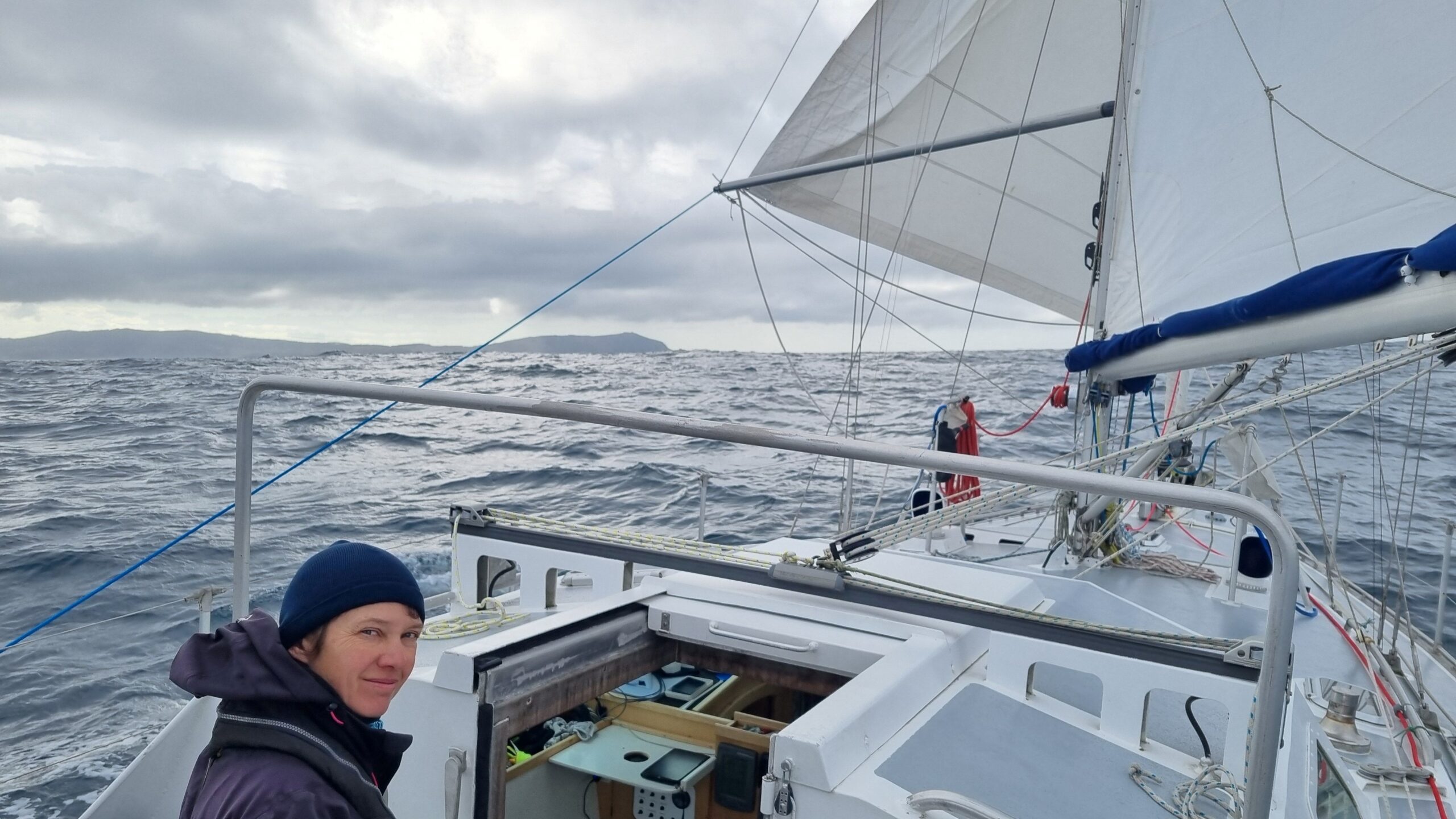
Cape Finisterre! The weather is slowly clearing up
But our Portuguese Trades are still a bit young, and a small SW front is expected overnight. We head into the port of Muros for shelter. We’d already been here with Saltimbanque in 2011, anchoring among a few boats—all French aluminium yachts. One in particular had caught our attention: we didn’t know the model at all (and indeed it was the very first of the series), but she looked beautiful and incredibly well-designed, with a high roof harbouring an inside steering station… “Maybe one day, when we’re rich…” That boat, of course, was UtPåTur, then called Cordova, on her maiden voyage after launch. We owed it to her to return to the place of our first meeting!!
This time, however, we actually venture ashore—and once again, we’re delighted. Founded in 1286 and dedicated to fishing, Muros is wonderfully typical, with its maze of stone streets, often stepped. Not only is the town unsuitable for cars—you wouldn’t want to break a leg here! Every corner offers a new view: a beautiful façade, a mushroom-shaped granary (hórreo), or a small vegetable garden—utterly charming. The waterfront is just as appealing and we enjoy delicious chipirones for lunch (because life is not all about octopus—there’s squid too!)
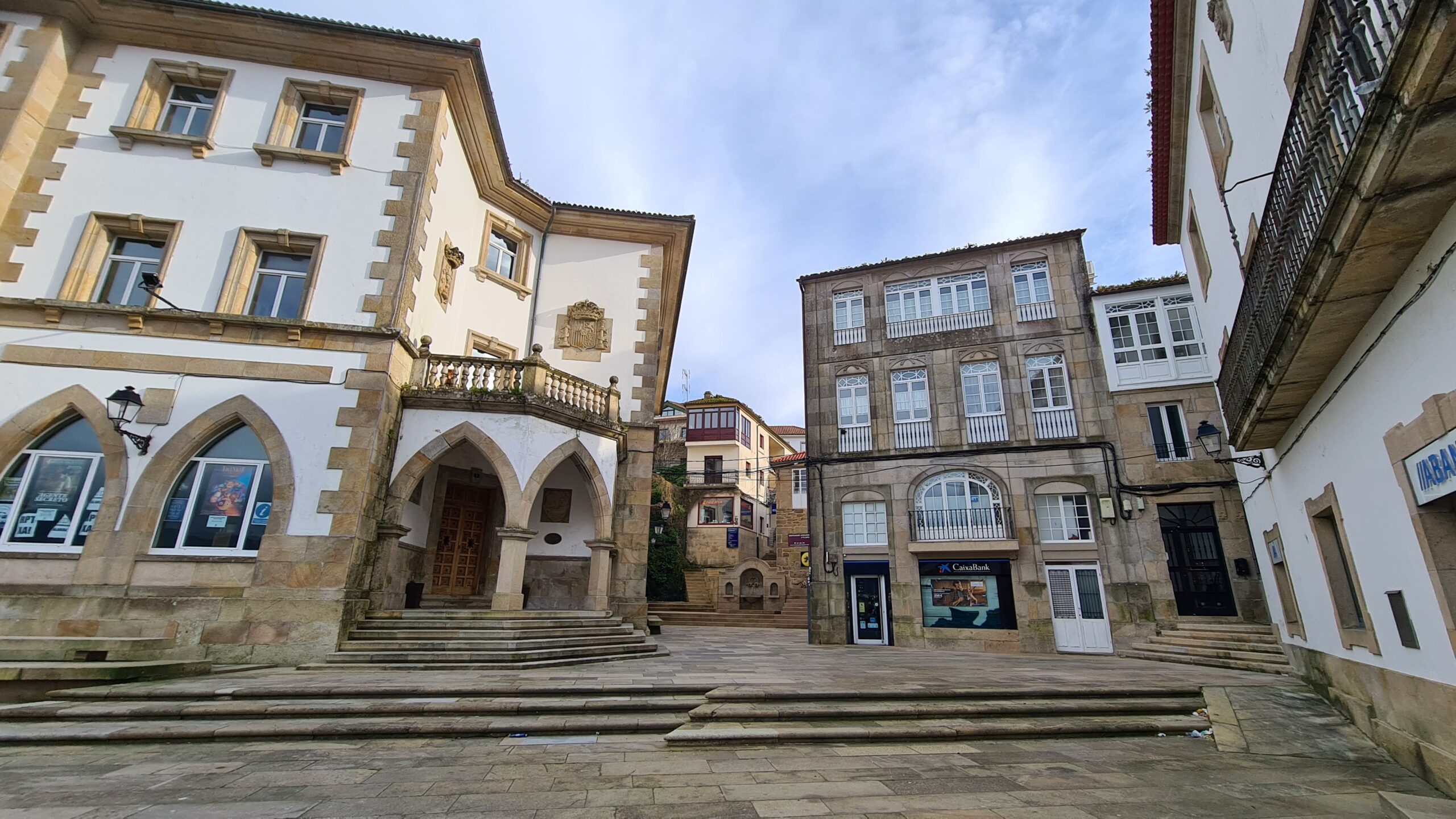
Muros, main square
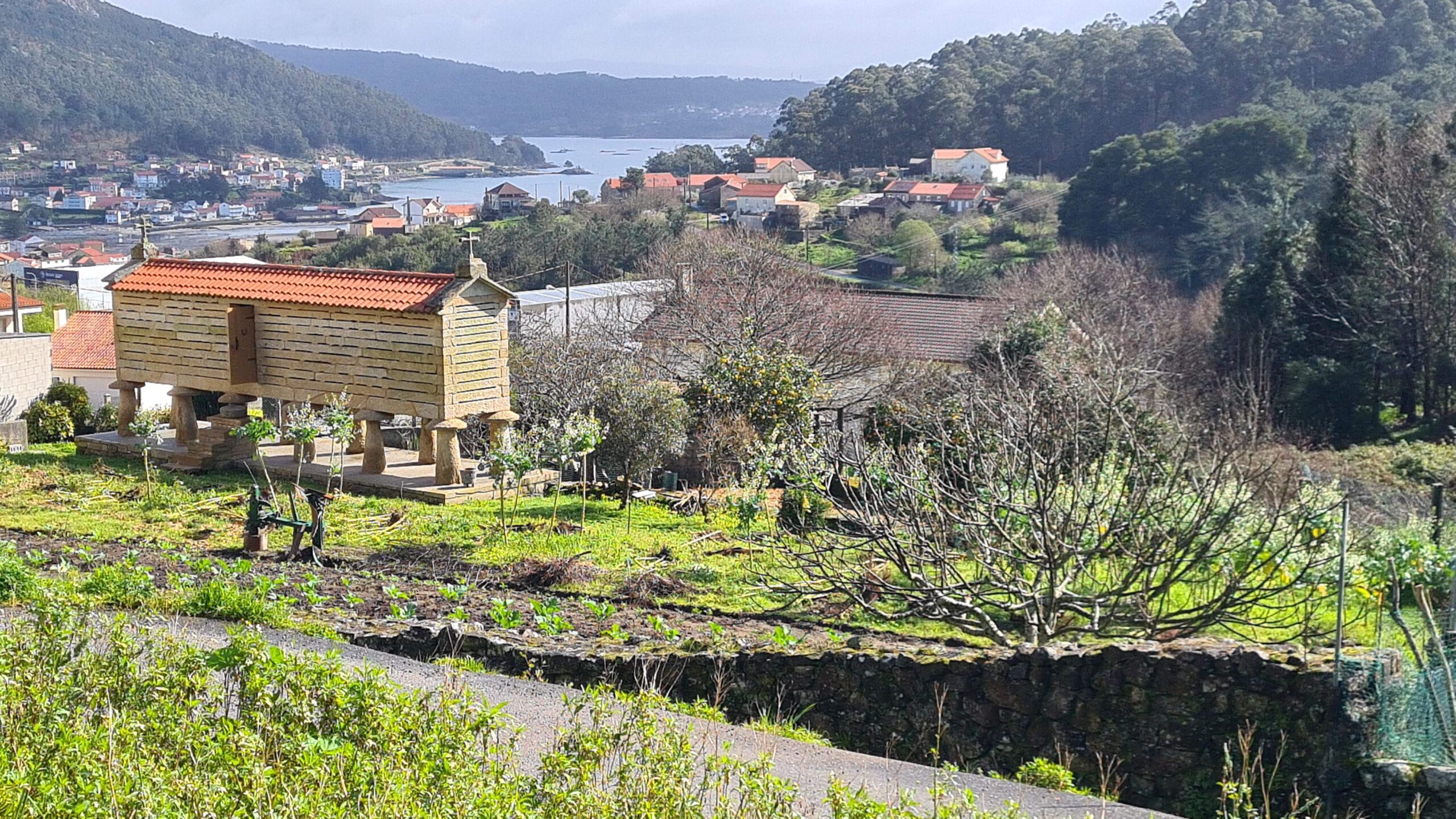
Typical granary on the heights of the village
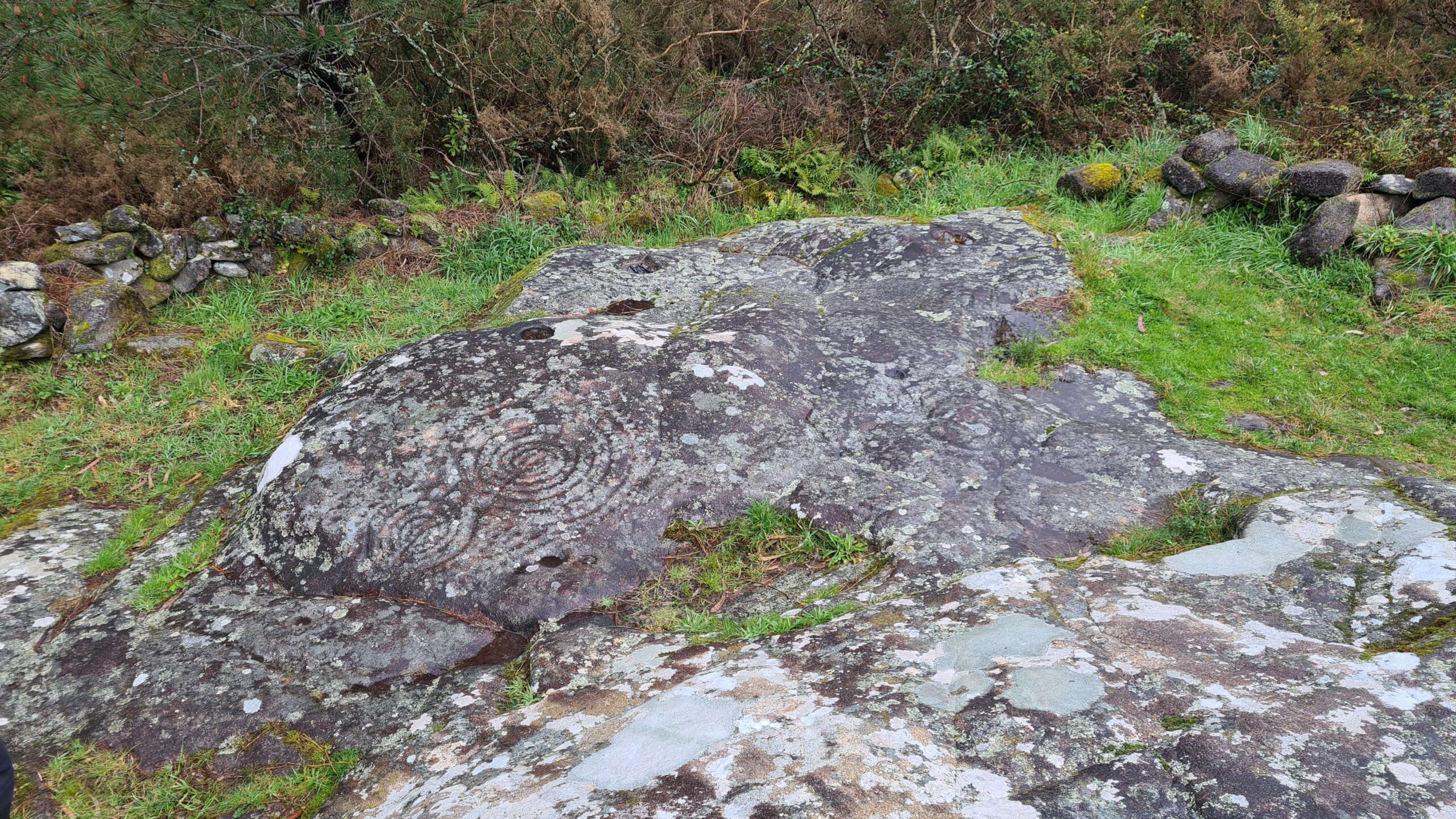
An ancient calendar carved on the rock
The surrounding countryside is equally lovely: white sand coves, eucalyptus forests, wild aromas, pretty hamlets, and even ancient petroglyphs! Too bad the weather is so unstable and damp… Isn’t it supposed to be summer here?
We leave the harbour in the evening for an anchorage off a nearby white sand beach. Big mistake… The waves somehow find their way in as crossing seas, rocking the boat all night—we barely sleep… Between the chilly temperatures and this relentless swell, we’ll have to admit it: it’s not summer, even if we’re in Spain…
Nice anchorage, but far too rolly for our liking.
March 10–13: Muros – Sanxenxo (60 NM)
Another telltale sign: the famous Portuguese Trades struggle to establish. Despite optimistic forecasts, there’s no wind this morning… but plenty of swell! Back to hours of being shaken in over three meters of waves… The sky is grey and under our wool hats, the high hills of the Muros ria strongly remind us of Scottish lochs. The impression is reinforced by the welcome sight of gannets everywhere, gliding majestically past us in lines of five to ten… We almost expect to see seals—but no, we’ll have to settle for plenty of hunting dolphins and a passing sunfish!
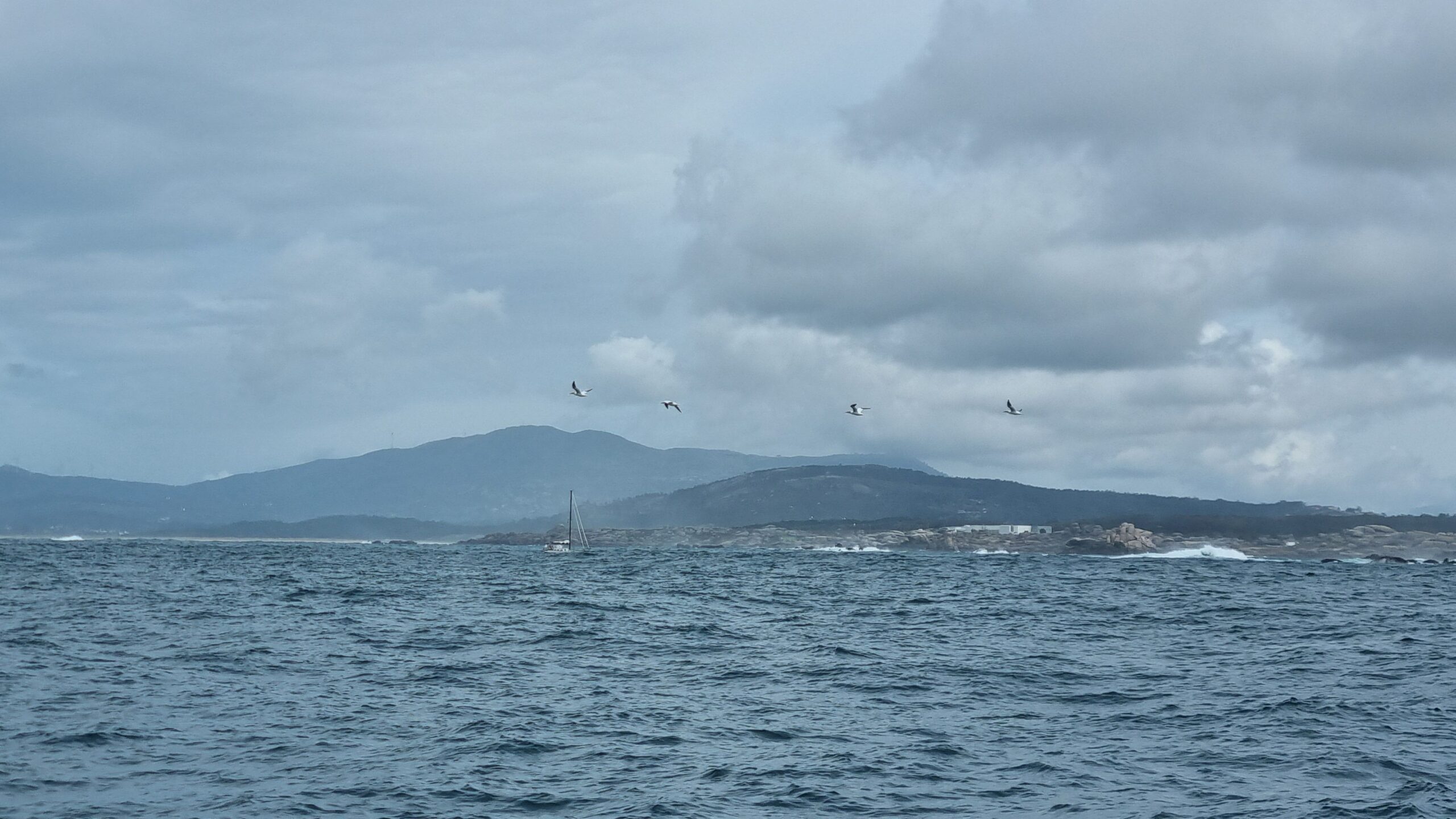
So, Scotland or Galicia ??
With the elements uncooperative, we turn the helm toward the nearest ria—the beautiful Ría de Arousa—and head for the most sheltered anchorage we can find. It lies behind a maze of mussel rafts—and indeed, it’s flat calm!
Extensive mussel farming in the ria de Arosa
A short walk on the foreshore to harvest our protein ration for the day—it’s been a while! Periwinkles, clams, cockles, and mussels all make their way into our pan—to our great delight. Life at anchor does have its perks!
Well-fed and rested after a flat night, we resume our southward route the next day in light but sufficient winds. The passage is uneventful until the island of Ons—except for a routine check by customs officers with surprising methods: instead of boarding us at anchor or meeting us in port, they come alongside within two meters while we’re sailing and hold out a landing net, asking us to drop our boat papers and passports into it—yes, over the water! Cautiously, we hand over paper copies and ID cards sealed in a ziplock bag, and everything goes smoothly—but it’s quite an impressive manoeuvre (did we mention that there can be swell in the area?). All that just to write down our details, which have not changed since last time we were stopped and may or may not be processed into a computer system afterwards… Anyway, another blue slip added to our collection!
We anchor at Ons Island, one of Galicia’s gems, part of the National Park along with the Cíes Islands further south. Unfortunately, the heavy surf crashing onto the beach quickly discourages any attempt to land… And one of yesterday’s clams must have hosted a cheeky bacterium—Camille starts feeling quite ill… we only stay long enough for a coffee before heading to the nearest anchorage: Silgar beach in front of Sanxenxo.
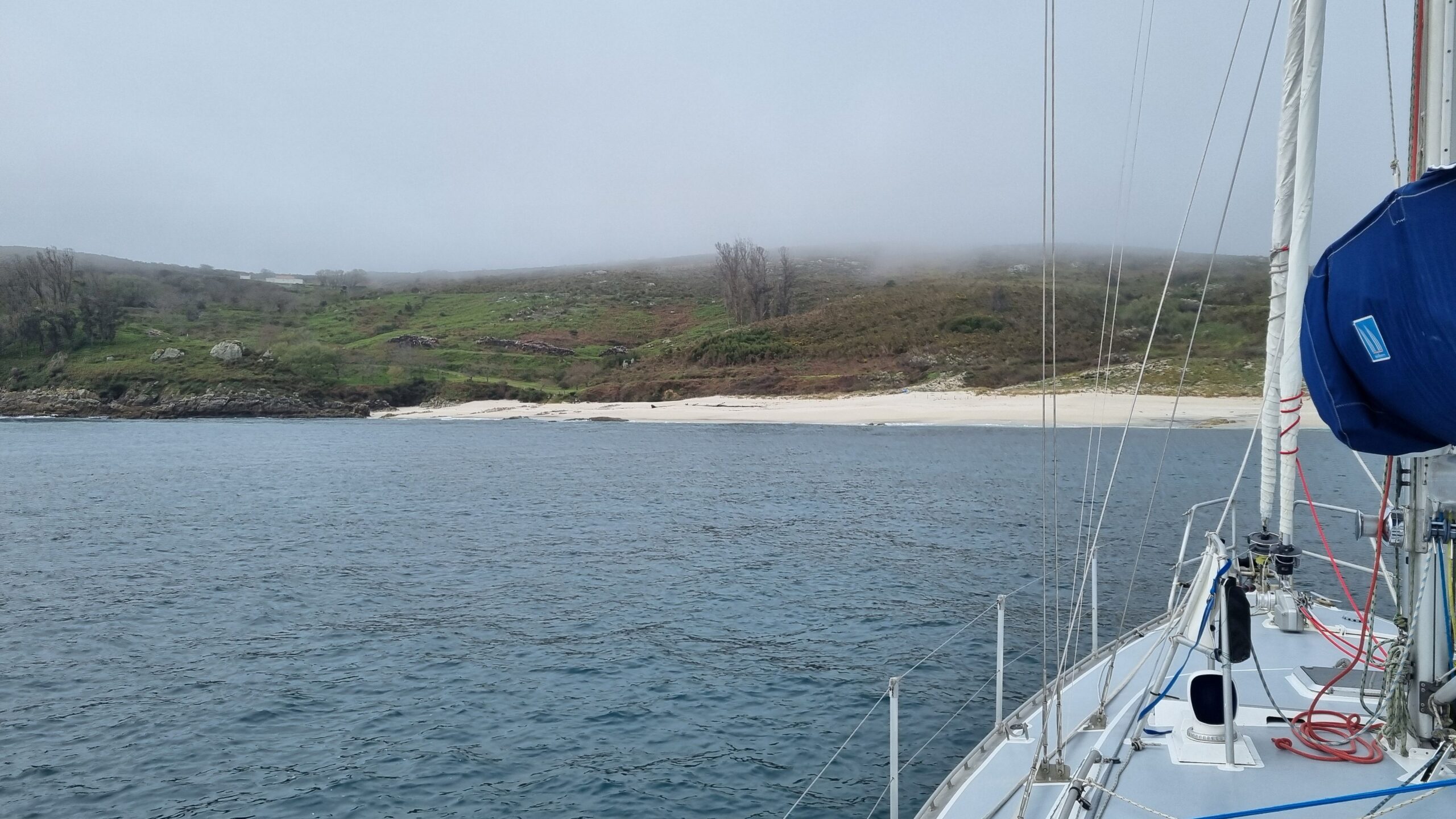
Unfortunately, it’s not the right season to discover the Galician islands…
The night is still quite rolly and in addition to Camille, the windlass is also showing signs of weakness (losing power). We need to fix everyone up, so we move into the harbour—well, not exactly the harbour, but the Real Club Náutico, run by incredibly kind and welcoming people, where we pay €16 per night—we hadn’t seen prices like that since northern Norway!
Sanxenxo is a typical large seaside resort, which makes it perfectly pleasant off-season during the week. Beautiful white sand beaches, small cafés, lovely views over the ria—and we even find 94 spotted cowries, those lucky shells said to guarantee days without gales! Well, we hope…
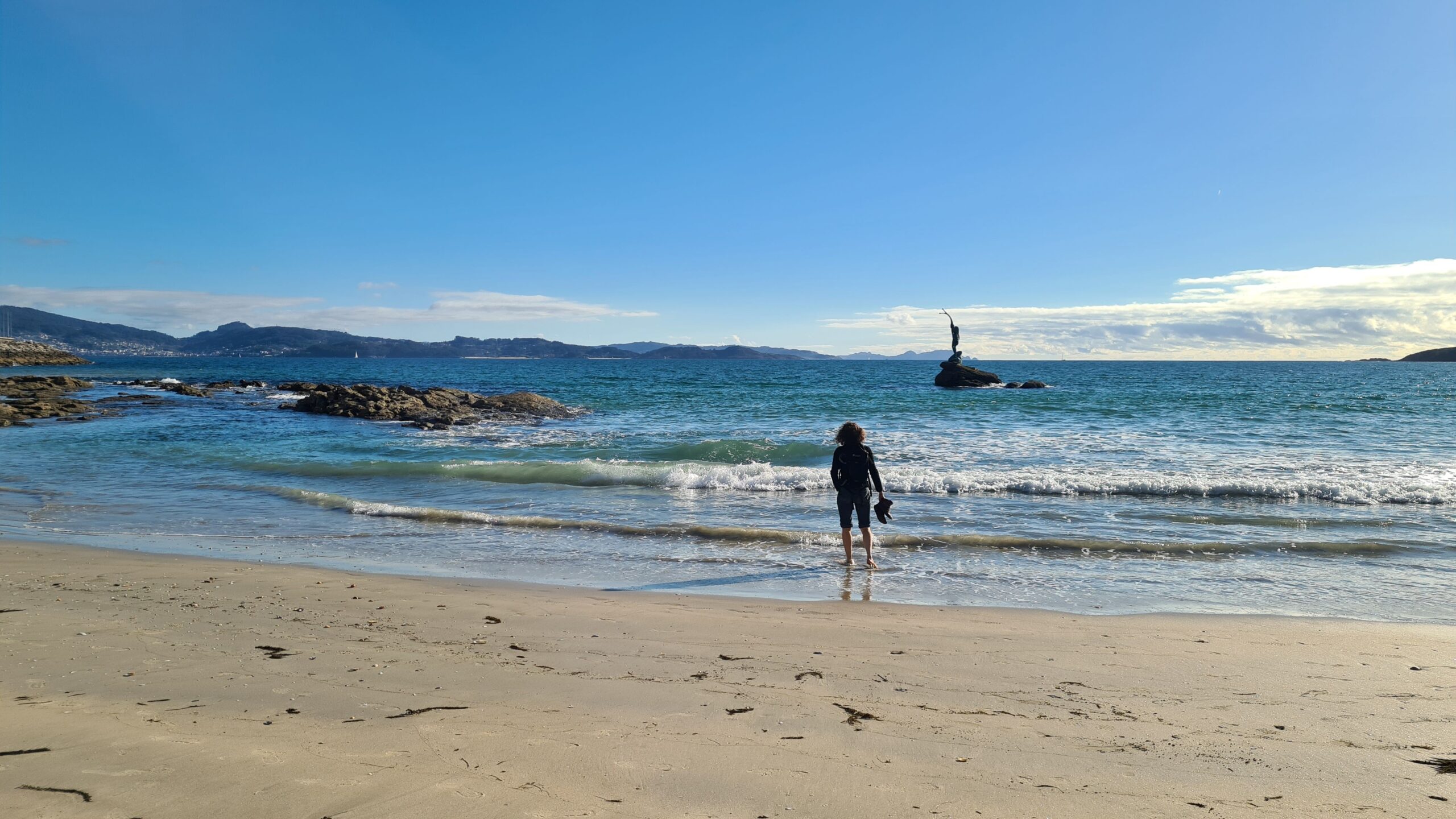
Silgar beach, Laure is checking that the water is still chilly
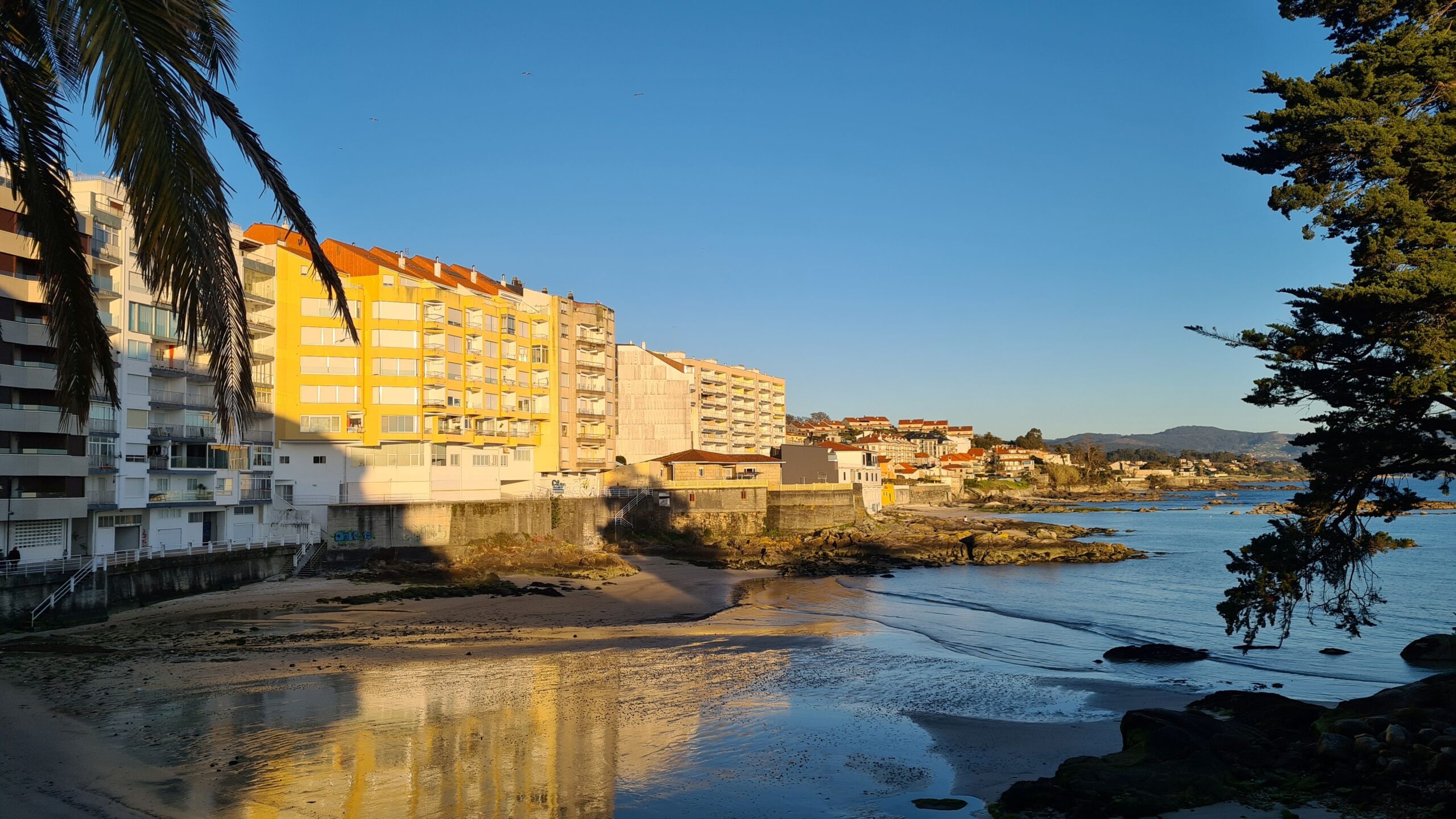
Sanxenxo at the end of the day, very pleasant out of season!
We also take advantage of a sunny spell to clean the electric motor of our windlass, removing all the accumulated coal dust. Aside from a few pleasant hours, the stopover is mostly marked by heavy rain and fairly strong SW winds… So where exactly is summer again?
March 14: Sanxenxo – Moaña (28 NM)
Rain and swell were indeed forecast—but not headwinds, low visibility, or military live-fire exercises along our route! What was meant to be a gentle shakedown sail turns into a constant battle to gain every meter southward… until suddenly the wind shifts north and strengthens. We enter the Vigo ria without even seeing the Cíes Islands, at over 7 knots in heavy gusts, zigzagging between pots, mussel rafts, and sailboats racing right in the channel.
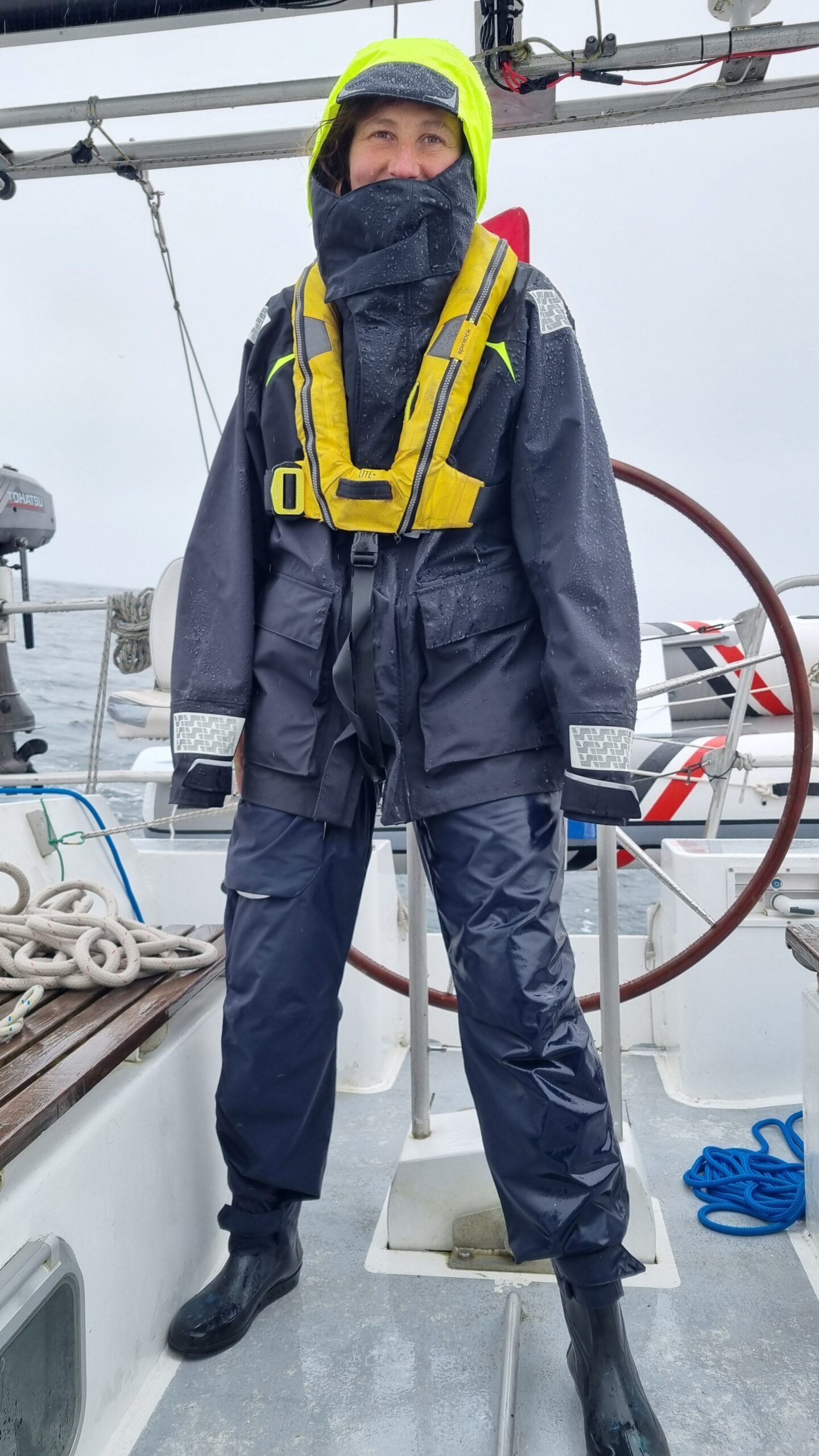
“Go south,” they said, “and you’ll find summer there,” they said.
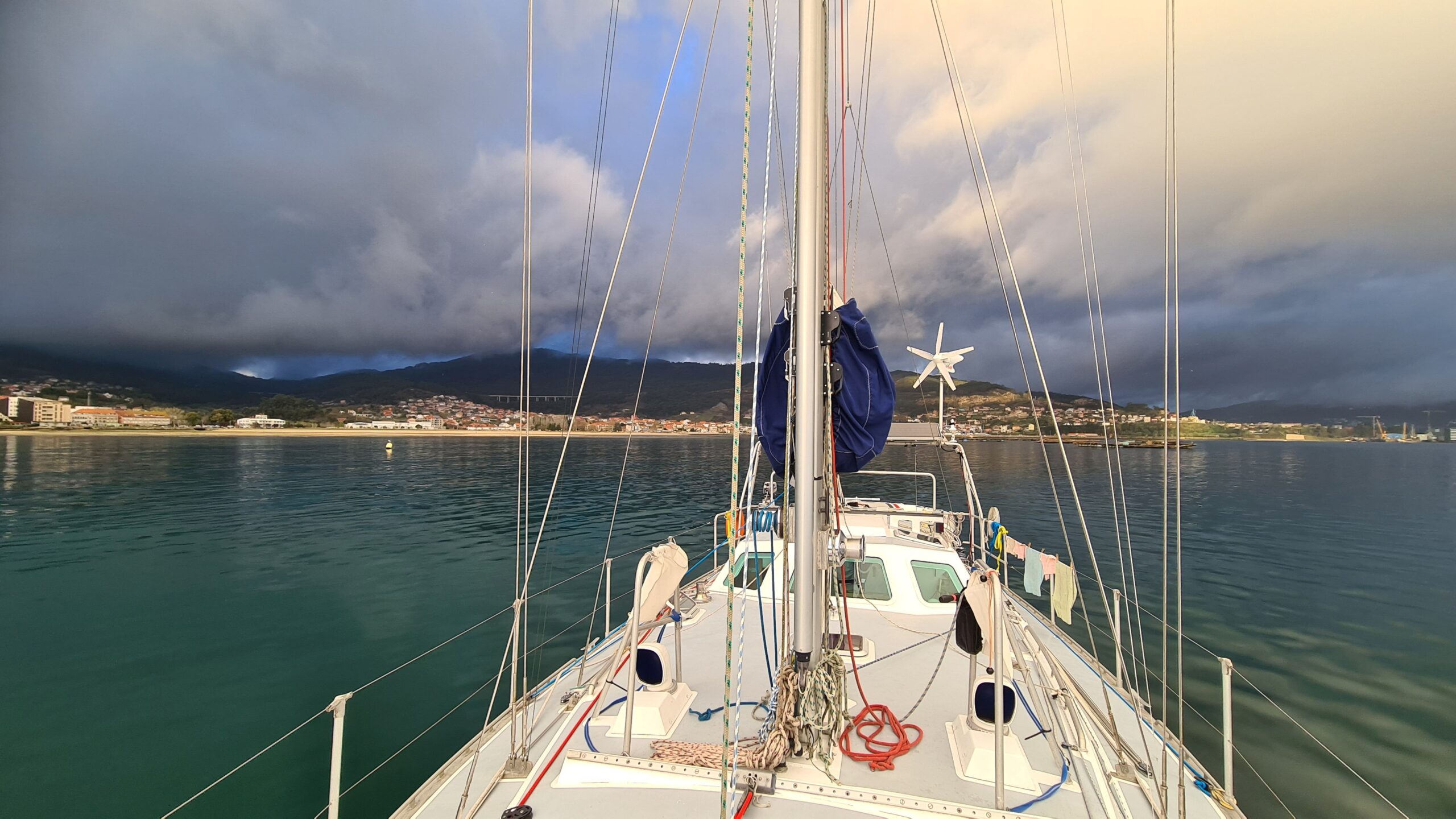
Stunning evening light on the Moaña anchorage
Relief: we drop the anchor off Moaña beach, opposite Vigo. Conditions improve visibly, letting us dry our gear and enjoy a beautiful evening.
Here we are in the last Galician ria. From here, we had imagined crossing to the Madeira archipelago, 650 miles to the southwest. But the forecast looks complicated: instead of the Azores High generating our Portuguese Trades, a deep low is forming, bringing SW winds here… and outright gales over the islands! Definitely not a classic setup, and we spend our days studying weather files, trying to figure out where our adventure will lead next…
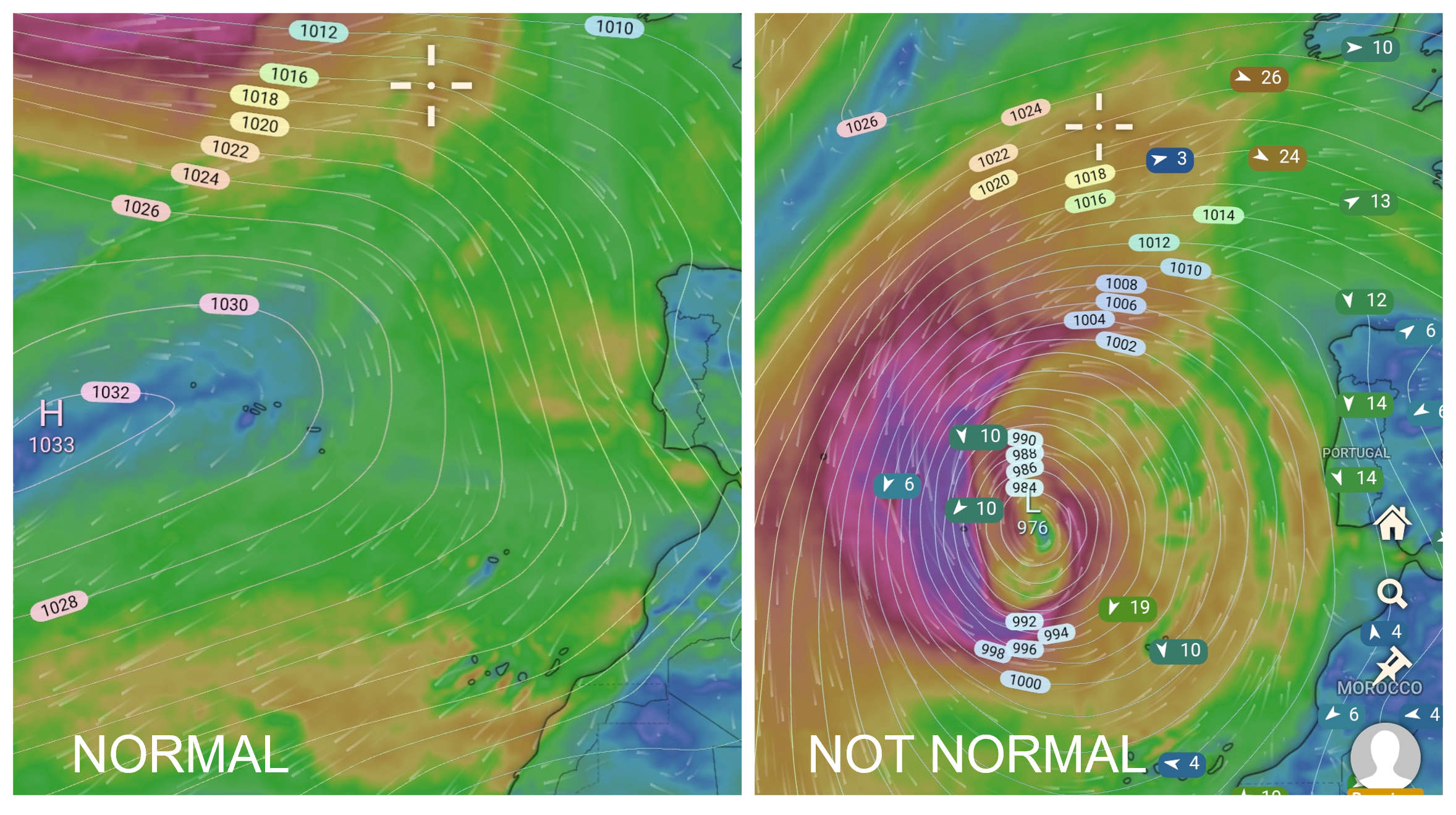
Such a low-pressure system over the Azores at the end of March is not very typical; we will have to wait for the weather to improve a bit!
 PDF