
The full photo album here.
September 10th: Brünsbuttel – Cuxhaven (17NM)
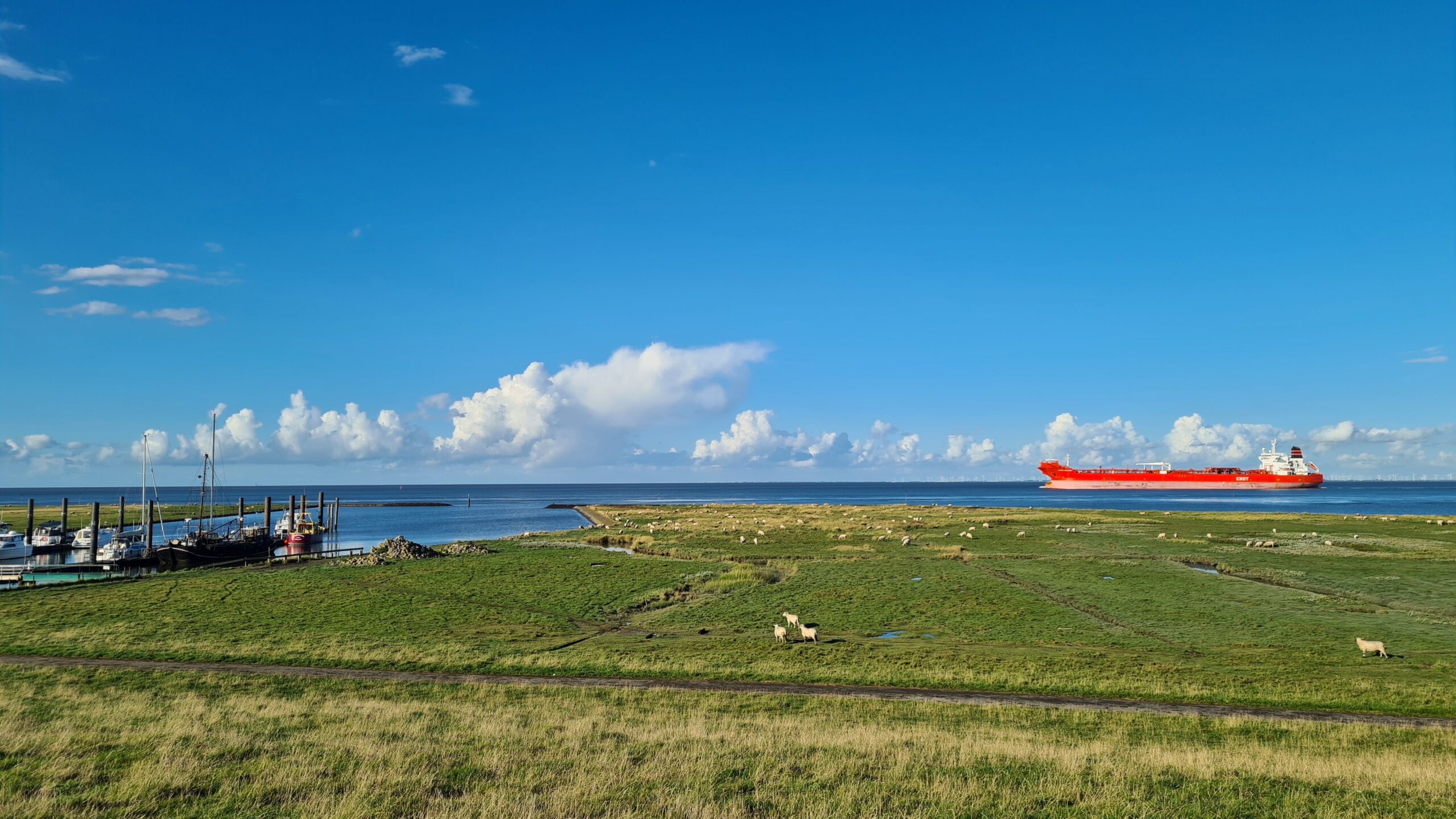
The Brünsbuttel lock out of the Kiel Canal opens onto a vast expanse of water with an uncertain colour, somewhere between cloud-grey and mud-brown, completely flat in this very calm weather, surrounded by equally flat shores. Welcome to the Elbe!
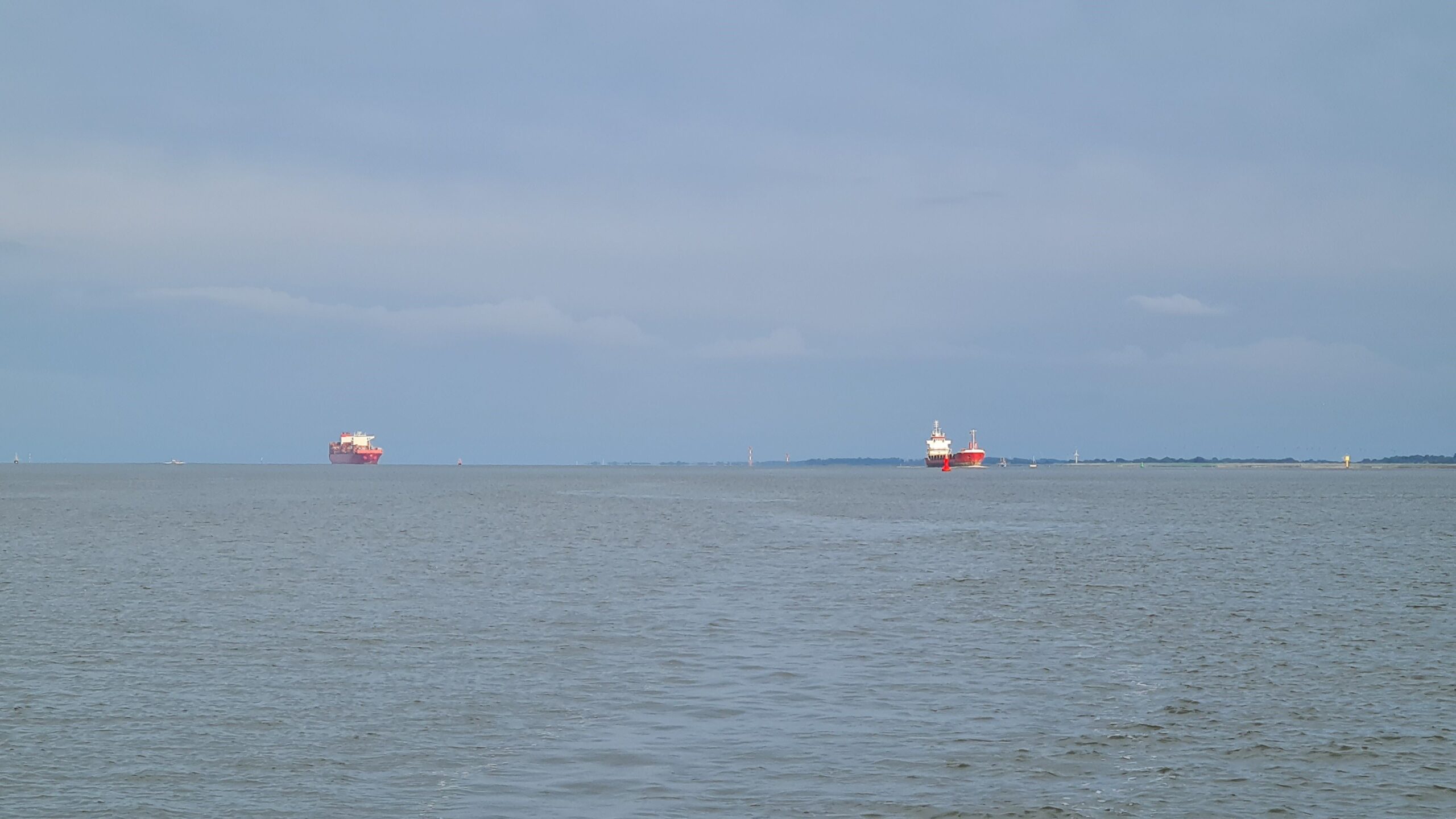
The Elbe, harmony of shapes, contrast of colors…
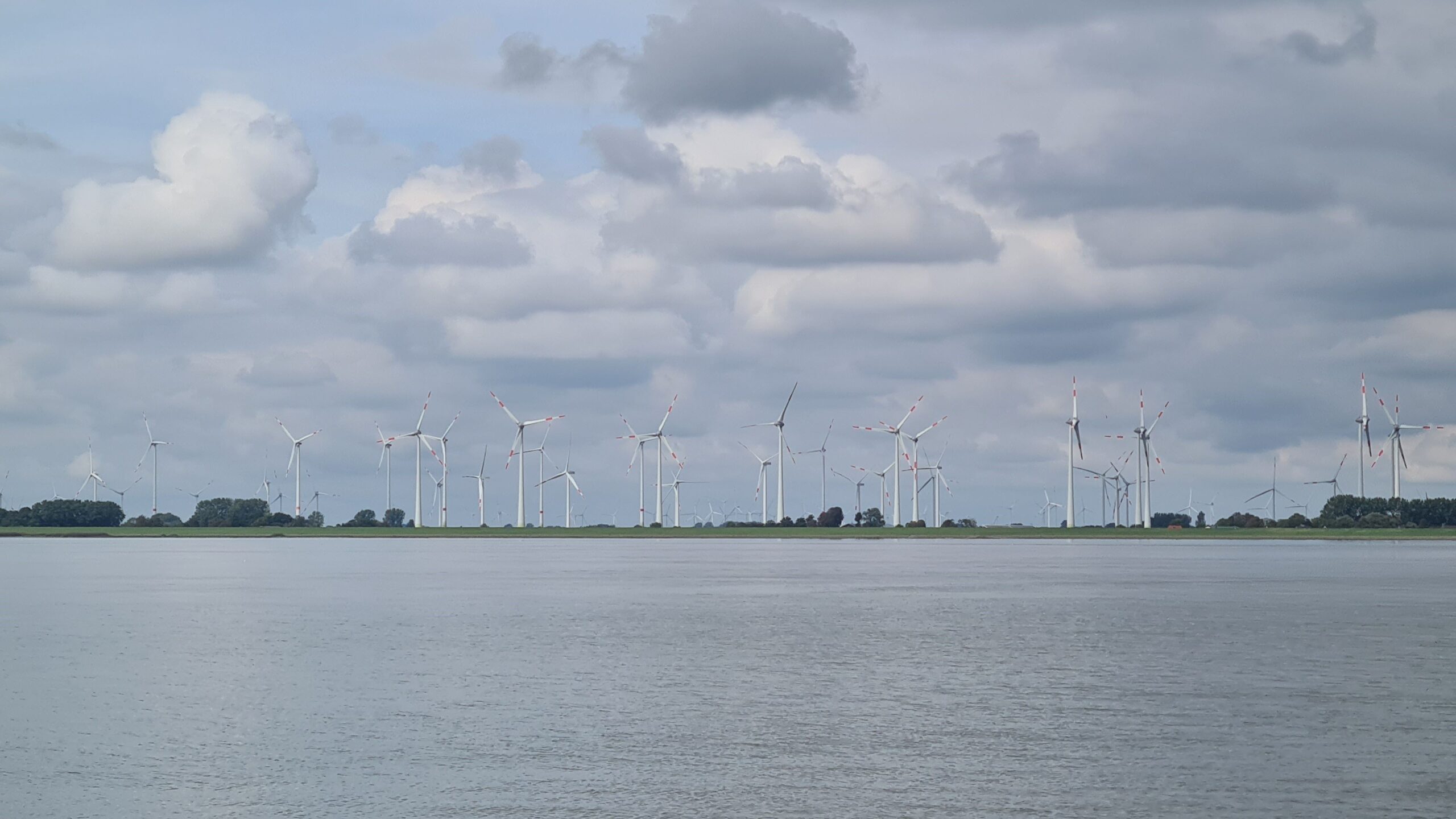
Fortunately, wind turbines provide a bit of verticality!
We slalom between a dredger and a tugboat before heading towards Cuxhaven and the river mouth. On our left, the large channel where enormous container ships are bound for Hamburg. On our right, dozens and dozens of wind turbines and a few industrial docks. We were used to this kind of landscape when we lived in the Netherlands, but after 12 years in Norway and all the remote regions visited this year, the aesthetic contrast is quite stark……
We’re also back in tidal land: as soon as the current turns in the river we find ourselves speeding at over 9 knots and we reach Cuxhaven in no time. We’ve chosen to moor at the LCF Yacht Club, which is smaller, friendly, and much cheaper than the town’s main marina. We find a good, well-protected berth there. It’s just as well, because judging by the weather reports, we’ll probably have to stay here for a while…
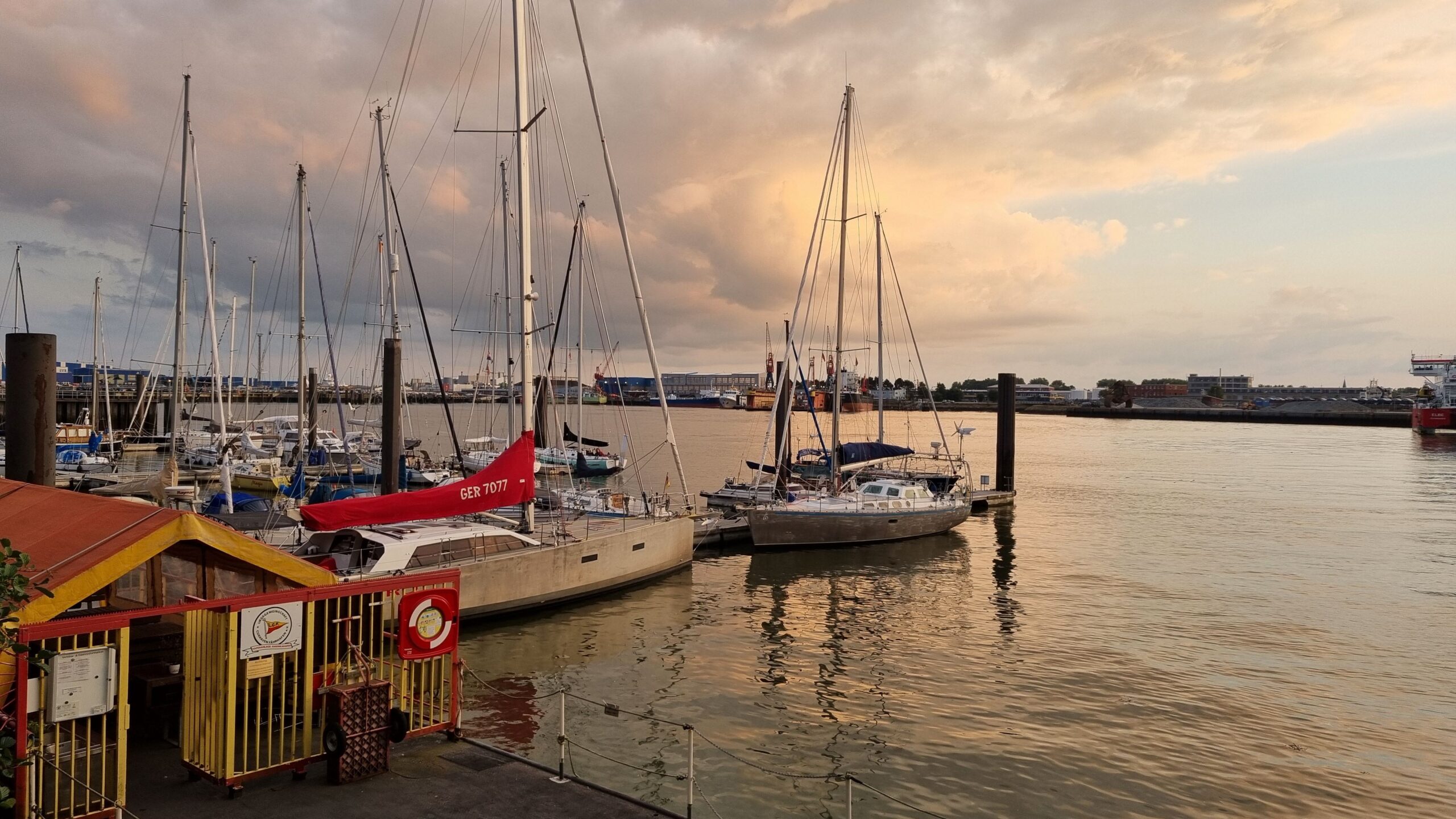
Small yacht-club, yet big boats! Our aluminium neighbour is 53 feet long…
September 11 – 18 : stopover in Cuxhaven
There are a few rites of passage in the life of a sailor in Northern Europe. Waiting for a weather window in Lerwick (Shetland) is one: we’ve already done it (twice). Being stuck in Cuxhaven watching low-pressure systems sweep across the North Sea is another one, which we were still missing!
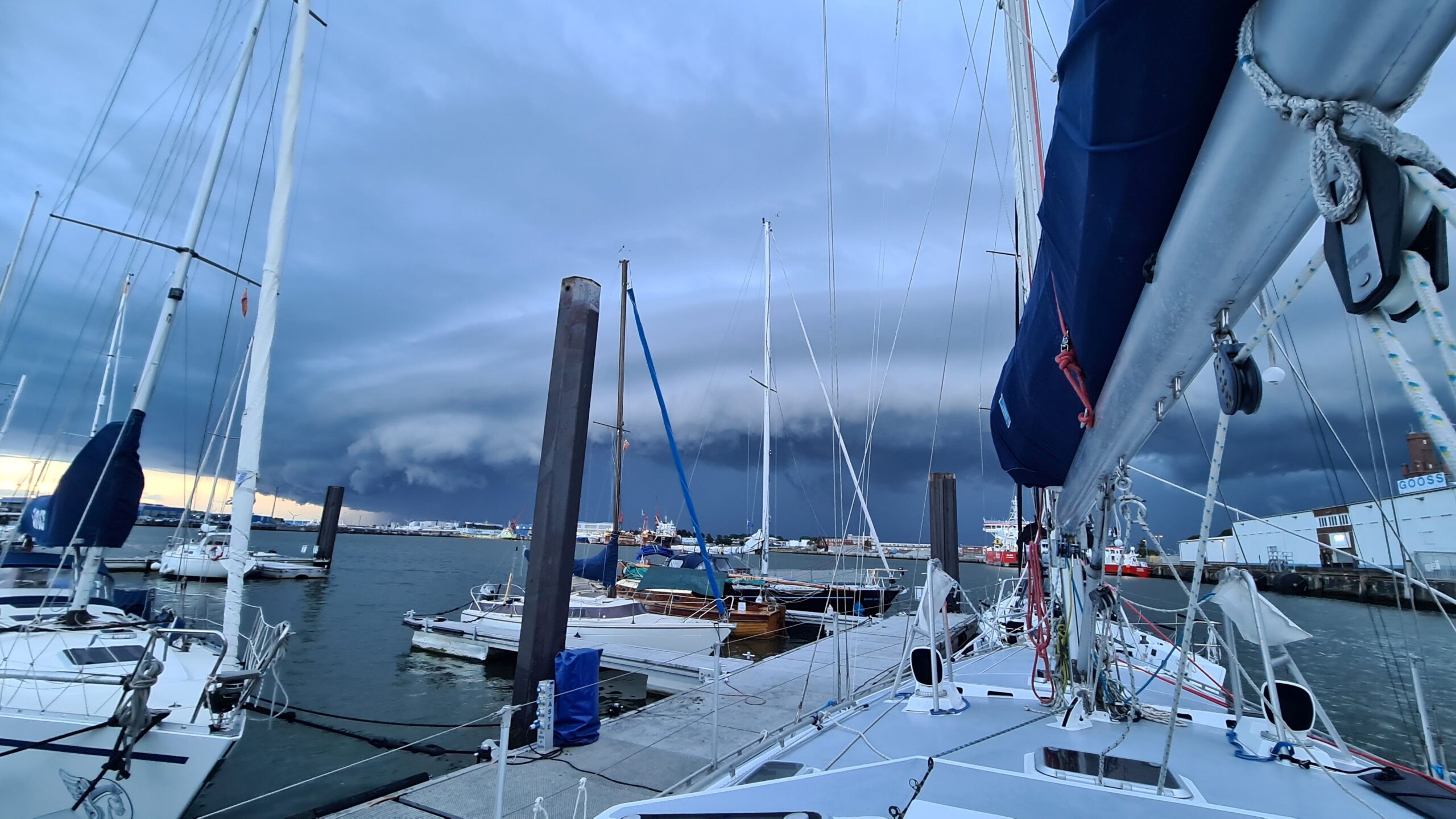
Pretty squall coming for us…
The weather is indeed quite depressing. 30 knots from the southwest for three days, then 24 hours of manageable upwind sailing, but that doesn’t give us time to reach safe shelter before a very large low-pressure system blocks our passage for nearly four days. There’s nothing to do but wait – and anyone who knows us a little knows that patience isn’t our strongest virtue.
It’s the perfect opportunity however to visit Cuxhaven, in Lower Saxony, Germany, a region we indeed know very little about. We feel out of place both geographically and temporally: it’s like we’ve gone back 25 years… First of all, almost no one speaks English. Second, you can only pay in cash (except for the large supermarkets that accept credit cards), whereas in Norway we haven’t used banknotes for over 10 years. Our steps lead us into town, where we come across a film photography shop… Then at the tourist shop we can buy pins, apparently very trendy, or mint our own souvenir coin. But what shocks us the most is the omnipresence of smoking. Here, people still smoke in bars (including the one at the yacht club, unfortunately), they buy their packets of cigarettes freely at the Lidl checkout (right next to the €1 vodka bottles, by the way), and there are tobacco vending machines on every street corner (coin-operated, of course). For us, coming from Scandinavia where no one smokes, and where the sale of alcohol is only allowed in Vinmonopolet, the state-run stores, it’s surreal! On the other hand, we really appreciate the farmers’ market, full of big and delicious fruit and vegetables.
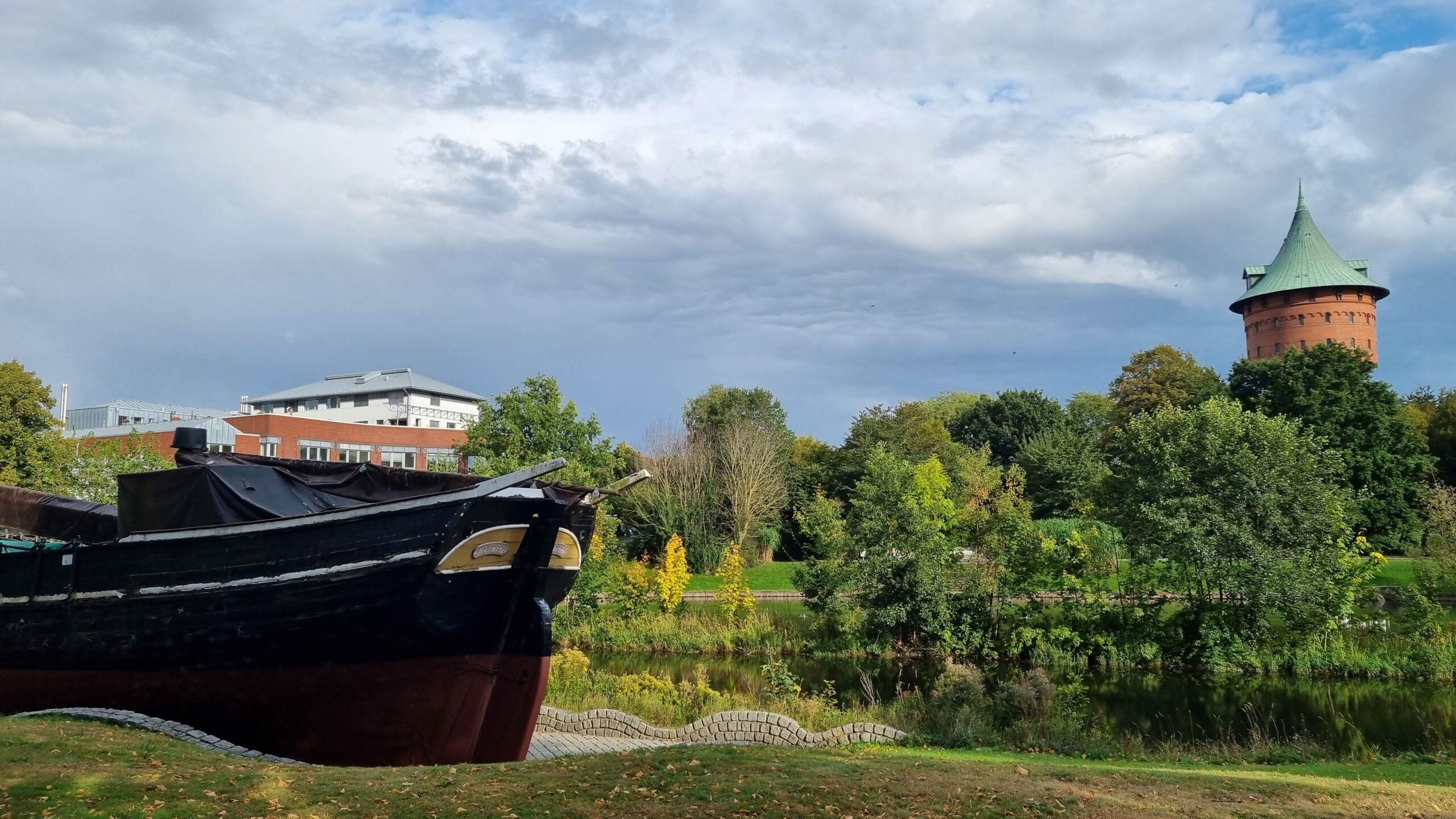
Cuxhaven city center, old gaffer in the park and water tower
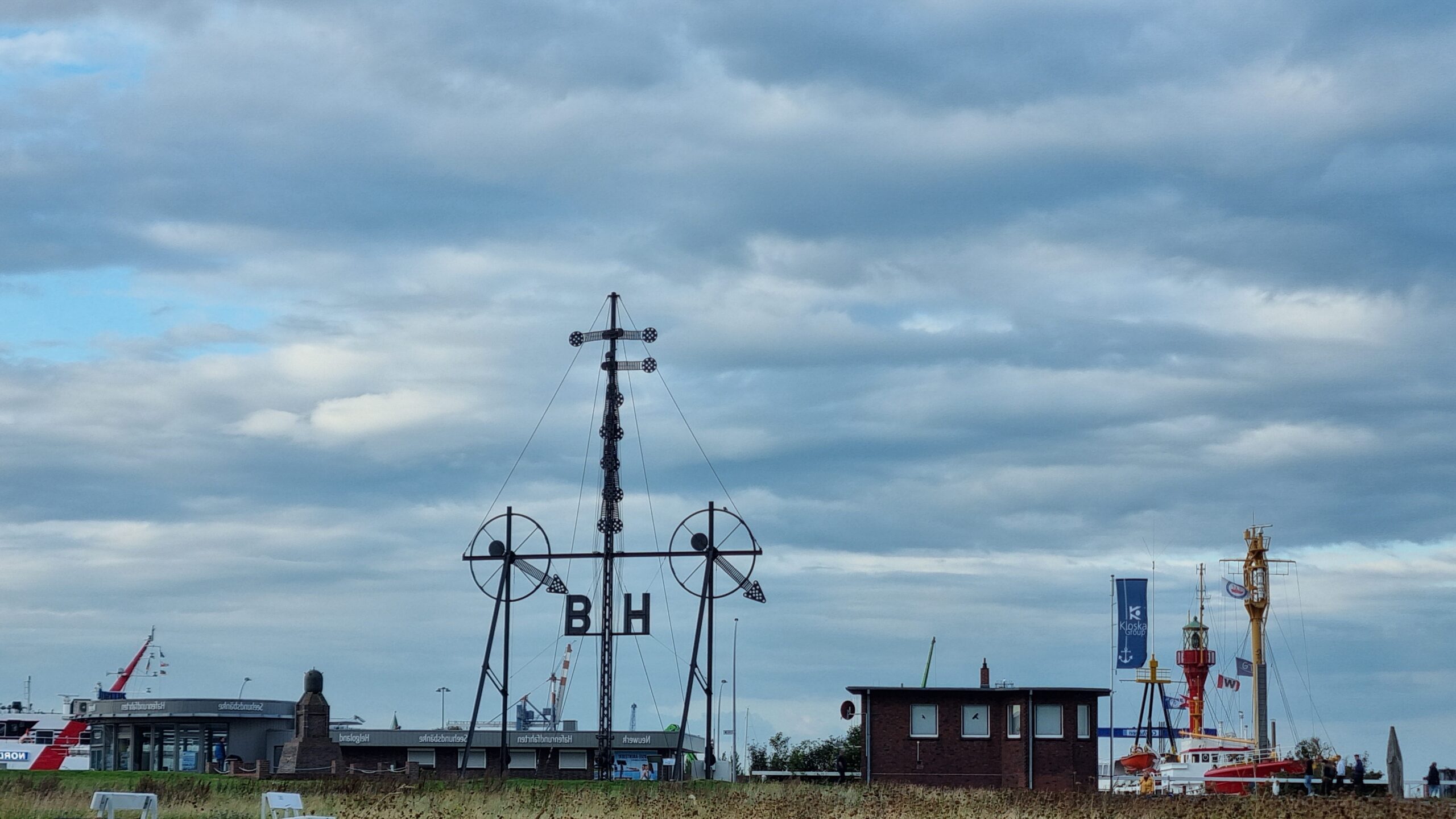
Port of Cuxhaven, this semaphore indicated the direction and strength of the wind in Borkum (B) and Helgoland (H)
The city itself is organized around its harbour and numerous locks, and exists because of the river. A small fishing port since the 13th century, it grew at the end of the 19th century with the rise of transatlantic liners, which carried hundreds of thousands of emigrants from Germany and Eastern Europe towards the American dream. The Yacht Club is located in the Hamburg America Line basin, built to accommodate the largest ships in the world at the time. A train line connected the port to the rest of the country.
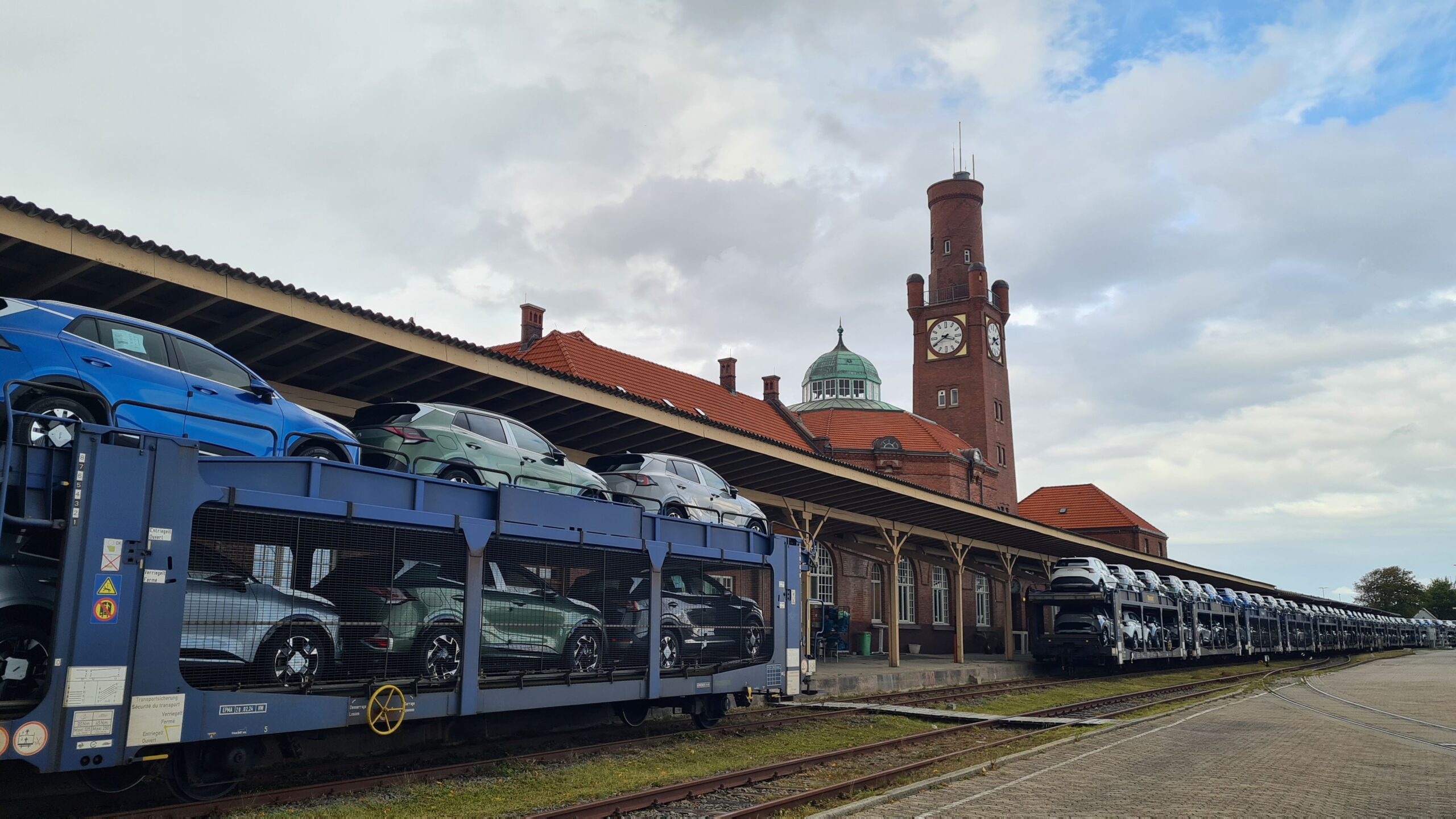
Emigrants yesterday, cars today, the train line is still in full service.
We love this atmosphere of shipyards and fishing. Everything is very flat and designed for bicycles. We use the ones the yacht club provides for free, good solid Dutch bikes; the feel is very different from our folding bikes!
Our ride takes us north of the city, where the river becomes the sea, transitioning through a muddy state. It’s a neap low tide, and the foreshore stretches for—literally—kilometres. This part of the North Sea is called the Waddenzee (Wadden Sea), and is a UNESCO World Heritage Site for its unique ecosystem. Many birds in particular live here between land and sea, as do seals, porpoises, and billions of grey shrimps, actively fished.
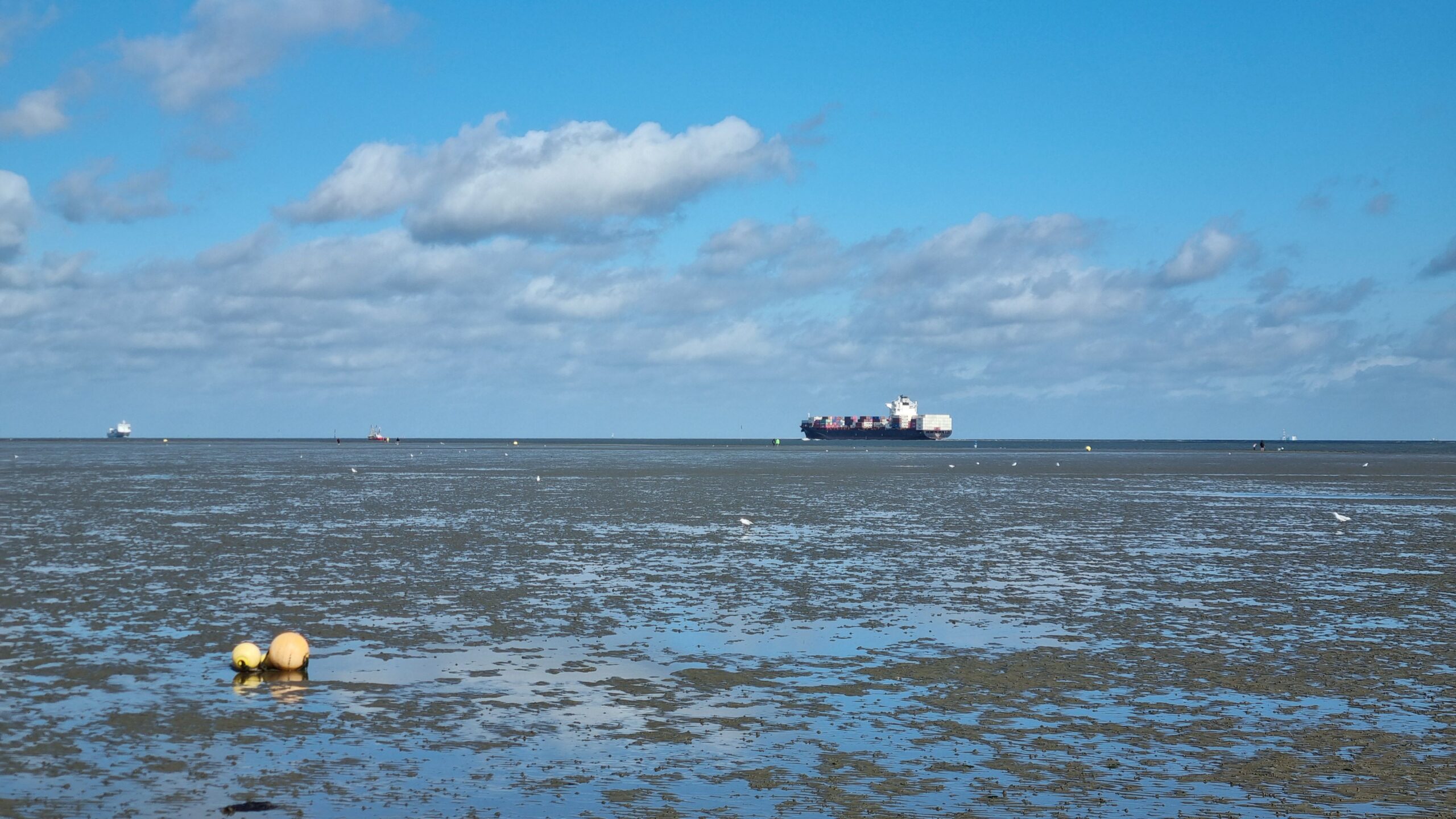
The mouth of the Elbe at low tide…
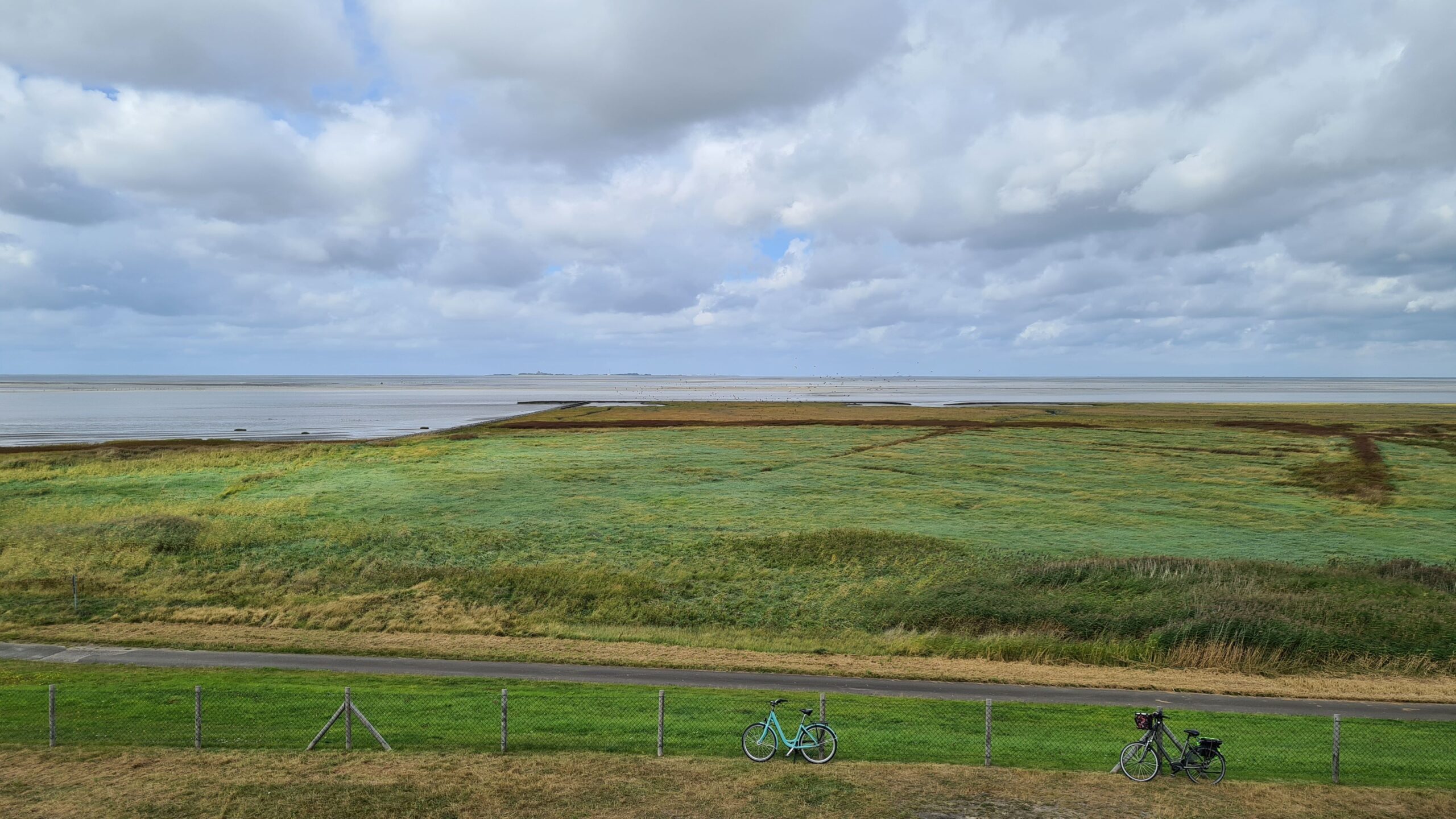
…one can actually walk to Neuwerk Island on the horizon!
The local fauna also consists of numerous tourists, all German and mostly elderly, who visit the coastal spas. Between two hot baths, it is recommended to go for a walk in the mud, or to lounge on the beach in one of the countless Strandkörbe: they are wicker armchairs, sitting two, with a large backrest that protects from the wind, and a footrest that, when raised, closes the thing when not in use. Every patch of beach or lawn facing the sea is filled with them.
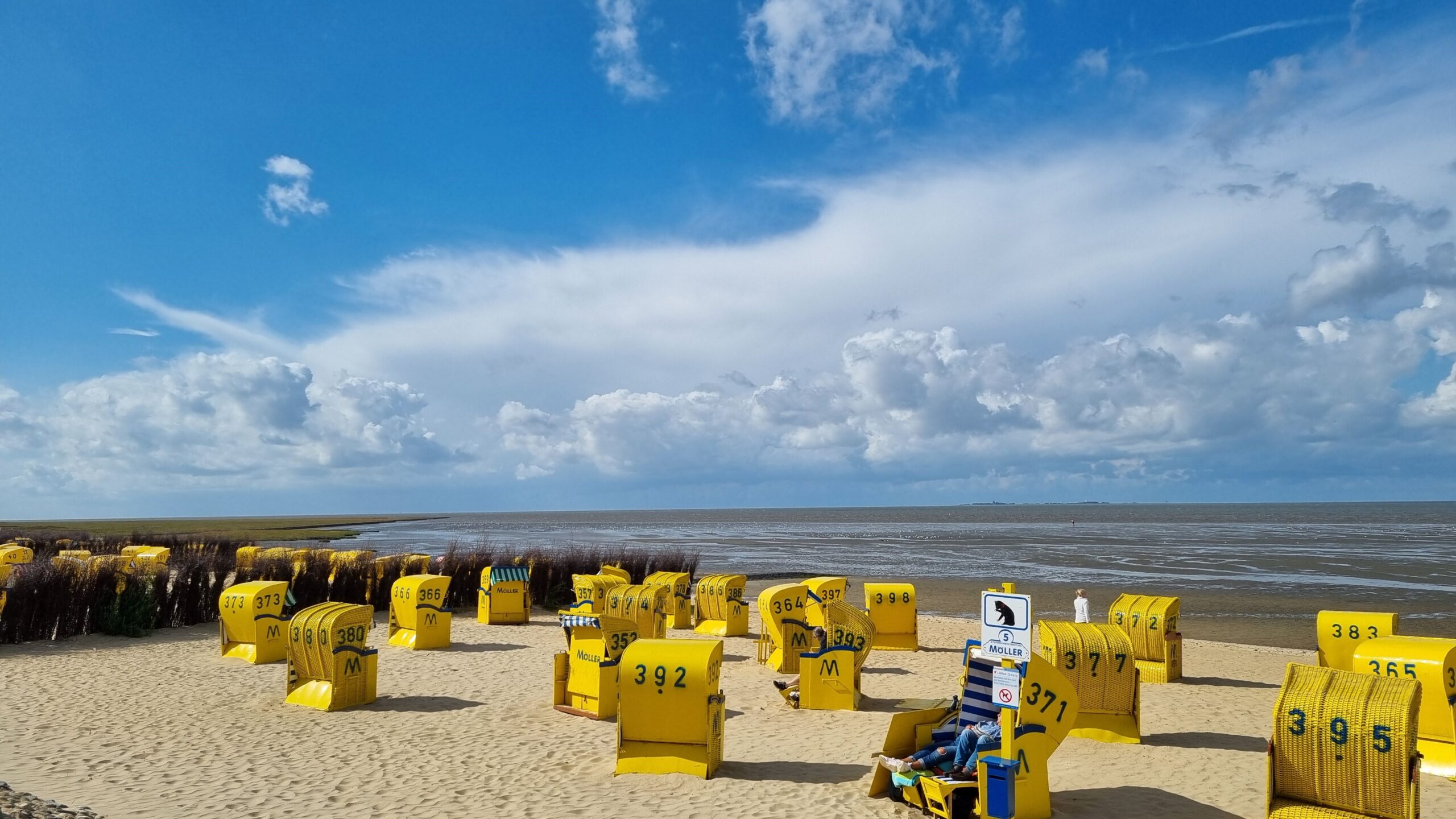
The famous Strandkörbe
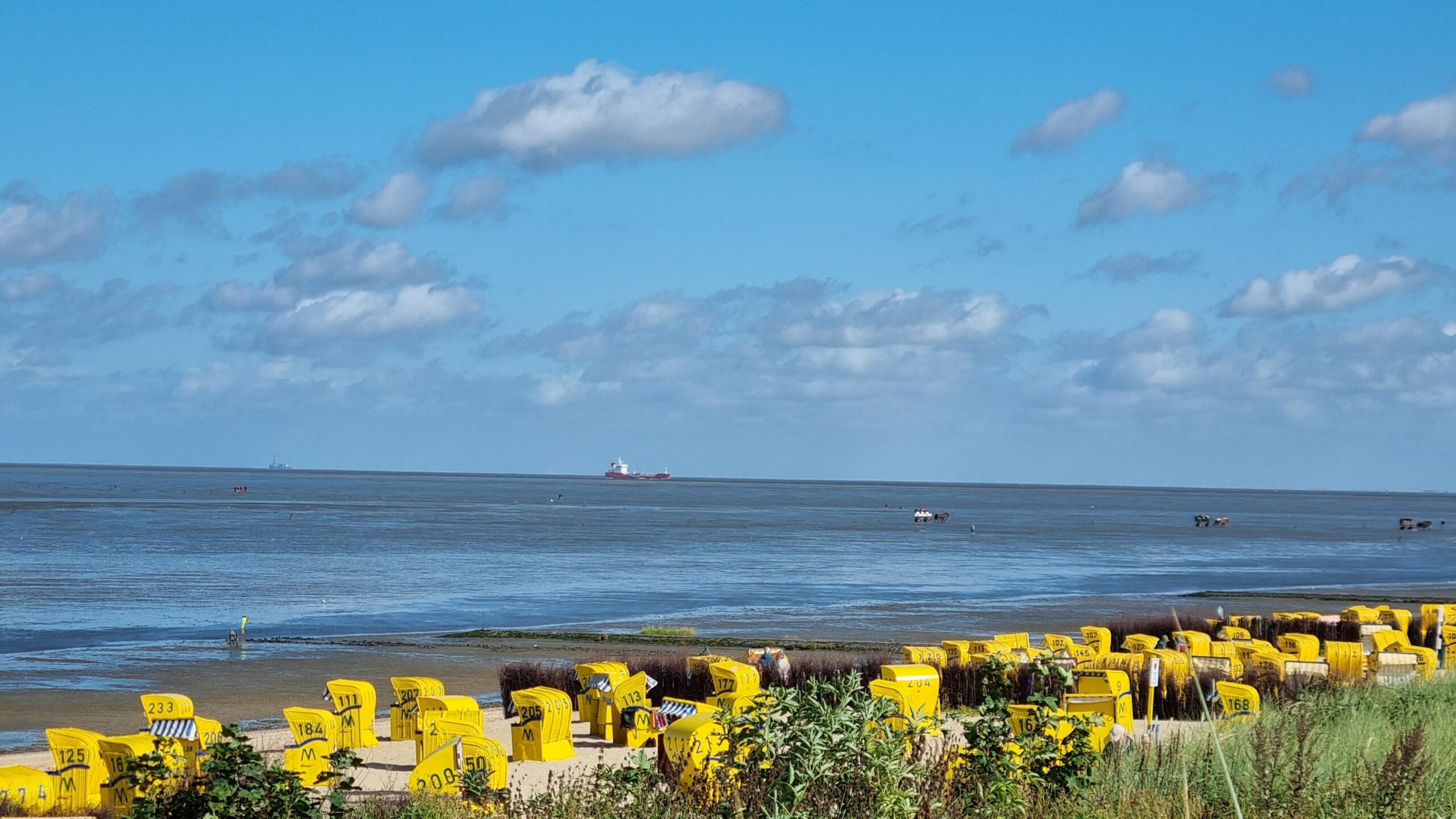
Cuxhaven in a nutshell: strankörbe, horses in the mud and cargo ships passing by
Back at the yacht club, the pontoons are teeming with people. We’re told (in German, of course…) that it’s the last weekend before the winter storage period, and that there will be a barbecue tonight to celebrate. The atmosphere is really friendly, but we suddenly feel very late in the season seeing all these boats unrigged, and some even dismasted… We seem to be the only cruising yacht waiting… almost! We meet Nicolas, an Argentinian sailor coming from Sweden and bound for Portugal on his Polish-flagged Hallberg-Rassy 31. He lives onboard and works from his boat as a financial advisor; he’s the first true digital nomad we’ve encountered.
The wind is still blowing, but we have some nice clear spells between the rainy periods. It’s the perfect opportunity for another bike ride, heading south along the river this time. The port of Cuxhaven seems to be a hub for the wind industry and we pass impressive blade storage areas.
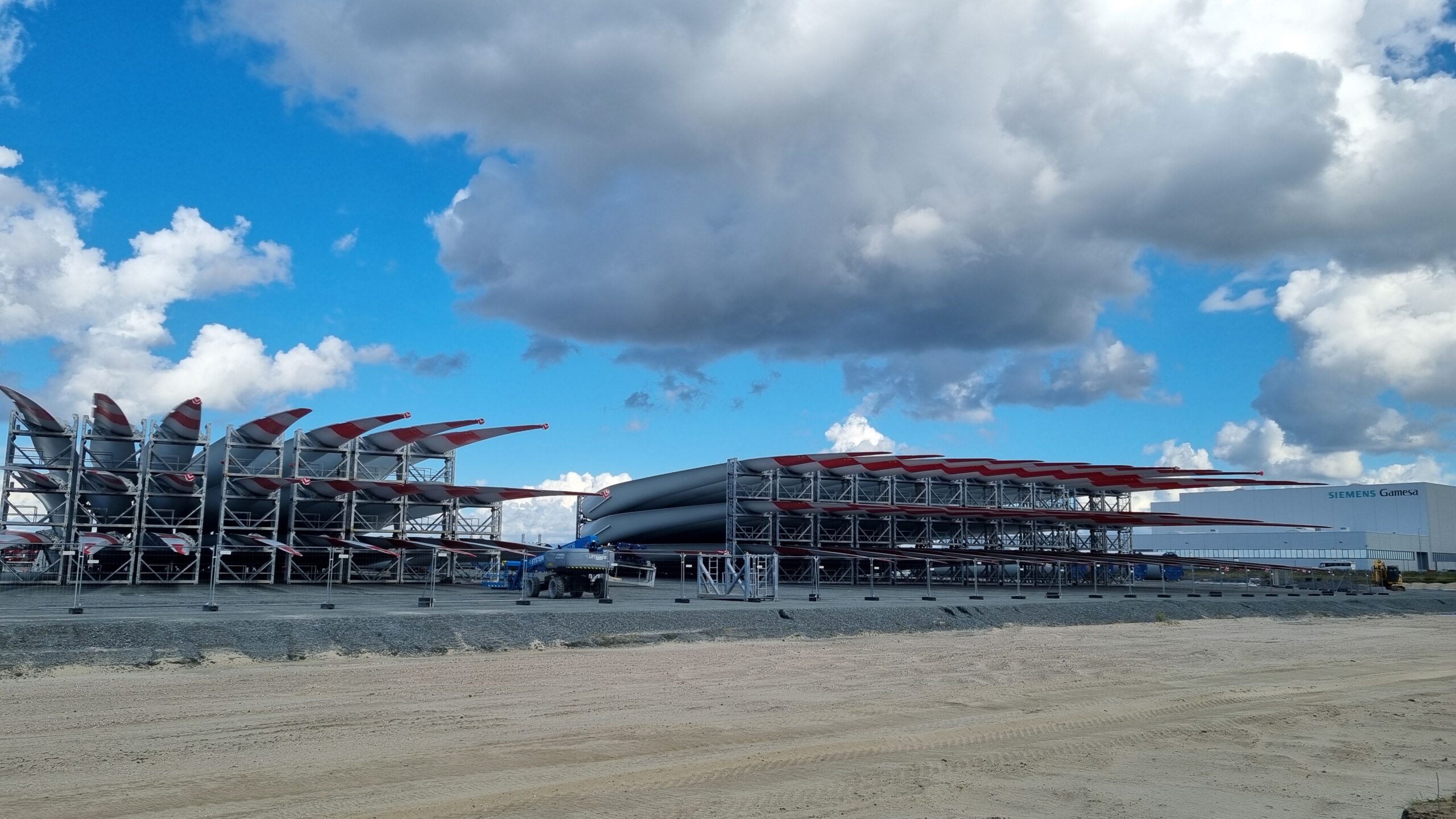
Wind turbine blades always work in threes, of compatible weight
Slightly nicer looking under the sun !
After the industrial area, we cycle between the river and the dyke through a landscape that reminds us more and more of Holland. The small port of Ottendorf is charming in the contrasted light, but we’re getting eager to go out of this river…
A short summary of our bike tours in Cuxhaven
Between two bike rides, we take care of the boat and begin to seriously prepare for our winter dry-dock in Brittany, if we ever get there… Lists of repair work, spare parts, and searches for shipyards where we can dry-dock the boat are all starting to take shape. We’re also winterizing the watermaker so we won’t have to run it regularly anymore. There are almost no anchorages left on the coasts ahead; we’ll find water everywhere.
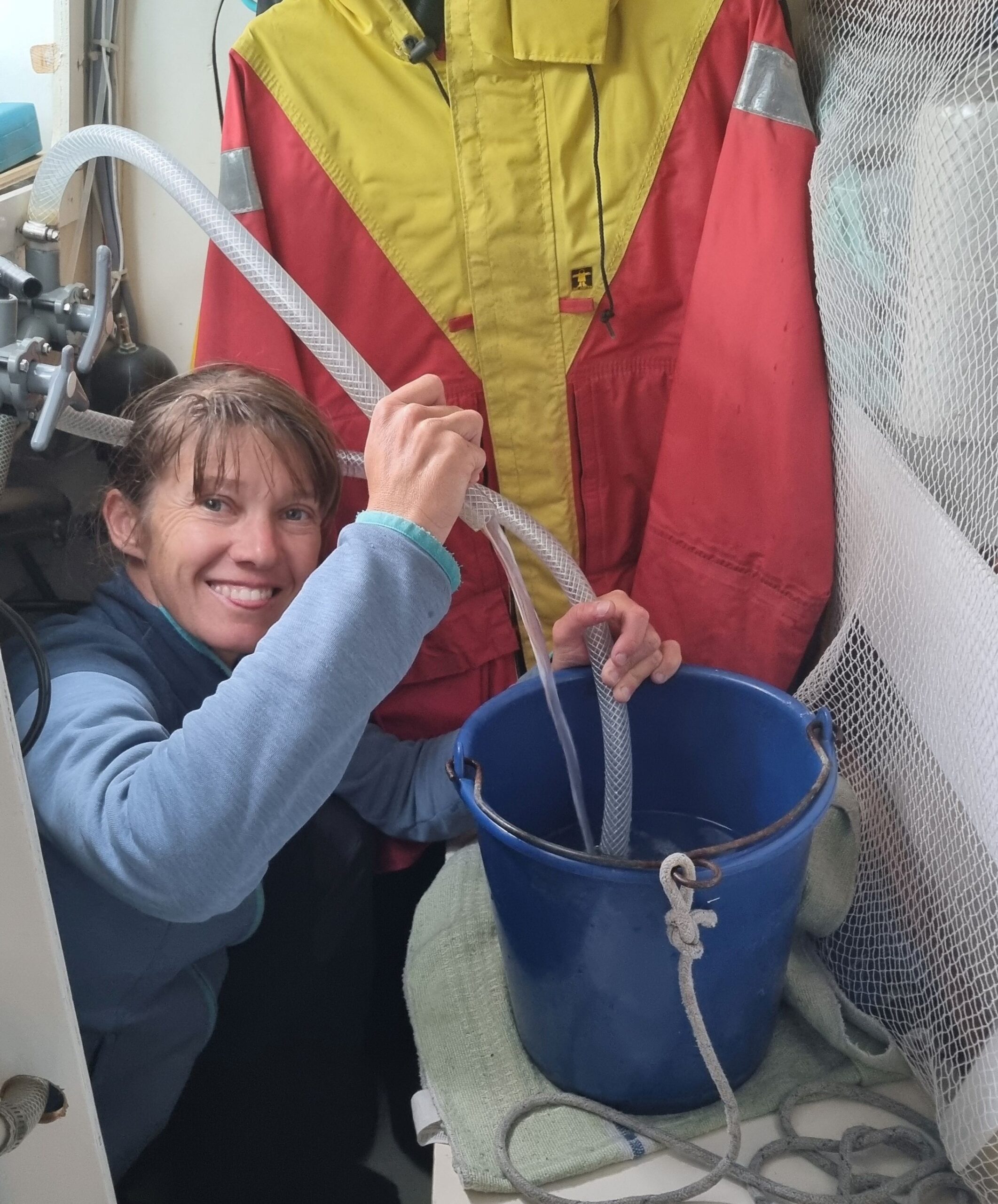
Winterizing of the watermaker in progress
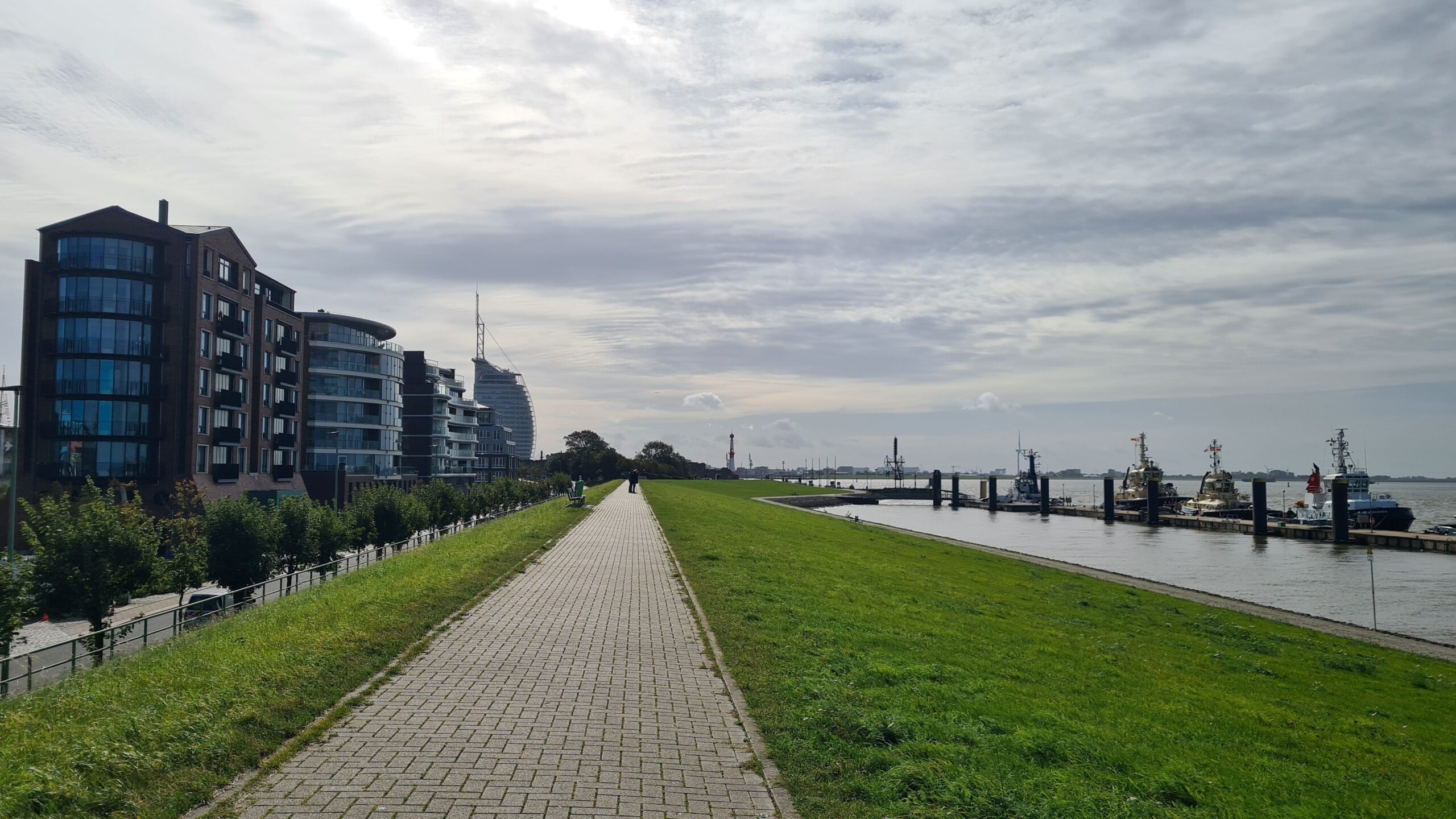
Bremerhaven, river side
The wind never stops blowing, and we’ve somewhat exhausted Cuxhaven’s “must-see” list. So, we take the train to Bremerhaven, the major port on the Weser, the next river. The city is much larger and much more developed for tourism. Some information is even available in English!
After a nice walk through the port district, we visit the Emigration Museum. The region’s most important port of departure, more than 7 million Europeans left the old continent from this city in the 19th and 20th centuries. The museum is extremely well designed, with many historical details and a very intelligent presentation and many questions and dilemmas discussed. We spend hours there and leave delighted.
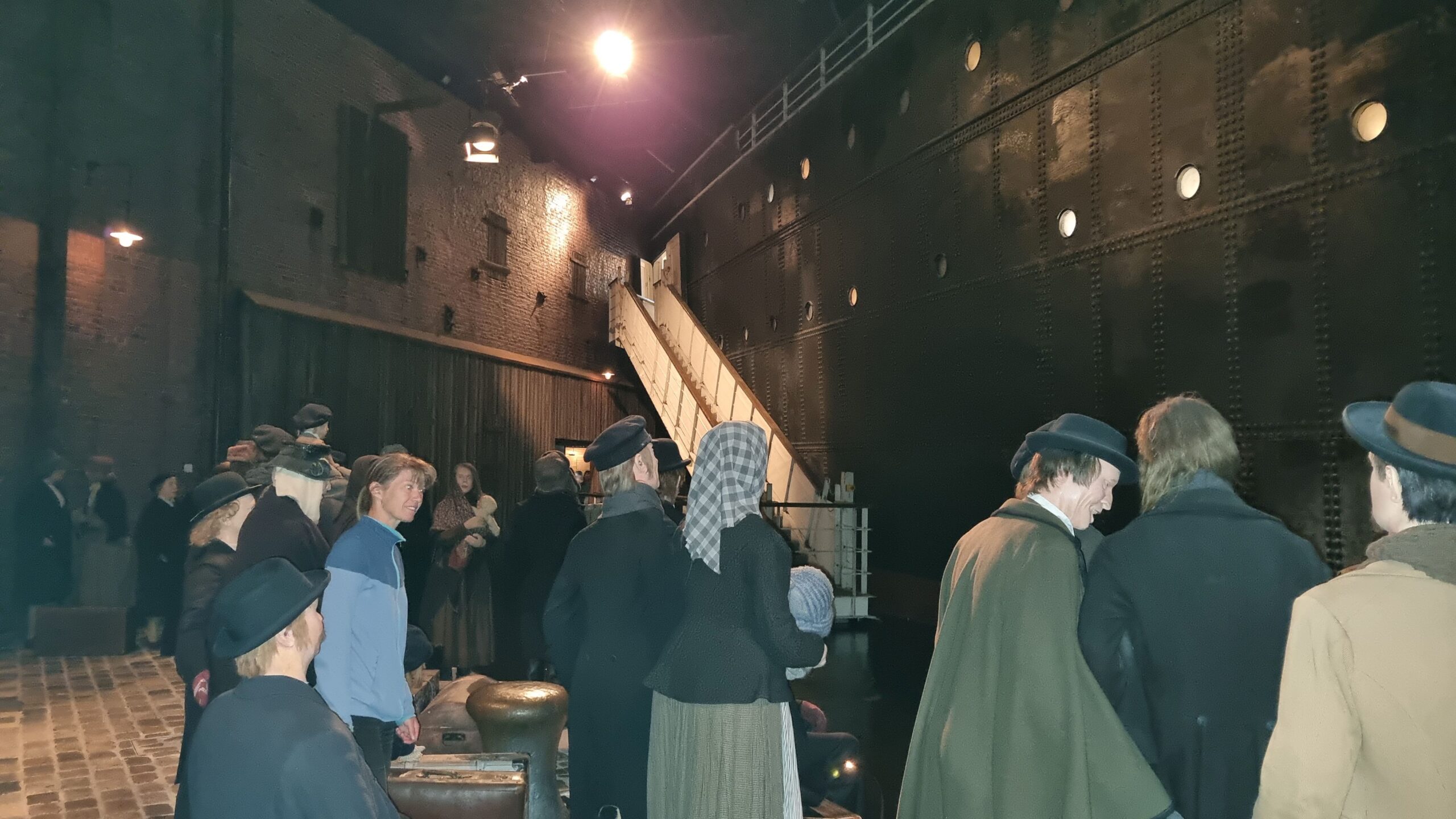
The museum offers an immersive experience, with extensive decorum and statues
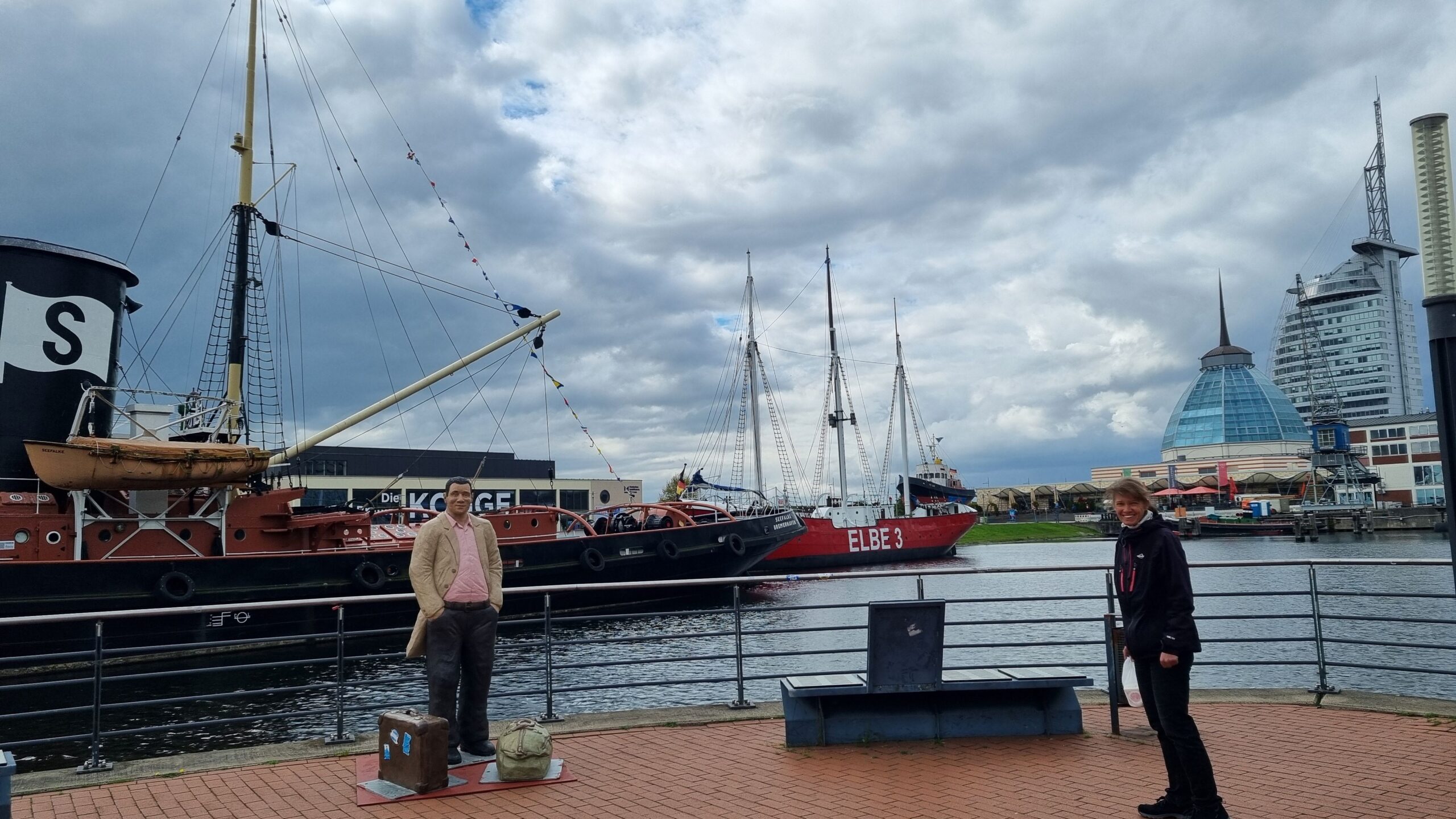
The historic port with the maritime museum, and one of the hyper-realistic statues that flourish in the city
We hadn’t planned to visit the Maritime Museum, but on the occasion of its fiftieth anniversary, the boats are open to all! It’s so tempting, we visit a tugboat from the 50s and a lifeboat from the 30s, marveling at the engines that fill entire rooms! We return to the boat, tired of a full day on our feet, and quite pleased with this little excursion.
September 19-20 : Cuxhaven – Borkum (101NM)
After days of gusts and gales, the wind will catch its breath for 48 hours, before a new low-pressure system arrives… Just enough time for us (and all other yachts in the area) to move forward one square on our giant snakes and ladders game.
We set off with the change of tide, the water suddenly fills with sailboats. But where were they hiding? The weather is magnificent, and we all head towards the mouth of the Elbe.
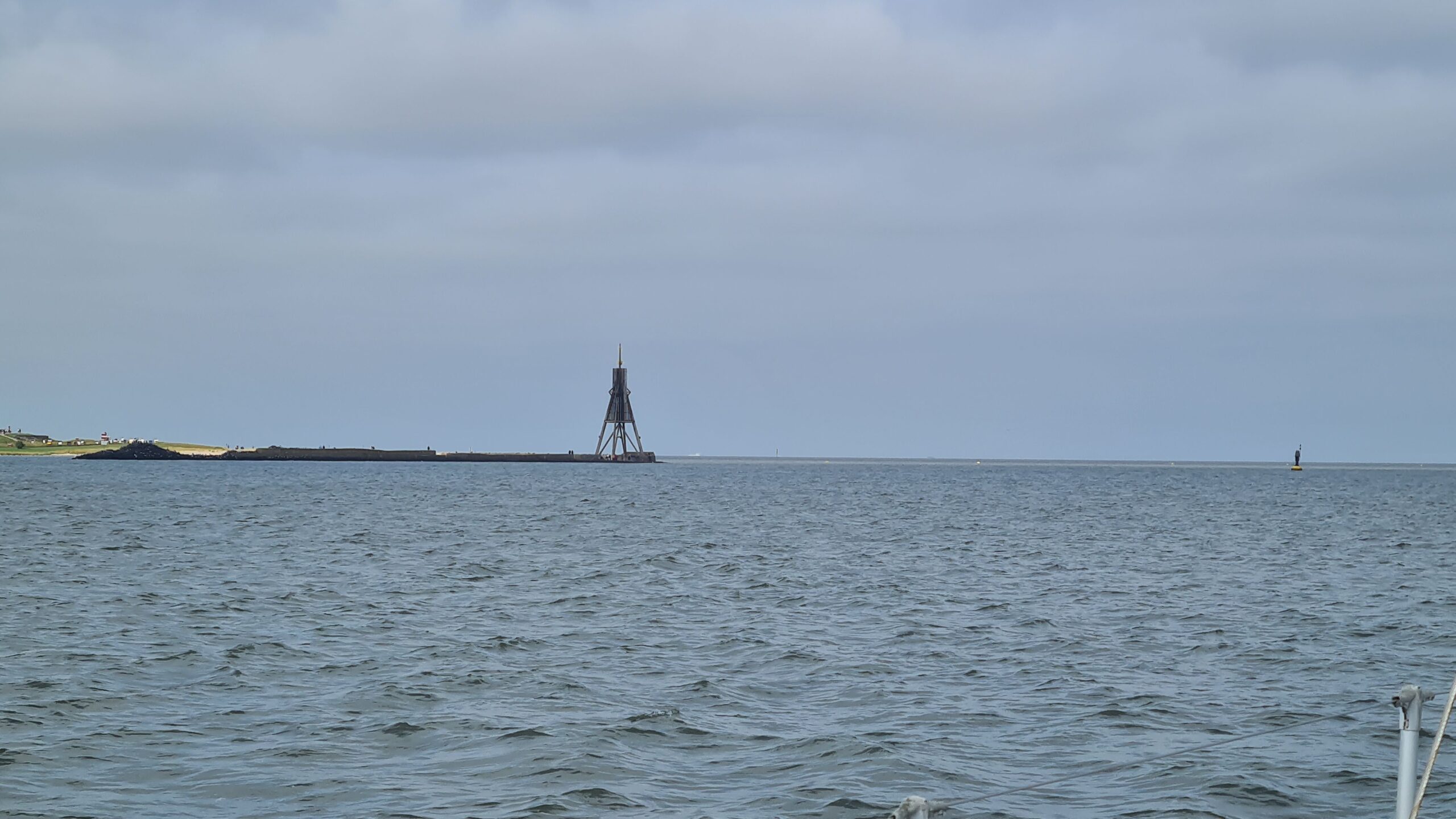
The Kugelbake, a historic wooden beacon that has marked the mouth of the Elbe for over three centuries
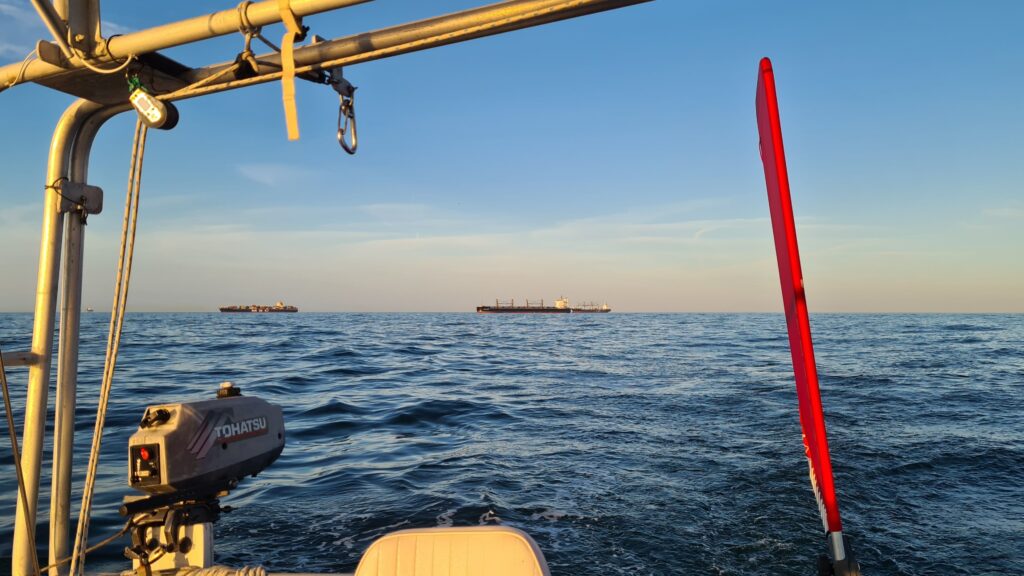
Passage through the anchorage area between the Weser and the Elbe
After a few gusts around the last buoys of the channel, a long lull forces us to start the engine for a few hours. It’s a good thing, because we need to get away from the heavy traffic between the Elbe and the Weser. Then night falls, the wind picks up, and we can resume our journey, between the islands and mudflats to port, and the commercial traffic to starboard. We are still surrounded by sailboats; we haven’t seen so many boats since Oslo. It’s clearly not the end of the season yet, hurray!
We’re making good progress; we even have to slow down a bit to get the current and daylight with us in the Borkum channel. A few tacks between the sandbanks later, and we arrive at the pontoon. We meet Nicolas there, who is mooring, and we take the berth just behind him! It’s still early; we have all day to rest and prepare the boat for the short but violent low pressure system expected the next day.
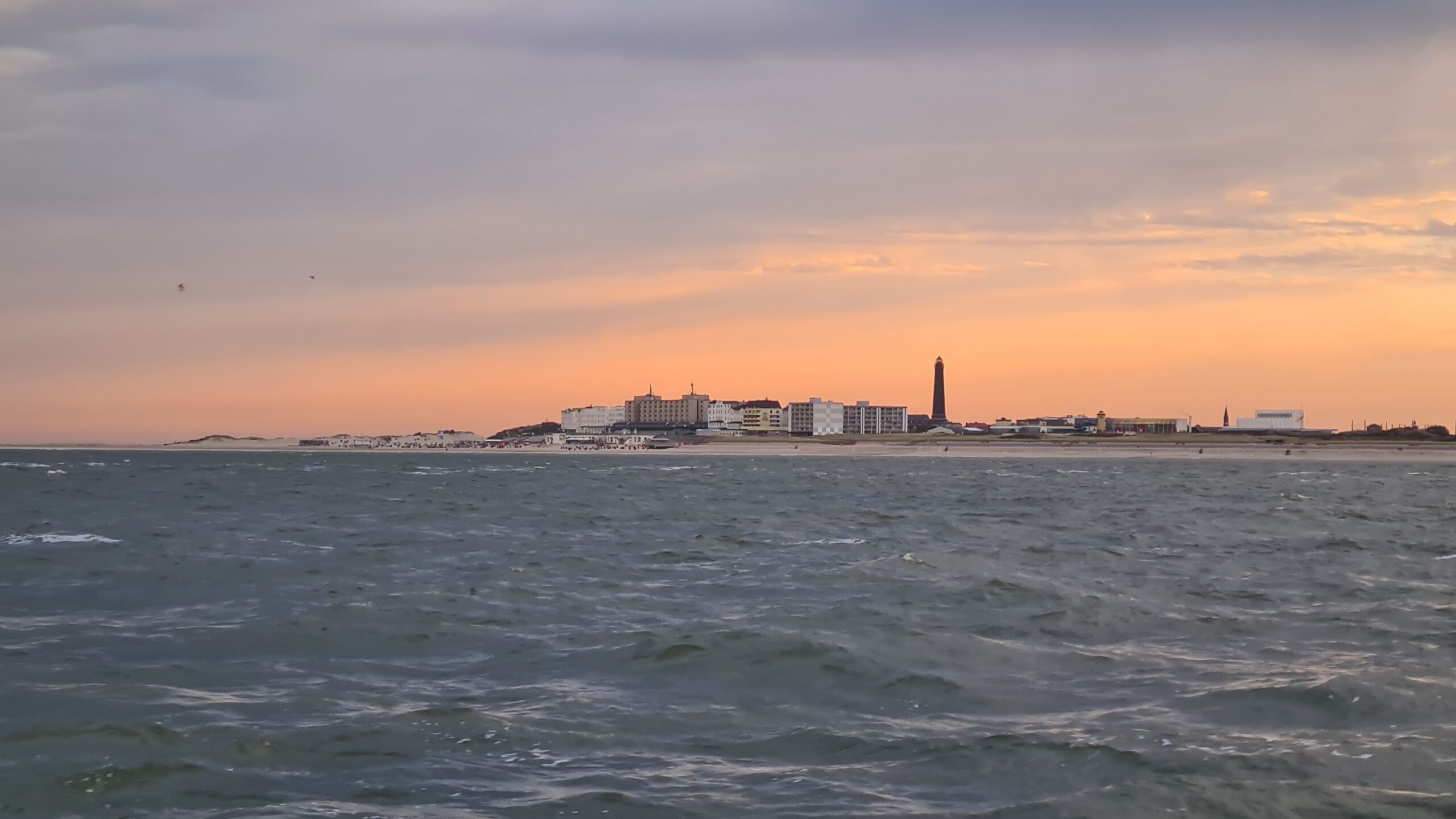
Arriving in Borkum at dawn
September 21-22: Stopover in Borkum
The wind arrives as expected, first from the south, with very warm air and rather unpleasant chop that blows into the harbour, then suddenly shifts to the north, becoming icy.
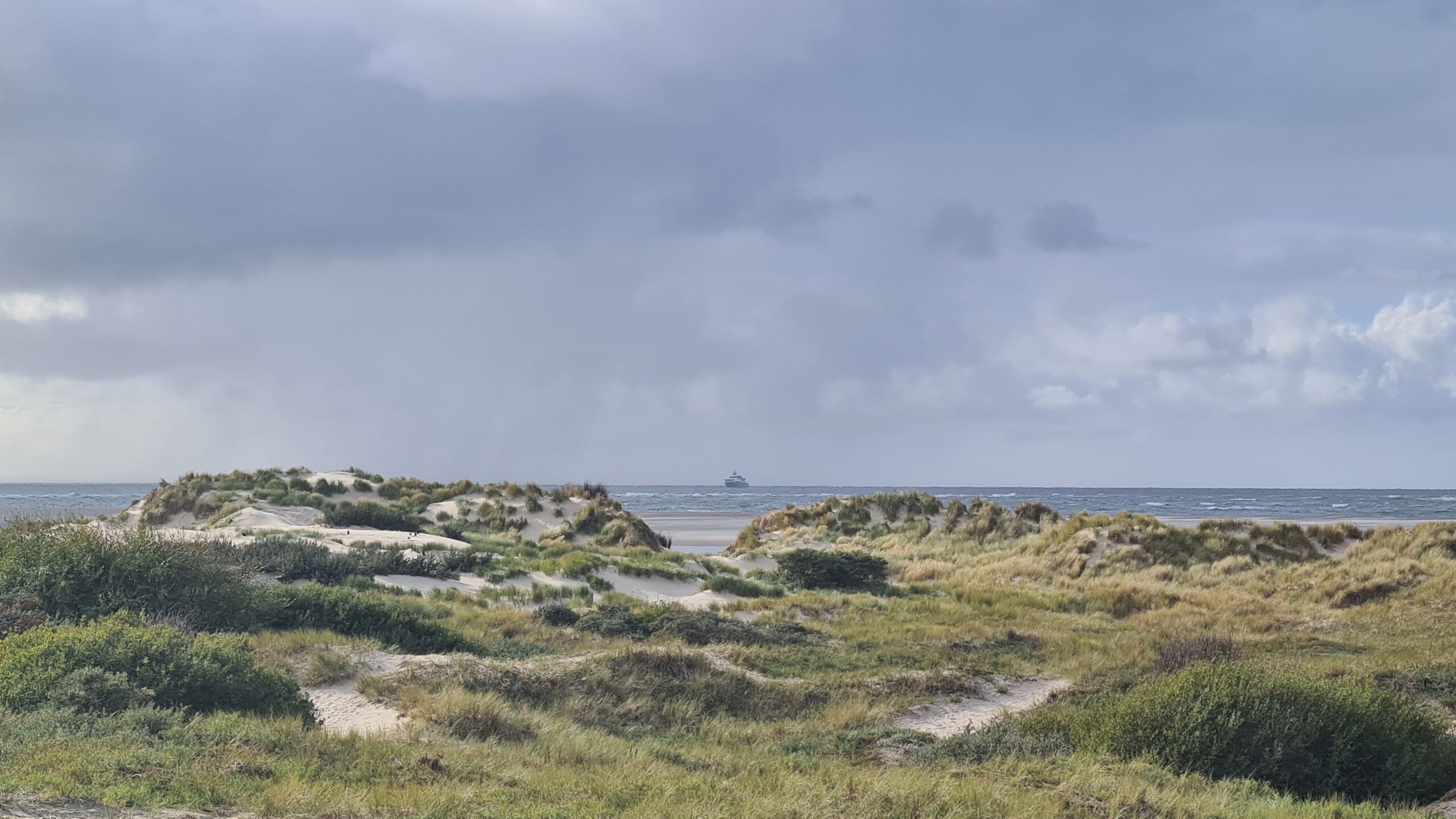
Borkum dunes, on the sea side
With the cold front, the weather clears, and we set off for a bike tour of the island. It is typical of the Frisian Islands, whether German or Dutch: sand dunes on the seaward side, vast flat and somewhat marshy areas landward.
On the beach, we still find German Strandkörbe, but the dunes and sand yachts could already be Flemish.
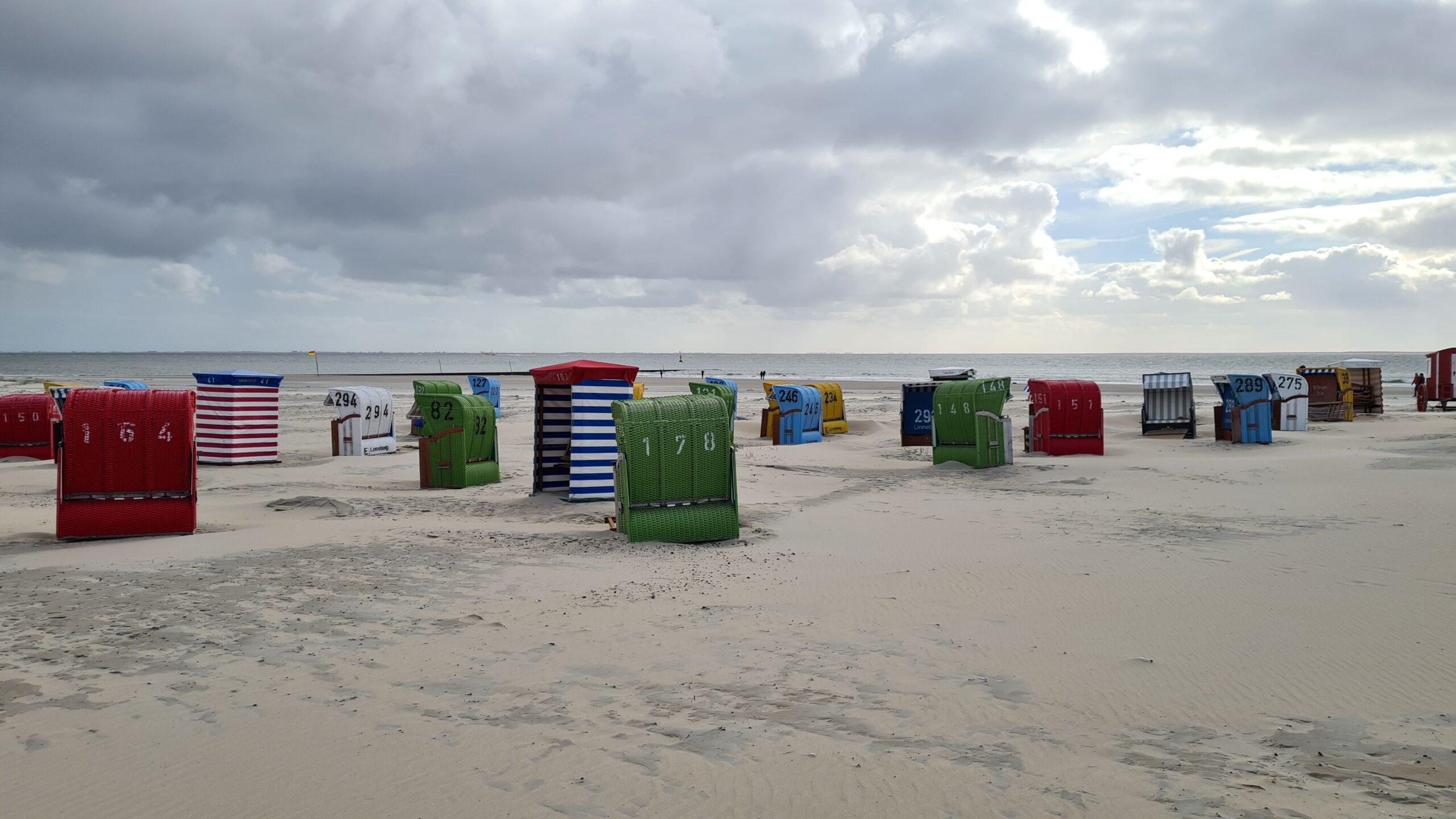
Strandkörbe on a northerly beach…
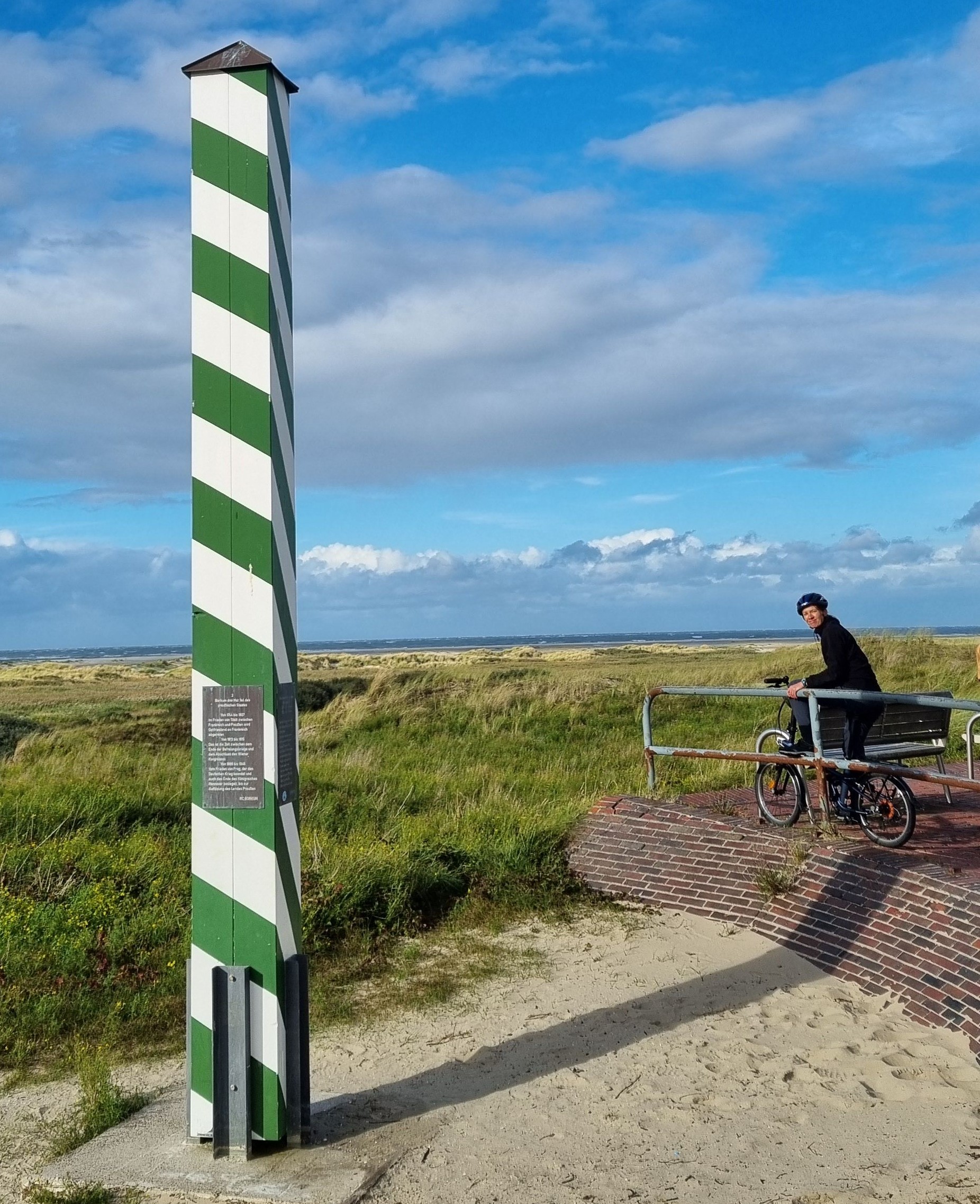
The northwesternmost point of Germany!
Our next stop is the very official northwesternmost point of Germany: neither the northernmost nor the westernmost, but they had to find something to mark!
The way back is rather poetic, biking on the dyke in the setting sun, swallows around us, skimming over us…
Borkum is of perfect bike size
This tour also gave us a glimpse of the sea state: it’s rough after the morning storm, and isn’t expected to calm down until the day after tomorrow… We’ll have to wait another day before setting off again…
Since we’re here, we take another trip the next day, this time in town. A visit to the large lighthouse offers a magnificent view, and the old streets tell the stories of the fishermen and whalers of times gone by.
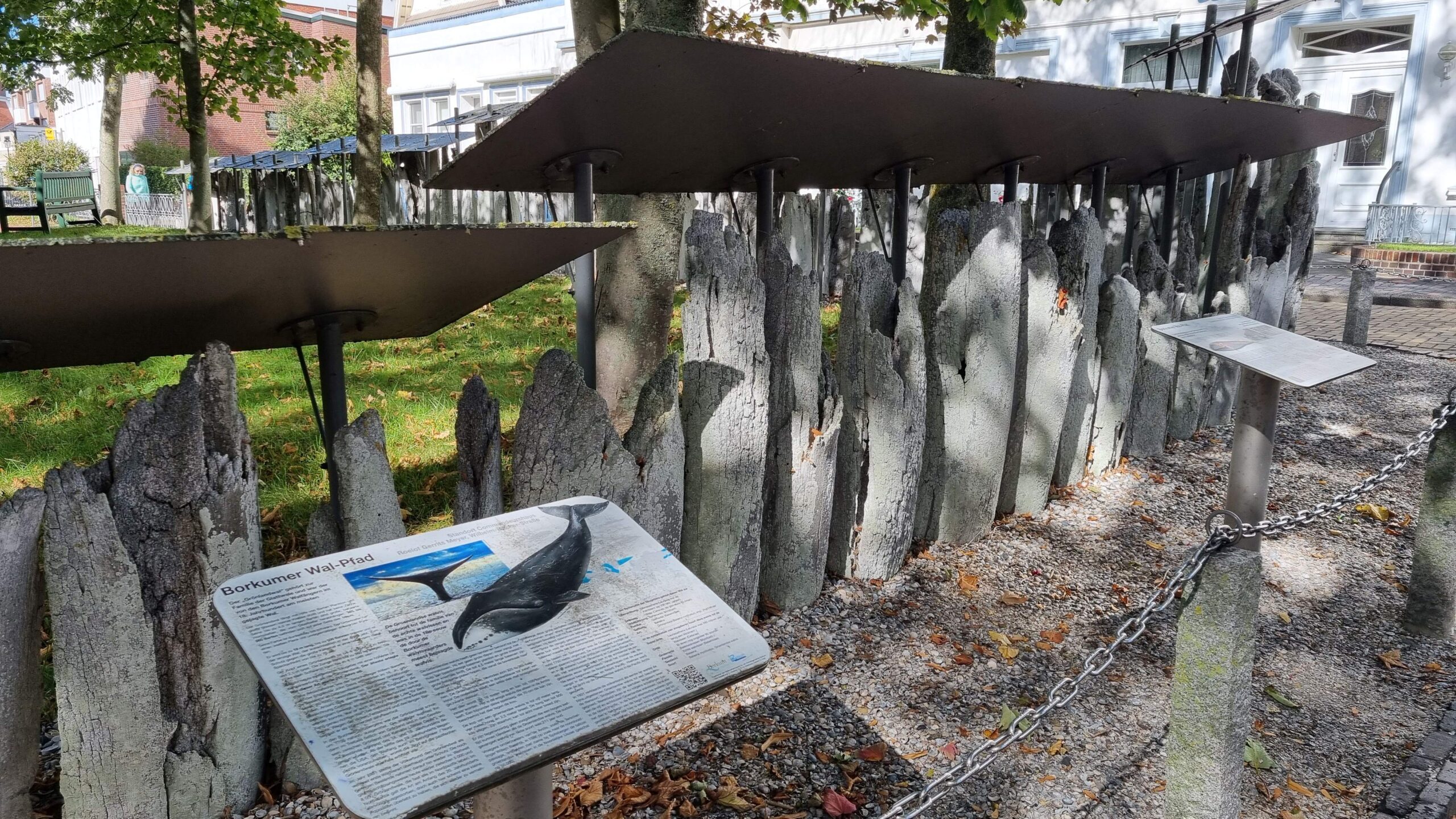
Whale bones were boiled to extract all the oil, before being used to make magnificent palisades.
September 23-25: Borkum – Dunkirk (251 NM)
We’ve been praying for it for several days; a small miracle of northeast wind is forecast, which should allow us to make good progress towards Brittany. It’s certainly expected to be quite strong in 24 hours, but we have a good boat, and since it is blowing offshore, it’s not dangerous. So, we set off against the current with the firm intention of eating up some miles!
The first miles are a little more complicated than expected: the northerly swell is still very much there, but the wind is extremely disrupted by numerous surrounding squalls. We go from light calm to twenty knots, then to nothing again… after a few exhausting hours of this regime, we finally reach a more stable downwind stream.
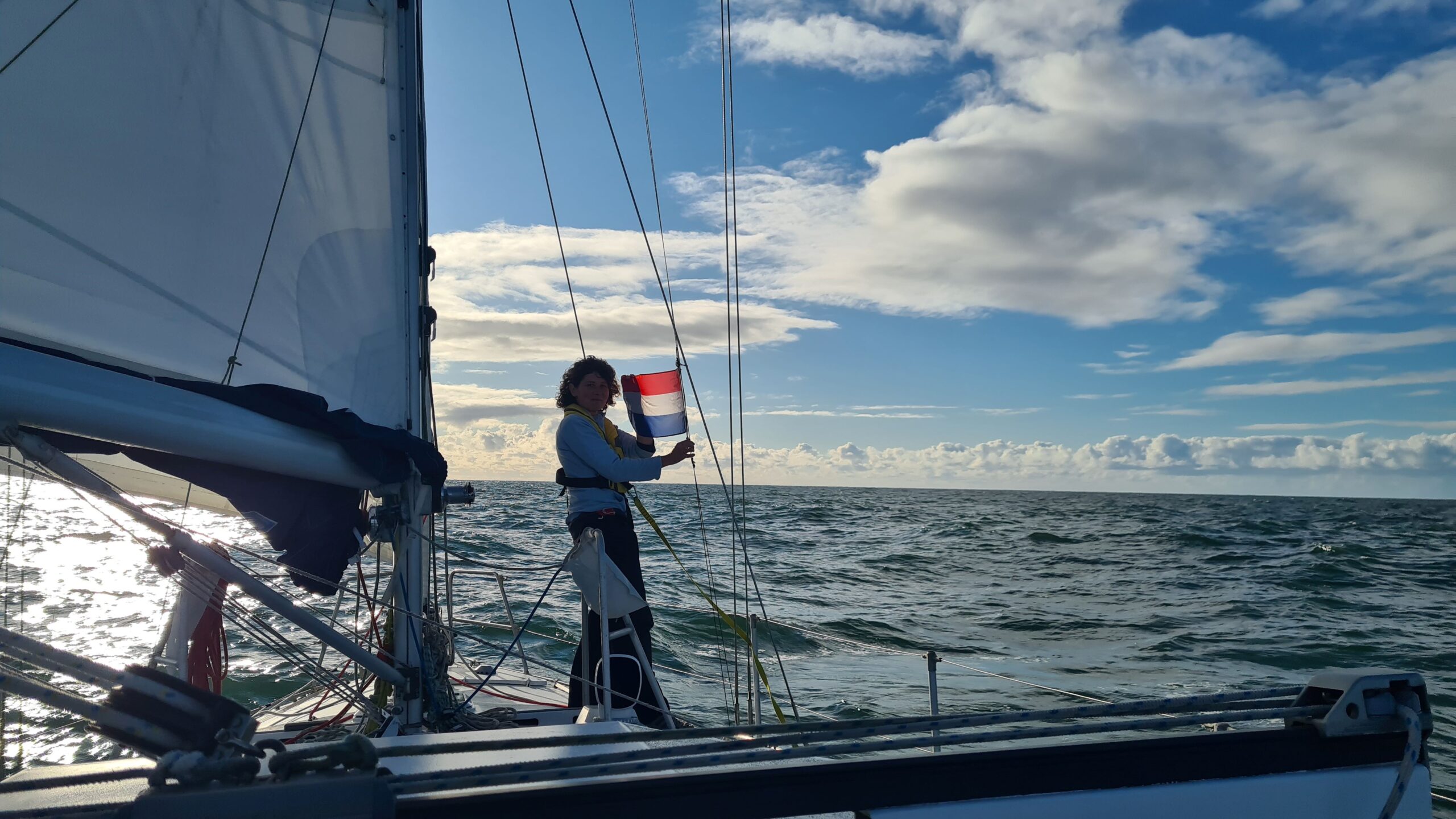
We are now sailing in Dutch waters !
We are now sailing along the Dutch Frisian Islands and the swell calms down as soon as we turn south. The first night is magnificent, under a starry sky without moon or clouds, an easy run far enough from the traffic lanes to avoid being bothered by big ships. There are no more sailboats around us except for two Estonians: the vast majority of sailors prefer to take the sheltered inland waters routes through the Netherlands. Less swell for sure, but lots of locks and motoring, in the end much less efficient navigation.
Here we’re flying ahead! Day breaks over the island of Texel, the Dutch coastline reveals itself: flat except for a few buildings and heavy industries emerging behind the dyke. We are approaching “Cheerful Ijmuiden”, recognizable by its conspicuously dense factory smoke. Here we could seek shelter if the weather deteriorated, but all the reports we receive on our smartphones and VHF confirm: maximum force 6! So, on we go, taking in the second reef…
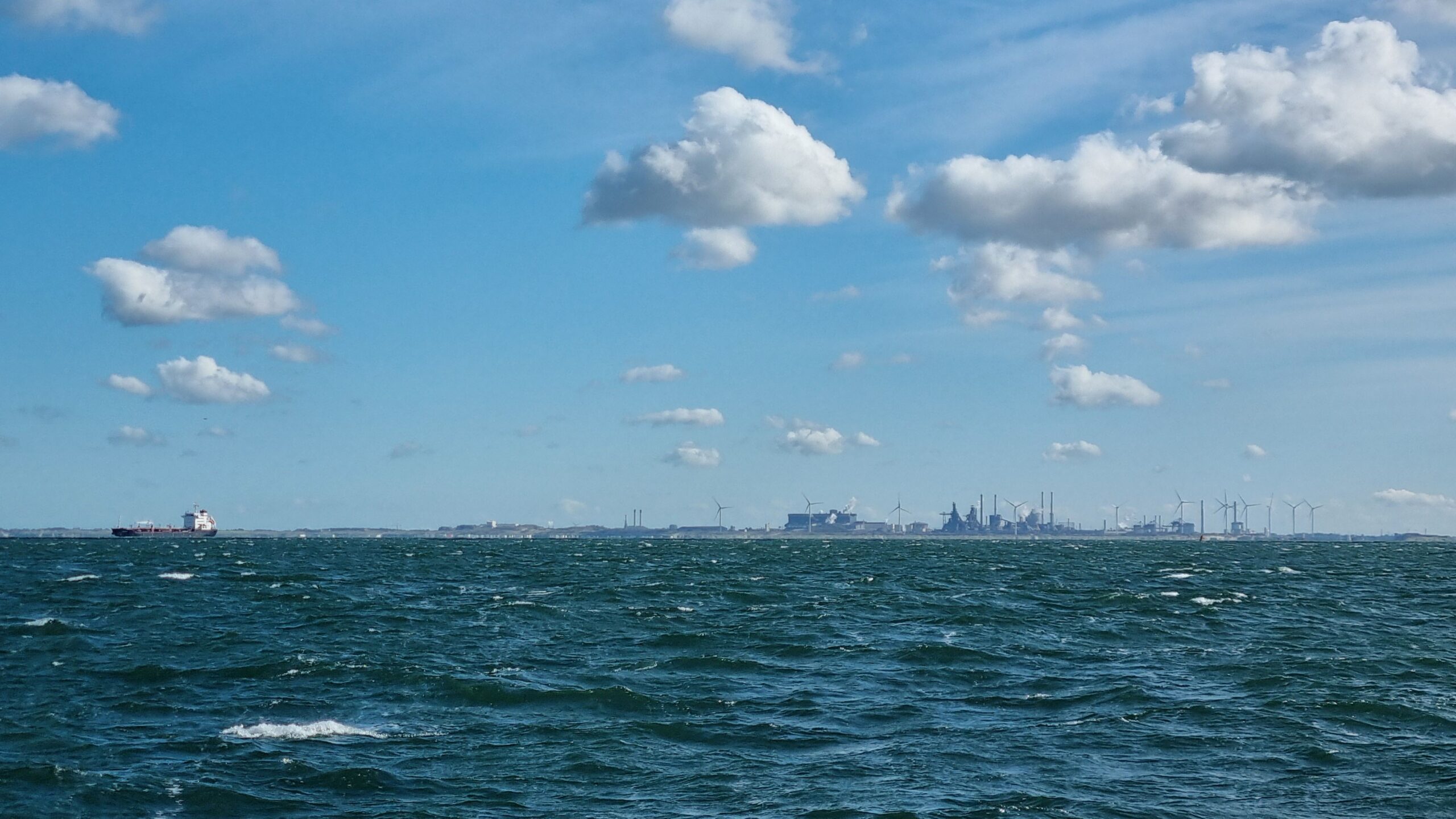
Aaaahhh, our beloved Ijmuiden…
The wind is now blowing over 25 knots, gusting near 30, the boat is making good headway. However, we are exactly downwind and have not yet found the good sail combinations for the boat in these conditions. Opening up the genoa with the pole doesn’t seem like a prudent strategy as we approach the Rotterdam traffic separation scheme, we must be very manoeuvrable. We’ve already been disappointed by the performances of the headsail alone, so we’re testing the mainsail alone now. It works, but it’s less comfortable and the risk of gybing is always present, even if Oscar our wind vane amazes us by his steadiness.
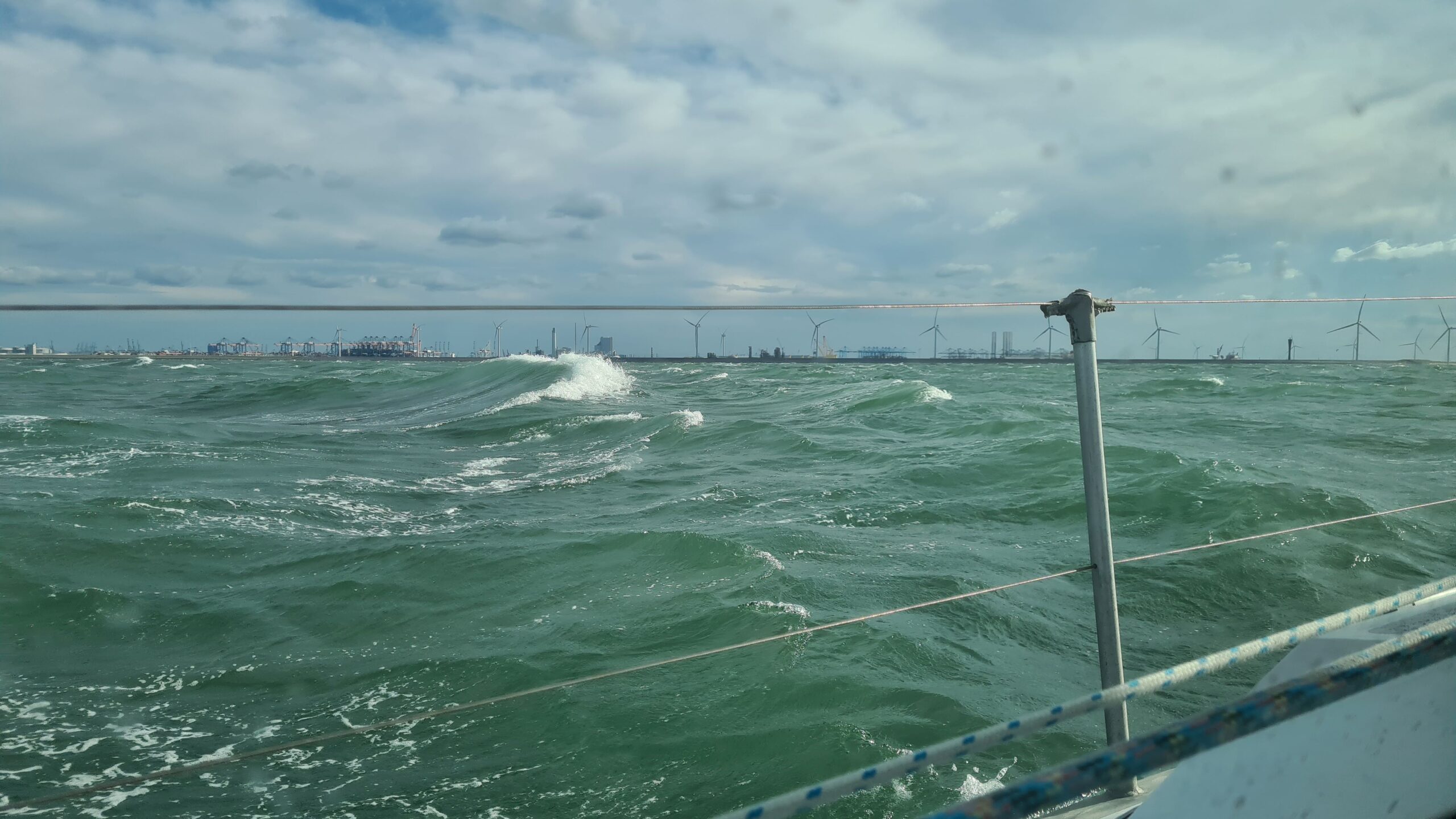
Rather rough passage across the Rotterdam channel
We pass the TSS without an issue, but the newest part of the harbour recently built on the sea extends out offshore and strengthens the current, which, against the wind, creates a very rough sea… Once again, UtPåTur sails right through it…
The following night is very much a repeat of the previous one: strong winds, heavy traffic, choppy seas, sandbanks and buoys everywhere… As we approach the Belgian coast at dawn, the wind eases enough for us to shake down a reef. Dunkirk is not far away; we can see the lighthouse on the seawall and the white buildings of the Grand Pavois, where Camille used to live for the first years of her life!
One last turn in the cross current and the heavy seas, and we’re sheltered behind the sea wall. Heading for the Port du Grand Large, and its easy-to-navigate visitor pontoon, oriented into the wind, we’ll perform a very nice arrival maneuver in gusts of 26 knots and 45 hours without much sleep. We’re so happy to have finally left Germany! And it’s a little stunned that we realize we’re… back in France!
A good coffee and a long shower later, and we set off for a walk. The Port du Grand Large isn’t actually in Dunkirk itself, but in Malo-les-Bains, the exact neighbourhood where Camille was born. It’s been a long time since she’s been back there, and her steps naturally lead her to the promenade and the beach. The colours are still the same as in her memories…
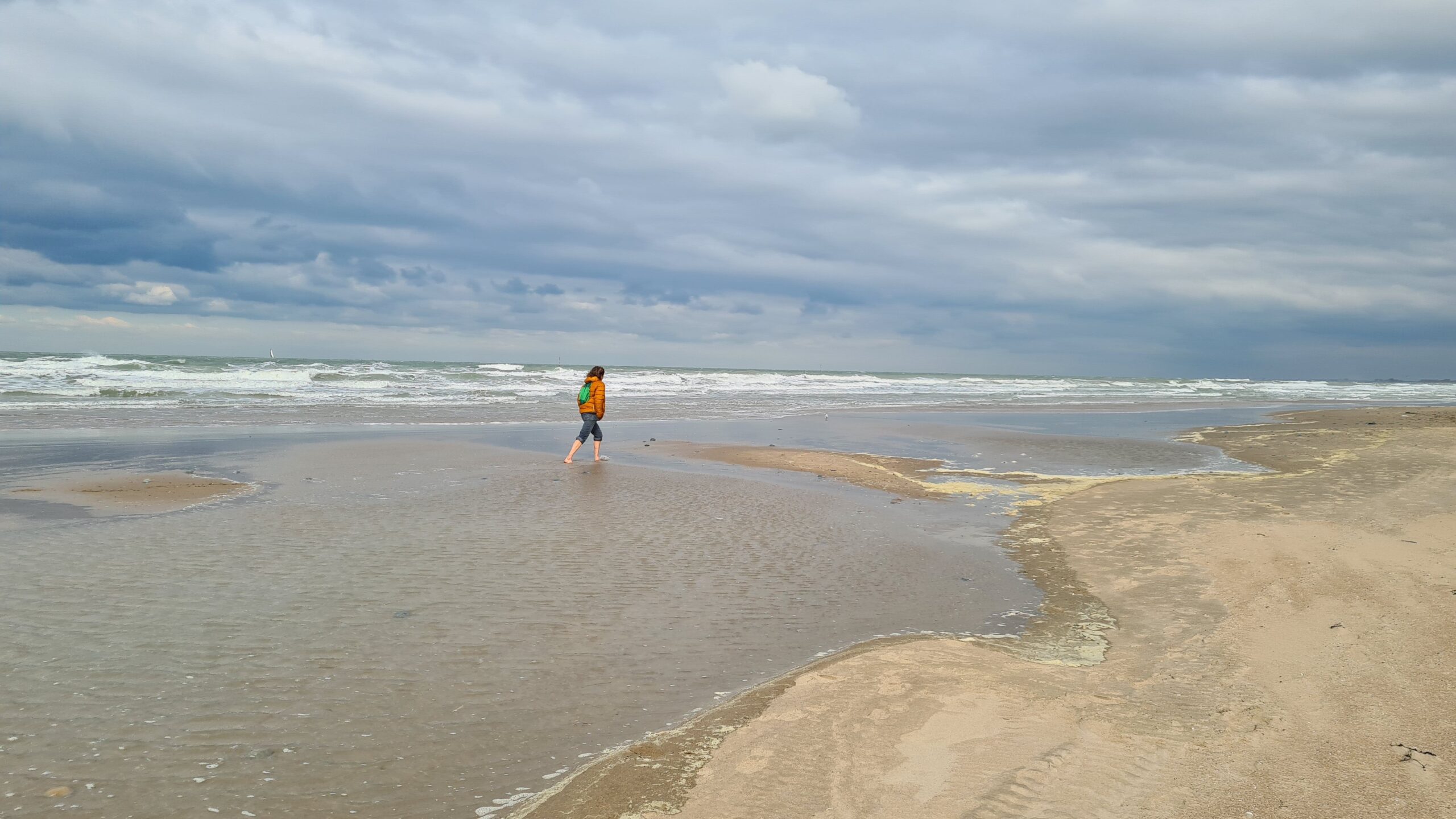
The beach of Malo-les-Bains!
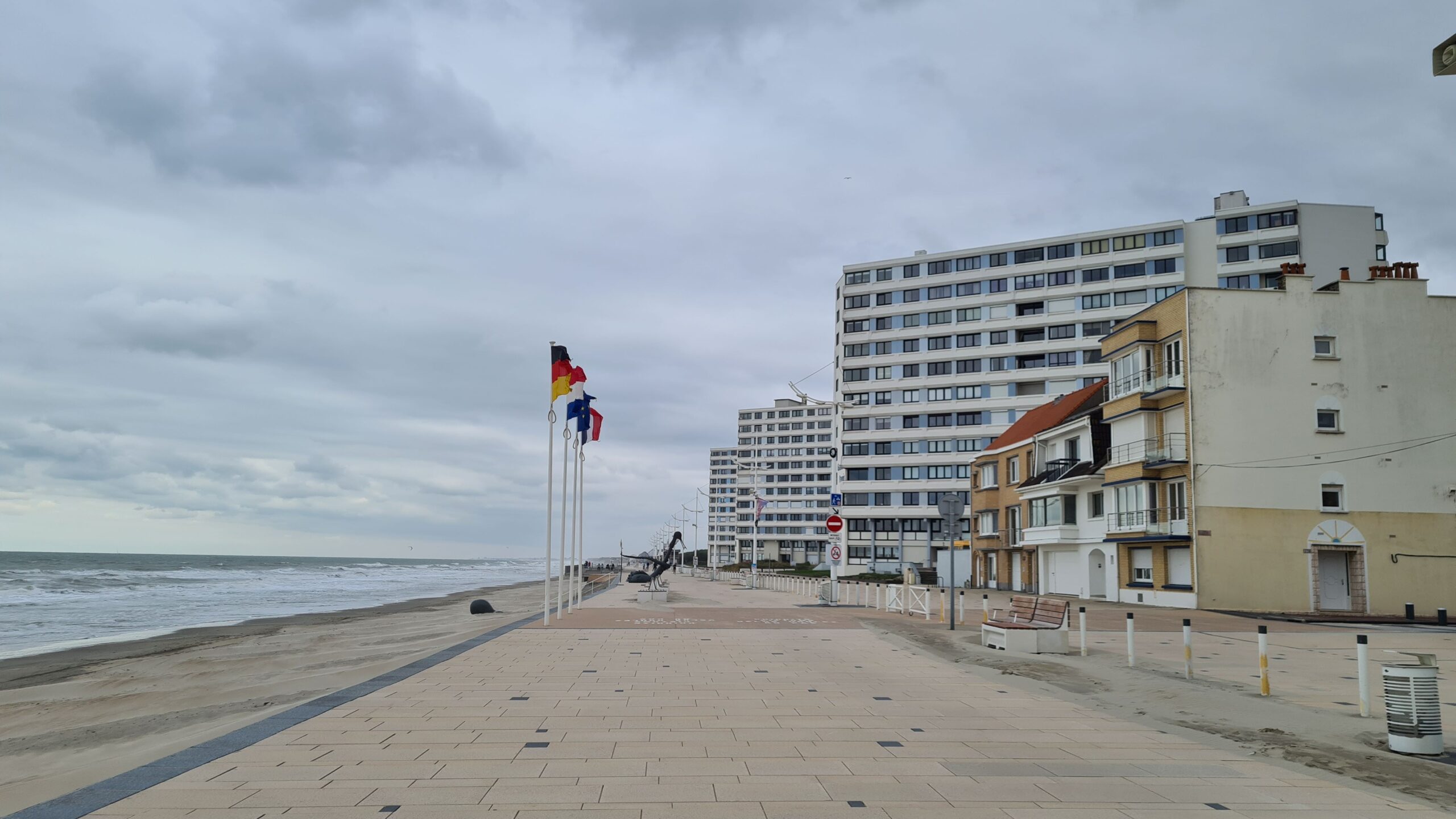
The sea wall, which ends at the Grand Pavois. After that, there’s nothing but the dune…
The buildings of the Grand Pavois, almost new 40 years ago, are now part of the local heritage. We’re tired and don’t wander further into the dunes.
However, we treat ourselves to a “moules et frites” dinner with Belgian beer – which we’d been eagerly talking about throughout this somewhat difficult trip. And we toast our successful sailing and efficient progress!
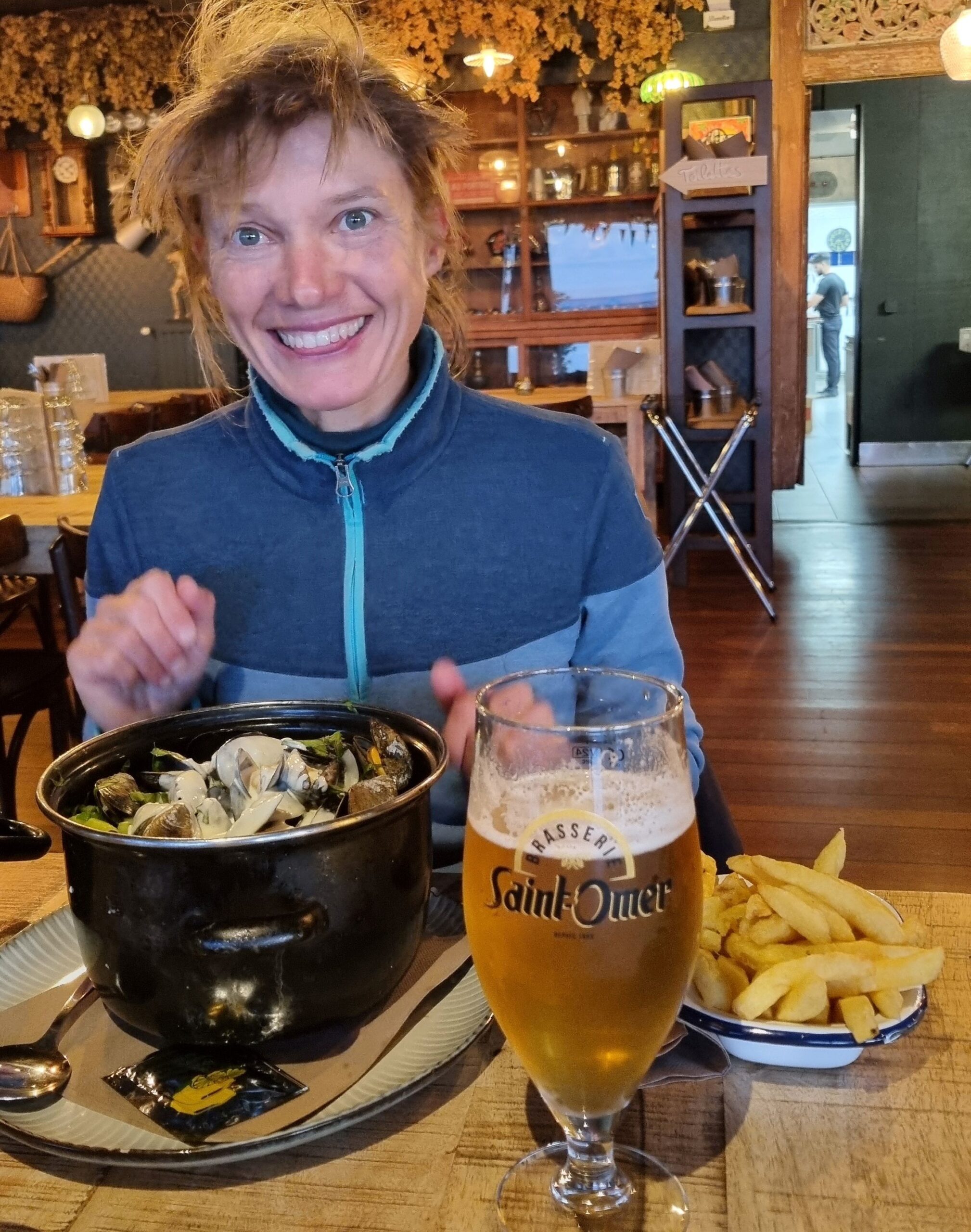
Here’s a well-deserved “moules et frites” dinner
September 26: Dunkirk – Dover (43NM)
Were we in France? Well, let’s leave! We wake up at 5:30 a.m. to set off with the tide, heading west toward England in the last hours of our good downwind wind, which is now blowing at a much more reasonable force 4.
It is smooth sailing, passing over “ridens”, the local sandbanks making the current swirl. Crossing the traffic separation scheme is child’s play with the AIS, but we still need to stay focused: approaching the port of Dover, the wind increases, the current shifts and creates a really rough sea, and the entrance is downright challenging. Once behind the breakwaters, we think the hardest part is over… But the new marina is very convoluted, and it is quite a slalom to get in! Everything happens very quickly, and we successfully manoeuvre into the berth, but what a stressful experience!
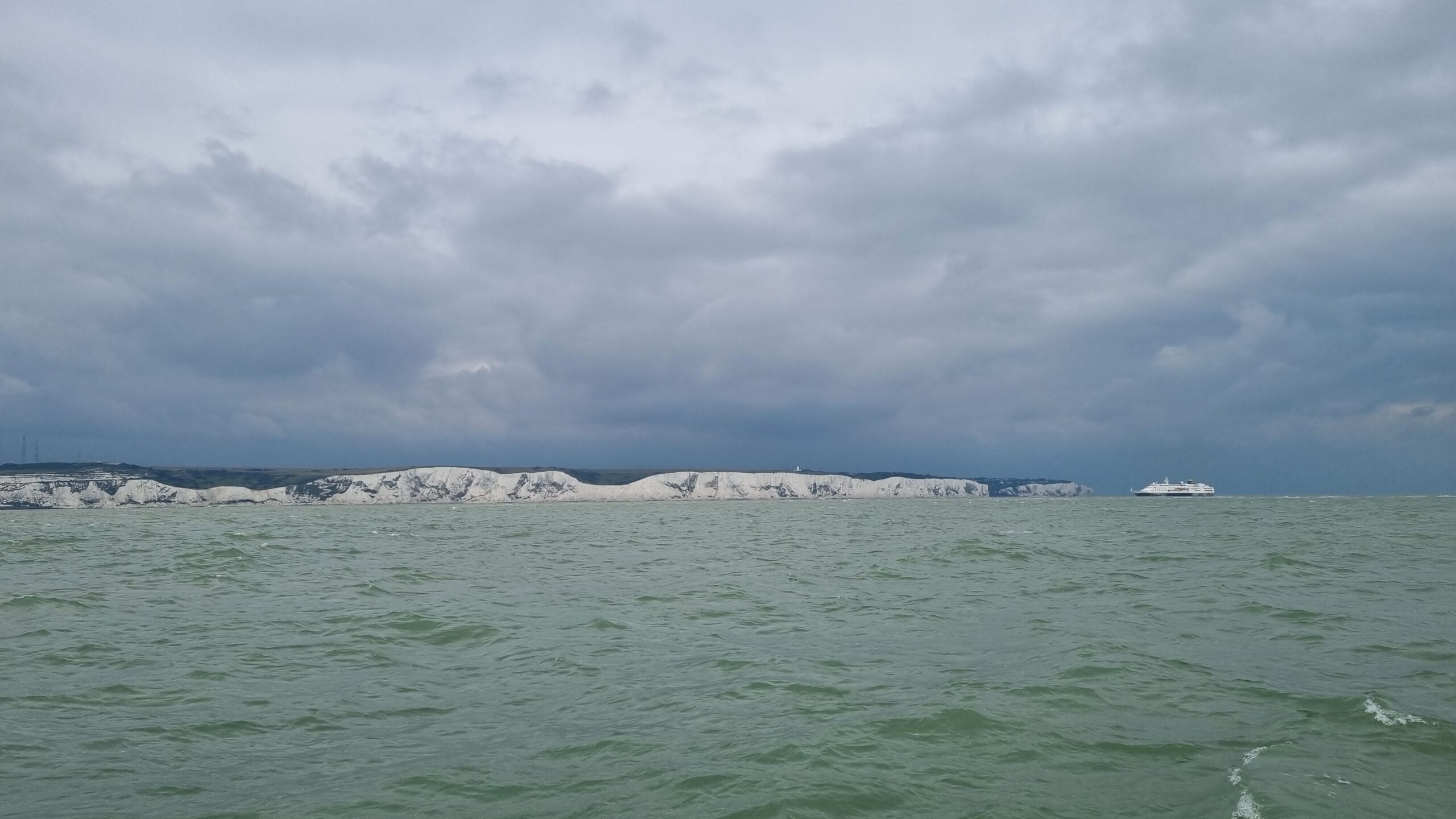
Dover ahoy, its white cliffs and its ferries
Come on, we’ve been sailing well these last few days, we’re entitled to a few days of holidays! We have some friends in London to catch up with… And we’re already back in the Channel, our cruising grounds for over 20 years. Not yet home, of course, but we can already smell the barn…
 PDF