
It’s already been a year since we left our jobs, our home, and our adoption country to join UtPåTur and set sail on the seas… A first year of finding our bearings, at the helm of a new boat but also of a new life. Let’s come back down to the ground and look back at this first voyage through some of the most beautiful landscapes of Northern Europe.
UtPåTur
After 17 years of sailing our old 8.5-metre boat, here we are, skippers of a 12-metre giant. We expected to feel a little lost on deck, overwhelmed by the forces involved, and indeed the first few days under sail were quite surprising. Between the absence of a keel, the boat’s considerable inertia, and the two furling systems at the bow, manoeuvres are very different, and at first we felt as though we had forgotten how to sail altogether. So we found ourselves heading out for a few hours to practise gybes and reefing right outside the harbour, before trying—with varying degrees of success—to get back into our berth without breaking anything… After these first few outings reminiscent of sailing school, we finally began to get the feel of her. A boat is a boat, and in hindsight ours isn’t all that big. We handle her quite well single-handed, and can even move her using only her mooring lines. And what a joy it is to be able to rely on engine power to get through a tricky manoeuvre! We wouldn’t have needed anything bigger, but the compromise between liveability and manoeuvrability feels just right.
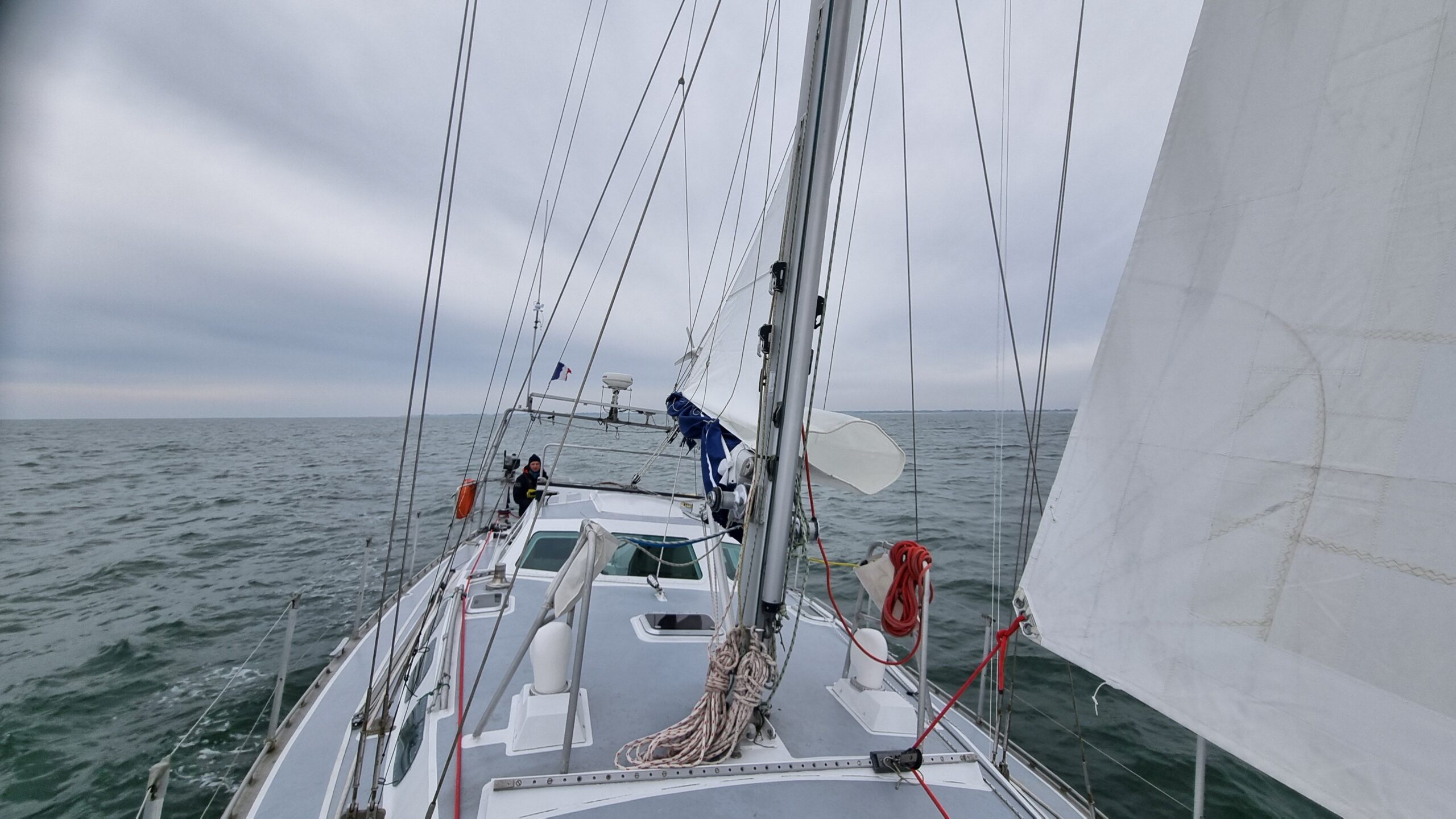
The very first tacks with UtPåTur, trials of the staysail and reefing.
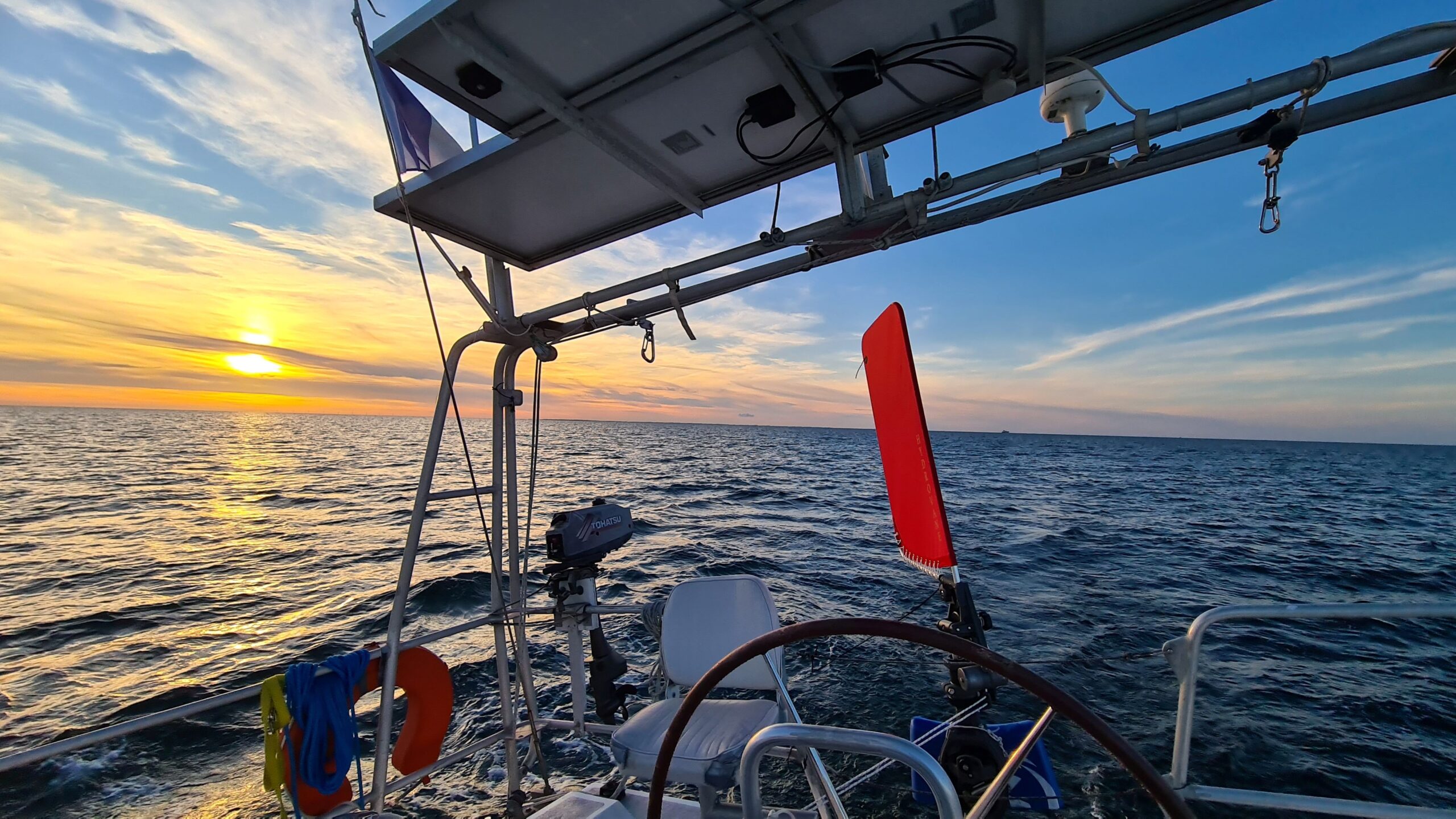
Everything is always better with a windvane
In fact, our biggest challenge was establishing a connection with the boat. We used to communicate a great deal with Saltimbanque through the tiller, which immediately told us whether he was well-rigged, well-balanced and happy. UtPåTur’s hydraulic wheel remains stubbornly silent and we feel deprived of a sense, unable to understand our new sailing companion. We were also surprised by her motion at sea, which is much more pronounced than we had imagined for a boat of around 11 tonnes. This ultimately proved to be the key: once we became accustomed to the sensations of heel and roll, we found a new channel of communication. After a few months—and especially once we were sailing with a windvane rather than an autopilot—we began to trim UtPåTur by feel rather than relying on anemometer readings. Even after 5,000 nautical miles, however, we know that we are still not using the boat properly downwind. A few weeks in the trade winds should help with that!
Our quest for communion with the boat also goes beyond sail trim. We are keen to develop a relationship as strong as the one we had with Saltimbanque, but such a bond can only grow with time. Day after day, we try to tame UtPåTur, opening all our senses to listen to her, understand her, and build mutual trust. After each beautiful passage we hope the worst is behind us—only to be disappointed by the next breakdown… And we have had our share of technical issues! Although very simple for a boat of this size, the number of systems on board is still considerable, multiplying the potential points of failure. We thought things had settled down after those idyllic months in Scandinavia, but the magnitude of the work required during our current winter refit is not exactly reassuring… Clearly, the taming phase isn’t over yet!
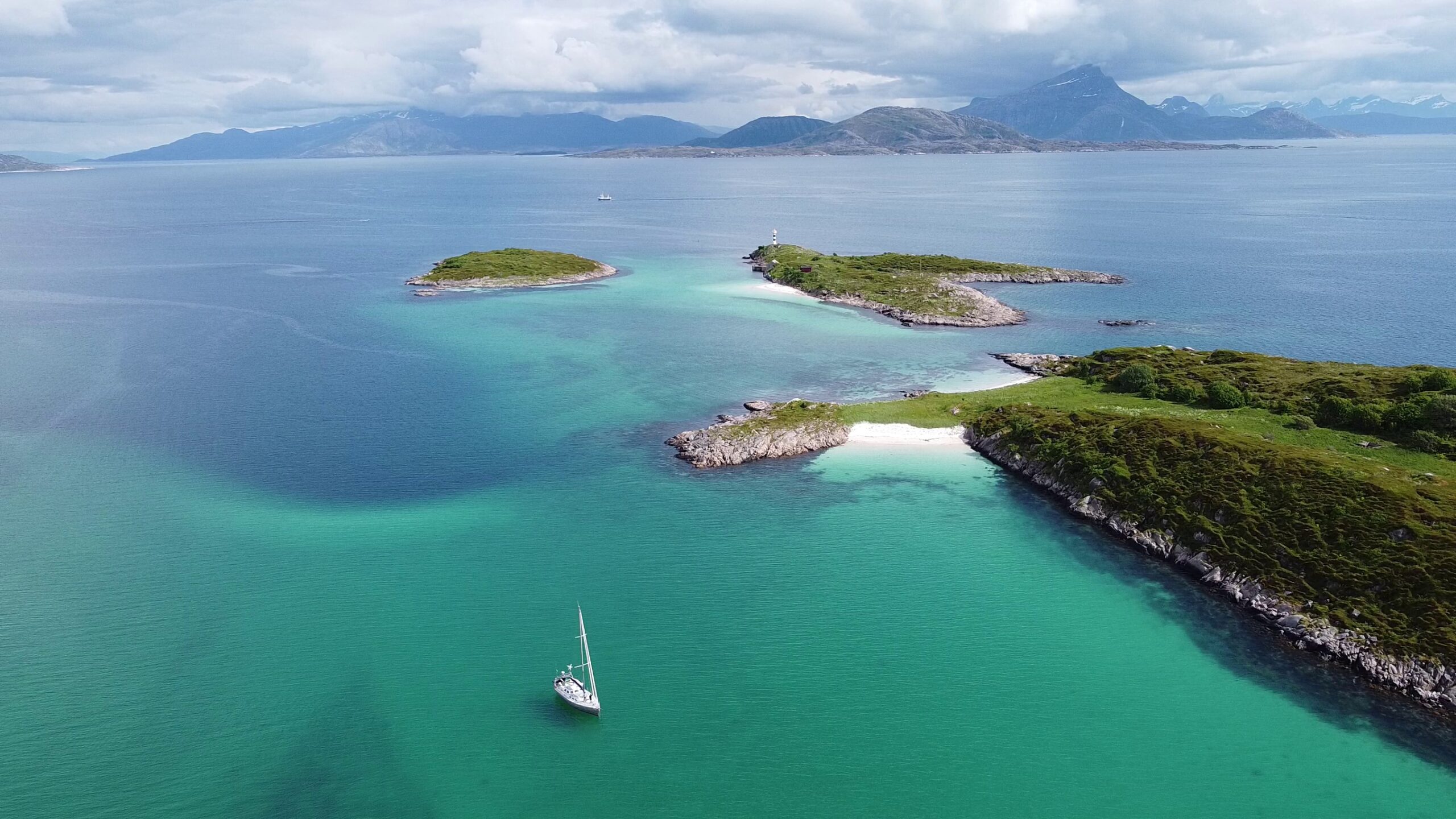
Perfect harmony with UtPåTur as we reach the northernmost point of the journey (68°23N)
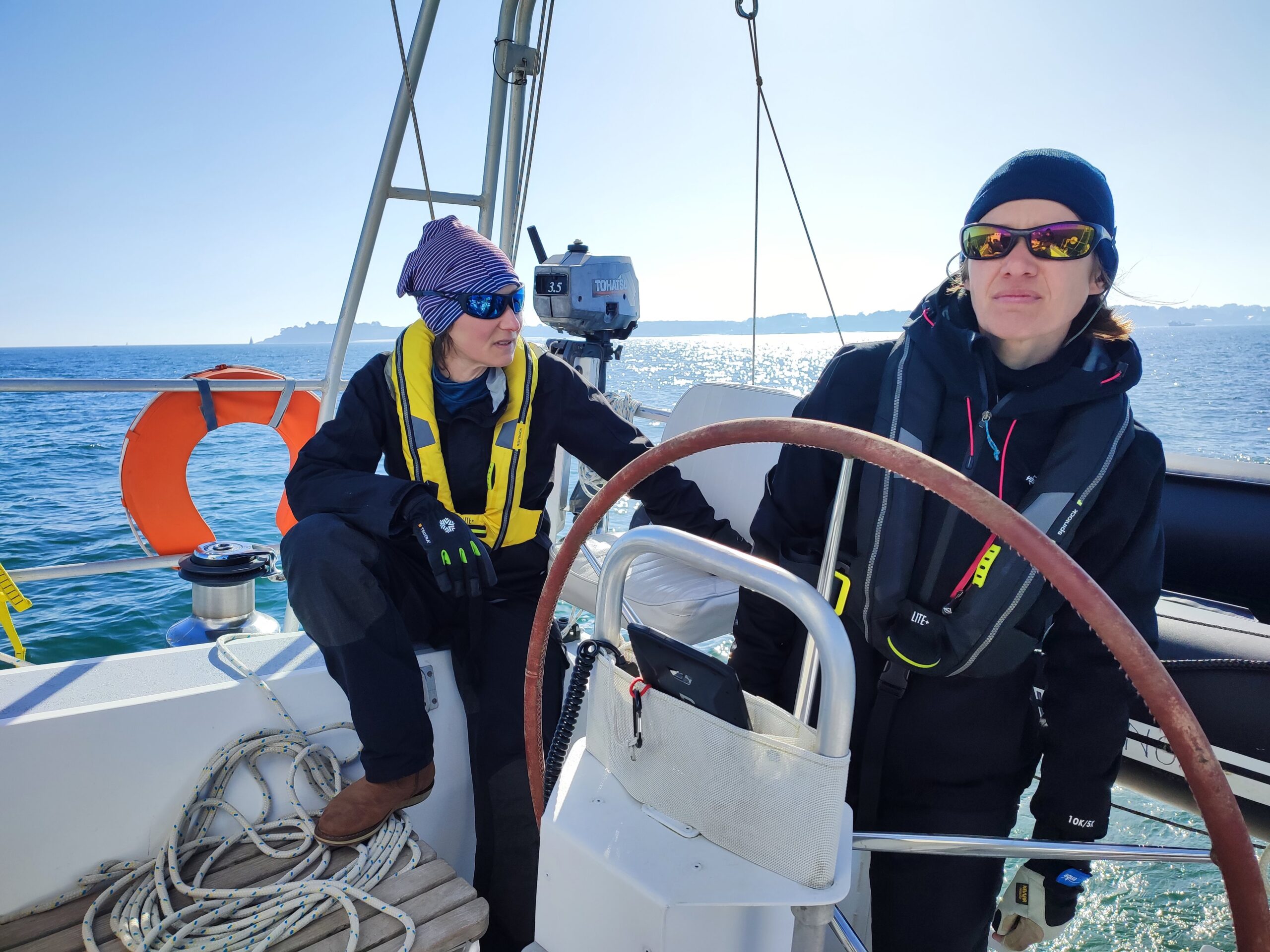
Equipped as we are, there are no more technical limits to our adventures!
At times we wonder… are we really meant for each other? And we—the Saltimbanques (= “jesters, street jugglers”) who used to sail further than most on a smaller boat—who have we become now that we’re cruising on a large, comfortable yacht? It’s a genuine identity crisis. We can no longer claim to belong to the group of young sailors with very little money who set off wherever their hearts take them, and yet we don’t recognise ourselves among those well-heeled sailors who wouldn’t dream of leaving the dock without the latest equipment. Nor do we quite feel part of the club of true blue-water sailors yet—that will take a few more ocean crossings… Our impatience wants to skip ahead: it’s quicker to change your life than to rebuild your identity! One thing is certain, though: with UtPåTur, the limits of our travels are clearly ourselves—our desires and our fears. The boat, on the other hand, is capable of anything. Freedom is therefore absolute, with all its exhilarating and terrifying aspects…
2025, a pilot year
Free, but sensible and well organised, we chose to begin our round-the-world journey with a year dedicated to testing the project, followed by a major refit—an extremely wise strategy given the number of unexpected issues we identified and can now resolve before they become a real obstacle. The aim was to get to know the boat, to let what was bound to break actually break, to identify what we wanted to improve on board, all within a fairly ambitious cruising area. It needed to be close enough to the coast to allow for rapid assistance if required, and ideally scenic as well—mixing practice with pleasure.
Northern Europe was the perfect playground for this programme. Between low-pressure systems, strong currents and cold weather, passages are short but sometimes more demanding than a transatlantic crossing in the trade winds. The coastlines are well equipped for leisure sailing yet sparsely populated. This allows us to enjoy solitary anchorages in the heart of unspoilt nature—while the day our hydraulic steering hose shows signs of fatigue, we immediately find a workshop to repair it. In the end, UtPåTur kindly allowed us a magnificent voyage, preferring to reveal her technical problems along the Breton coast—a habit we encourage as much as possible! (After all, we’re not coming back for another ten years, are we?)
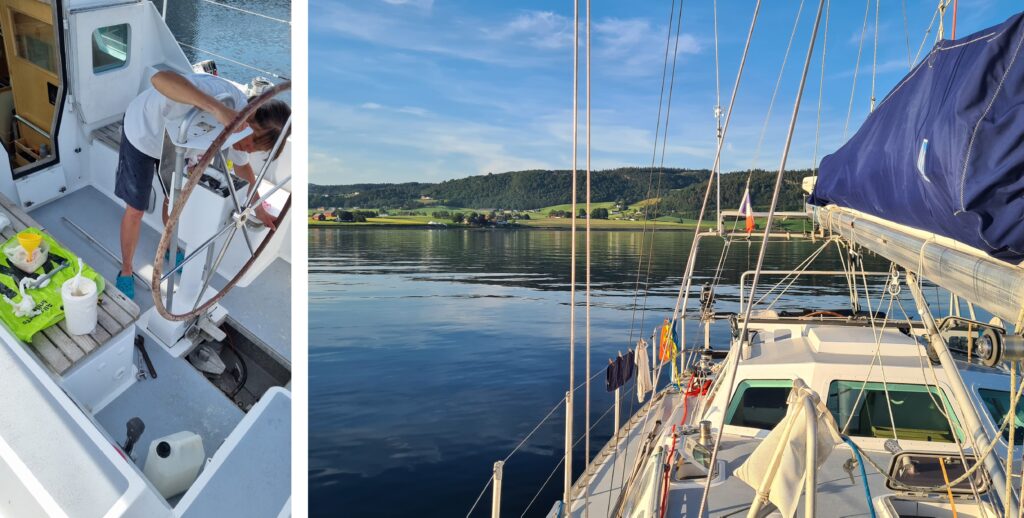
These two photos were taken only a few hours apart (and yes, the weather was gorgeous in Trondheim in July!)
And what a setting! Among the highlights of this test voyage were the islands of western Scotland under improbably bright sunshine, followed by the breathtaking landscapes of northern Norway… We will long remember those three weeks without night, sailing in turquoise waters beneath jagged mountains.

Magical moments in Scotland with the puffins
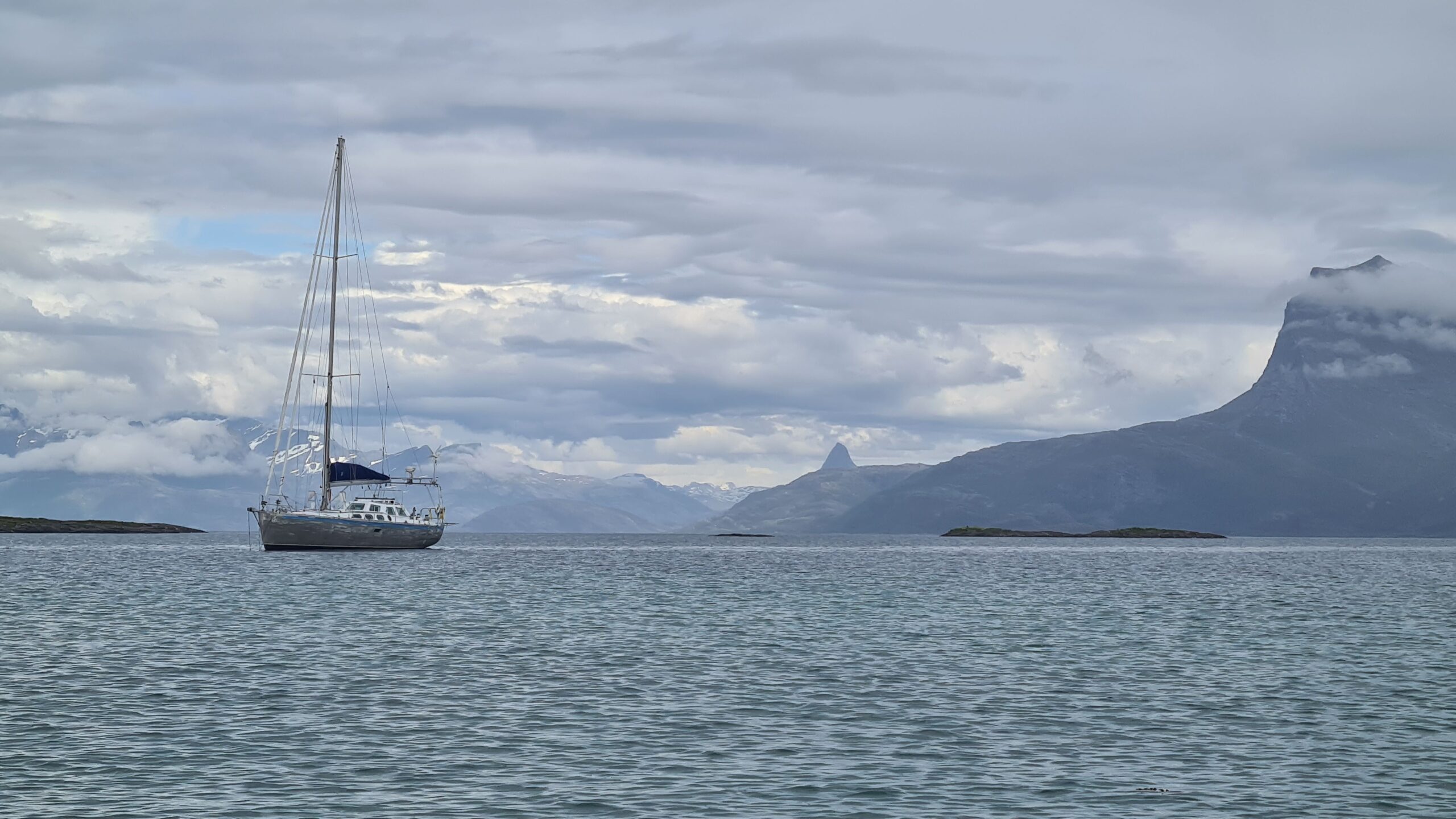
Arctic atmosphere near Bodø
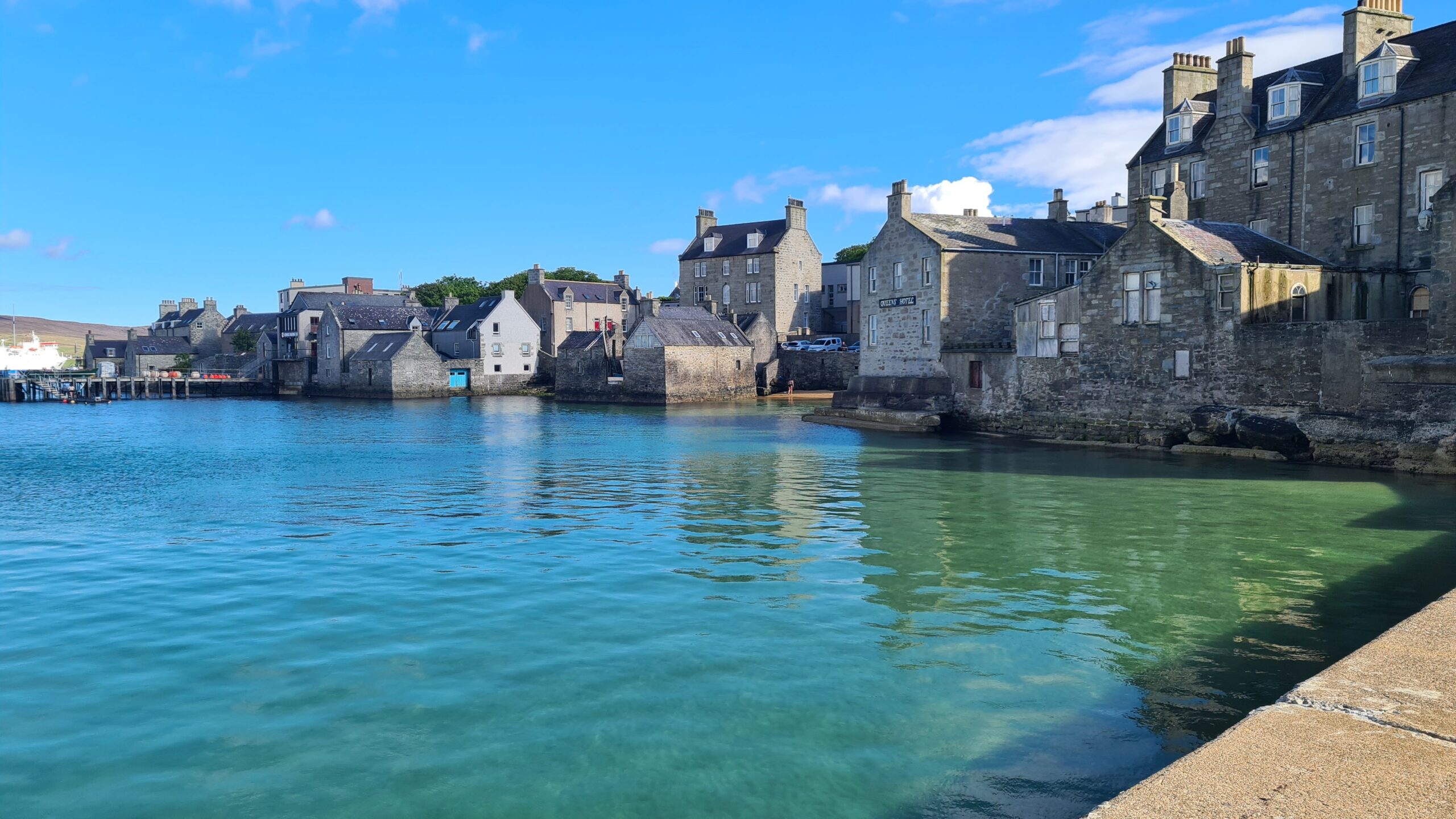
And besides being well-frequented, Lerwick is absolutely beautiful!
In between came a compulsory stop in Lerwick, the North Sea crossroads where sailors congregate to wait for more favourable weather. Once again, we made some wonderful encounters there. The area is easily reached from Brittany for a few months each year, and we met many retirees enjoying their newly extended summers. A handful of twenty-somethings—often sailing solo—were taking unusual sabbatical years and impressed us with their audacity, confidently heading for Iceland, Greenland or even the Northwest Passage. No one quite in our age bracket, but being positioned right between two generations of sailors, we had the advantage of connecting easily with everyone.
The return south along the Norwegian coast felt like a pilgrimage through places from our former life. Here the fjord where we first arrived by kayak; there Bergen, where we spent our first two years in Norway; further south, the coasts of Sørlandet and Bohuslän where we sailed every summer with Saltimbanque; and finally Oslo, our city, where we lived for ten years. Of course, we reconnect with friends—but also with old habits. We can vote there as Norwegians. Even though we are living on the boat this time rather than in our house, we still feel a strong attachment to a place that means so much to us. Our social life is in full swing, and UtPåTur is constantly buzzing with activity. Our friends are keen to see us in our new life, and we are delighted to give them the space they deserve. This stopover doesn’t allow us to close the Oslo chapter once and for all; instead, it bridges our former life with the one we are now beginning to write.
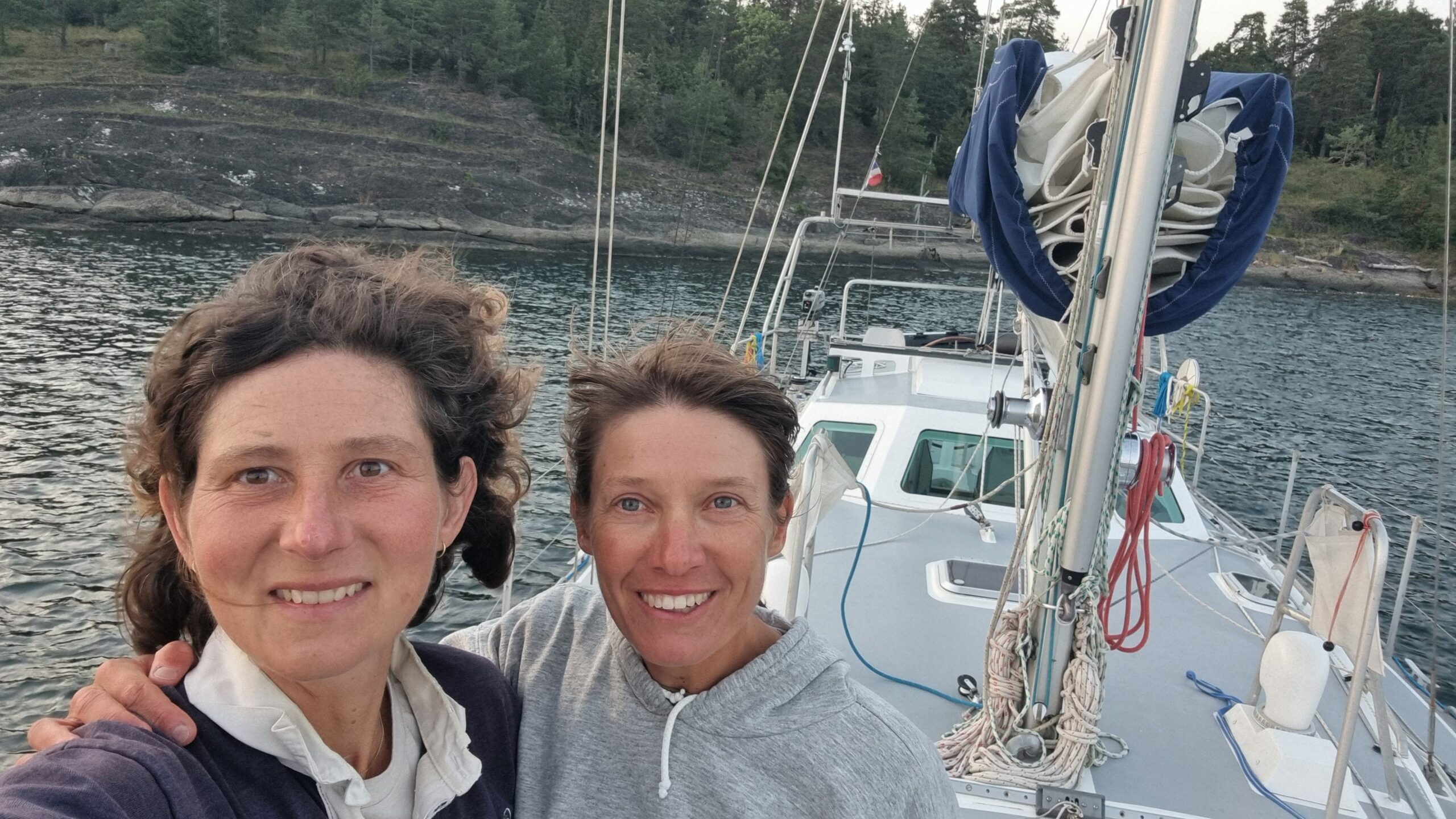
UtPåTur in Borøya, very close to our house, where we used to go so often with Saltimbanque or by kayak…
A new life chapter
Indeed, one of the aims of this first year was also to test our new way of living. This time, we are not setting off on a finished project with a return date and professional prospects waiting ashore. We have genuinely cut all ties, and the difference is striking. Like good engineers faced with a new situation, we analyse it, dissect it and examine it from every angle to understand it fully and find the best approach. We end up spending a lot of time reflecting on ourselves, our reactions, our expectations… at the risk of going round in circles, just the two of us on the same boat! First conclusion: it’s easy to become trapped inside your own project, and maintaining a minimum level of social interaction is essential to stay open to the world and to others.
Writing your life story in complete independence ultimately requires a great deal of time and energy. Every decision is ours alone, and we alone bear the consequences—whether under sail or when choosing onboard equipment. We also have to come to terms with our new status as “rentiers”: the board’s treasure chest is sufficient at the outset, but no longer replenished by a monthly salary. Budgeting becomes a different kind of exercise: finding the best compromise between cost and quality, the risk of failure versus carrying spares, outsourcing to a specialist versus learning to do things ourselves. There is never a single right answer—only our answer. We’re not always entirely comfortable, but here too confidence will grow with experience we think. And on the way we’re developing skills in wealth management and multi-currency trading—who would have thought…
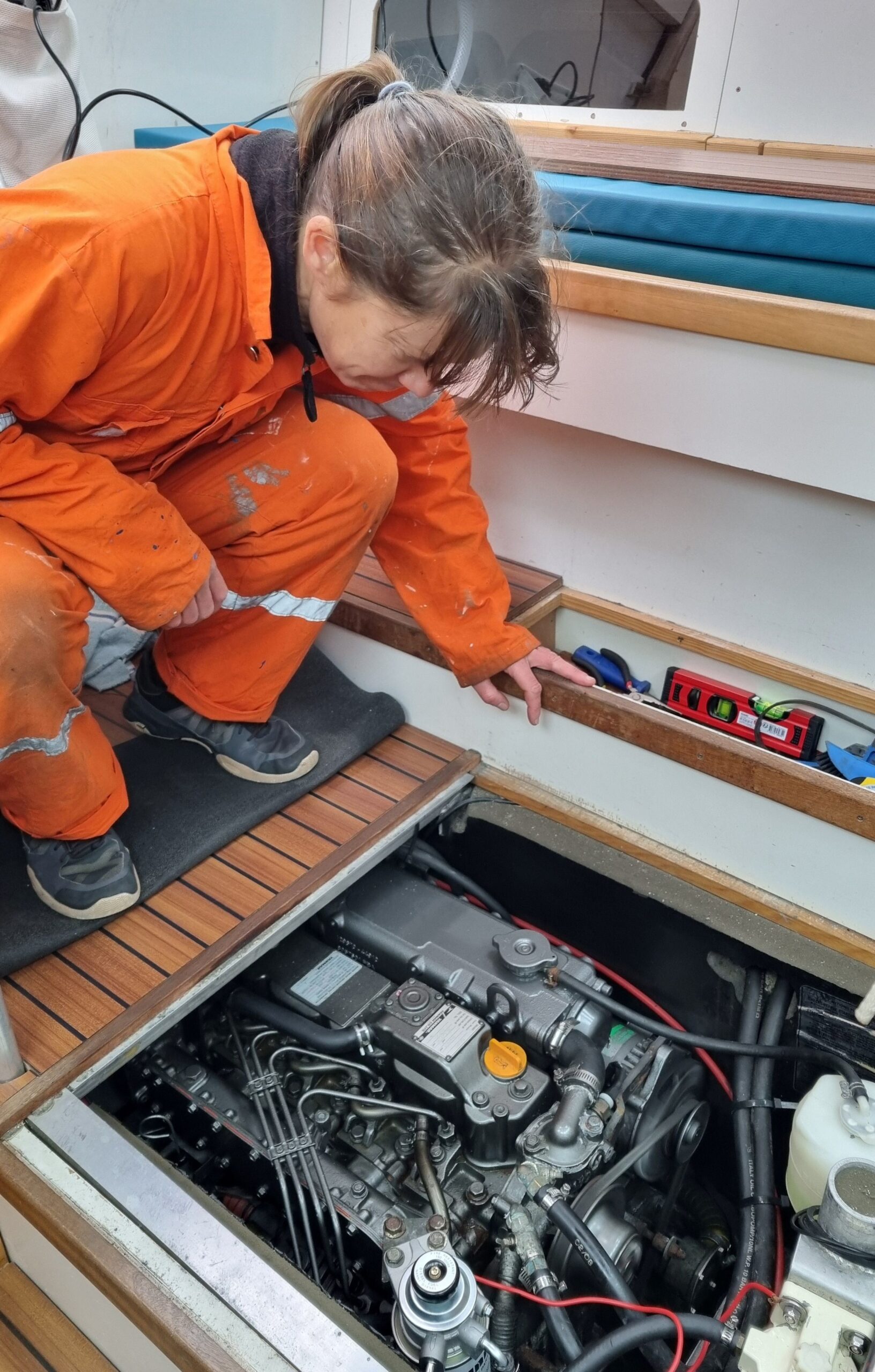
So, Mr. Engine, what mood are you in today?

Little wind, boat well anchored, we need to relax… now!!
We also need to find our new travel rhythm. As voracious explorers used to time-limited sailing trips, we naturally set the bar high and abhor inactivity. But over an open-ended timeframe, maintaining that pace risks burnout. Neither a sprint nor a marathon, there is not even a finish line in the race we’re starting! We therefore need to learn to break the project into stages, to define limits within the infinite possibilities available to us, and above all to truly rest when we are safely between passages. Well then—yet another skill to acquire ;o)
The real departure
And so here we are at the end of this pivotal first year—the year we left everything behind… but we have not really left ourselves! The true departure, towards adventure and the unknown, is still ahead. Just a few more nuts to tighten, a few more welds to finish—and this time, no half measures. We’re off for good, to see whether the sea really is round…
 PDF