
After the hustle and bustle of Brazil’s major cities, we retreat into nature for a proper breath of fresh air in the heart of the Costa Verde. Surrounded by magnificent granite islands sitting at the foot of mountains blanketed in (very rain-heavy…) rainforest, we make the absolute most of this tropical stopover.
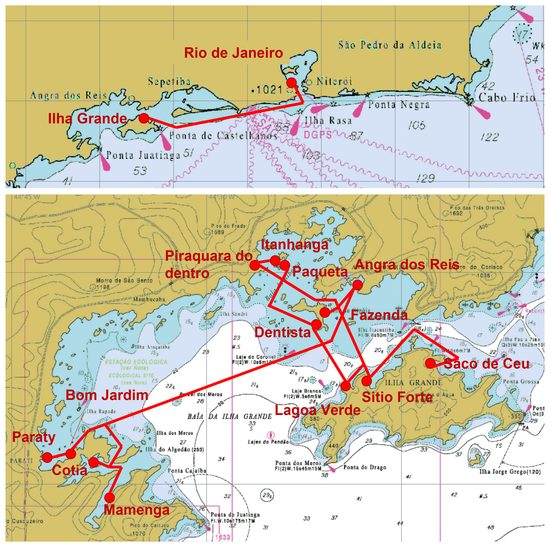
174 nautical miles sailed– 12 003 NM in total on UtPåTur
The full photo album here.
29th–31st August: From Rio to Ilha Grande (77NM)
70 miles west of Rio de Janeiro lies a stretch of coastline famed for its beauty—the Costa Verde—and its crown jewel known to every Carioca: Ilha Grande. We too are itching to discover this celebrated island, and we don’t even wait for the sun to rise before setting off! Which, more practically, guarantees a daylight arrival…
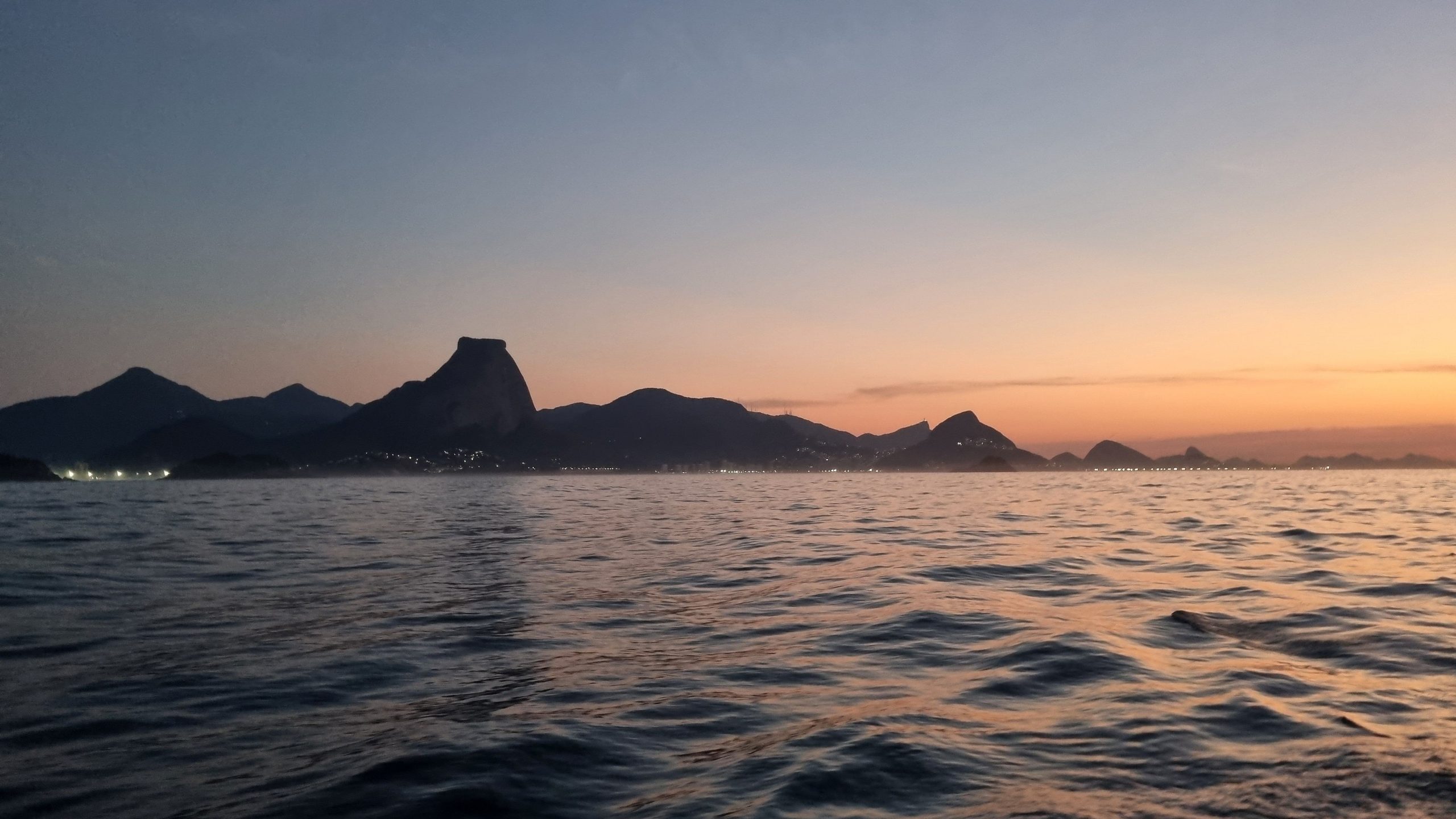
Farewell Rio…
The passage is fast and punctuated by severe local wind effects. We jump violently from 0 to 29 knots, before the wind gently eases off and collapses completely once again. So, this is inshore sailing…
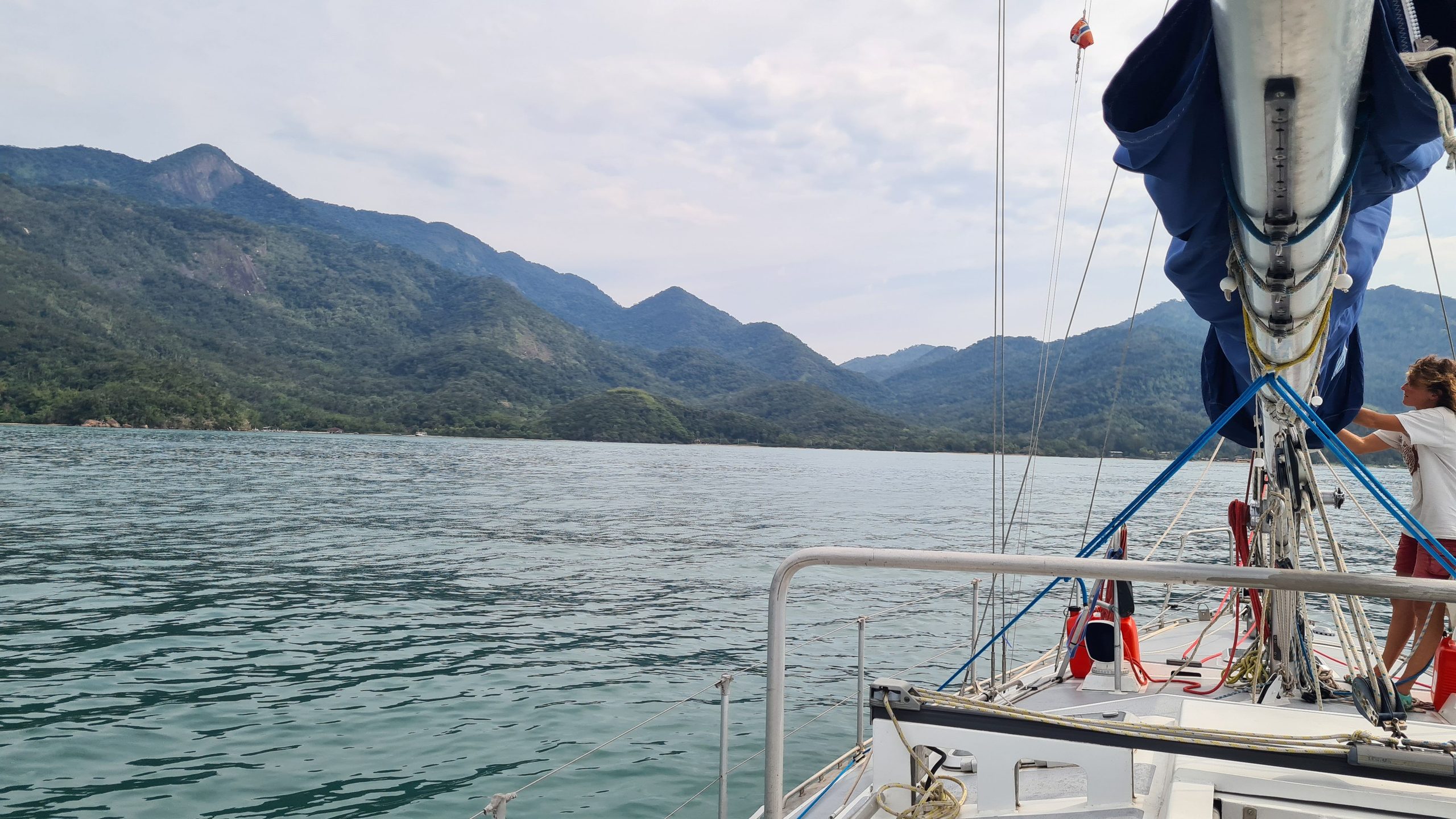
Laure lowers the main approaching Ilha Grande
In a dead, sunny, sweltering calm we reach the ultra-sheltered anchorage of Saco de Céu—”Heaven’s Cul-de-Sac”—so named because the water is so still at night that the stars reflect off the surface.
The moment the anchor hits the seabed, we dive straight into the water. What absolute bliss to go swimming again! In Rio, taking a dip in Botafogo Bay was a non-starter—far too polluted. UtPåTur’s hull is actually black from it, and no matter how hard we scrub, it really doesn’t want to come off…
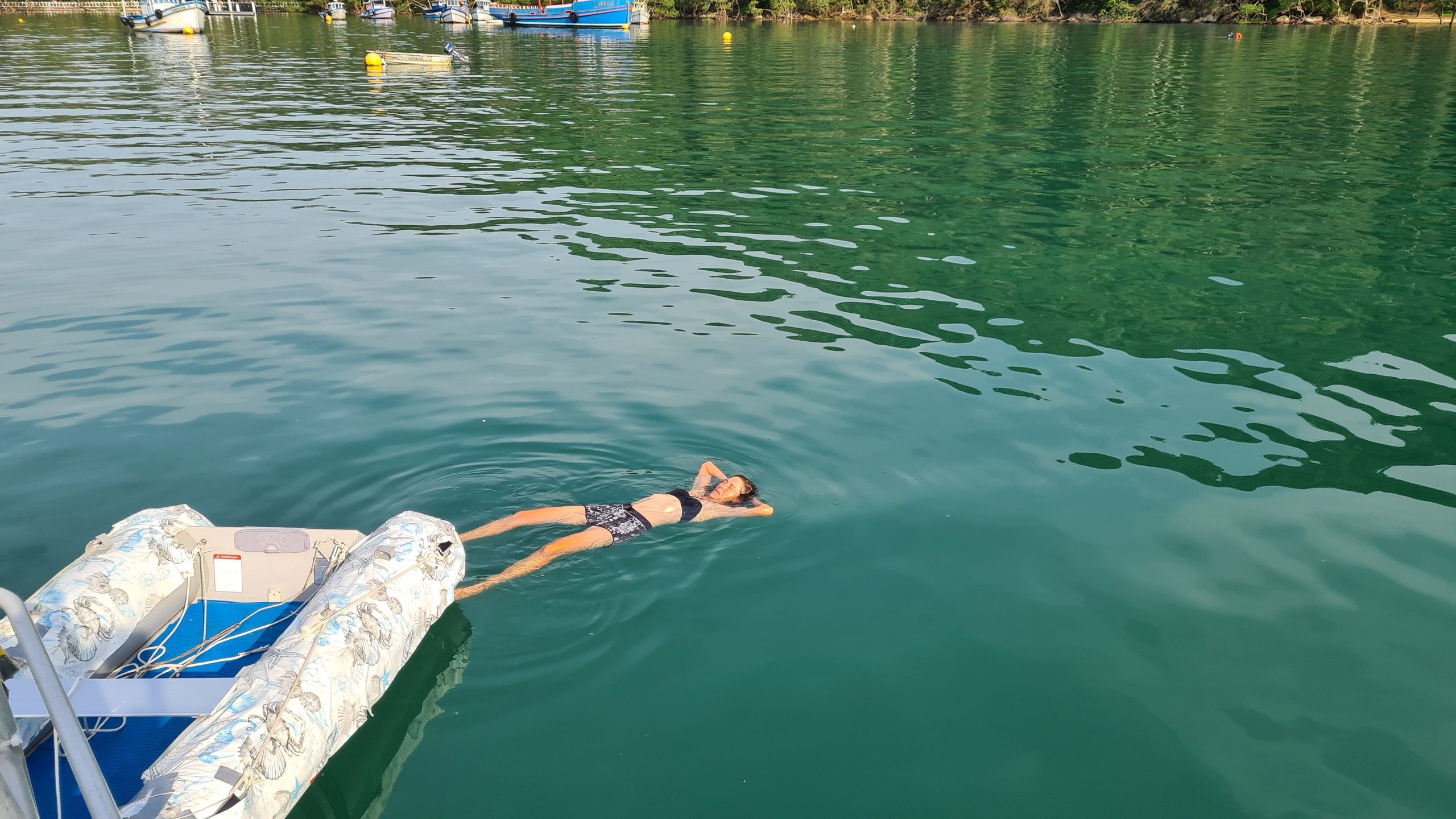
The water is still warm enough, especially on the surface
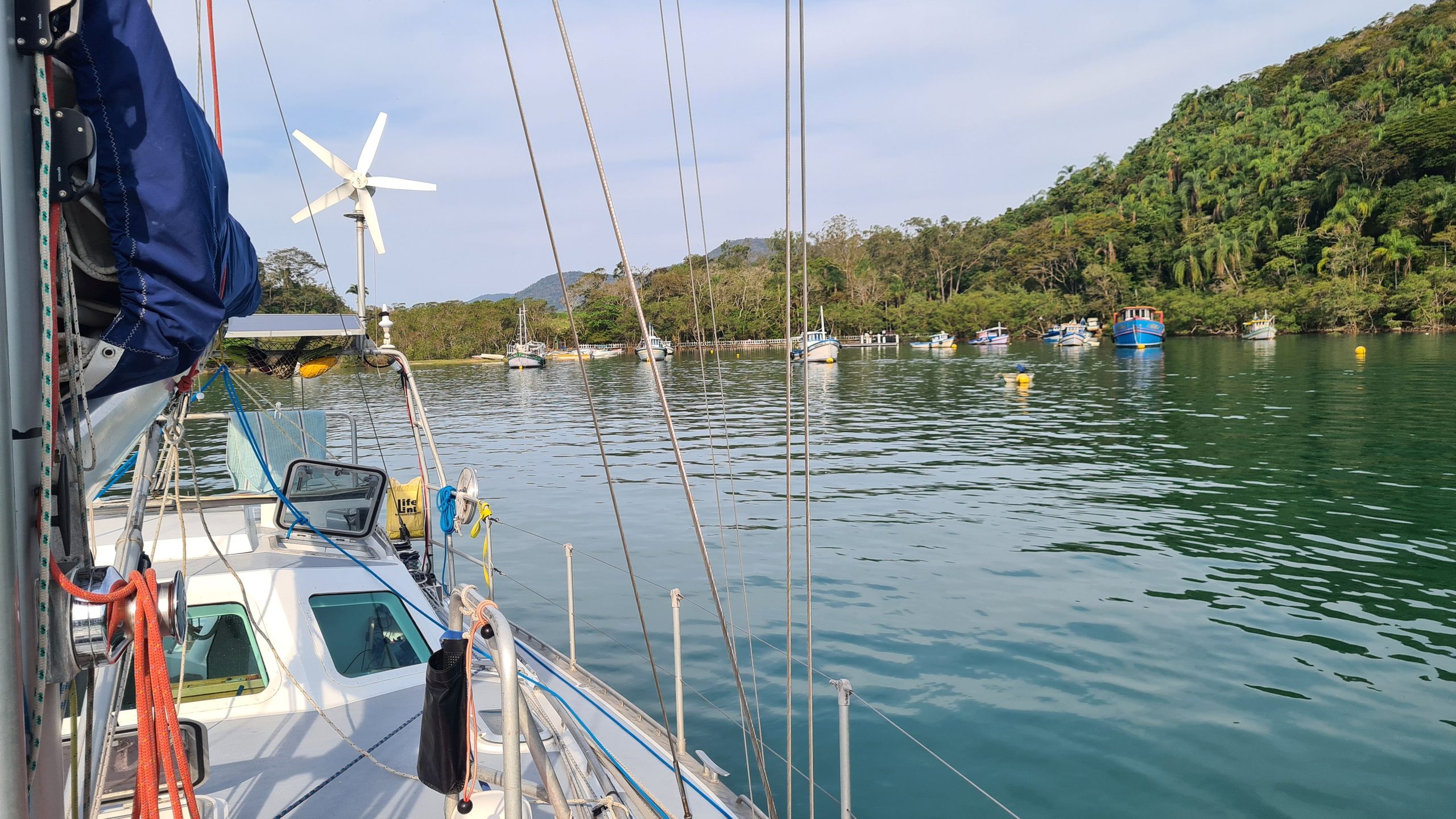
Saco de Ceu, the new view from the terrasse
Once refreshed, we sit on the aft platform with our feet in the water, taking in the vista around our new home. The island is actually very mountainous, featuring several prominent peaks, the highest soaring over 1,000 metres. The slopes are covered in the tropical rainforest typical of the South-East Brazilian coast—the Mata Atlântica—which gives the coastline its famous green colour. Tucked inside the bays are beaches of varying degrees of white and turquoise.
The local wildlife certainly doesn’t lag behind: alongside our usual brown boobies, frigatebirds, black vultures, and piping pipipious, we spot countless unfamiliar species flying overhead. As night falls, the forest comes alive, echoing with the sound of millions of crickets. At dawn, a persistent avian cry wakes us up—a tiny parrot that decided our bow pulpit was the ultimate perch for singing at the top of its lungs! The local alarm clock!
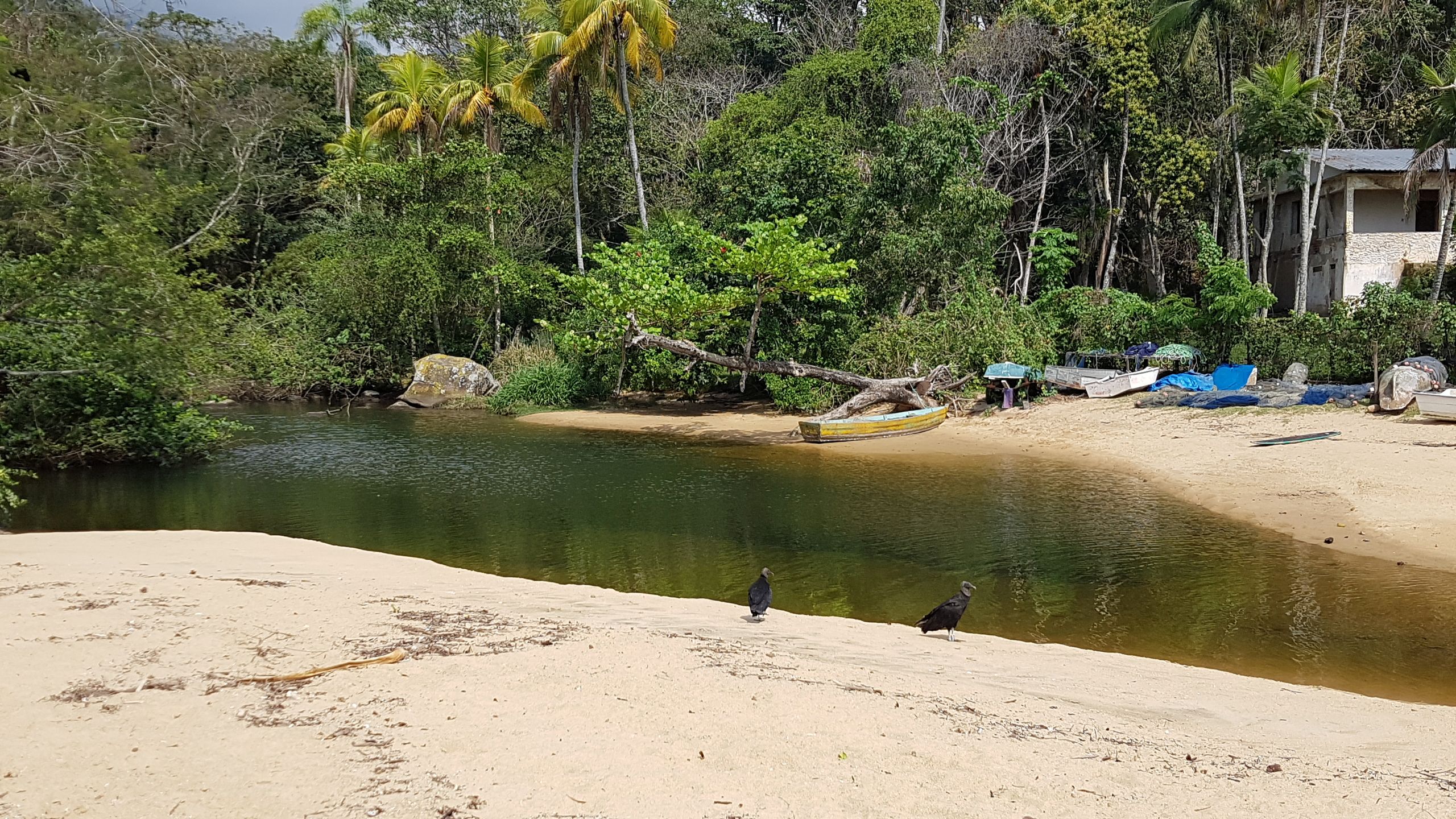
Two urubus by the river
We head ashore the next day, tucking our dinghy into a corner of mangrove alongside the fishermen’s boats. Everywhere else, the shoreline is bristling with “Private Property – Keep Out” signs, leaving barely enough space to squeeze onto the coastal path to explore the island. The villas are huge, rivalled only by the luxury motor yachts dotting the bay. We are a long way from the favelas of Salvador—Brazil is most definitely a country of contrasts…
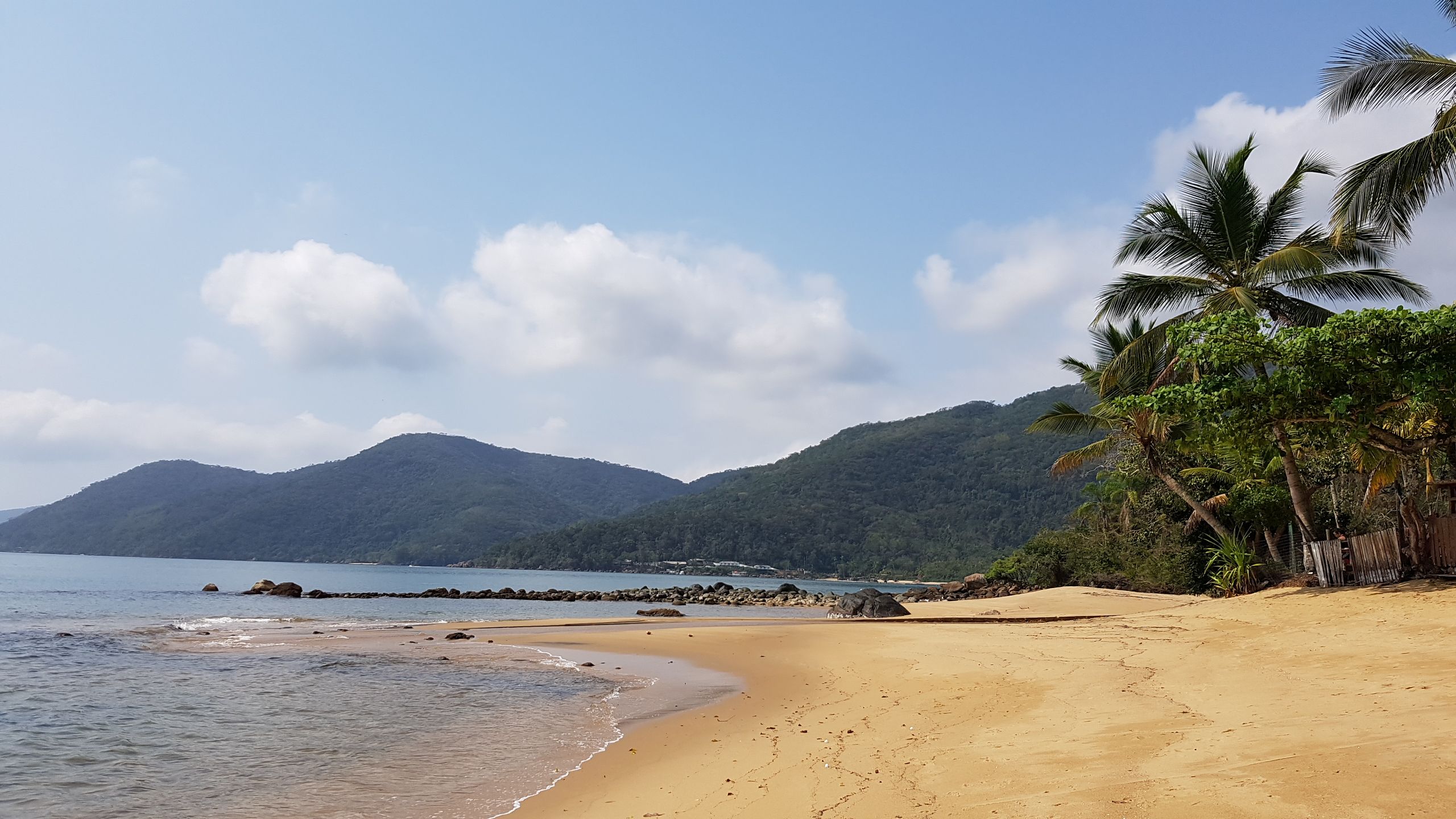
At last a tropical beach, it’s been too long !
The path leads us first to the superb beaches of Baía Estrela, right next to the anchorage. Blue water, golden sand, coconut palms—finally, a bit of that tropical vibe we’ve been dreaming of! There are no cars on the island, so getting around is strictly on foot or via the water taxis buzzing out from the beaches.
We leave the shore behind for a small trail through the rainforest. We cross paths with plenty of wading birds, but it’s the butterflies that captivate our attention: orange ones, yellow ones, and above all, enormous, stunning blue-and-black Morpho butterflies! Oh, and a fair amount of mosquitoes, too…
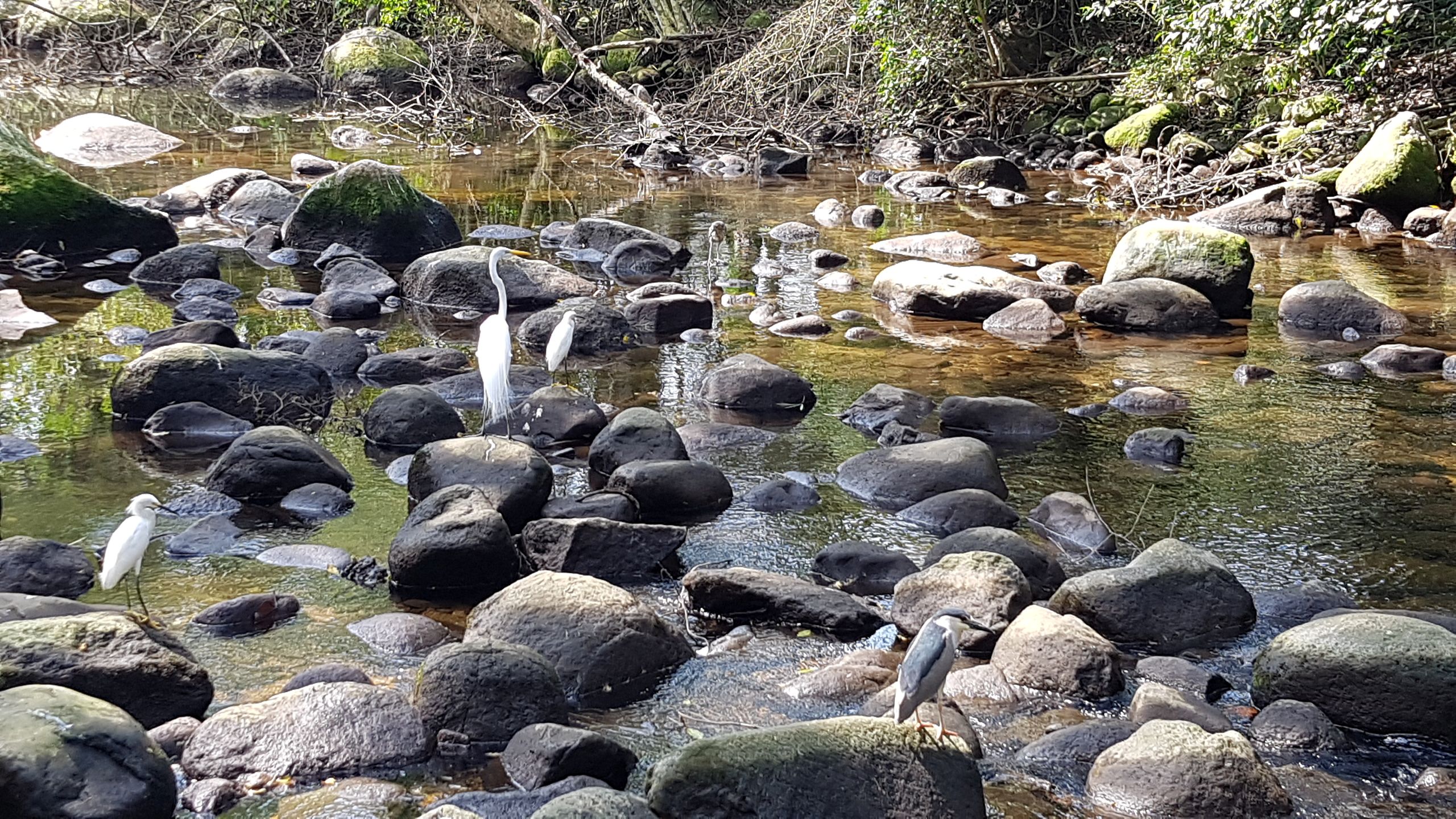
A selection of local wading birds
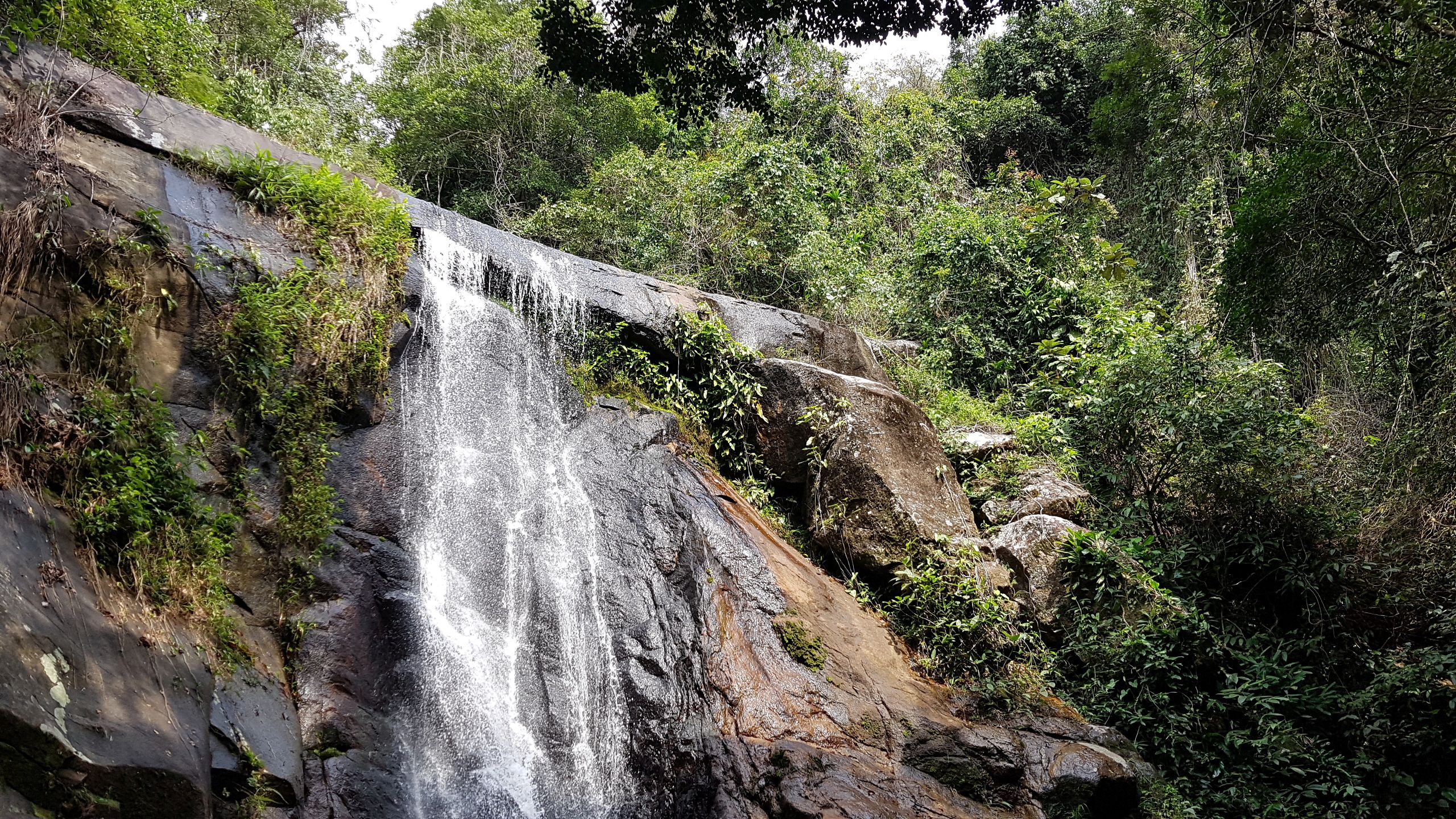
Waterfall in the rain forest
We reach the destination of our walk: a magnificent waterfall blowing off refreshing mist! It feels so good to be back in nature after nearly two months spent exclusively at sea or in cities.
Back on board for a quiet afternoon in the sun. A bit too quiet… As night falls, the wind starts cranking up, just to prove wrong all the weather forecasts. Then come the lightning bolts, getting closer and closer. 25 knots of wind, 30 knots… We’d love to pay out more chain, but there isn’t much swinging room—that’s the drawback of enclosed bays… The squall eventually blows over in torrents of rain and one final 38-knot gust, which the anchor handles without a hiccup, giving us further confidence in our ground tackle. Note to self: always check the thunderstorm forecast alongside the wind forecast to avoid such surprises!
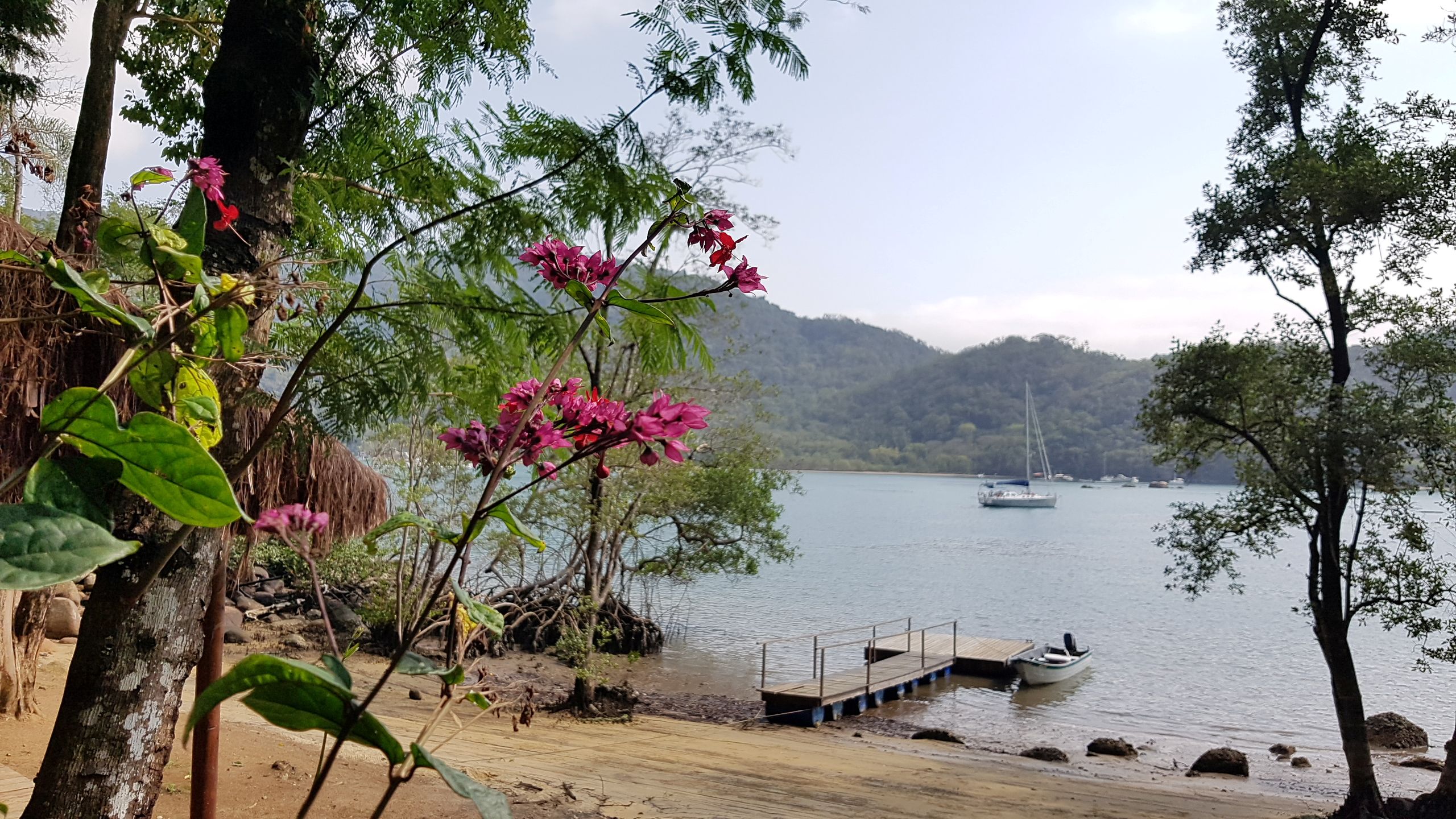
Saco de Ceu, before the storms…
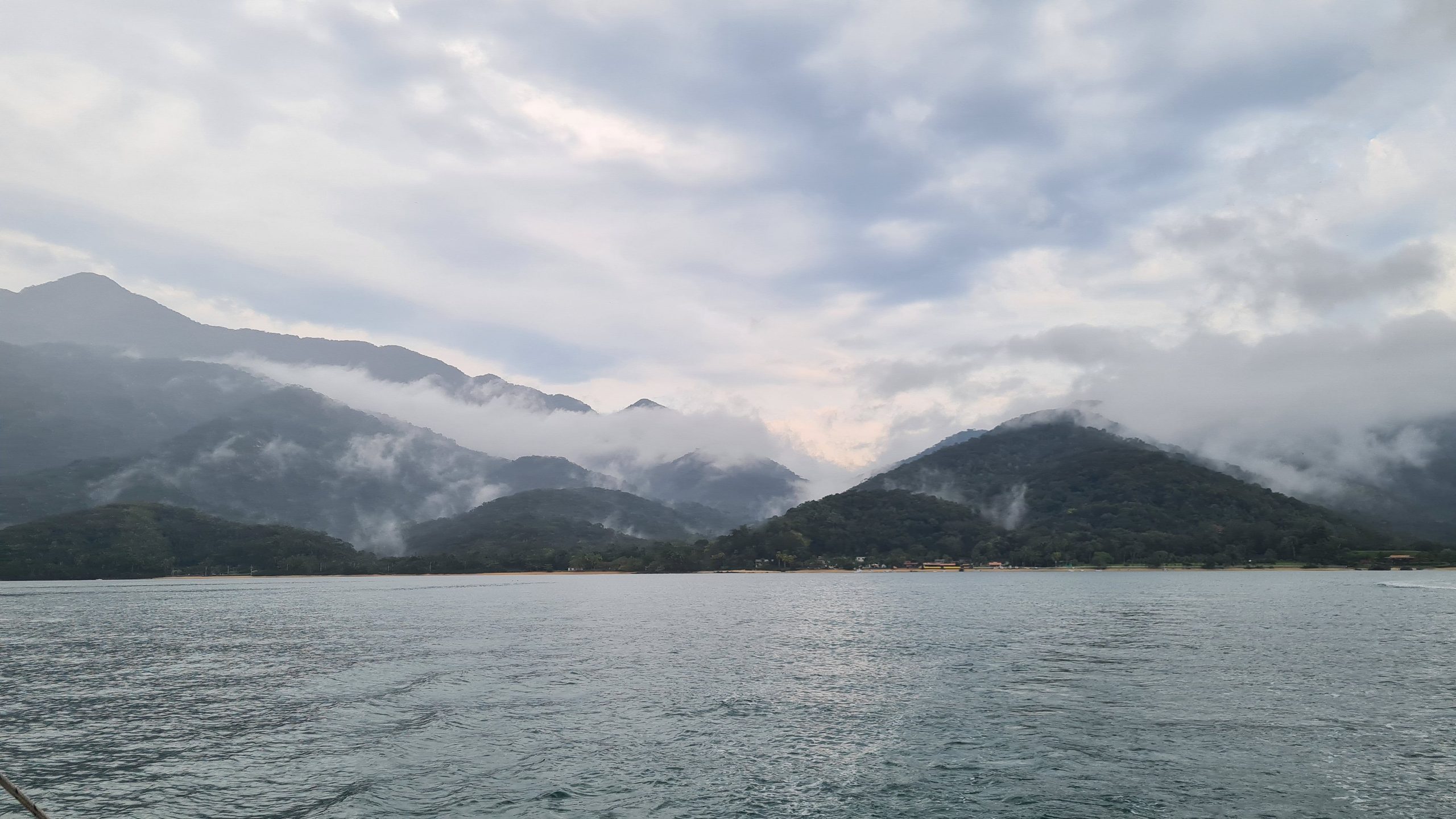
Leaving Saco de Ceu while the island is sweating clouds
The weather, however, is supposed to stay fine and settled for another 24 hours before a mini cold front rolls in. We decide to shift to the neighbouring bay, Sítio Forte, where there’s more space and where we hope to swim with the fish. In the end, the wind turns out stronger than forecast once again, the temperature feels distinctly chilly, and the fish are completely absent. We’re a bit disappointed… so we console ourselves by baking a lovely banana cake. Yum!
The night turns out much like the previous one: heavy thunderstorms, big gusts (mostly from the south-west)—we’re starting to get used to the drill…
1st–4th September: Holidays in the Baía da Ribeira (36NM)
The thunderstorms rumble on all day, so we make the most of a brief lull in the morning to leave Ilha Grande, heading for Ribeira Bay, which cuts deep inland to the north and branches out into a maze of well sheltered coves.
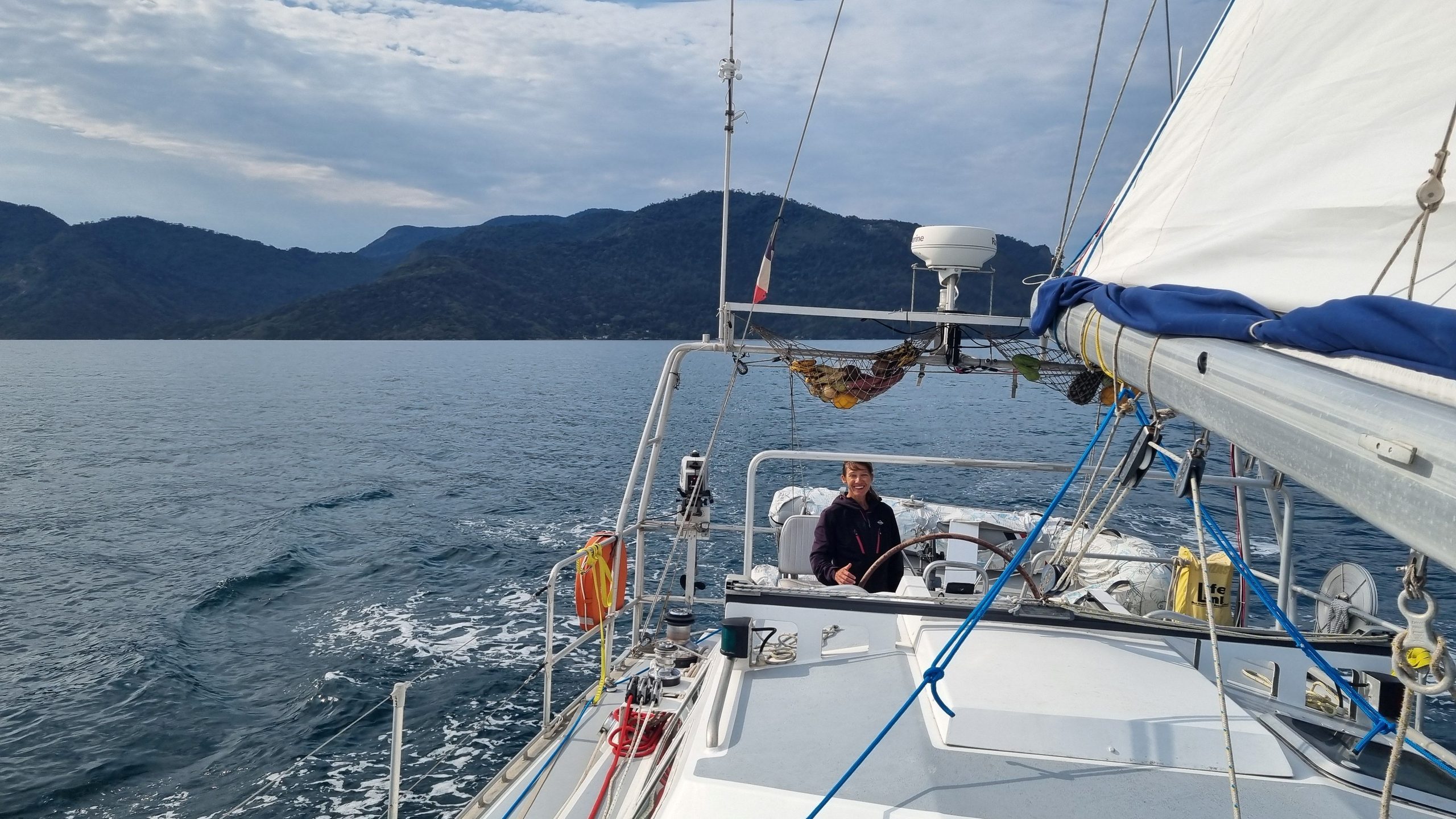
New day, new bay!
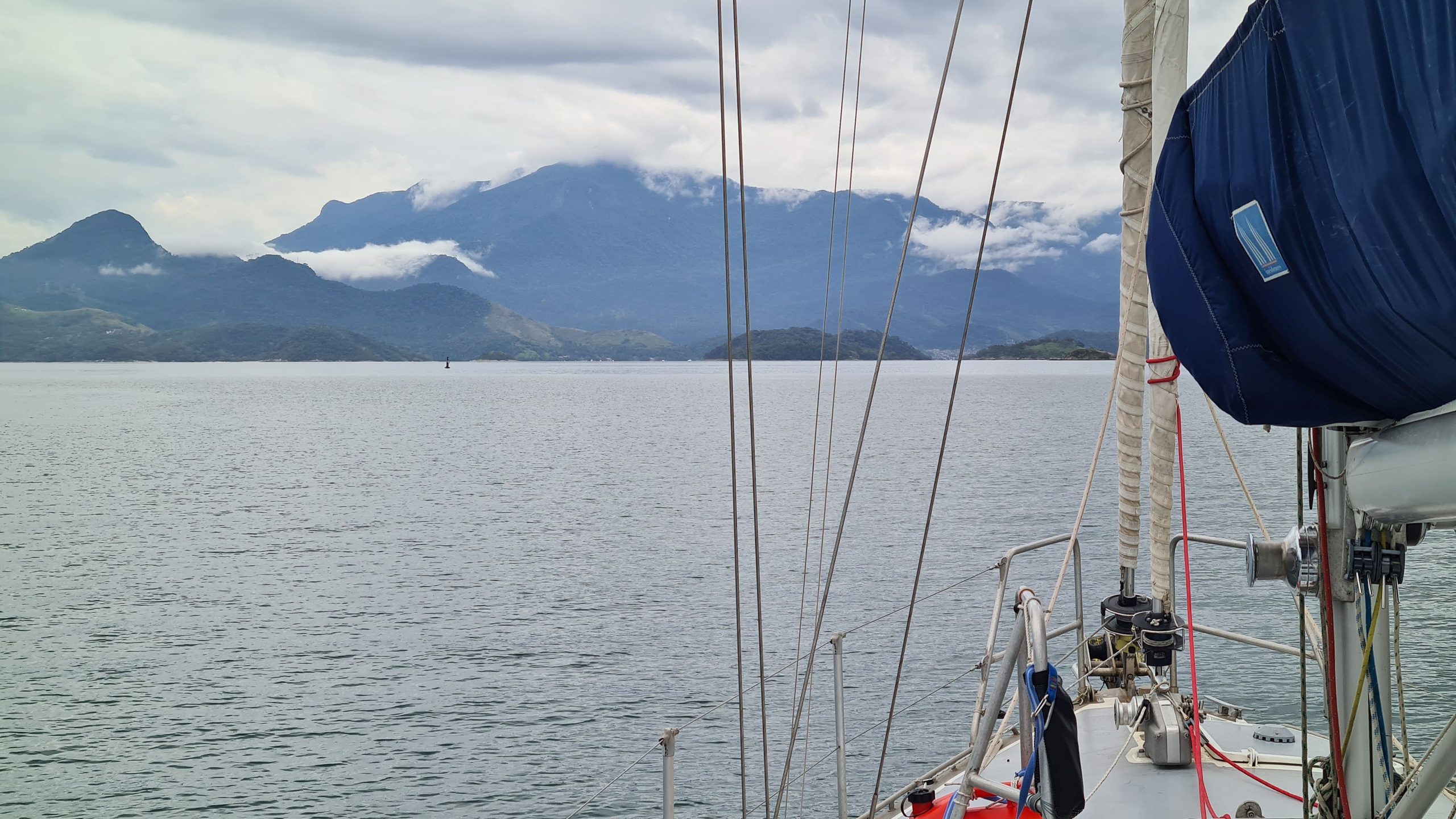
High coastline and granite archipelago, welcome to the Costa Verde
If the island was mountainous, what can we say about the mainland? The little peak right over there tops out at a cool 1,500 metres! The sailing is magnificent, weaving between dozens of tiny granite islets blanketed in deep green vegetation. With the grey skies and low clouds, you’d swear we were back in one of our beloved Norwegian skjærgård! An impression reinforced by the numerous porpoises frolicking in these waters—just like home. Naturally, we fall head over heels for the place. Stunning!!
A few motoring miles later, we drop anchor in the perfectly sheltered Saco de Piquara do Dentro. Perfect timing: the rain starts just as we finish anchoring, giving us barely enough time to scramble below deck. Mind you, we do have a few boat jobs on the list to keep us occupied on wet days, don’t we? Today: dismantling and cleaning the galley sink’s seawater pump, which hadn’t been pumping properly for a while. A couple of hours later and it’s operational again—a success! (You need those every once in a while…)
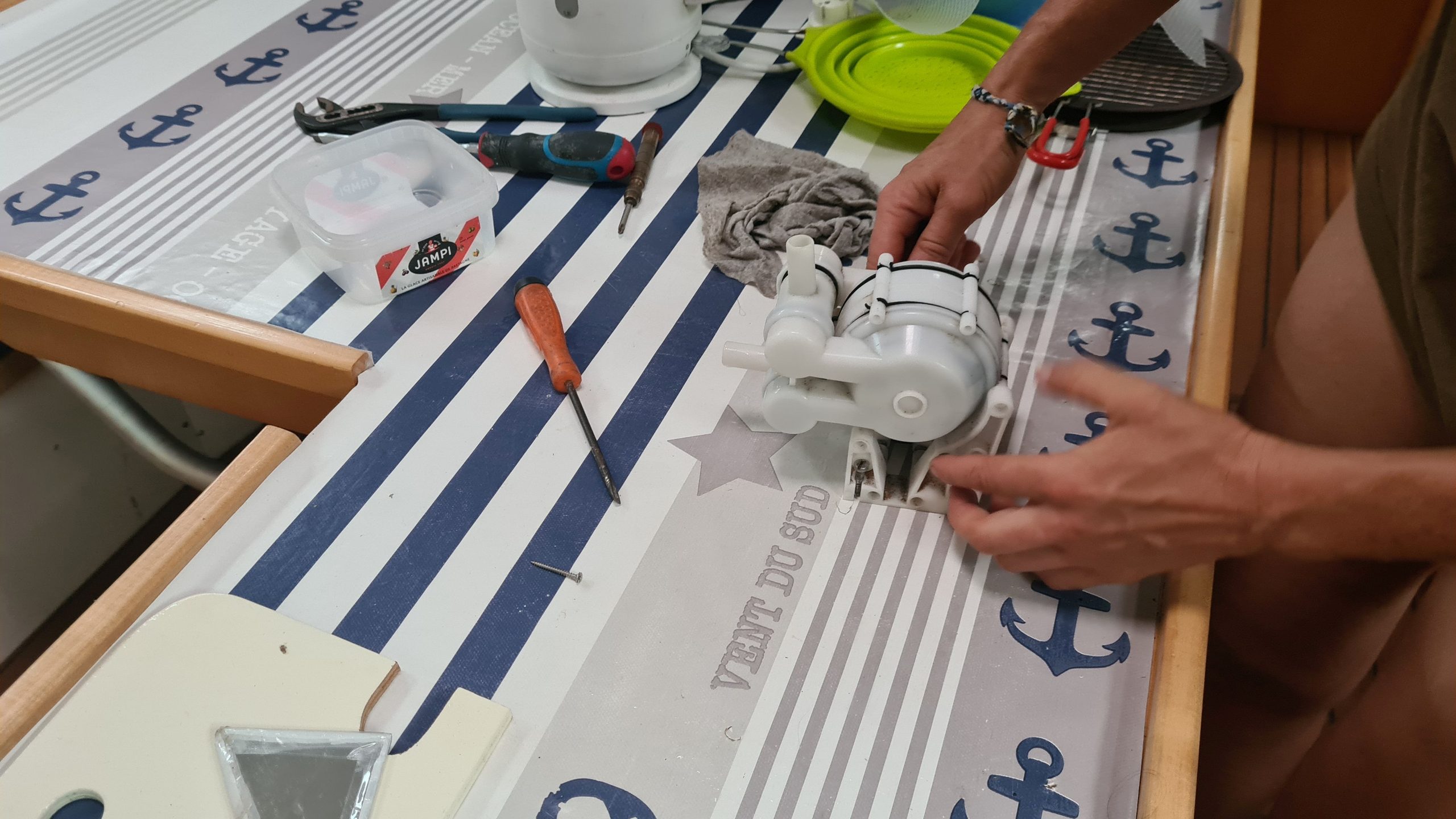
Working on one little pump all afternoon
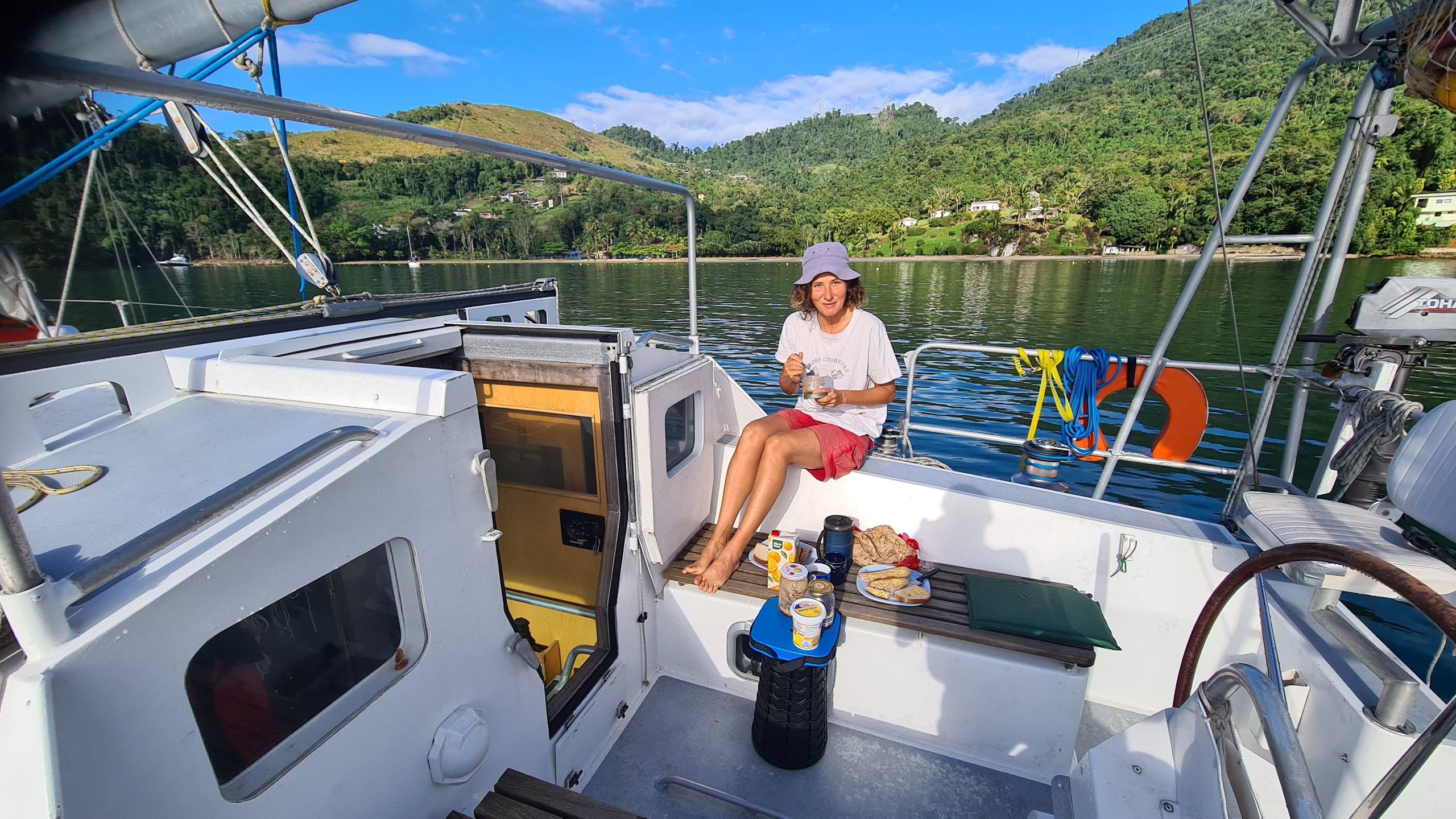
As we wake up, summer is back!
Sunny weather finally returns for a few days, and we fully intend to make the most of it!
First stop: Itanhangá Island, which looks like a giant butterfly with its two granite wings separated by a sandy isthmus. A trek ashore rewards us with brilliant panoramic views of the surroundings.
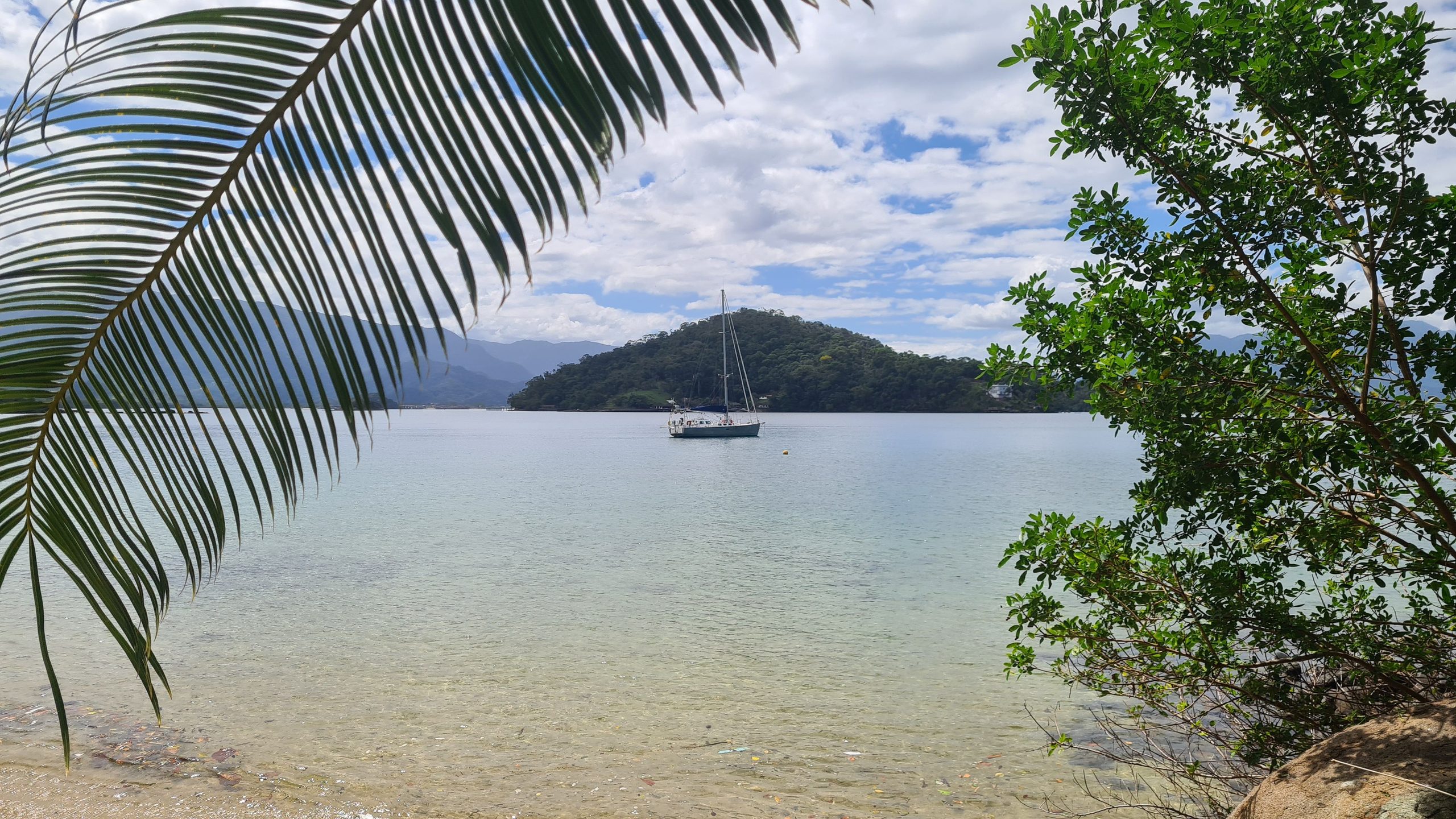
UtPåTur anchored at Giant Butterfly, not too bad !
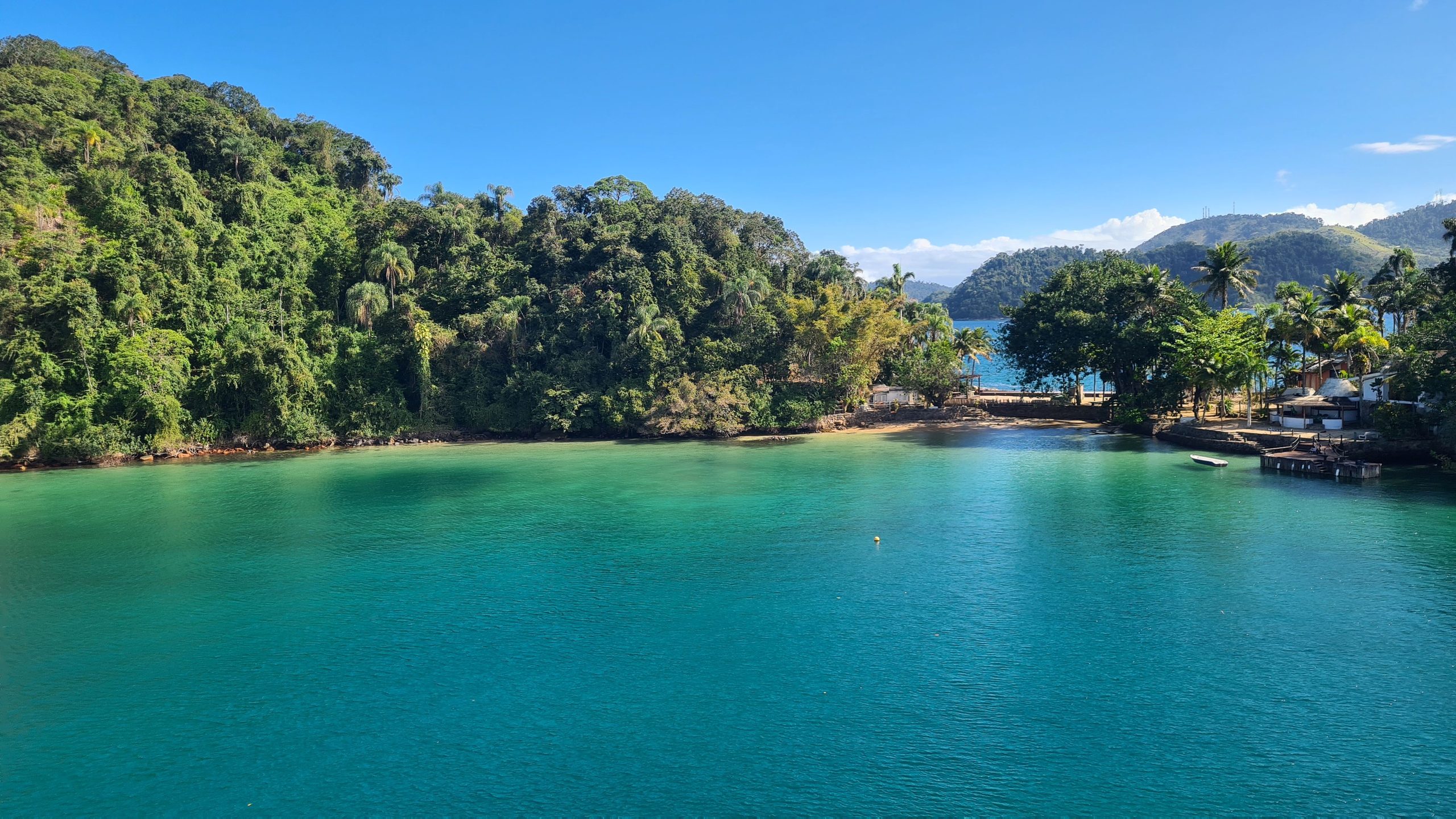
The view from the mast, the colours are stunning!
In the afternoon, we dive in to see the fish. The water isn’t super clear, but we still spot heaps of sergeant majors, porkfish, a porcupinefish, and a flying gurnard—very impressive with its large, blue-trimmed fins. We finish on an absolute high by swimming alongside a turtle! What a brilliant snorkelling session—it had been far too long!
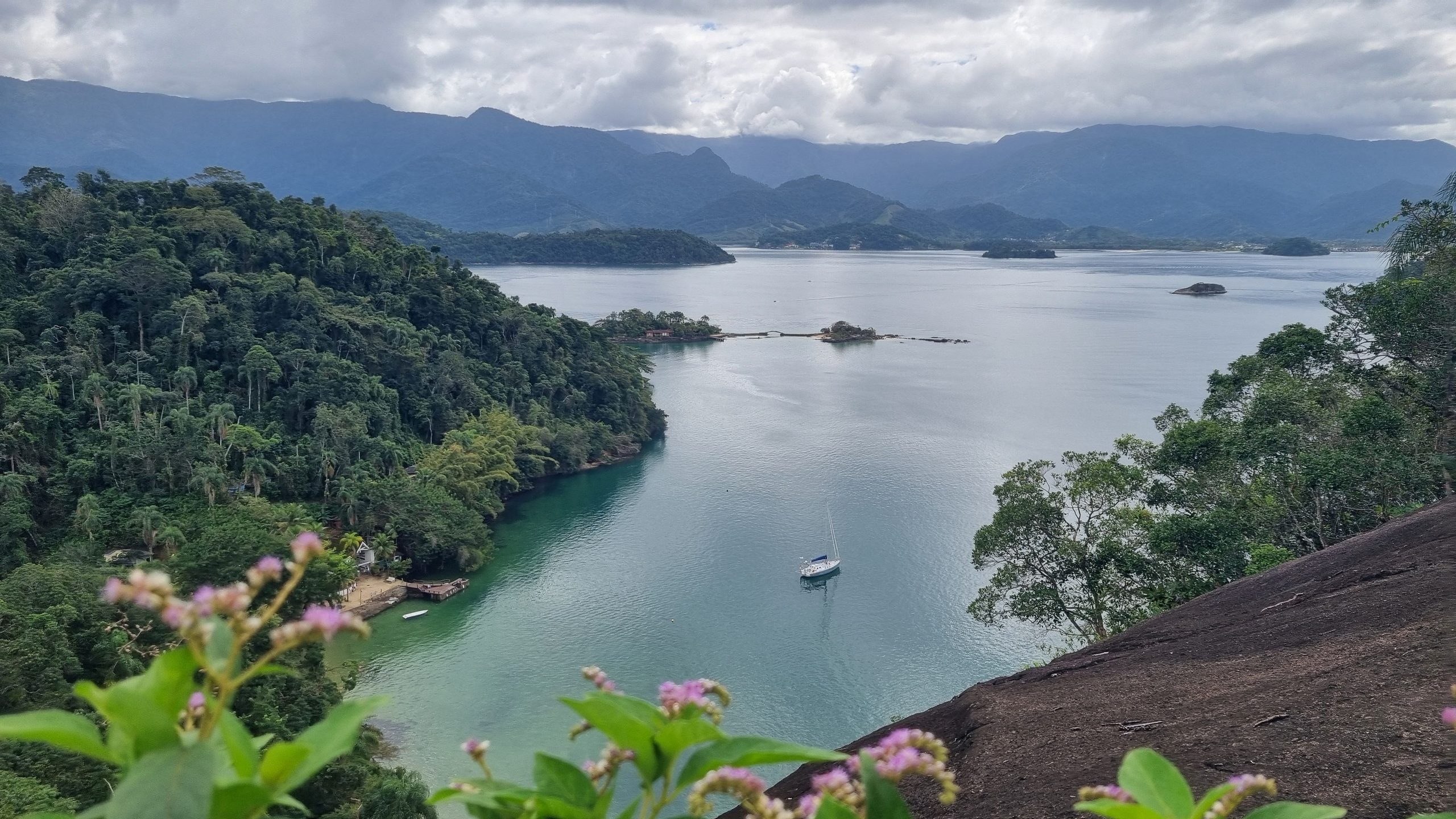
View from the top of “Giant Butterfly”
Life is good here, all by ourselves in our Giant Butterfly bay, soaking in the gorgeous scenery. We enjoy an excellent, flat night with no thunderstorm in sight.
The next day, we shift half a mile over to our butterfly island’s little sister: Ilha de Paquetá. Hard to get more tropical than this: emerald-green water, a white sand isthmus topped by five evenly spaced coconut palms, and giant ants that won’t hesitate to nip your toes if you get too close!
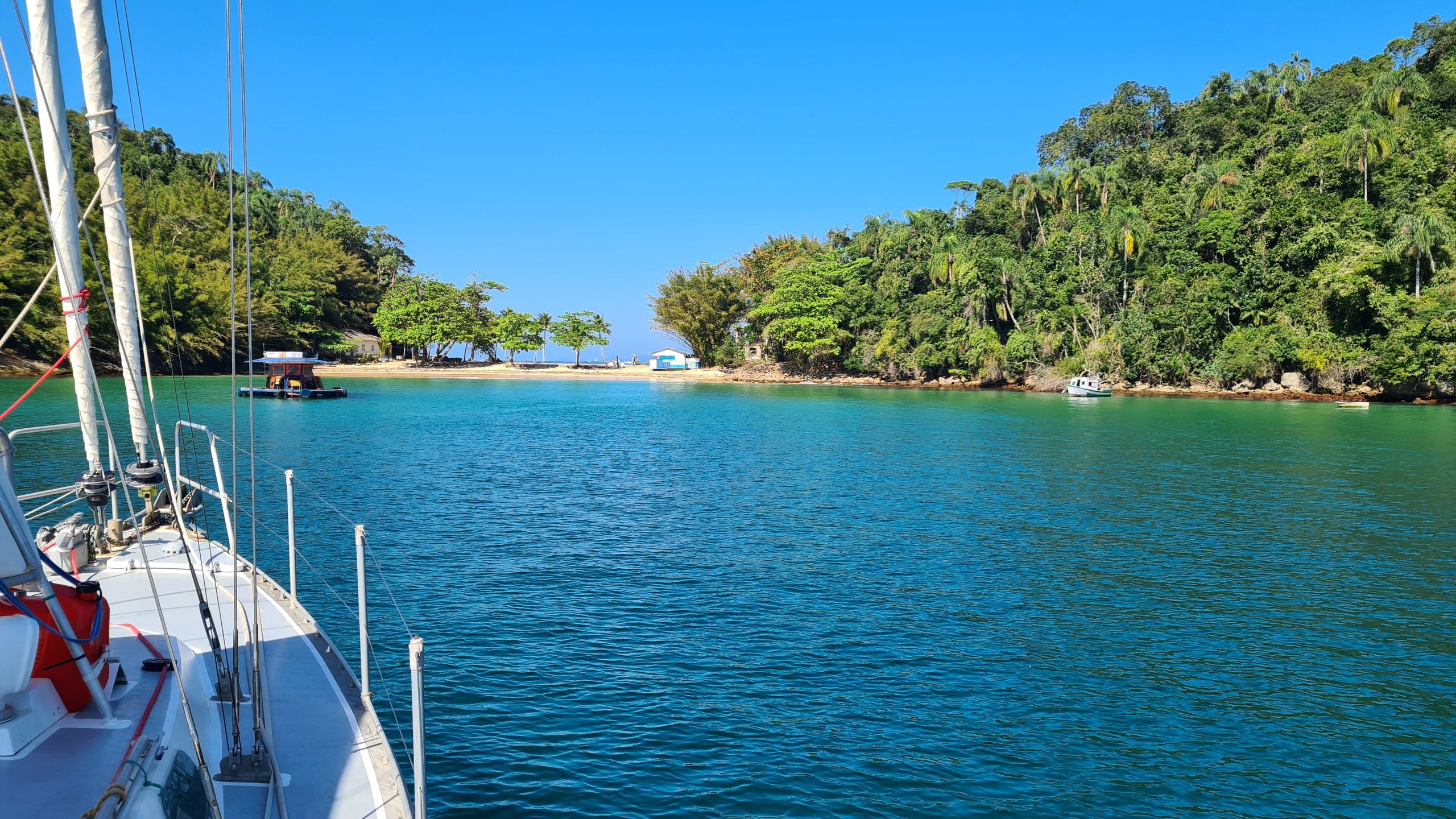
Anchored at “Little Butterfly”
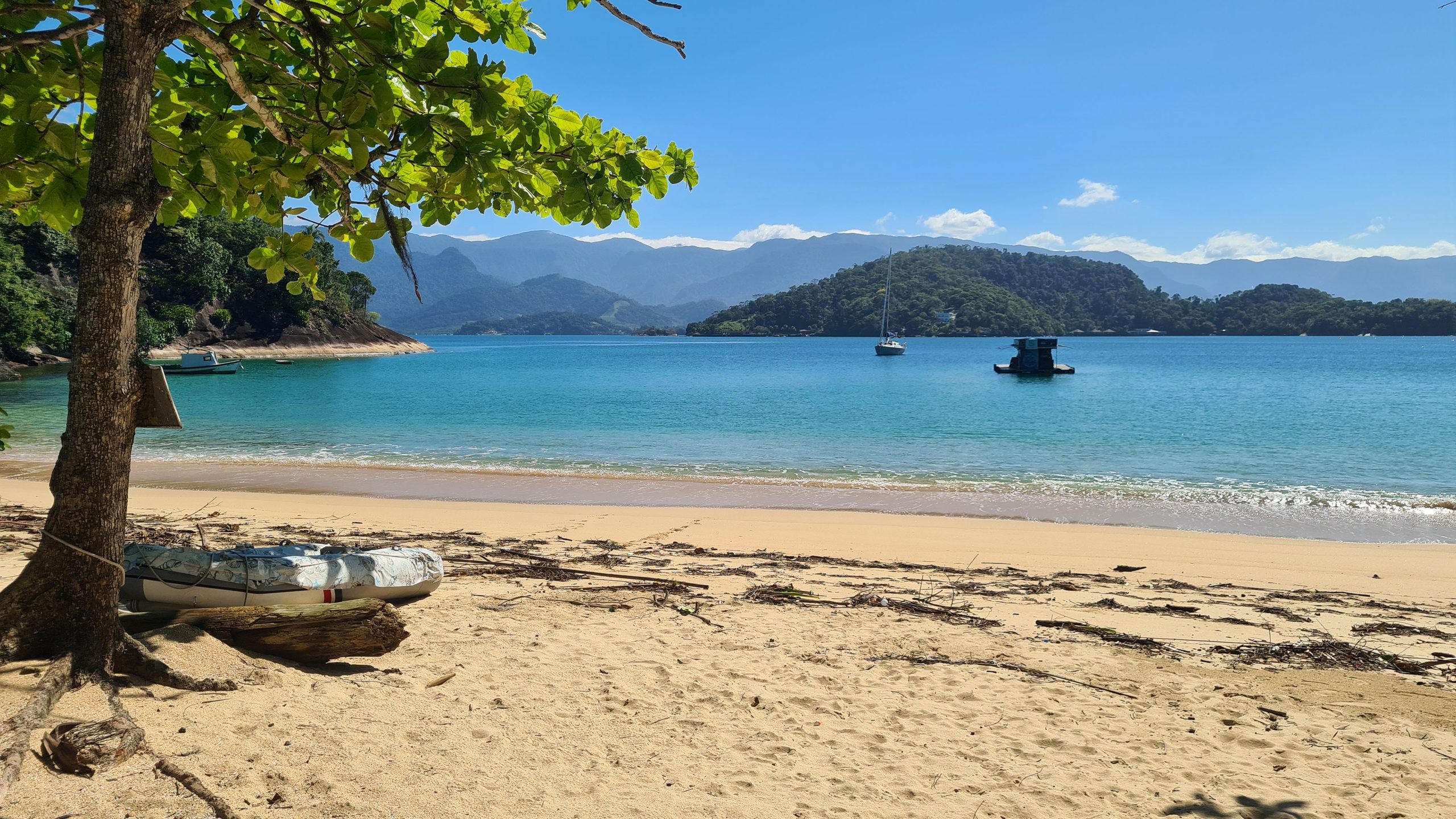
Nice spot to park the tender
Just like old times, we gather coconuts washed up on the beach, hunt for a few shells, and head back on board.
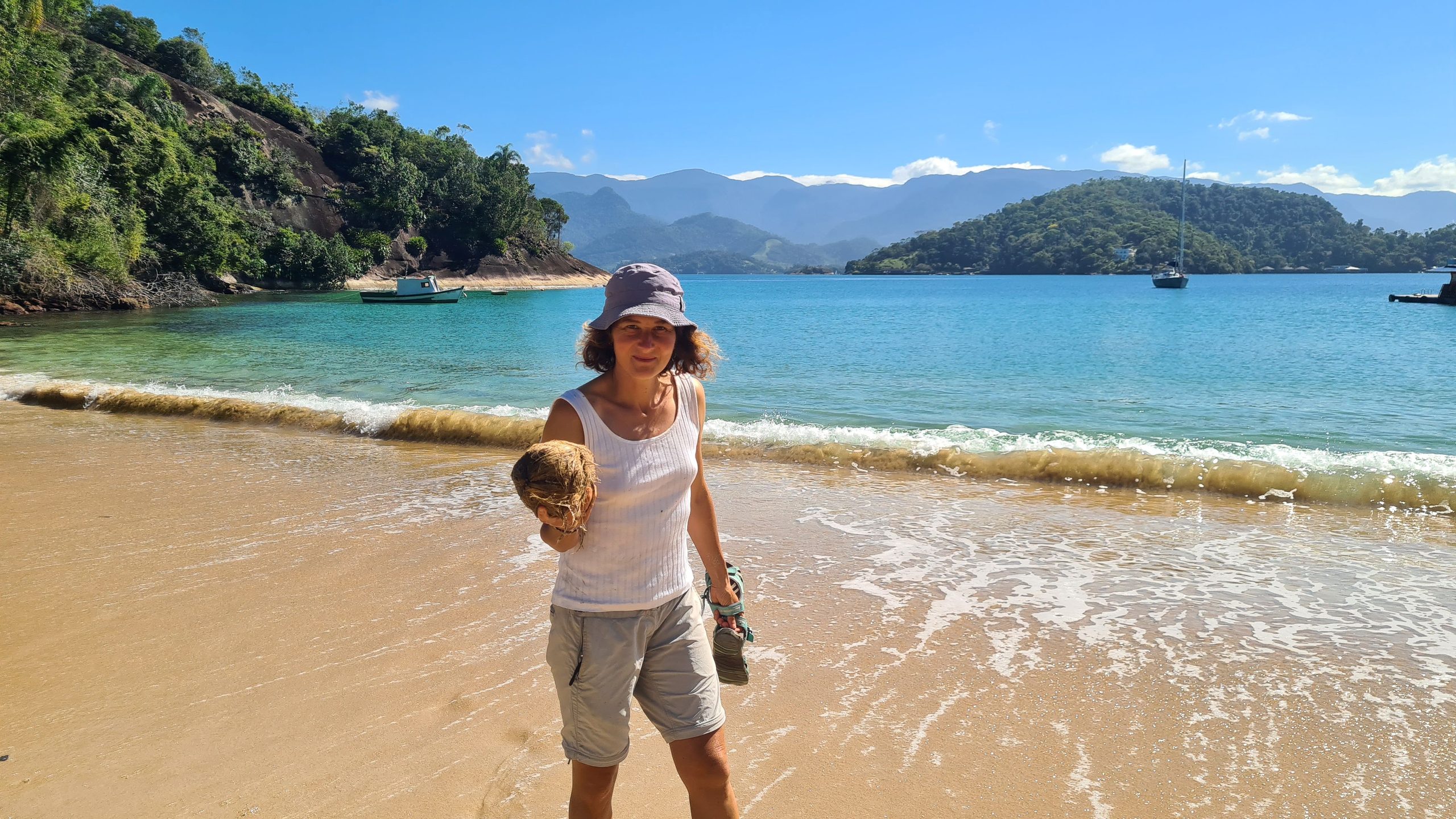
This one looks definitely edible!
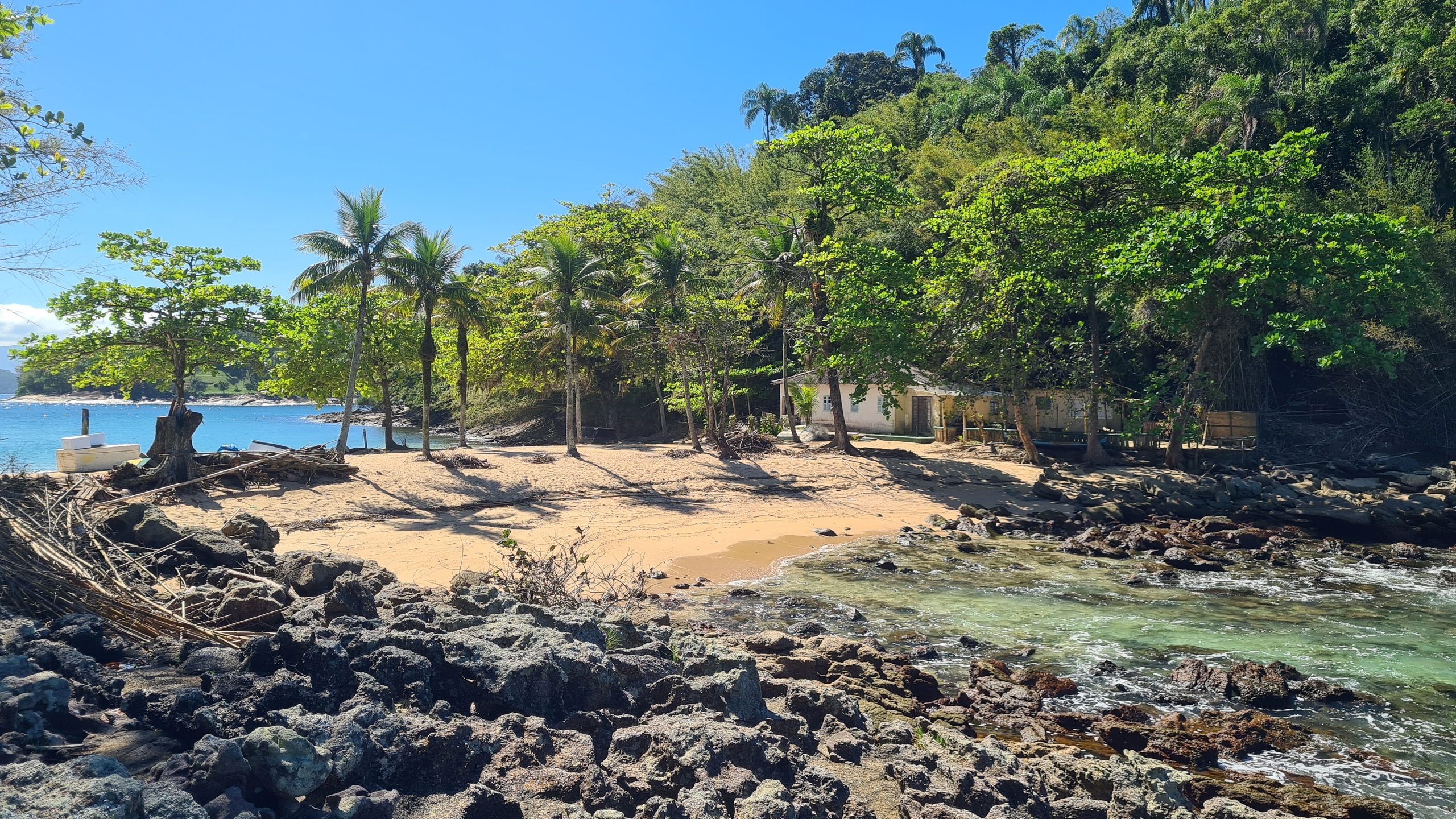
The isthmus of “Little Butterfly” seen from the other side
The logical next step to a tropical day: a swim with the fish. The water is clearer here and there’s a bit of coral on the rocks, but no turtles this time…
The setting is really pleasant, but not particularly well-sheltered, and actually getting increasingly crowded as the day wears on. So, we decide to scope out another anchorage. We’re in luck: a gentle sea breeze springs up from the south, allowing us to sail—a rare treat in this ultra-sheltered bay. Out comes our Norwegian seamanship as we tack right up against the rocks… all in shorts under the sun and palm trees—no, really, we’re alright!!
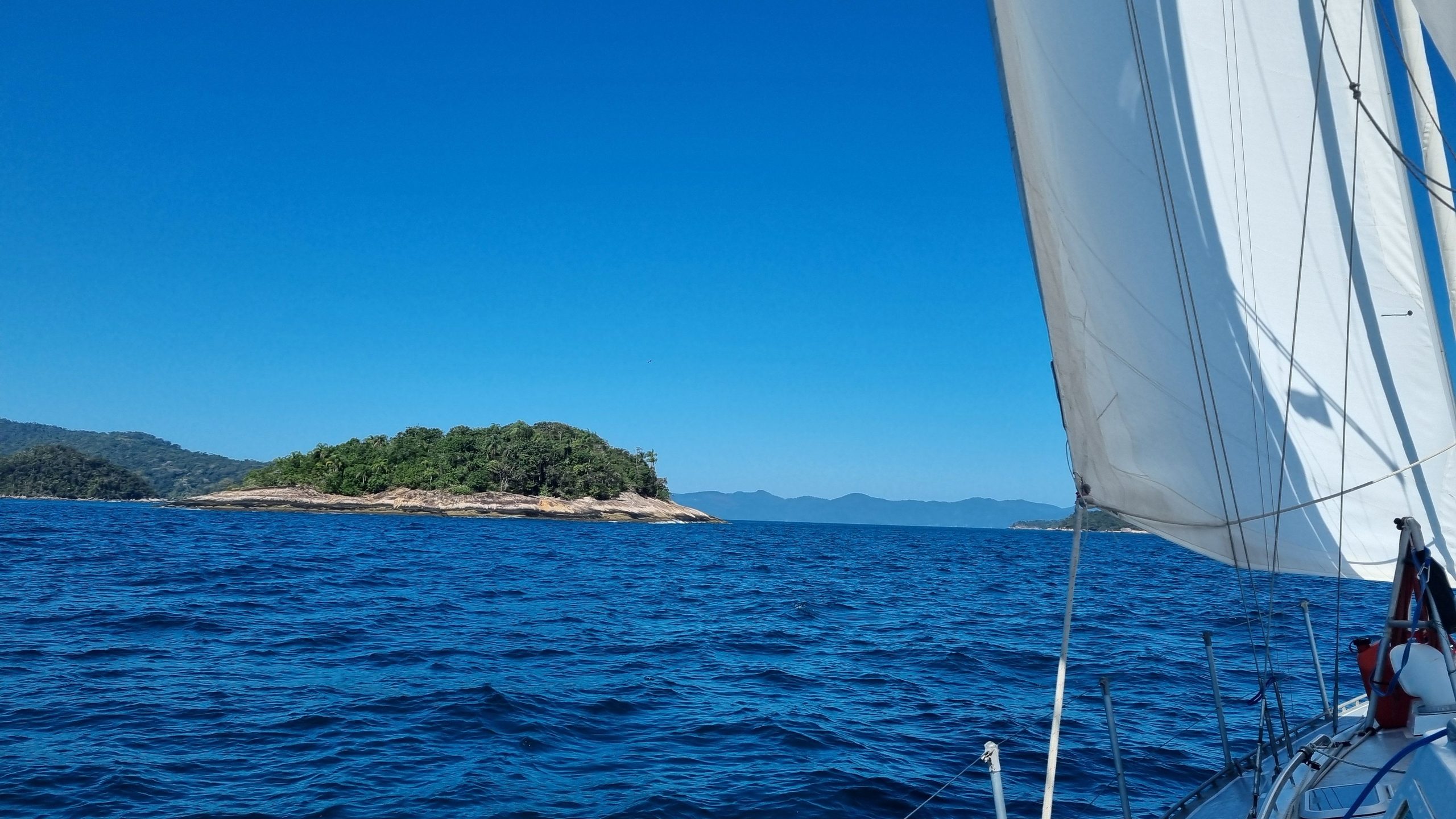
Sailing in the tropical skjærgård
We aim our bow towards Praia do Dentista—”Dentist’s Beach”—one of the prettiest around. The picture-perfect beach, no doubt, but the secret is well and truly out, and it’s packed with water taxis… We hesitate for a moment, but decide to stay put and ignore the noisy neighbours. Good choice: from 3:30 pm onwards, the tourists start packing up, and before long we have this absolute slice of paradise entirely to ourselves!!! Sure, there were struggles and tough moments getting here, but for this exact instant—jumping into crystal-turquoise water off soft white sand while watching frigatebirds soar over the palm trees—it was 100% worth it!
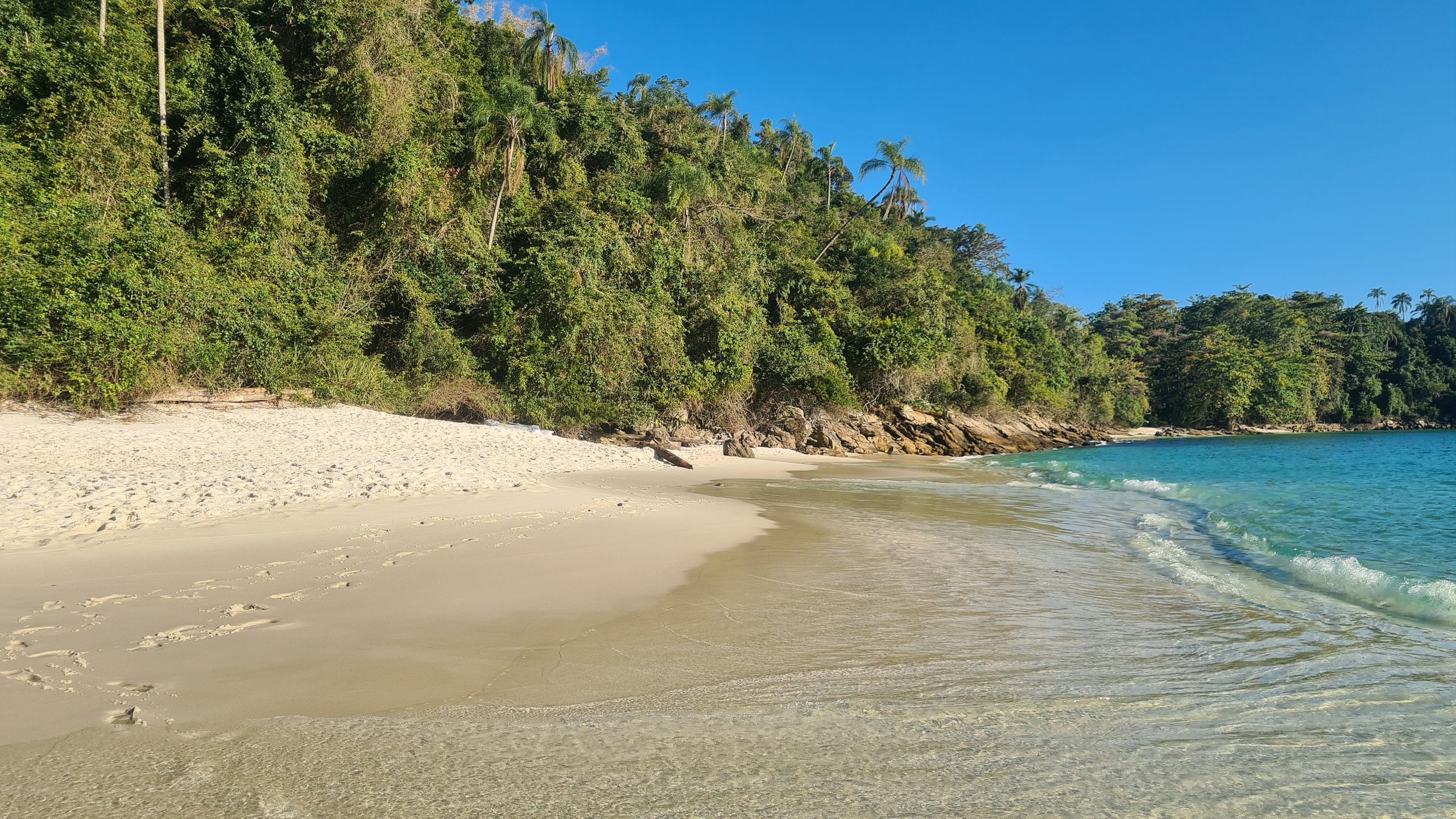
Our very private perfect beach
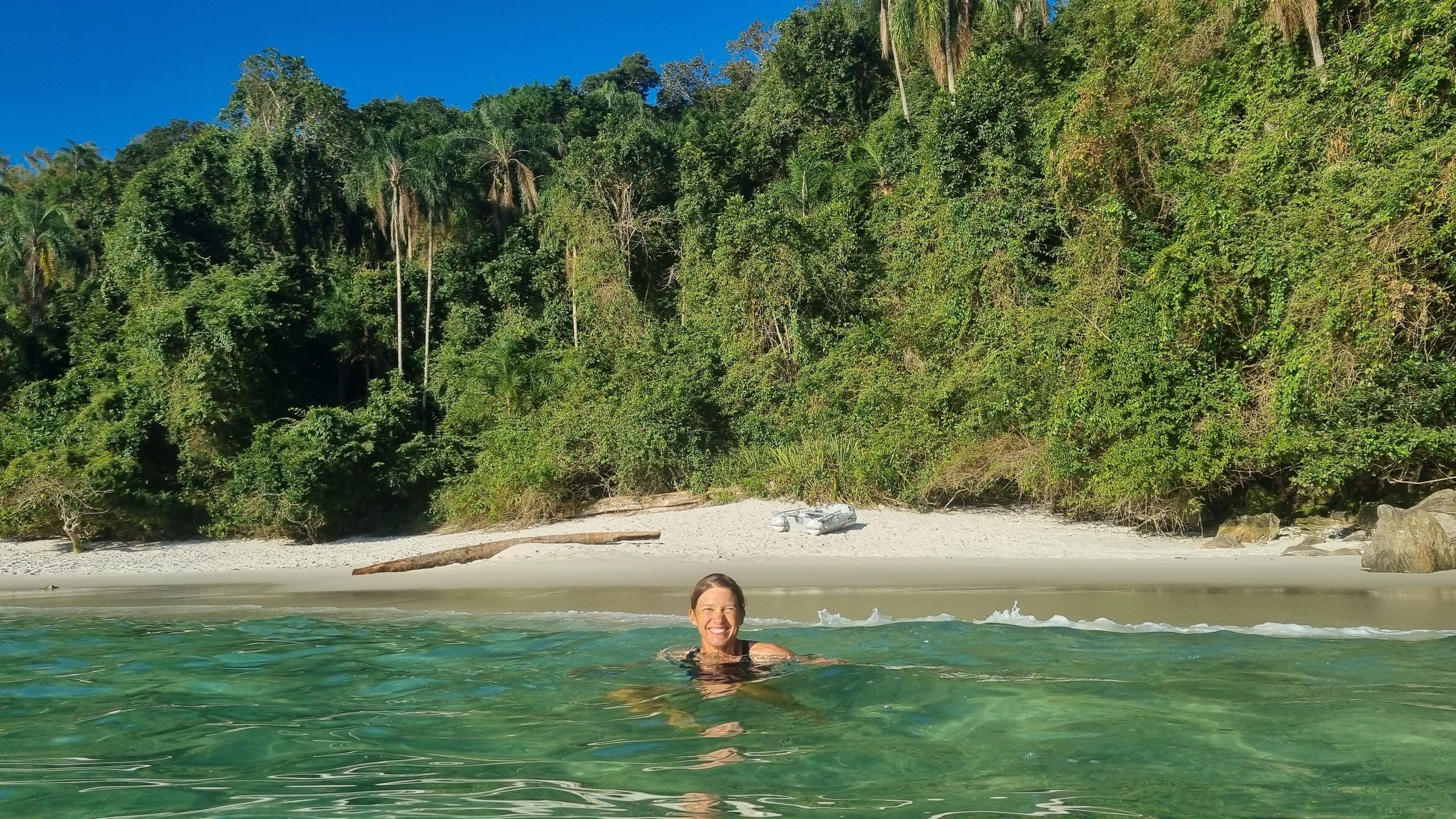
With transparent and warm water!
We round off this legendary day with a caipirinha on deck watching the sun go down—mosquitoes be damned… The last motorboats buzz off, leaving us alone once again for the night.
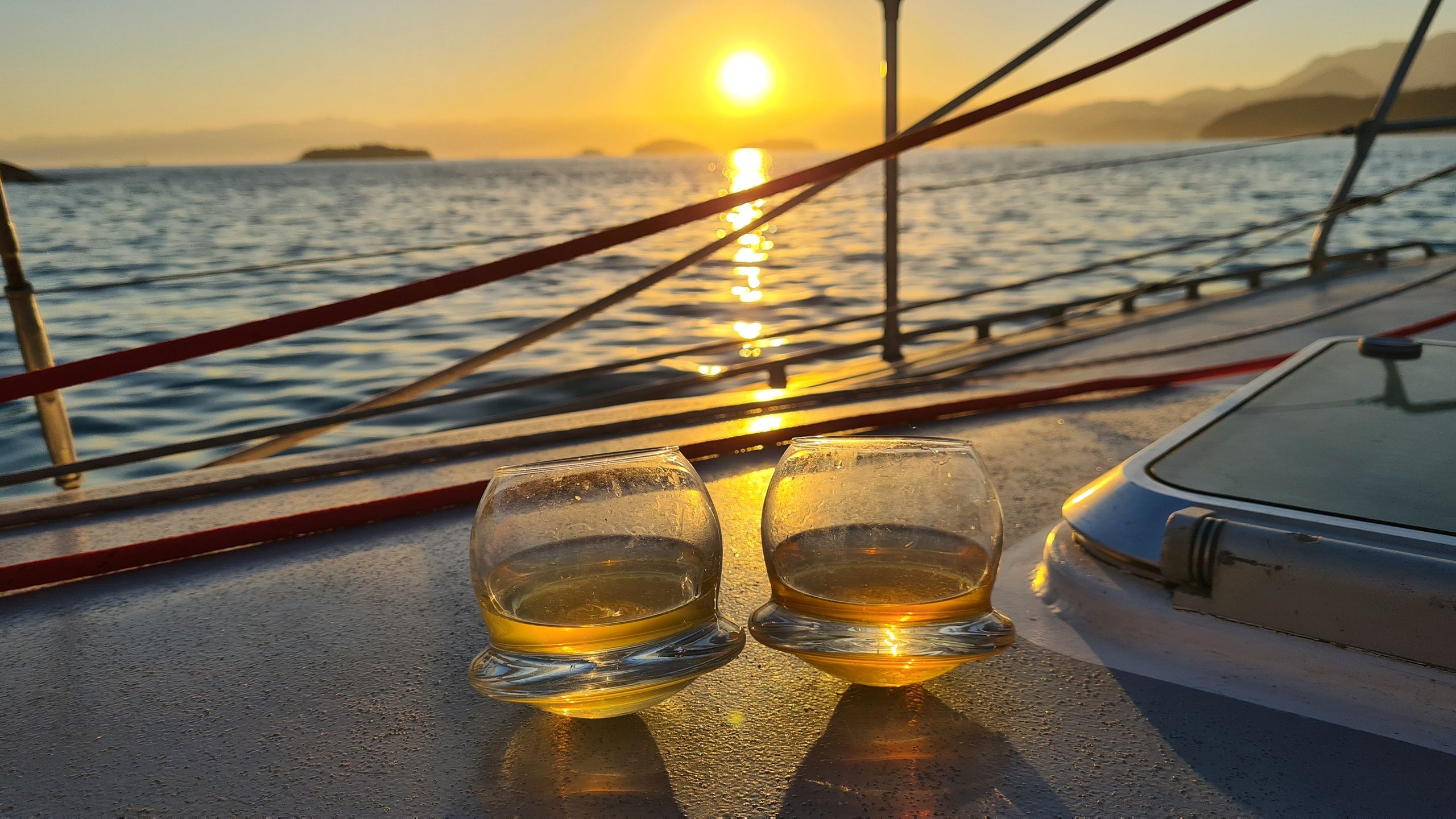
End of an incredible day…
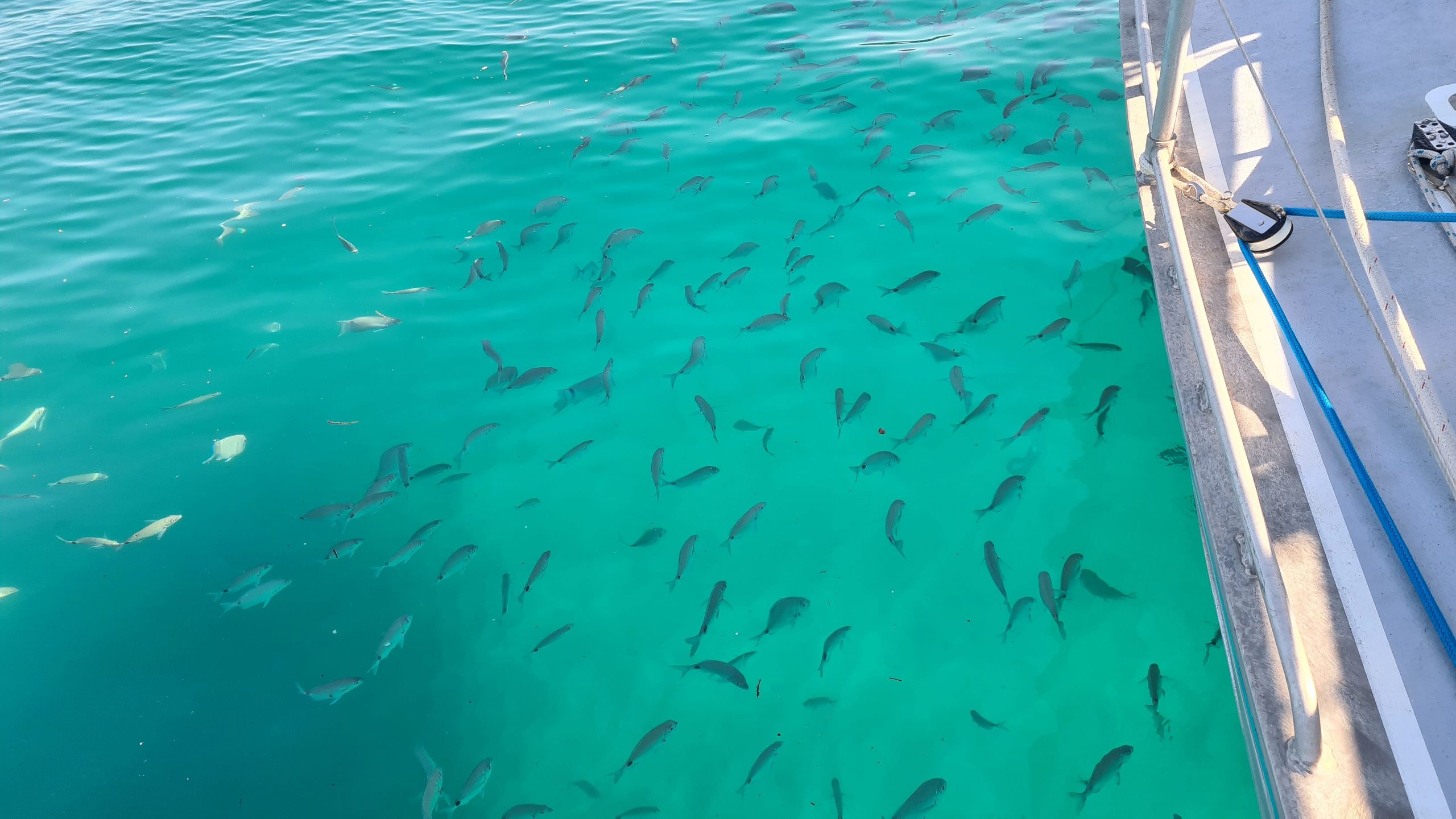
Natural antifouling in Praia do Dentista
When we wake up, the water is so clear we can count the grains of sand 7 metres down… The boat is surrounded by dozens of fish coming to nibble the algae off the hull, mostly marimbas and sergeant majors… We debate staying put to go diving, but for several days now we’ve wanted to go and explore another bay that looks even more promising for snorkelling…
An hour of motoring later, we’re anchored in Lagoa Verde, west of Ilha Grande. The water looks magnificent—a very good omen! We run into our algae-munching fish again—or rather, munchers of everything: they come right up to eat bread from our hands and even try a nibble on Laure to see if she’s edible too! A bit tough apparently, so thankfully they don’t try it twice. Given their greediness, we try catching one or two, but this species seems remarkably sharp and turns away from anything resembling a hook or a net. Frustrating!!
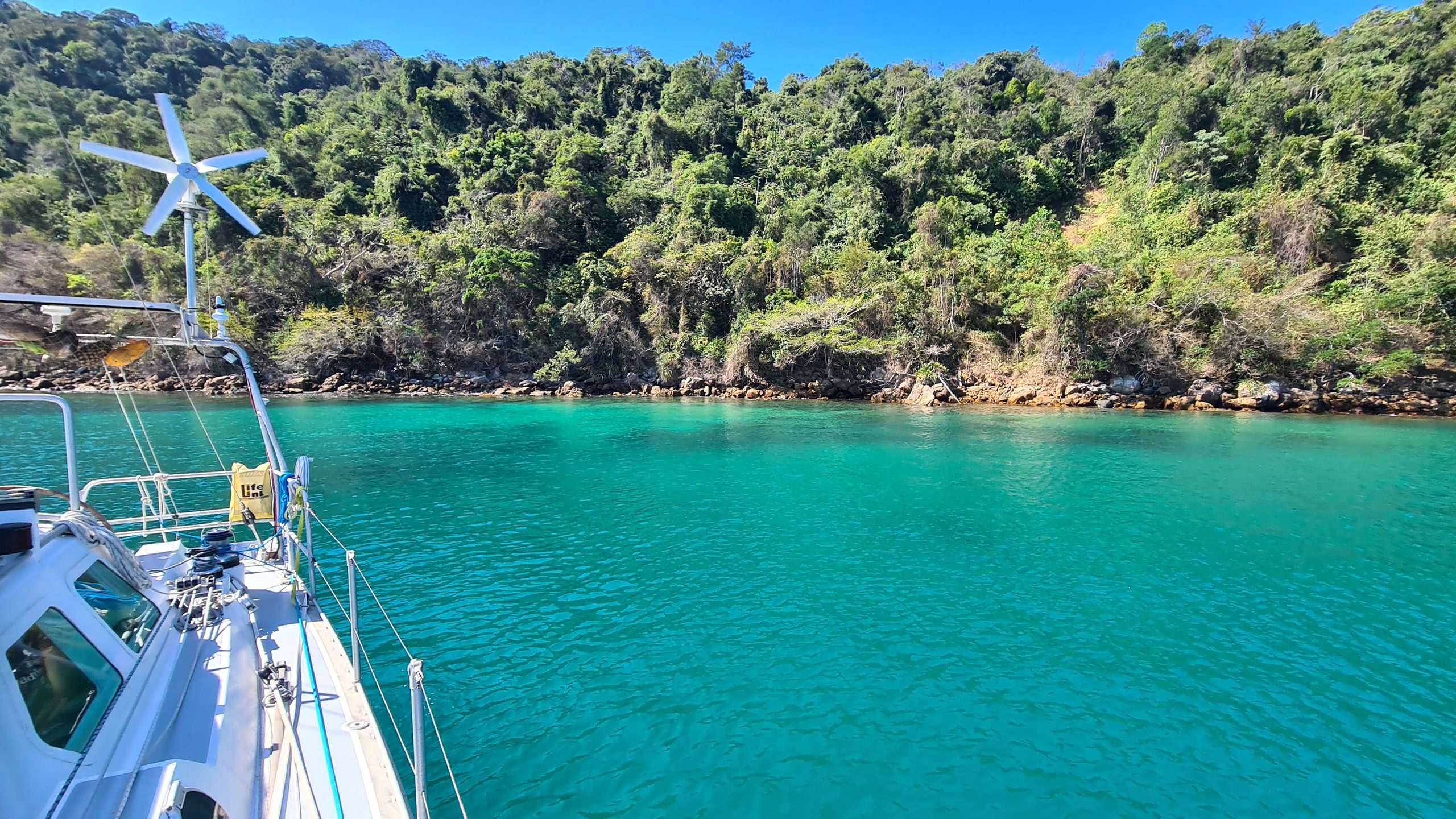
Lagoa Verde, promising..
The dive is just fantastic… On the bay side, we spot our usual sergeant majors and porkfish against a backdrop of orange and pink coral, soon joined by angelfish. We fin over to a small white sand bar covered in 50 cm of warm water before crossing over to the seaward side. There, the experience steps up a notch. The water is astoundingly clear; the angelfish are still there, now joined by schools of surgeonfish—there are just so many fish!! We even spot the neon-green coral that gives the bay its name… A true spectacle… After an hour in the water, we start shivering and reluctantly head back on board, but what a grand finale to these three days of tropical holiday!!
Indeed the bad weather is returning fast… and we head back to the neighbouring bay of Sítio Forte for the night, our eyes still sparkling at the recollection of that extraordinary dive…
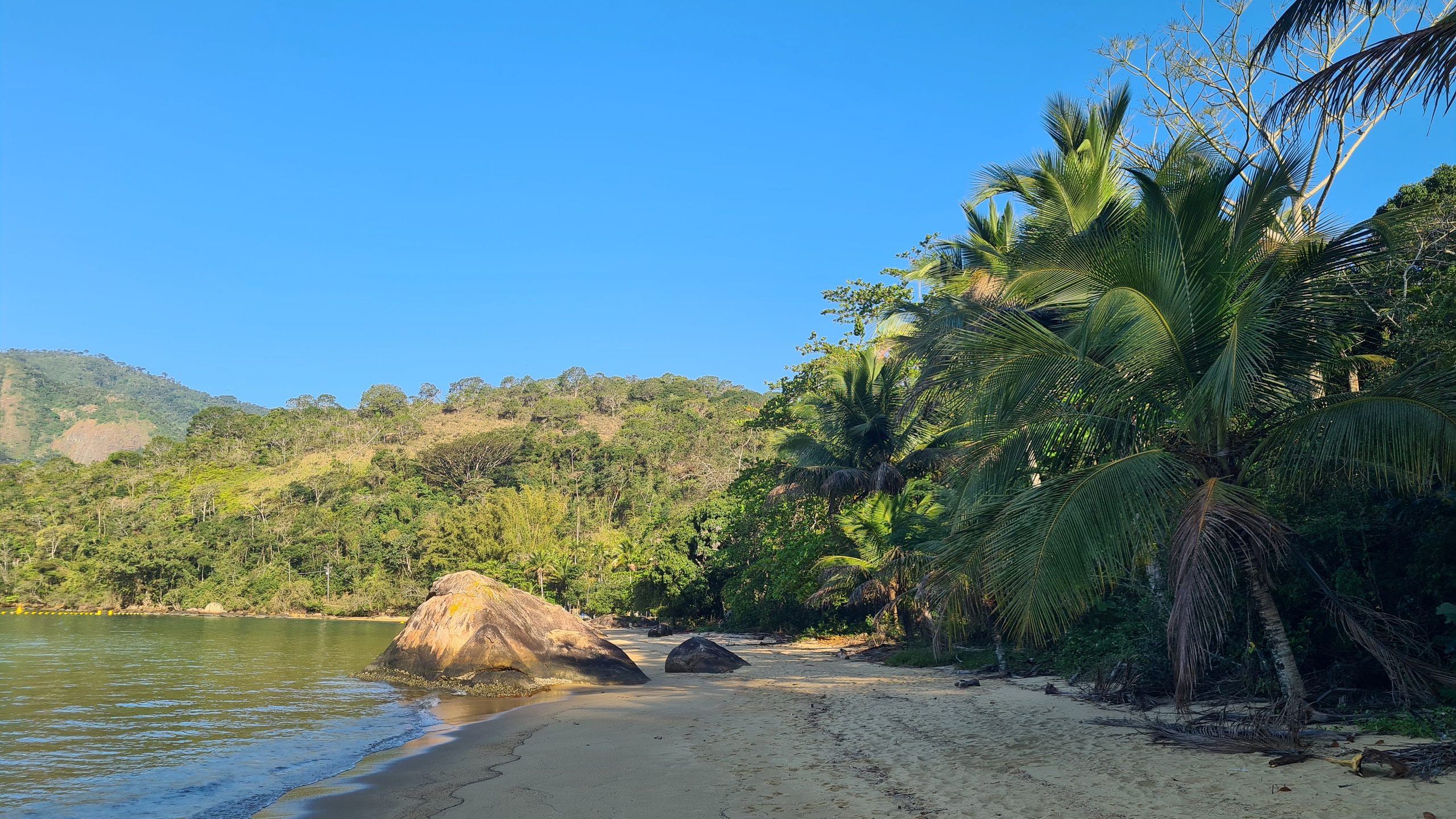
Sitio Forte beach, not tired of palm trees yet
5th–9th September: Angra dos Reis in Winter (17NM)
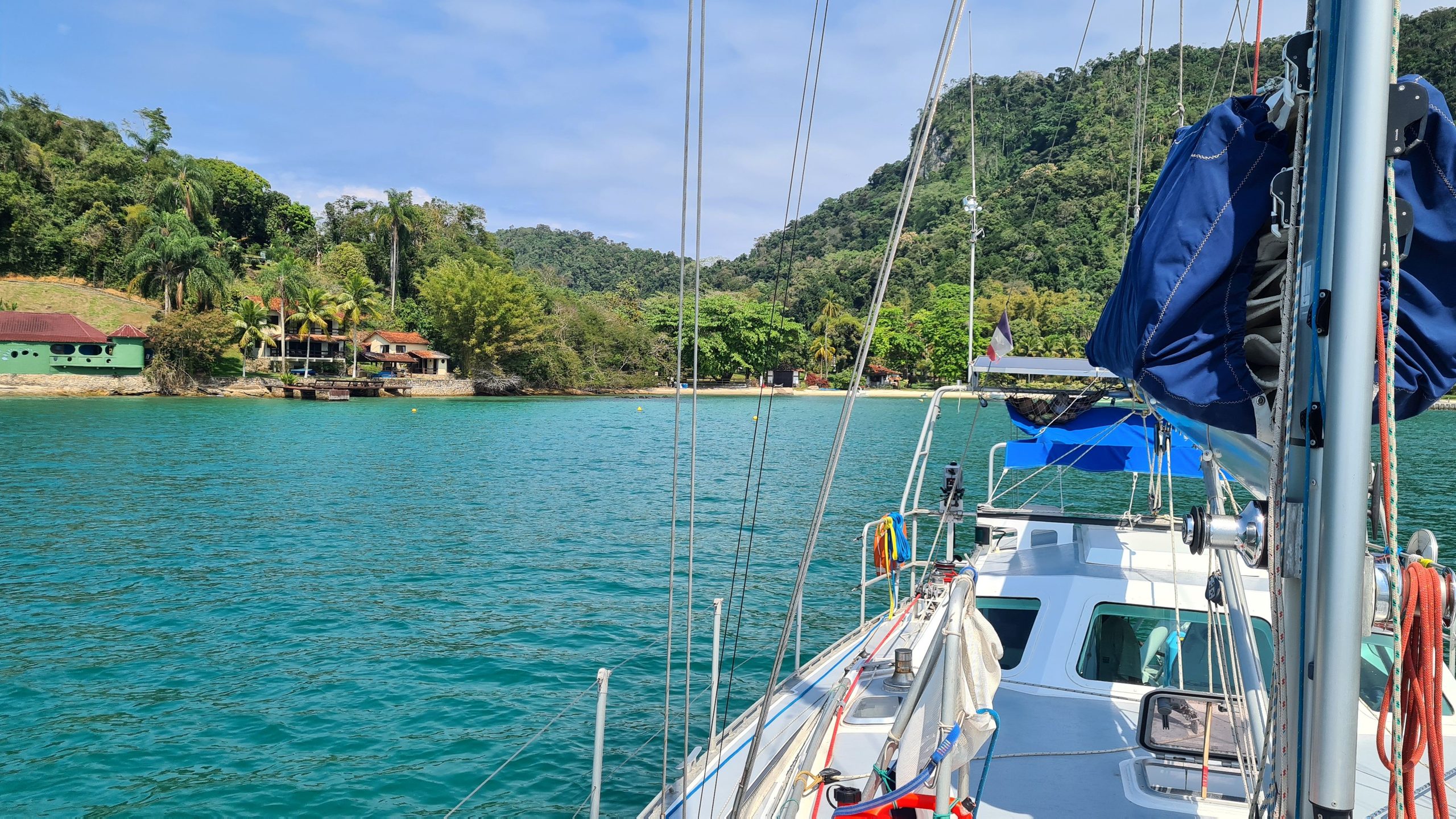
Enseada de Fazenda, waiting for the cold front…
End of the summer vibe: a cold front is forecast overnight. The GRIBs call for 10 knots gusting 20 in our “ultra-protected” Ribeira Bay, but after more than two months in Brazil, you can’t fool us—we know full well there’ll be 40 knots. We pick a well-sheltered, shallow bay to spend the weekend: Enseada de Fazenda on Gipóia (Gipøya?!). 40 metres of chain in 4 metres of water over good sand—the wind can blow all it wants, we aren’t going anywhere!
As expected, we get over 40 knots in the gusts as the cold front rolls through, but it’s the rain that really marks the day. With our watermaker still out of action, we’ve taken to harvesting rainwater. The dozens of litres that routinely fill the dinghy serve for washing up and taking showers, but are a bit too dirty for drinking. So we use our sun awning to catch clean rainwater, managing to top up a good fifty litres straight into our tank in a single afternoon!
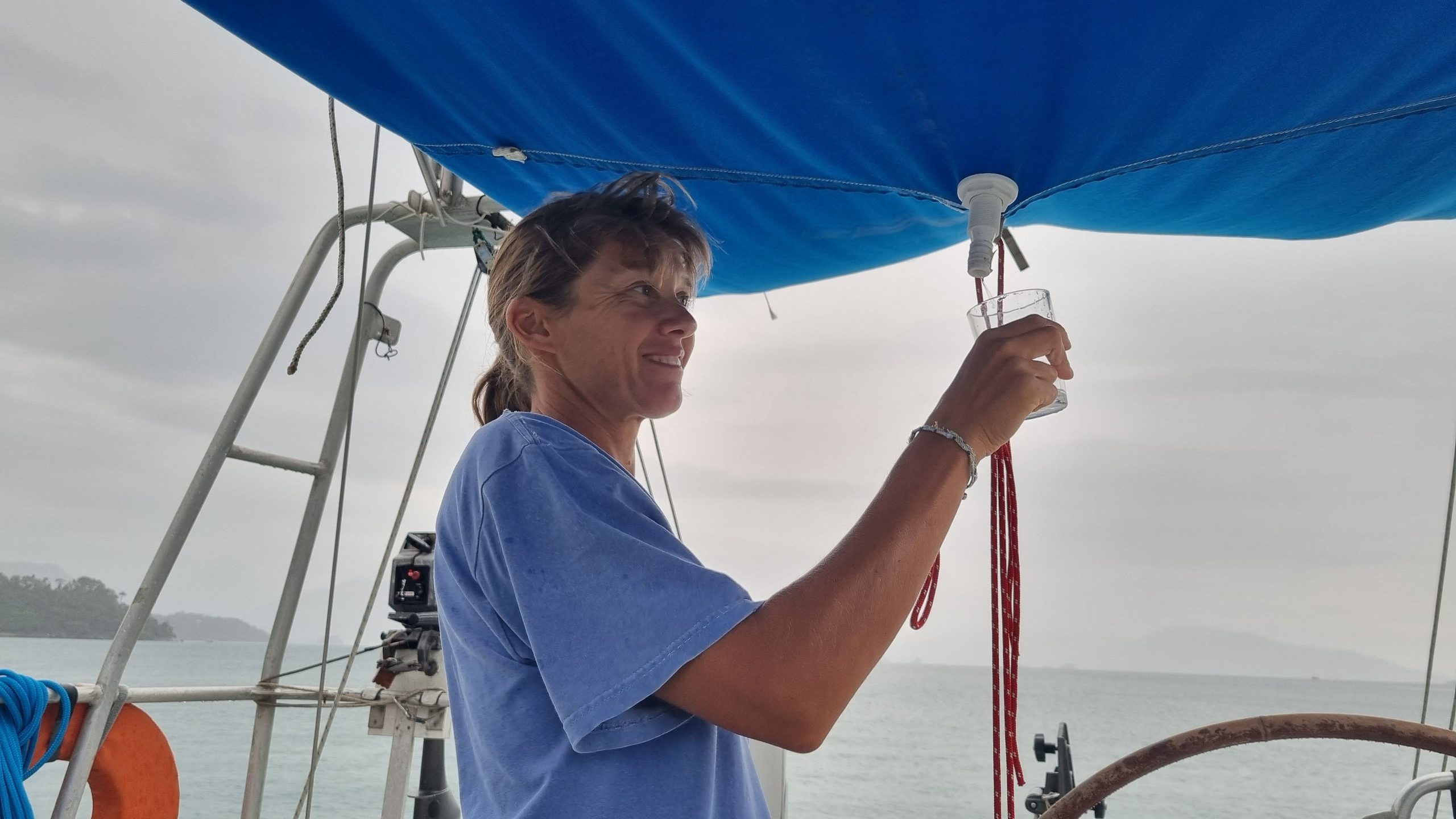
Water tasting before bottling
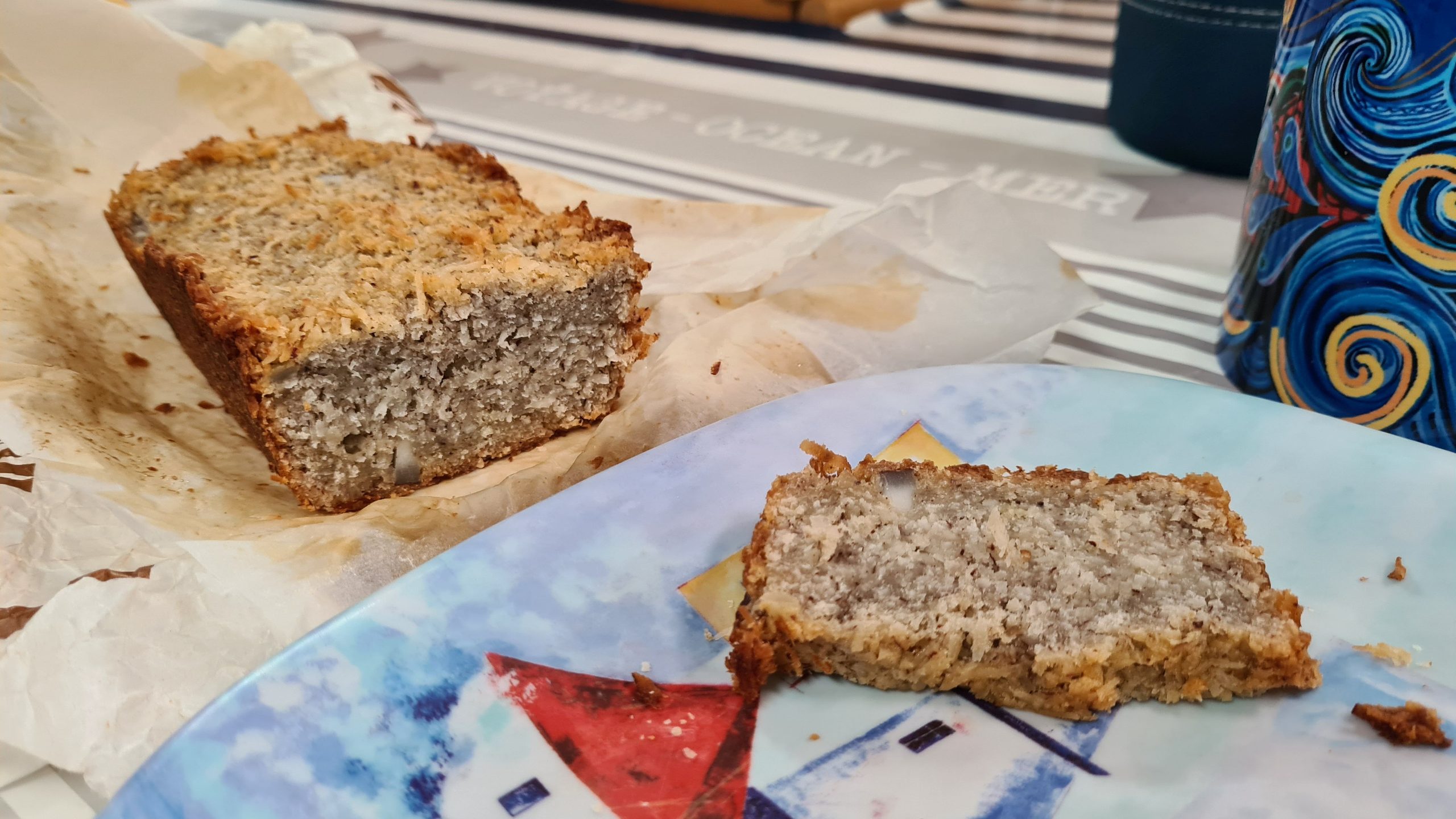
Our first attempt of a coconut bread was a success!
Today’s culinary exercise: coconut bread! We’re not letting our morale slide.
Once the rain eases off a bit and the temperature drops sharply behind the front (we don’t even get close to 20°C all day…), we set course for Angra dos Reis, the local town, to grab a few groceries and do our entry and exit formalities. The town doesn’t have anything special really, and we cast off the second our errands are complete.
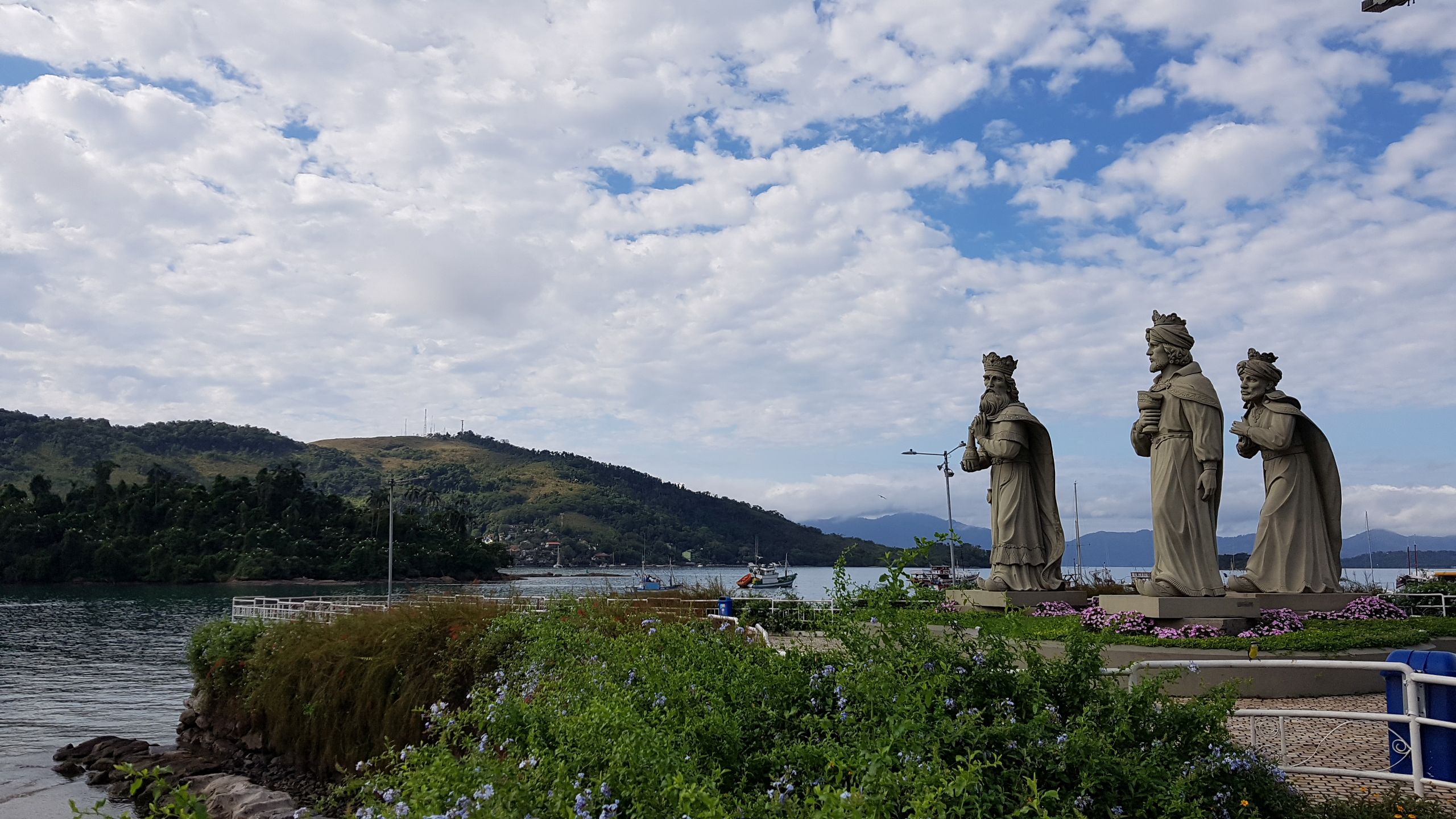
Quiz: if Rio de Janeiro [“January River” in Portuguese] was discovered on 1st January 1502, on what date was Angra DOS REIS [“Bay of the Kings”] identified? Answer: Epiphany / Three Kings’ Day, of course!
9th–12th September: Paraty and Surroundings (44NM)
Today we cross the Baía de Ilha Grande to reach Paraty at its far south-western tip. Once again, it’s a motoring passage, occasionally assisted by the sails whenever a tiny breeze fills them.
UtPåTur is a proper bird magnet: this time, a brown boobie perches right on our bowsprit and stays for a few hours, hitching a ride with us!
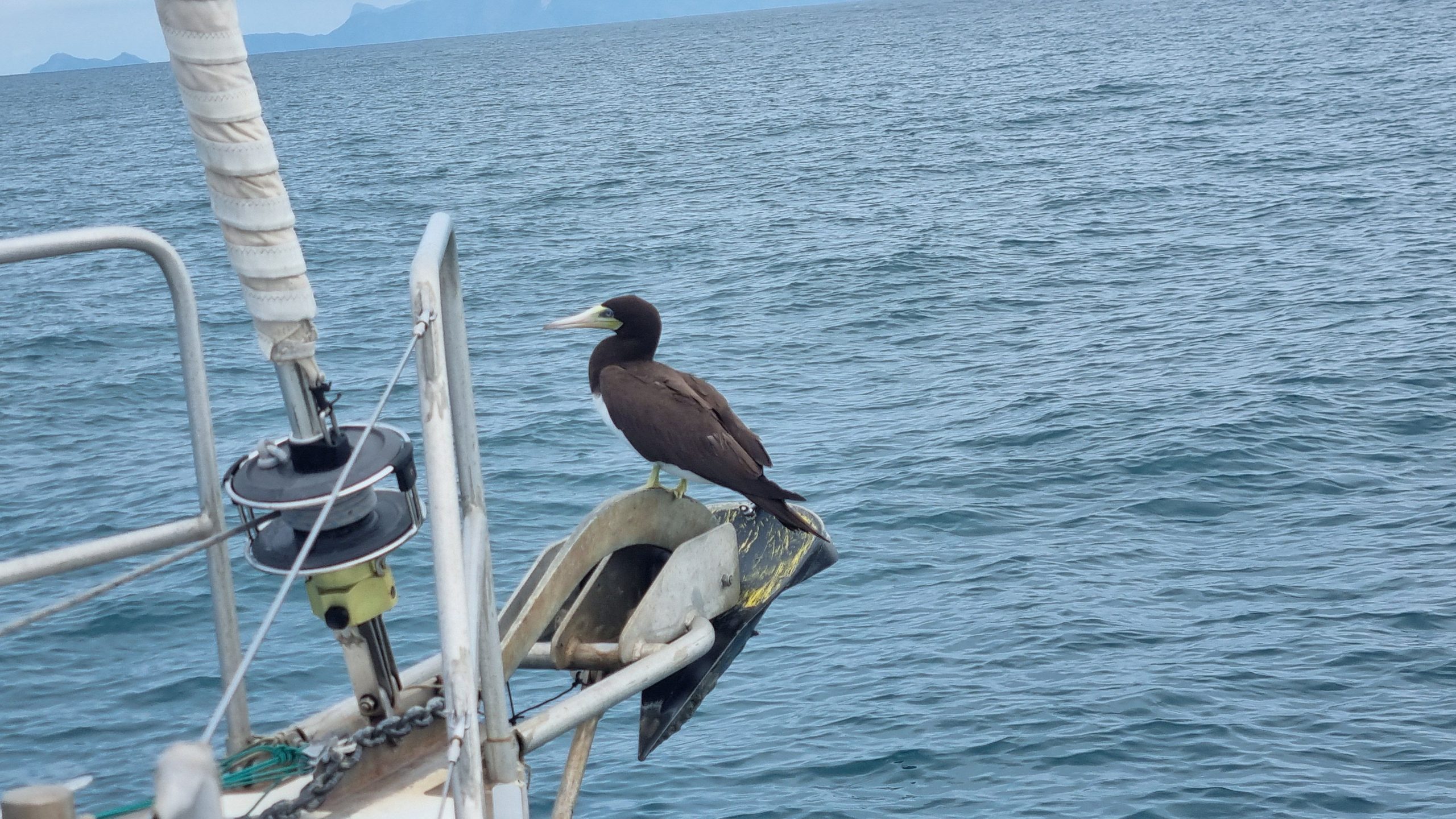
It’s a female booby, recognizable by her… pinkish beak of course!
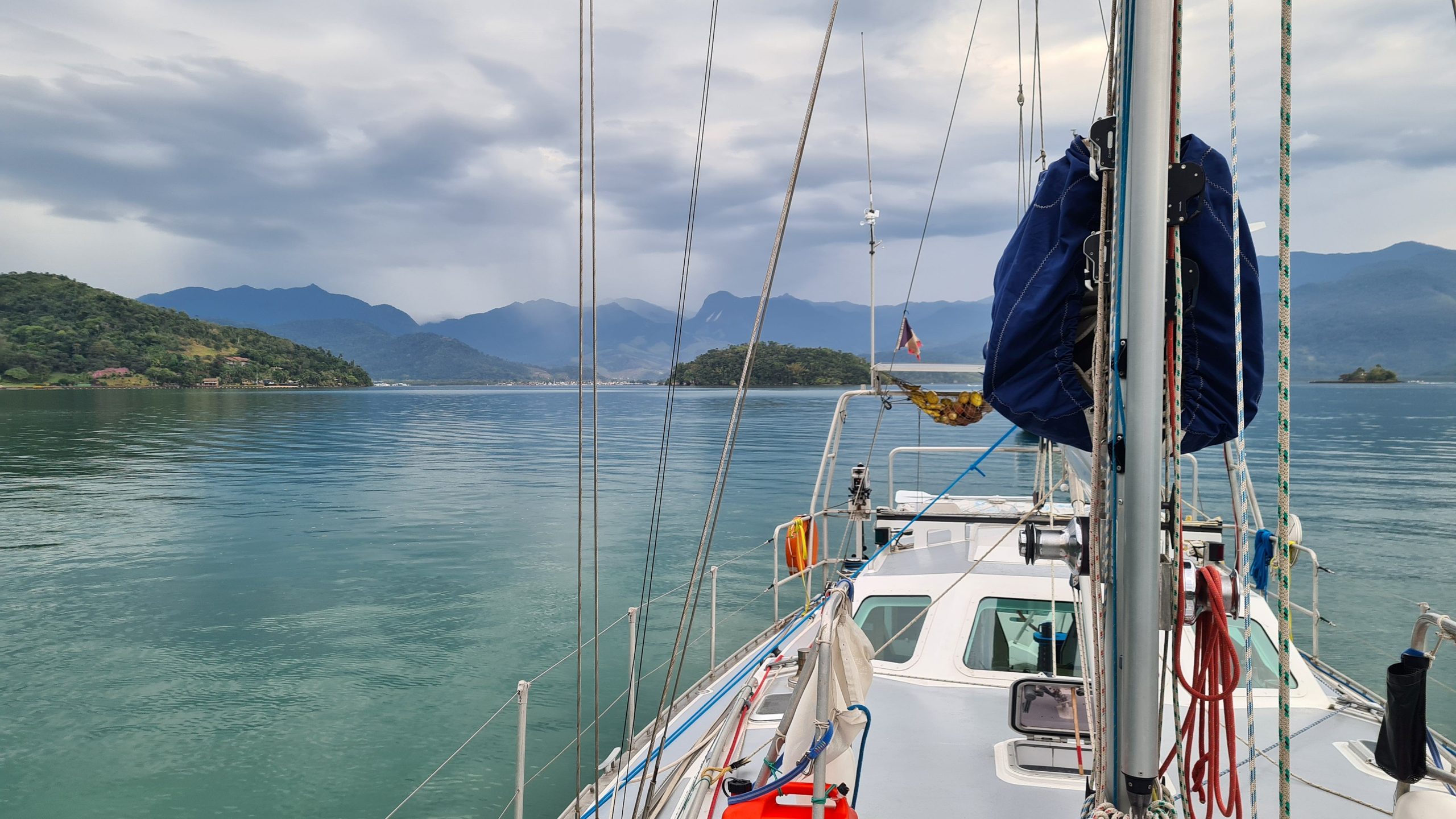
Baia de Bom Jardim, last minutes before the rain…
We arrive late in the day and anchor in a bay slightly away from town for the evening, allowing us to go for a swim before bed while the sea is still warm. (23°C—slowly but surely creeping down…)
We move the next day under pouring rain and drop anchor right off the historic town of Paraty. From a minor, unknown shelter at the bottom of a sheltered bay, Paraty suddenly became the beating heart of Brazil at the end of the 17th century when gold was discovered in the inland mountains. Situated at the end of an indigenous trail, the village received the precious metal and loaded it onto small boats to transport it to Rio. From there, it crossed the Atlantic to line Portugal’s pockets. Paraty rapidly grew into a town with a layout unique in the world: it was designed so that high tide would flood the streets to wash them clean! Indeed, the water in the anchorage right out in front of it is not particularly appetizing… The town itself, however, is stunning—made of little white houses with brightly painted doorframes reflecting in the flooded streets. Absolutely gorgeous.
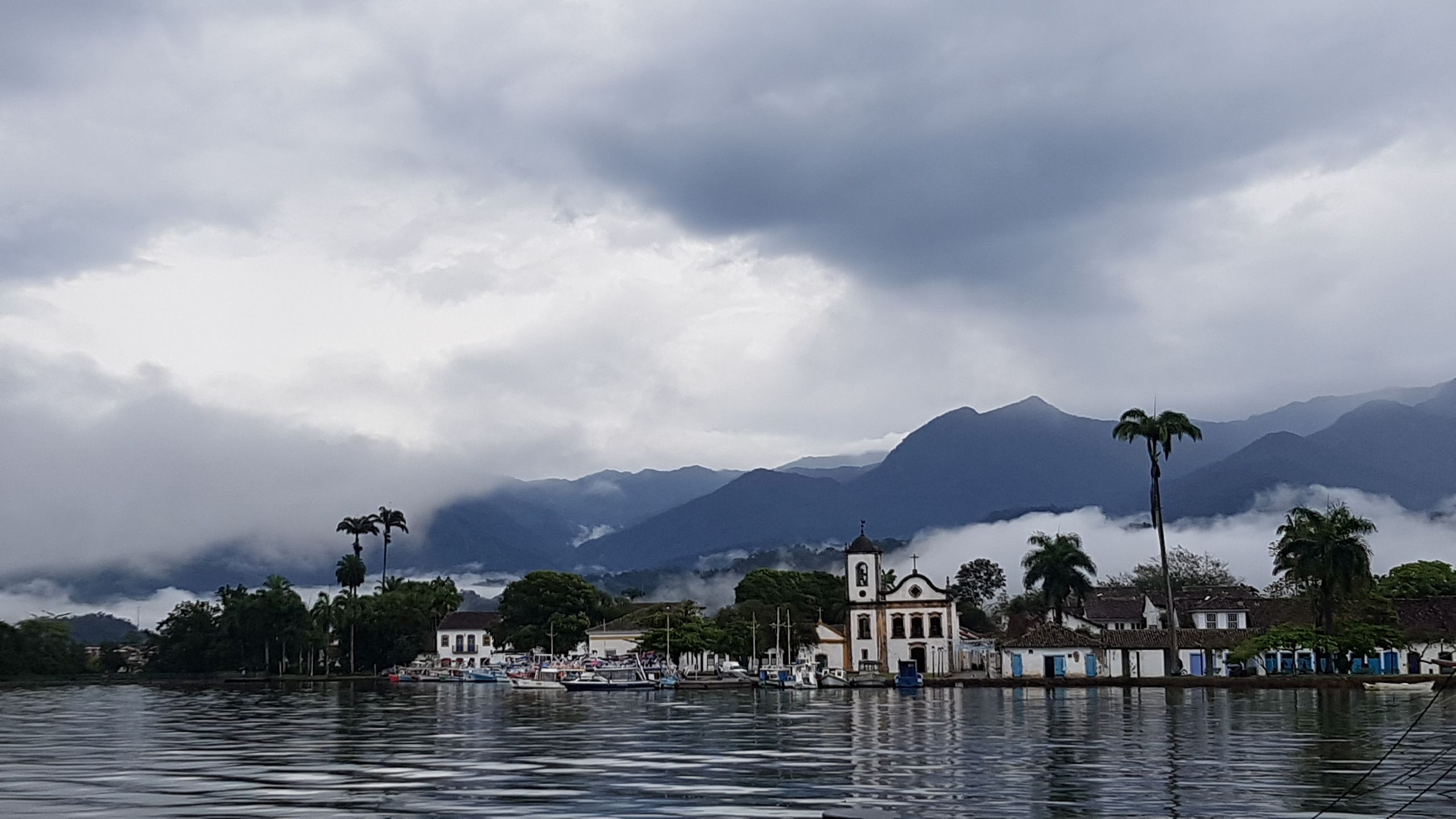
Paraty, seafront
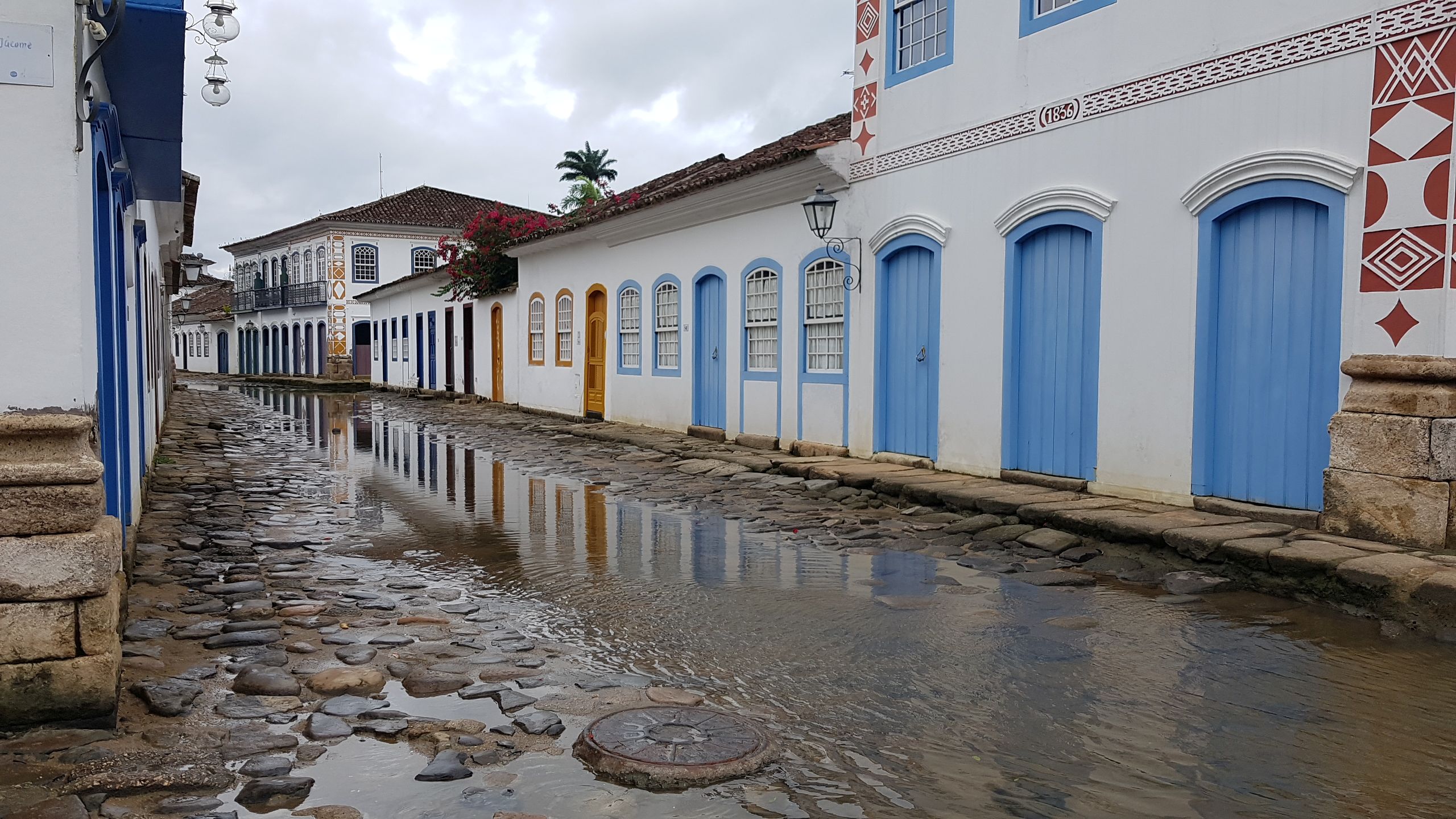
Paraty, seastreet
And when the tide isn’t enough, the torrential downpours take over! Paraty sits at the foot of near-1,800m mountains that trap the clouds, making the town more than twice wetter than Glasgow… As a plaque in the gardens of the little fort explains, mango trees are magnificent specimens that yield fruit anywhere with a distinct wet and dry season. Meaning that in Paraty… they don’t produce any fruit at all! In lieu of mangoes, the trees around the fort are occupied by adorable tiny monkeys—Mata Atlântica marmosets, known locally as Micos.
Well, we’re not talking about wild animals either…
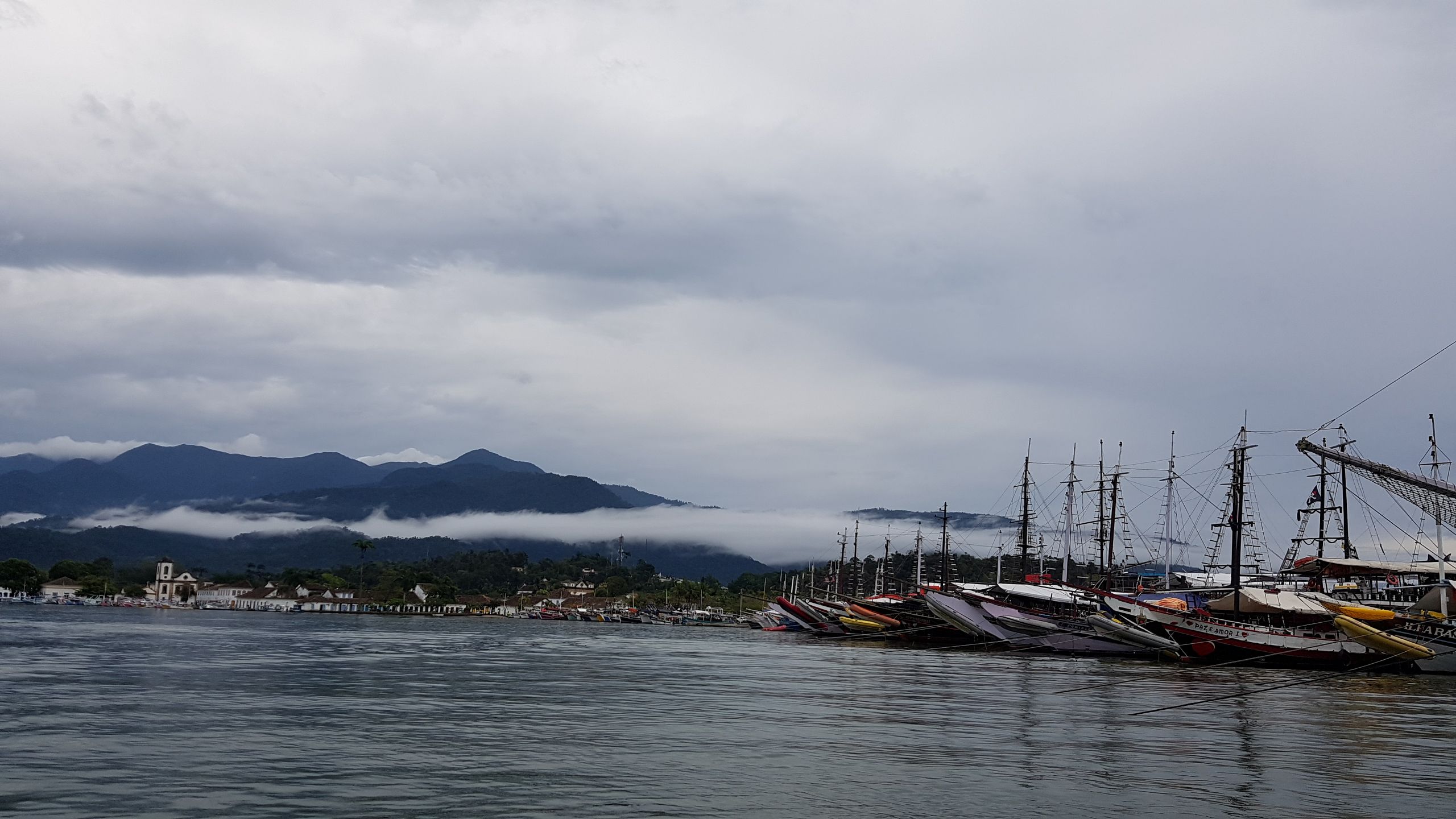
A whole bunch of escunas in Paraty waiting for better days…
The gold rush didn’t last forever. Once the vein dried up at the end of the 18th century, the town pivoted to a classic staple of tropical colonies: sugar cane and rum—known as Cachaça in Brazil, still recognized as some of the country’s finest today. Perfect for attracting the latest booming revenue stream: tourists! To be fair, the setting is really attractive between the living-museum town and the picture-perfect island landscapes. To visit the remote beaches, tourists pile onto one of the many escunas moored along the quay. These wooden, brightly painted boats are ubiquitous along the Costa Verde. Carrying the somewhat tragic look of fake caravels with dummy masts and rigging, they have an annoying knack for invading quiet anchorages, unloading visitors and blasting questionable music for a couple of hours. They do leave quickly, however, remaining mostly a picturesque detail of our trip.
We spend two very soggy days in Paraty, praying for a brief break in the weather for the next day. It takes pure faith to pull up anchor under bucketing rain and head over—motoring, because there is never any wind around here—to the Saco de Mamanguá: a long, narrow bay flanked by steep hills and sugarloaf peaks hundreds of metres high, which everyone here grandly refers to as “the world’s only tropical fjord”. Right then, let’s be clear: these people have never seen a fjord! If they’re really desperate to sound Norwegian, they should call their magnificent granite archipelago a “tropical skjærgård“—that would be far more accurate!
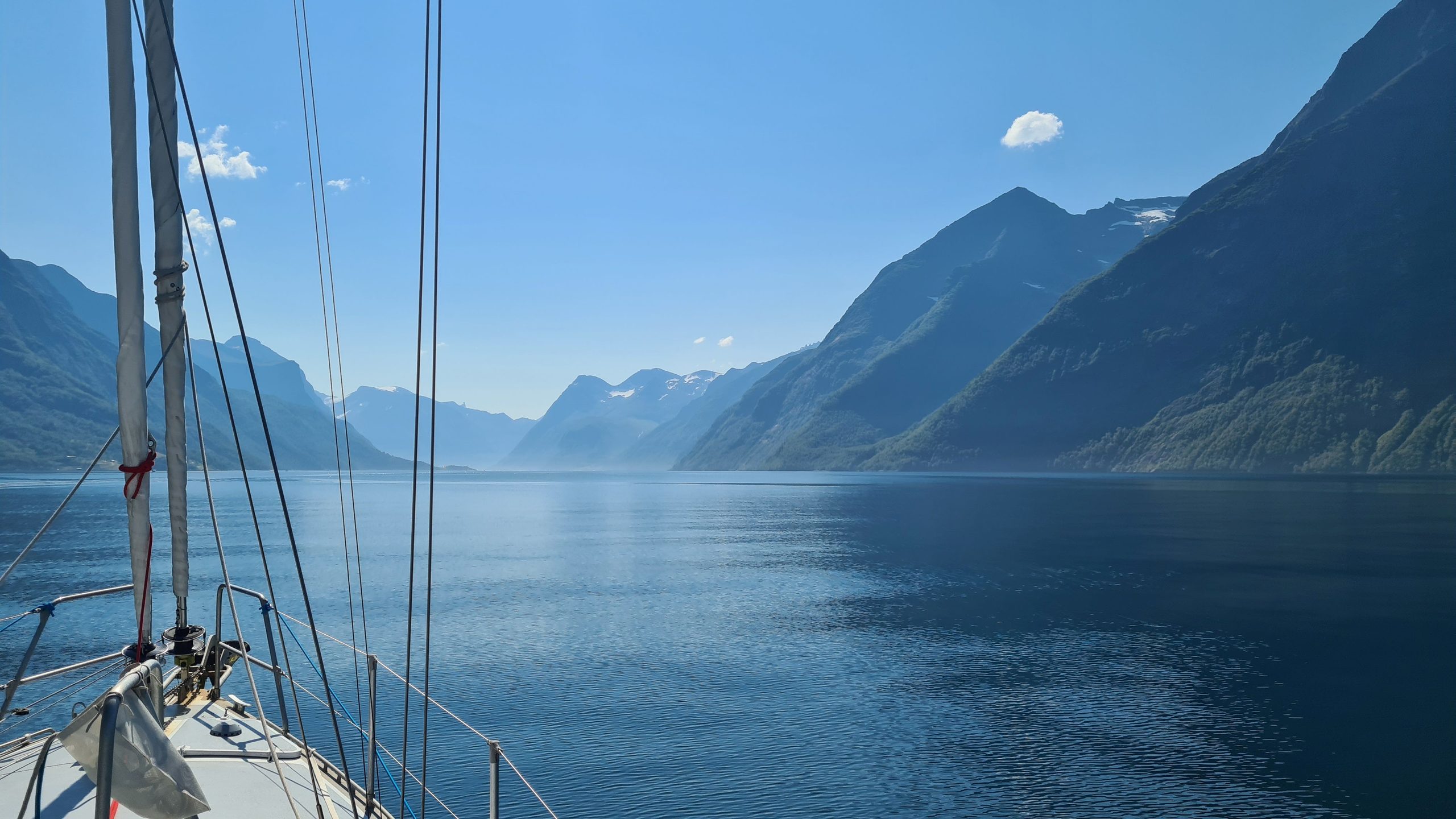
This is a fjord (Hjørundfjorden, July 2025)…
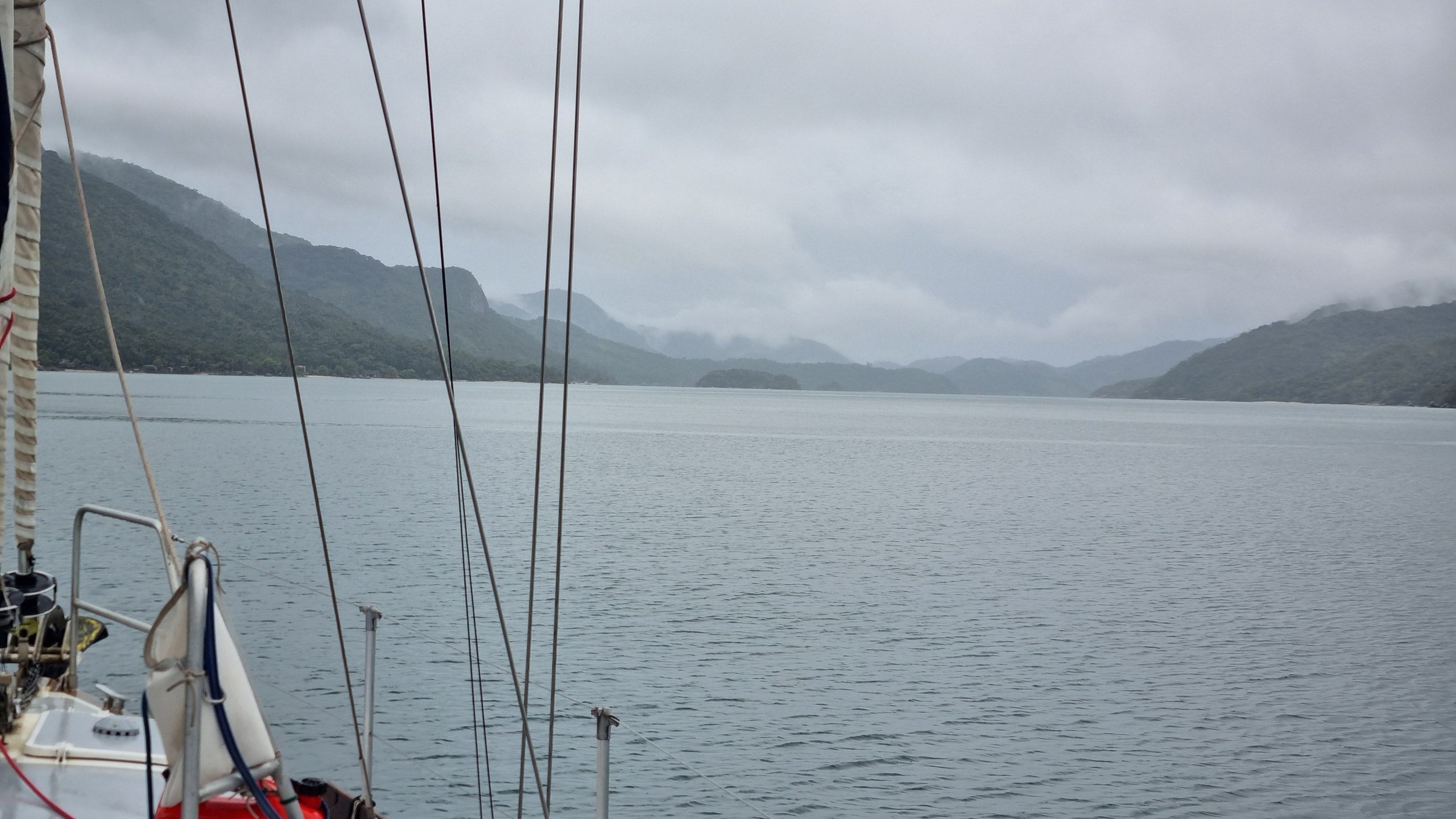
… this is not a fjord ! And even “tropical” is questionable…
The rain eases off a bit, so we head out to climb a 425m sugarloaf peak—we always love scrambling up local mountains. The view from the top is worth the hike. We take in our entire playground from the last two weeks, from Paraty to Angra via Ilha Grande. A superb finale to our stay in the Costa Verde.
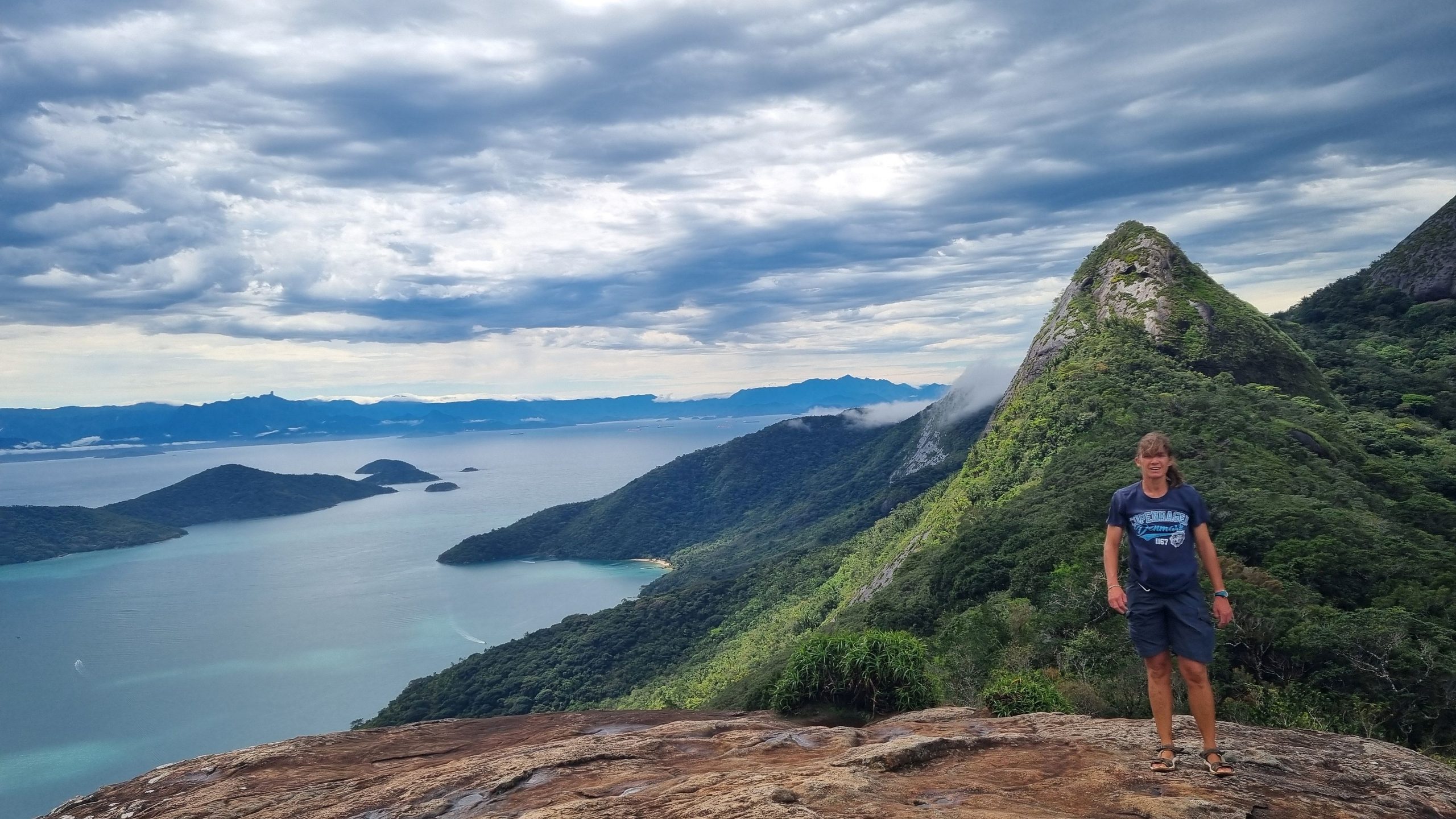
Made it to the top of the sugarloaf peak
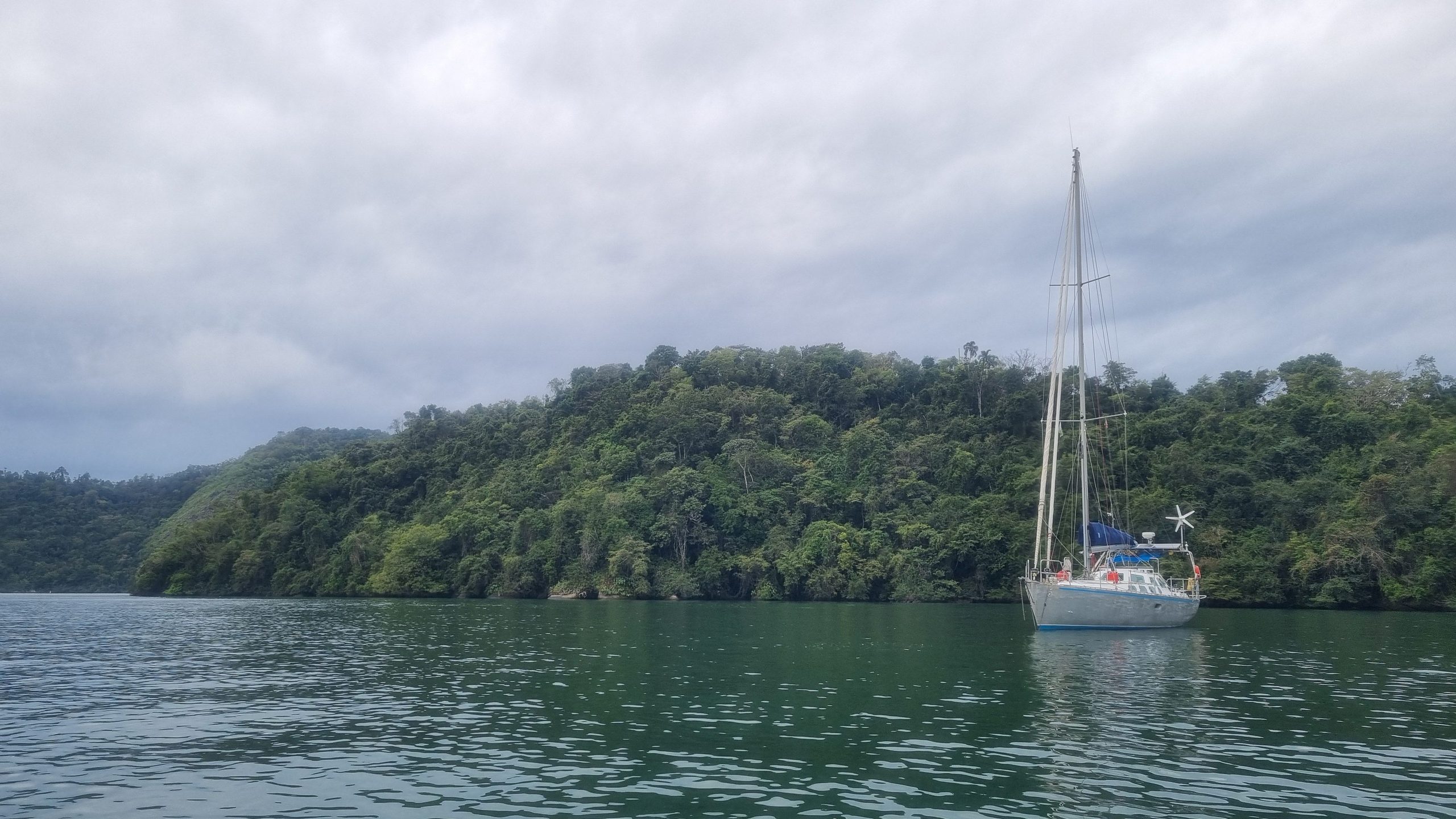
Cotia, anchored deep in the forest
Because it’s about time we resumed our journey south, weather permitting. A small cold front is expected tomorrow, so we head for the ultra-sheltered anchorage of Cotia Island, which our Brazilian friends on Aurora had much touted. The setting is charming, tucked right against the forest. We see some magnificent blue butterflies again, hear strange bird calls, and forage a few more coconuts.
While fetching passion fruit from our cockpit net to prepare some infused rum to keep us warm in Patagonia, we notice our bananas have been nibbled on… Who’s the culprit? Hiding behind a coconut is a tiny gecko that has taken up residence among our fruit and veg! How on earth did it get on board? We’ve been exclusively at anchor for two months! Either way, we stow our bananas and mangoes safely inside, hoping it doesn’t move on to the sweet potatoes next!
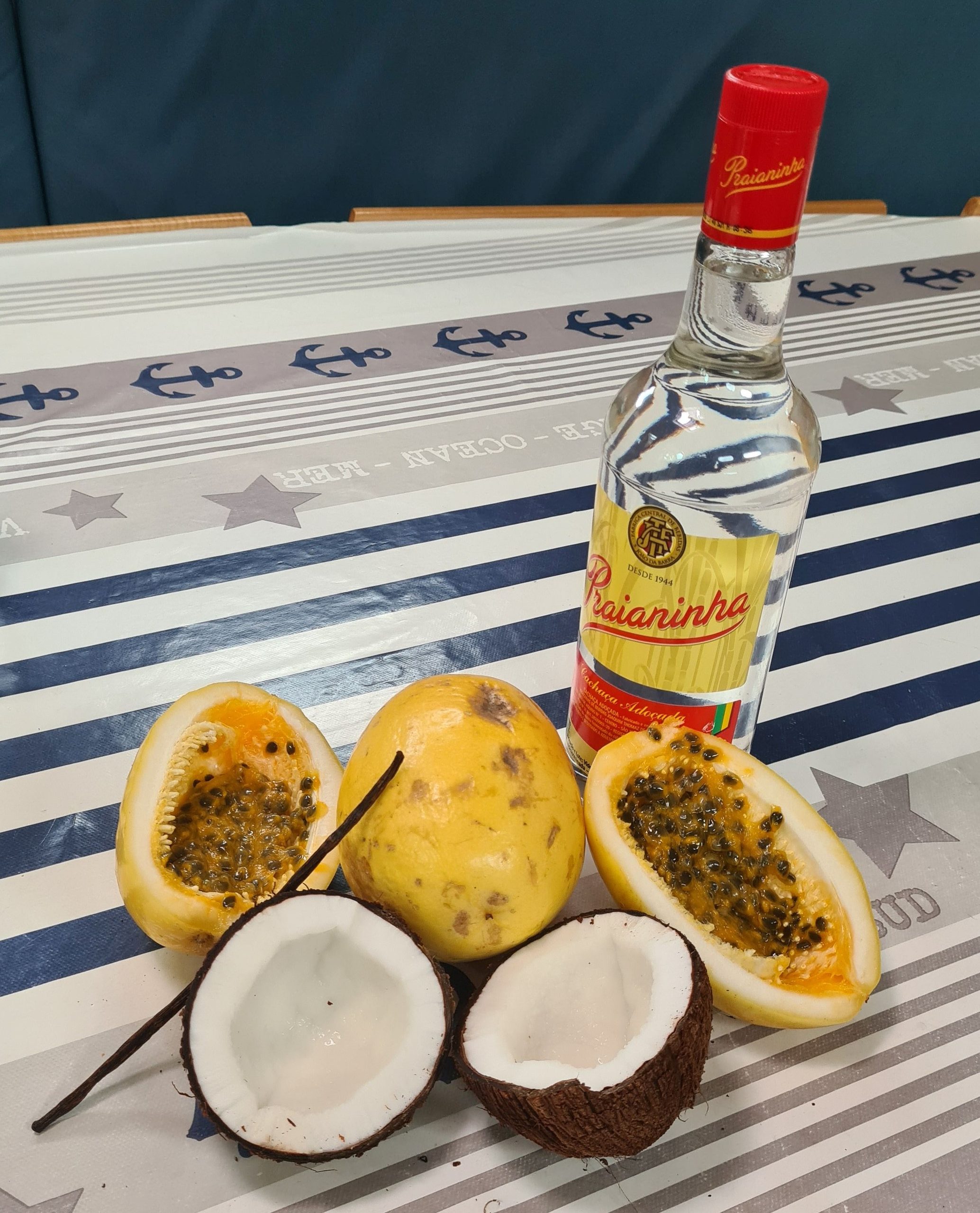
Foraged coconut and passion fruit from the market for a good infused cachaça!
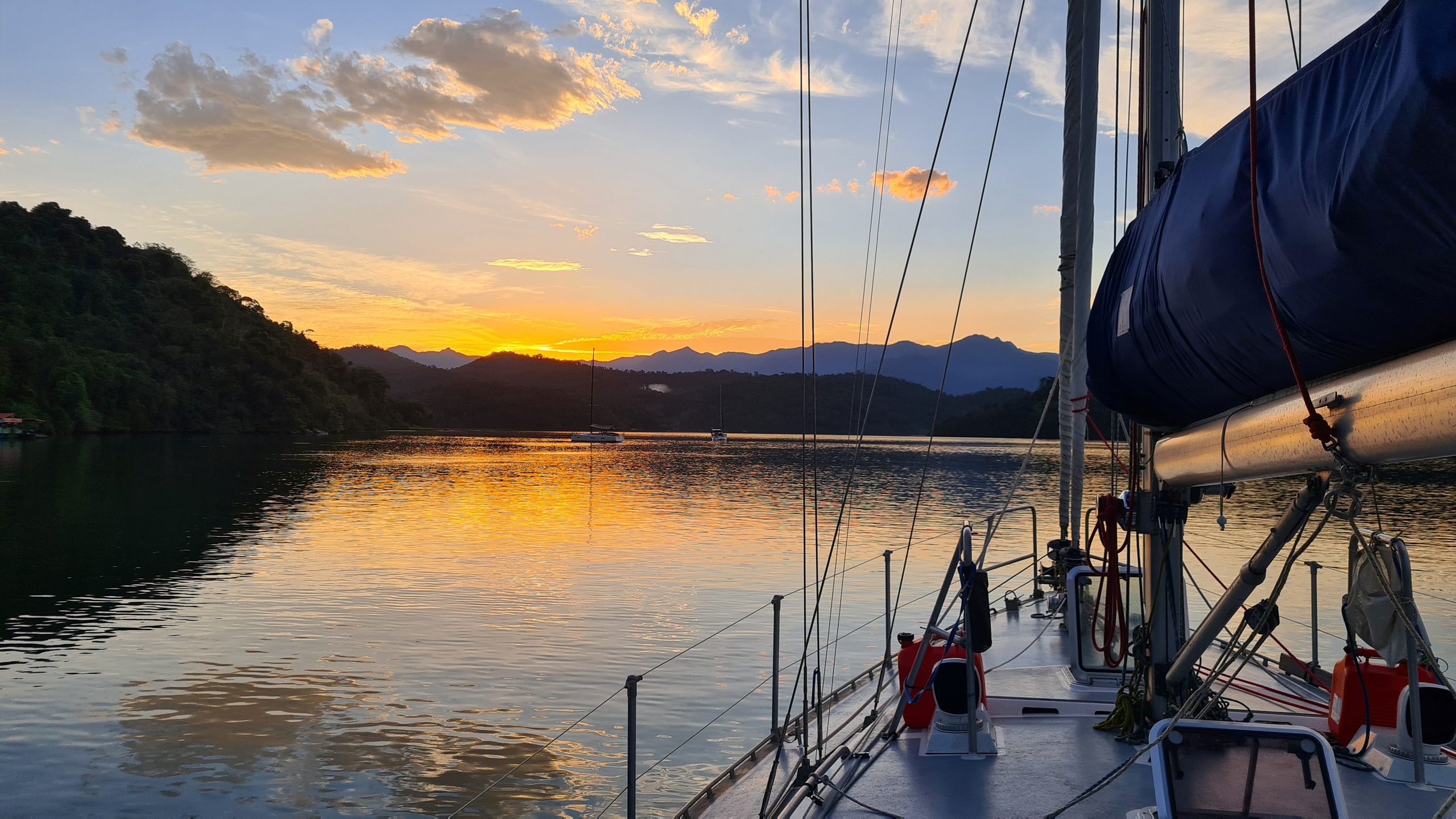
Last sunset on the Costa Verde, a magnificent little corner of our planet!
The cold front eventually hits, but in our snug little hideaway, we only get a few sharp, brief gusts spinning in every direction, occasionally interrupting the dead calm. Perfect for getting some proper rest before our upcoming passage! The holidays are over—now, it’s full speed south…
 PDF
Tout est beau. Photos magnifiques.
On vous embrasse
Reading, and enjoying catching up with you via, your blog, is such an education:
You cover a whole curriculum of interesting subjects: botany, marine biology, geography, geology, meteorology, cookery, music, history, anthropology …every day’s a school day 🧑🏻🎓