
Here we are in Cape Verde, the southernmost islands of Macaronesia. Some wonderful discoveries and a come back to the places we visited on our first voyage, weather permitting…
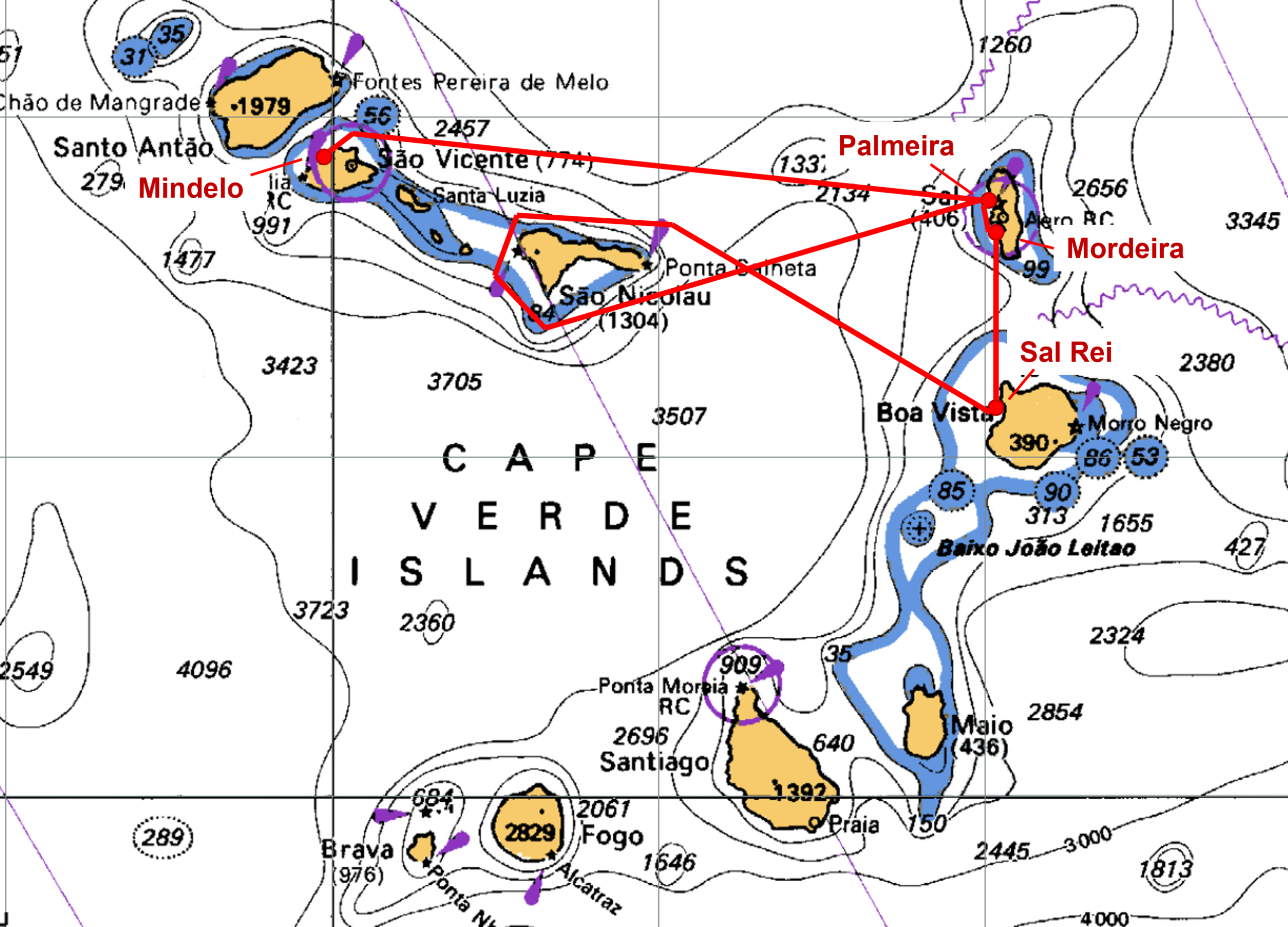
394 nautical miles sailed– 8613 NM in total on UtPåTur
The full photo album here.
22 – 25 May : Sal Island, Palmeira – Mordeira (7NM)
No sooner had the anchor dropped into the sand at Cape Verde than the wind began to blow strongly. 20 knots, 25 knots, 28 knots (force 7)… we had forgotten what anchorages were like in the established trade winds, and especially how quickly the sound of the wind became obsessive. Anyway, the anchor seems to be holding…
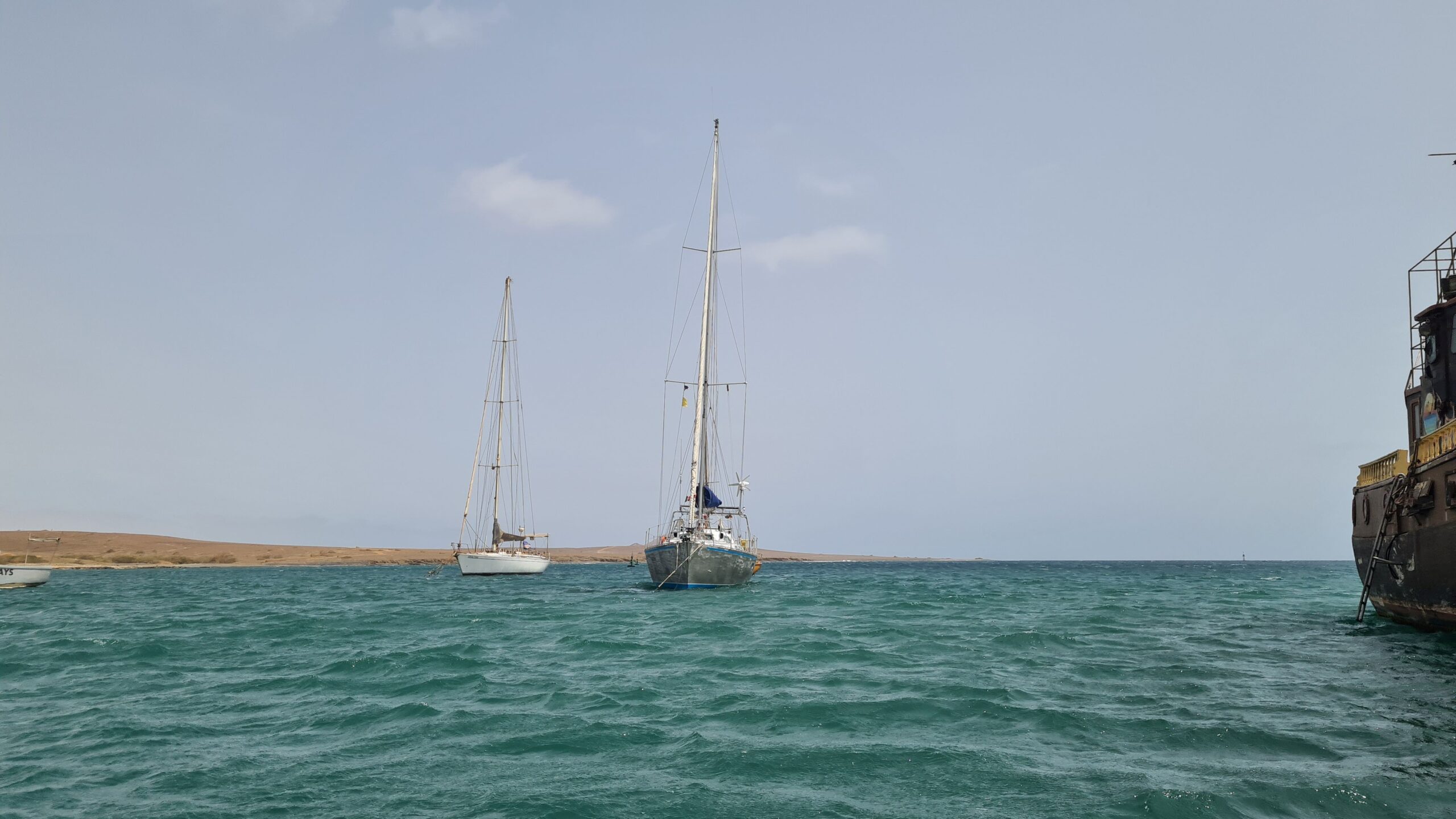
The anchor is holding, but we had forgotten what a well-ventilated anchorage felt like…
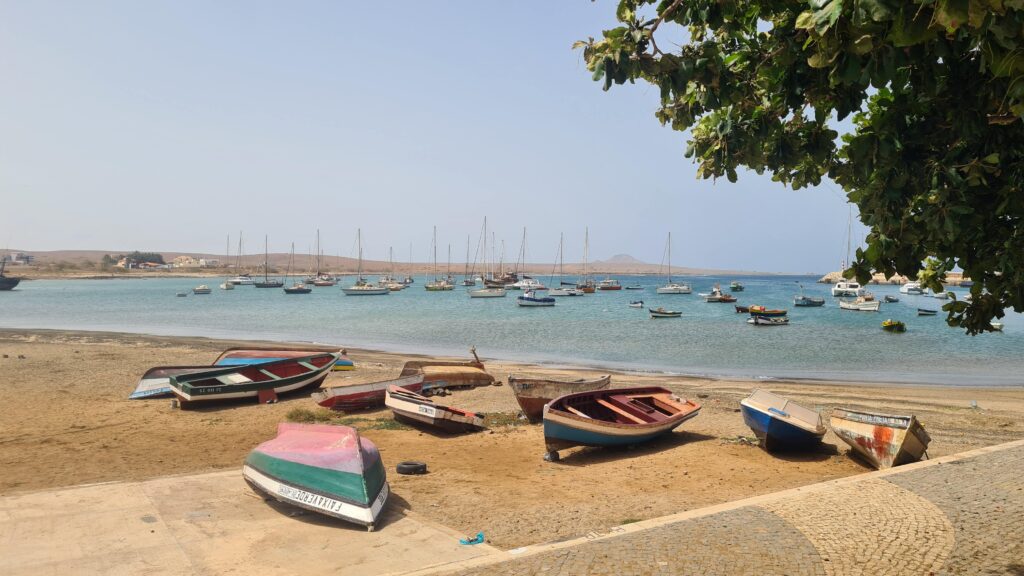
Welcome to Palmeira !
It took a lot of faith and will, but the tender’s engine finally started, making it easier to get ashore in the face of such a strong wind… On the quay, two young men hail us to tell us where to moor the dinghy, then give us directions to the ATM for escudos, the local currency, as well as the police station where we need to complete our entry formalities. Nice!
We would have found it on our own; there are still only three streets in Palmeira. We are thrilled to rediscover Arminda’s bar (read about our adventures with Saltimbanque here), as well as the Wi-Fi hotspot, where there are no longer any trees or Wi-Fi. Aside from these few familiar landmarks, we are, we must admit, very disoriented. The dust from nearby Africa is everywhere, the barren concrete houses bear witness to rather precarious living conditions, while the souvenir shops and numerous minibuses full of visitors reflect the explosive growth of mass tourism on the island in recent years. We don’t really recognize the Palmeira of our memories…
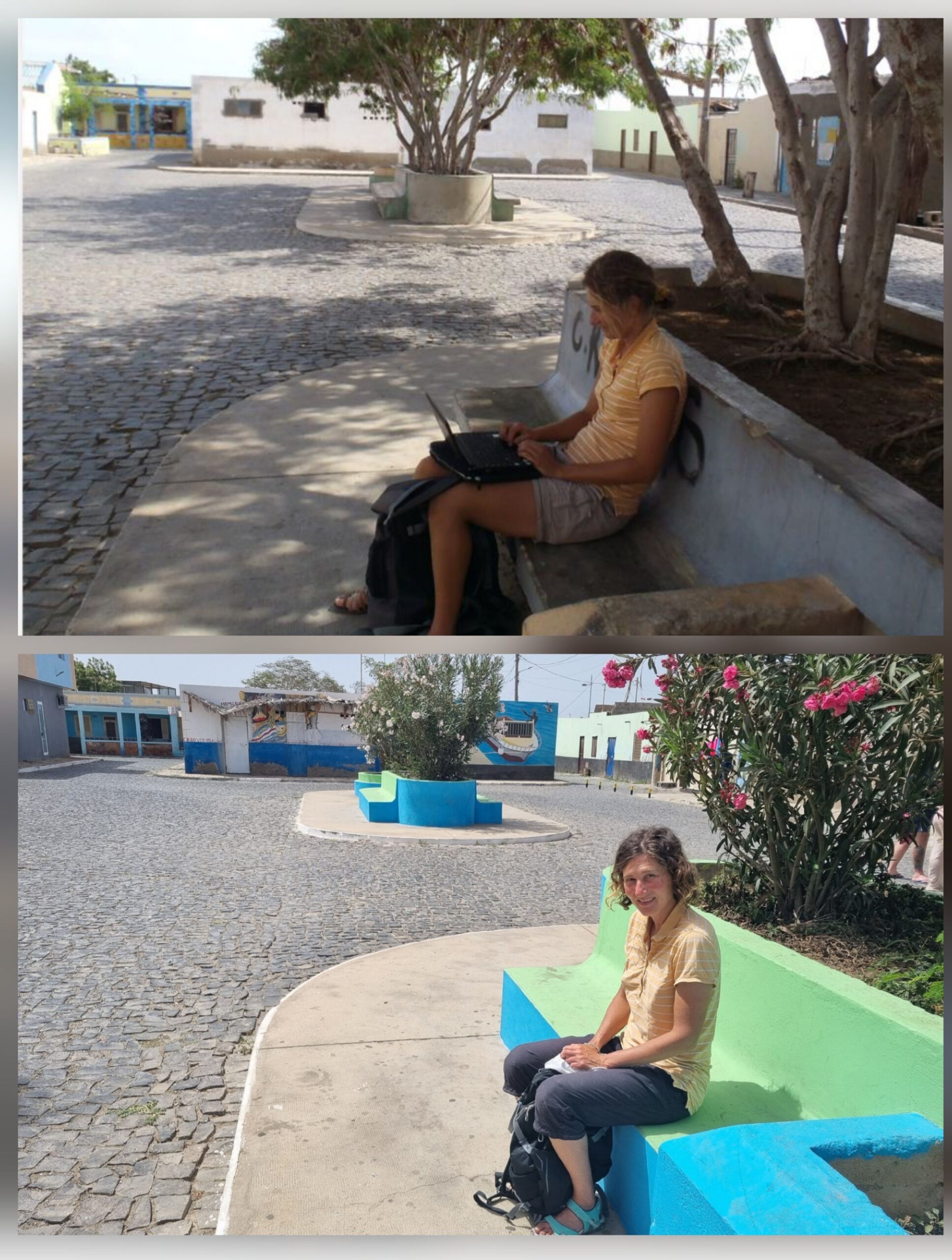
15 years later…
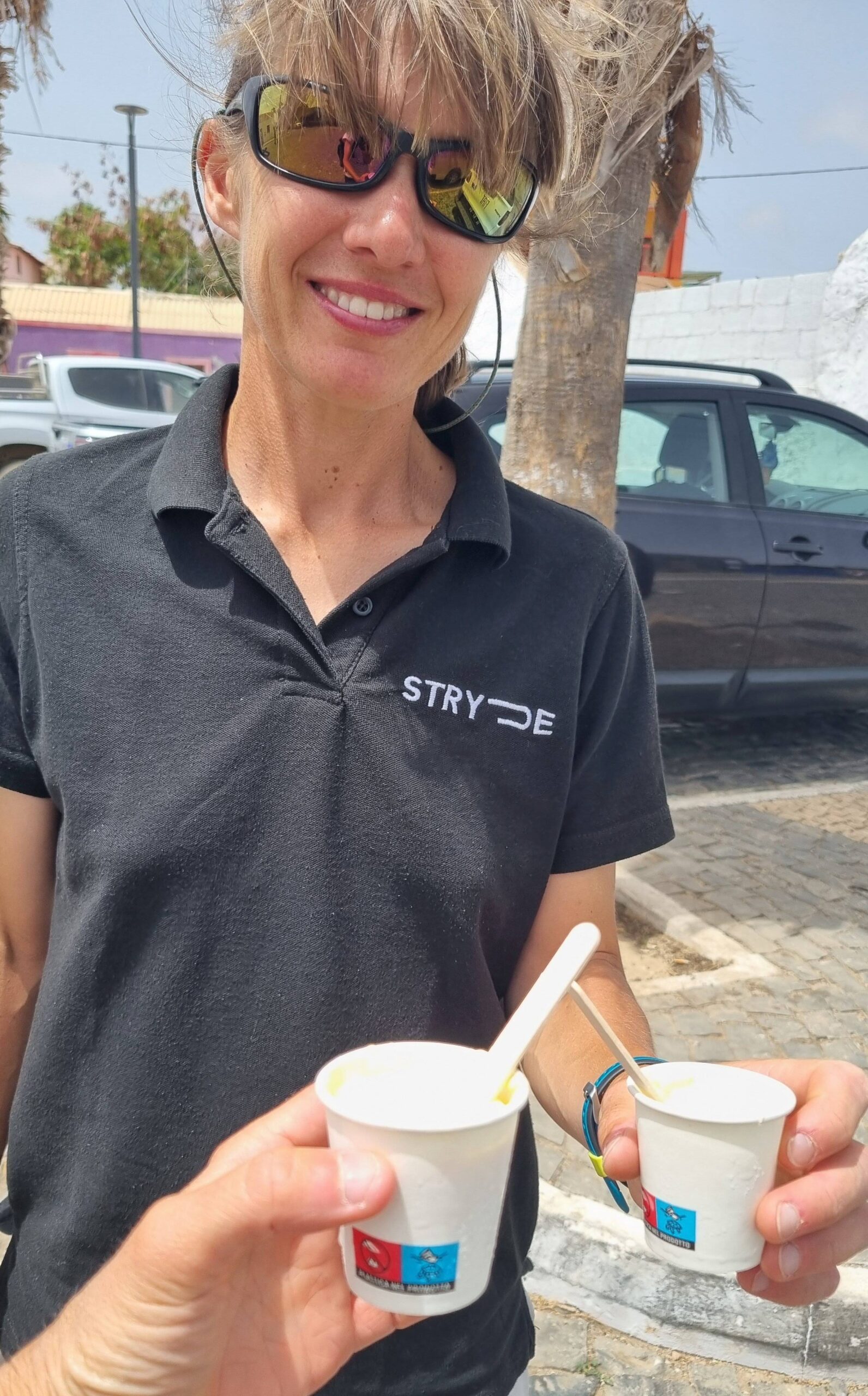
Homemade ice cream molded into a cardboard cup
Then there are the people. For the vast majority, they are welcoming, helpful, and friendly. Seriously, in what country does the immigration officer greet you with a fist bump? Once the formalities are completed, we treat ourselves to some local ice cream before returning to the ship and get some rest after our crossing.
While the anchorage is quite crowded with boats, mostly on mooring buoys, very few are inhabited. We miss Erik, the Swede on Nomada (an acquaintance from when we were based in Lysekil) by a few hours, then meet Jérôme and Félicie on Gwerelaouen: after several months exploring the Gambia River, they’re taking a break in Palmeira before Jérôme crosses over to Brazil. It’s the first boat we meet that’s also heading south! We’re looking forward to finding a sailing community like the ones we experienced around the Atlantic or in Lerwick.
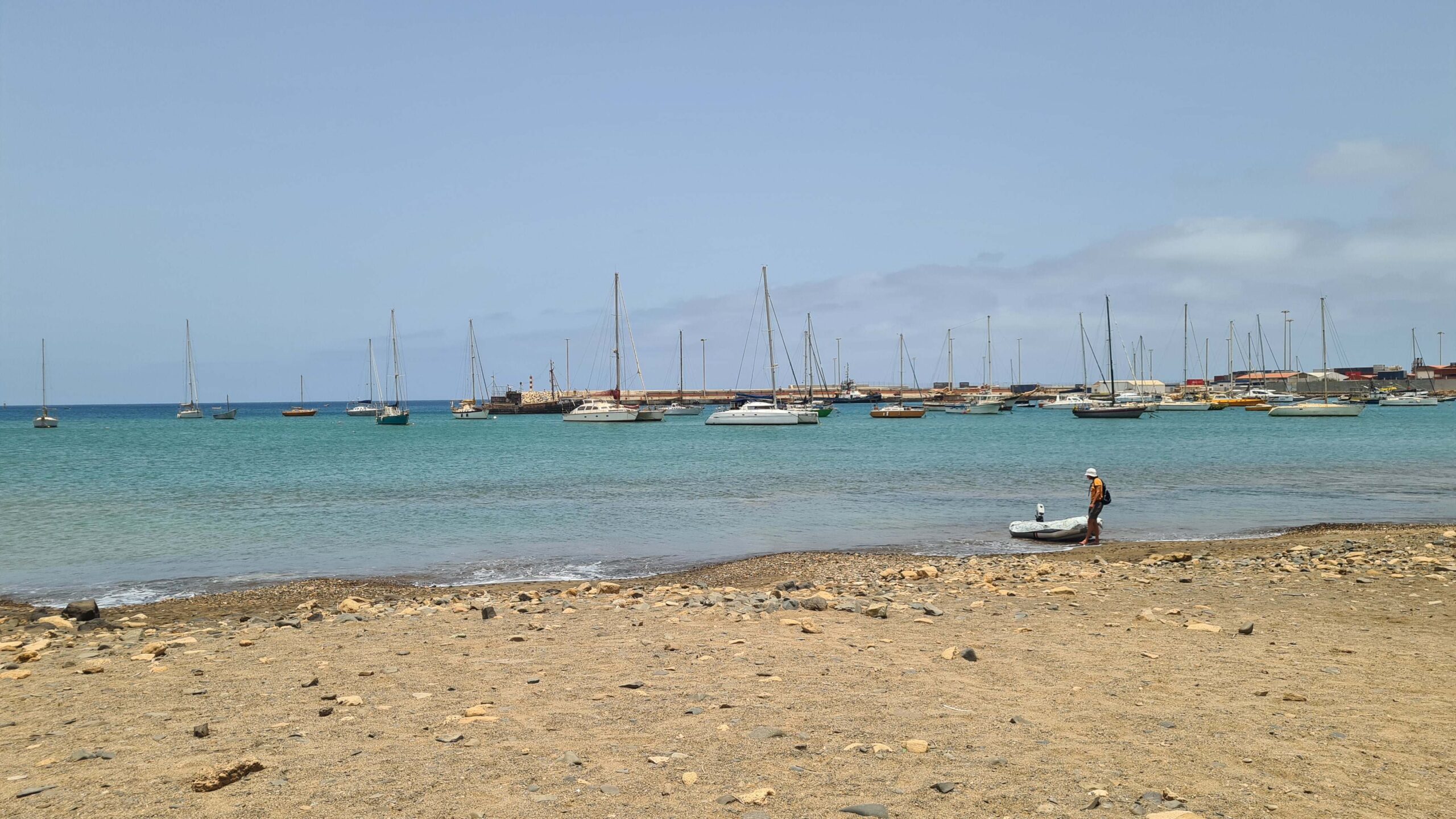
Palmeira anchorage, where is UtPåTur ?
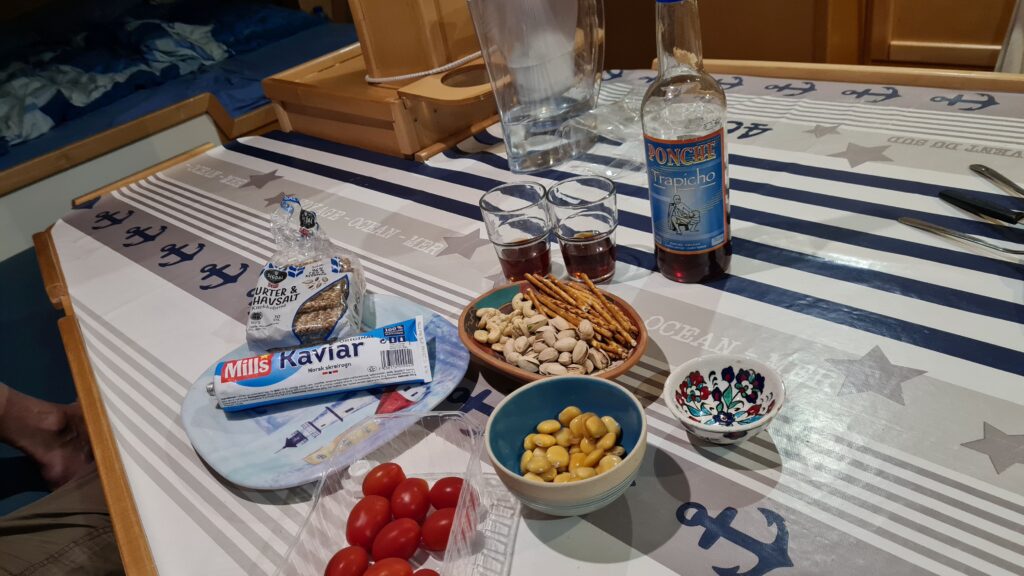
Norwegian kaviar and knekkebrød, Spanish tremoços, and Cape Verdean pontch!
But before socializing or heading out, we’re treating ourselves to a full day on board busy resting and maintaining the boat. Remember, we had a black water tank to unclog! It’s easily done by diving; still limescale in the pipes… Once in the 25-degree water, we take the opportunity to clean the hull of the algae that grows much faster in the tropics than in Norway! In the evening, we have a drink to celebrate our arrival in Cape Verde. We’ve been thinking about this for 15 years. Ever since we opened that bottle of Santo Antão pontche on Saltimbanque, and it was so good we never dared finish it. Or rather, yes, we’d only be allowed to drink it again when we were back in Cape Verde. Today, we reopened the bottle of pontche…
Once the crew and the boat are well looked after, we go ashore to explore the surrounding area.
There’s nothing on Sal. The island is low-lying, dotted with ancient volcanoes about a hundred meters high, and covered mainly in dust on which a few stunted acacia trees grow without a single drop of water to reach their roots. The landscape is starkly austere…
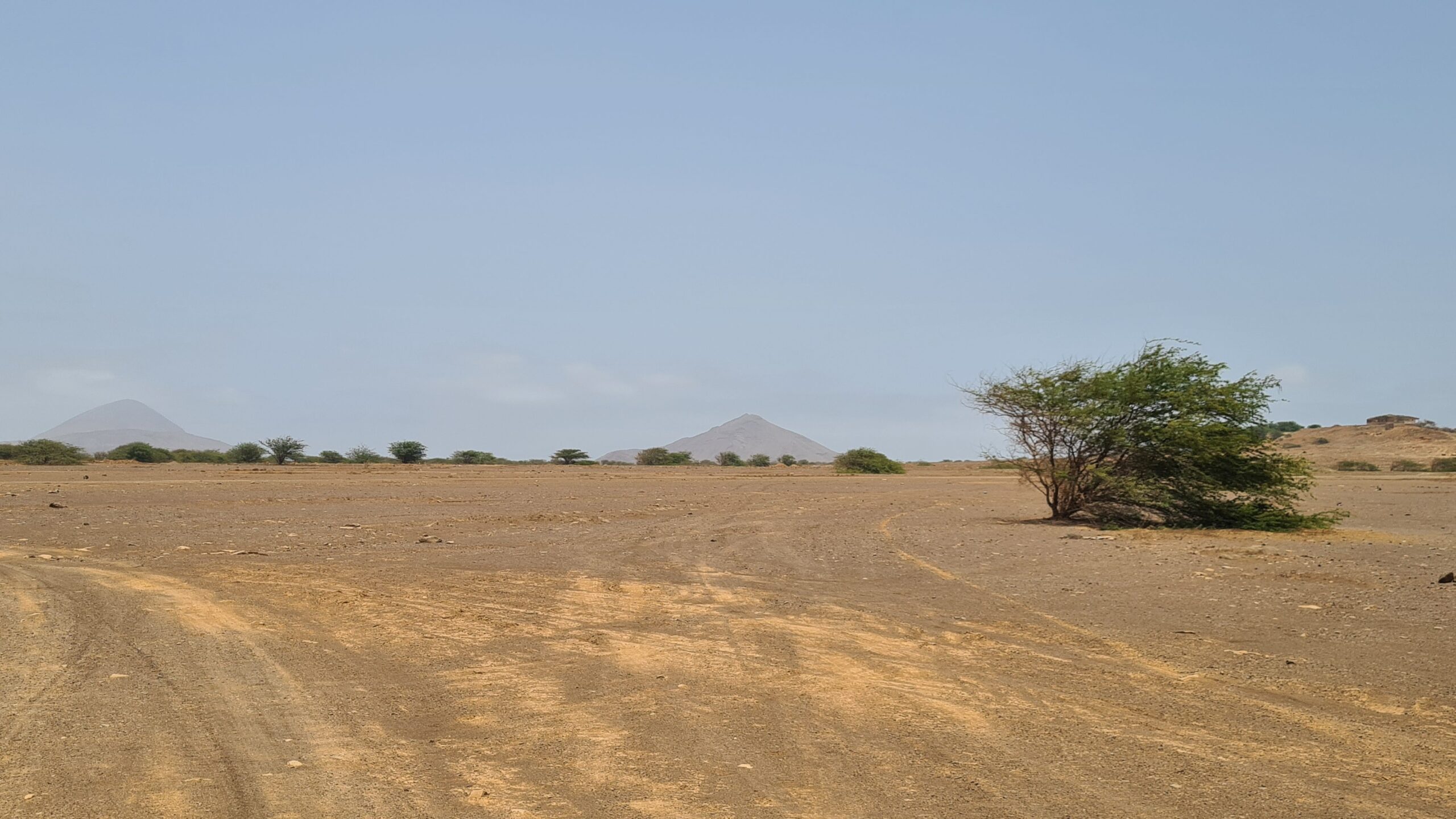
Sal at the end of the dry season is very, very arid!
There’s nothing on Sal… except for a magnificent white sand beach at its southern tip, in Santa Maria. Mass tourism, barely in its infancy when we visited 15 years ago, has literally exploded in recent years. The island attracts around 650,000 tourists a year (for a population of 12,000), representing 60% of Cape Verde’s visitors, who remain concentrated in the hotels on the now completely concreted-over southern coast. The revenue generated makes Sal the richest island in the archipelago – something that doesn’t seem to benefit the communities we encounter at all.
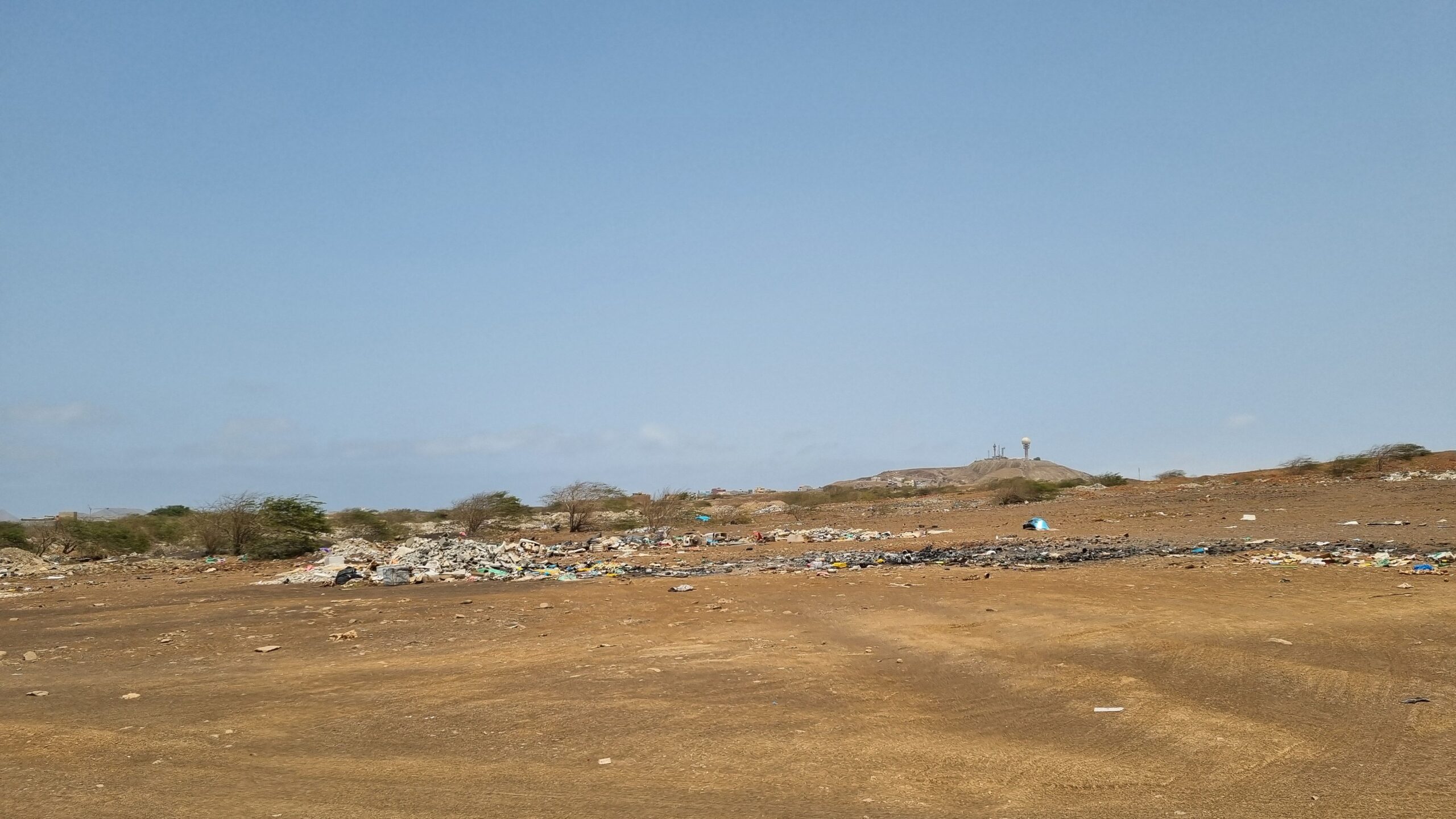
“Sal” happens to mean ” dirty” in French..
Not particularly drawn to all-inclusive hotels, we prefer to walk the few kilometres leading to the capital, Espargos, along a dusty path baked by the blazing sun. But very quickly, the landscape transforms… into a dump… Garbage everywhere, everywhere, everywhere… Every bush is covered in plastic, every ten meters there is a pile of metal, rubble, and all sorts of other debris… The investors seem more eager to build hotels than waste treatment plants…
In town we try to do some shopping, and the visit to the local “supermarket” reminds us of the reality of the country: a few rare vegetables, mostly sweet potatoes and onions, no protein apart from frozen meat which doesn’t appeal to us at all, a few pasteurized yogurts that keep at room temperature, all overpriced! We wonder how people get by, and the contrast with the luxury hotels in the South of the island is once again very stark.
We search in vain for a restaurant to have lunch, and stumbled upon a square with music playing. The atmosphere is pleasant, so we come closer. Several stalls are serving various typical African dishes that smell delicious. But it seems we can’t buy any food? A woman approaches and explains: it is a festival organized by the island’s Francophone association, and we are welcome. And here, look, here’s some food, a Senegalese dish. And no, we can’t pay, everyone is invited! As a piece of graffiti we saw a few streets away said: nos morabeza, nos riquesa: our kindness, our treasure…
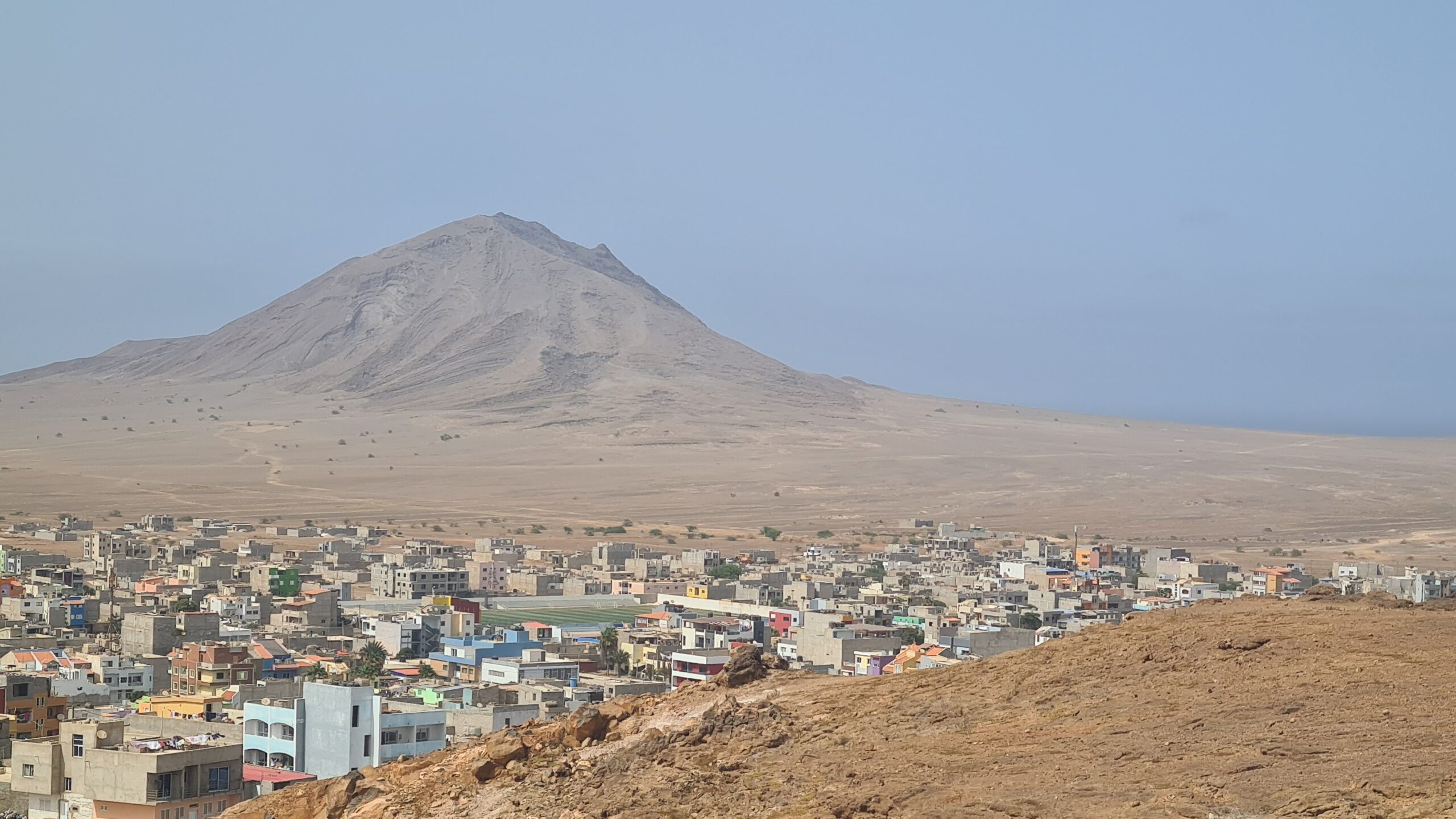
Panoramic view from the heights of Espargos
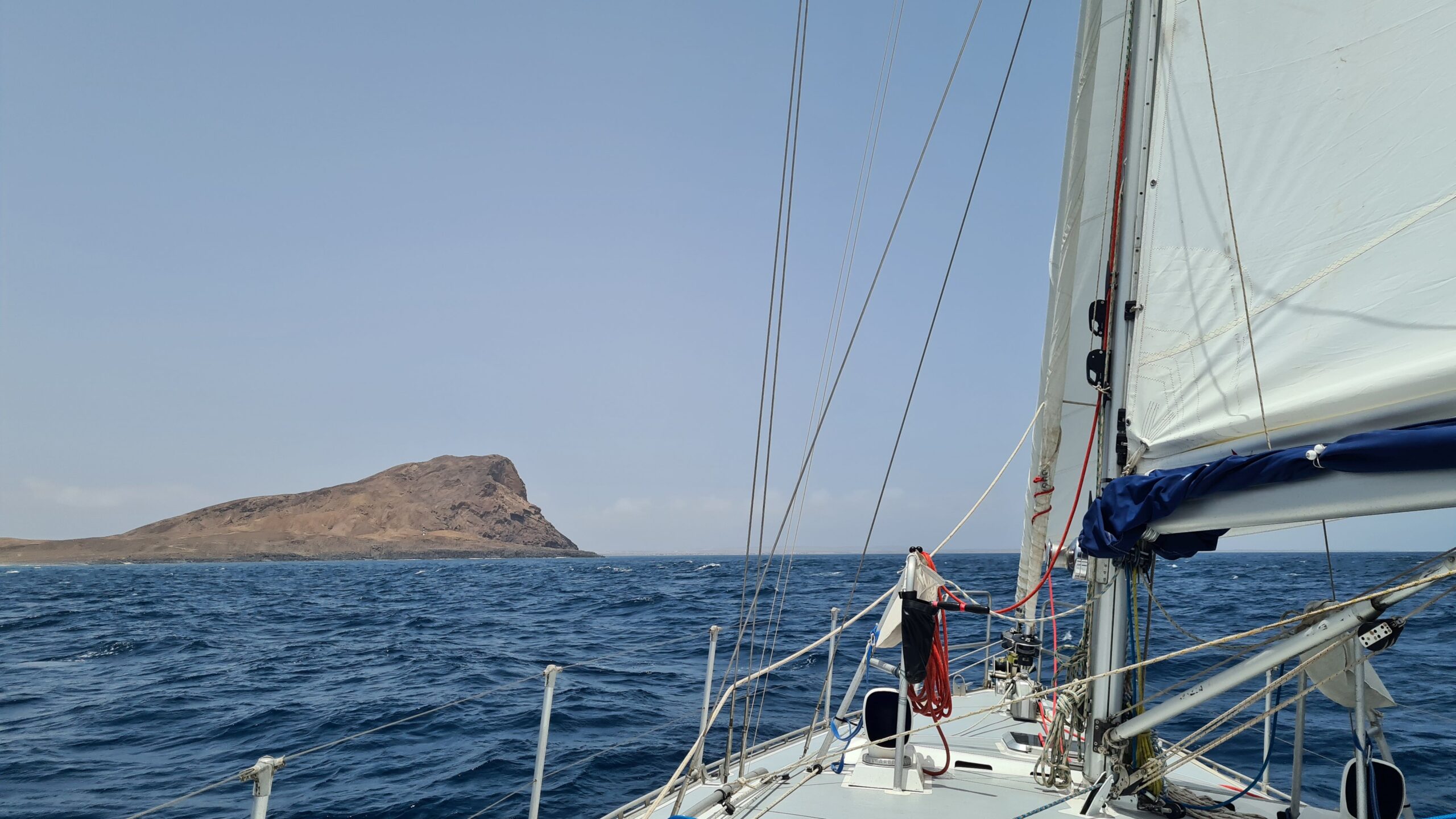
En route towards Mordeira
We’re starting to get used to the atmosphere of the country and are now more relaxed. However, we long for a bit of solitude and clear water. As soon as the police station opens on Monday morning, we complete the exit formalities from the island, which we now have to leave within 24 hours, and then weigh anchor to reach Mordeira Bay, 7 miles to the south.
Finally, a beautiful tropical anchorage! White sand, clear, warm water—a long-distance sailor’s paradise! The wind is still blowing at 20 knots (force 5) and the sun is beating down. We’re bursting with energy thanks to our wind generator and solar panels, perfect for running our watermaker. It’s actually the first time we are producing fresh water because we need it, and it’s quite magical! Slowly but surely, our tanks are filling with our own water, produced using our own electricity. Now that’s self-sufficiency!
While this little miracle unfolds, we take turns swimming with the tropical fish. They’re not the same as the ones we saw in the Canary Islands, and we spot our first – tiny – corals! Back on board for a seawater shower rinsed with warm fresh water in the cockpit… pure bliss!
26-28 May : Boa Vista Island, Sal Rei (33NM)
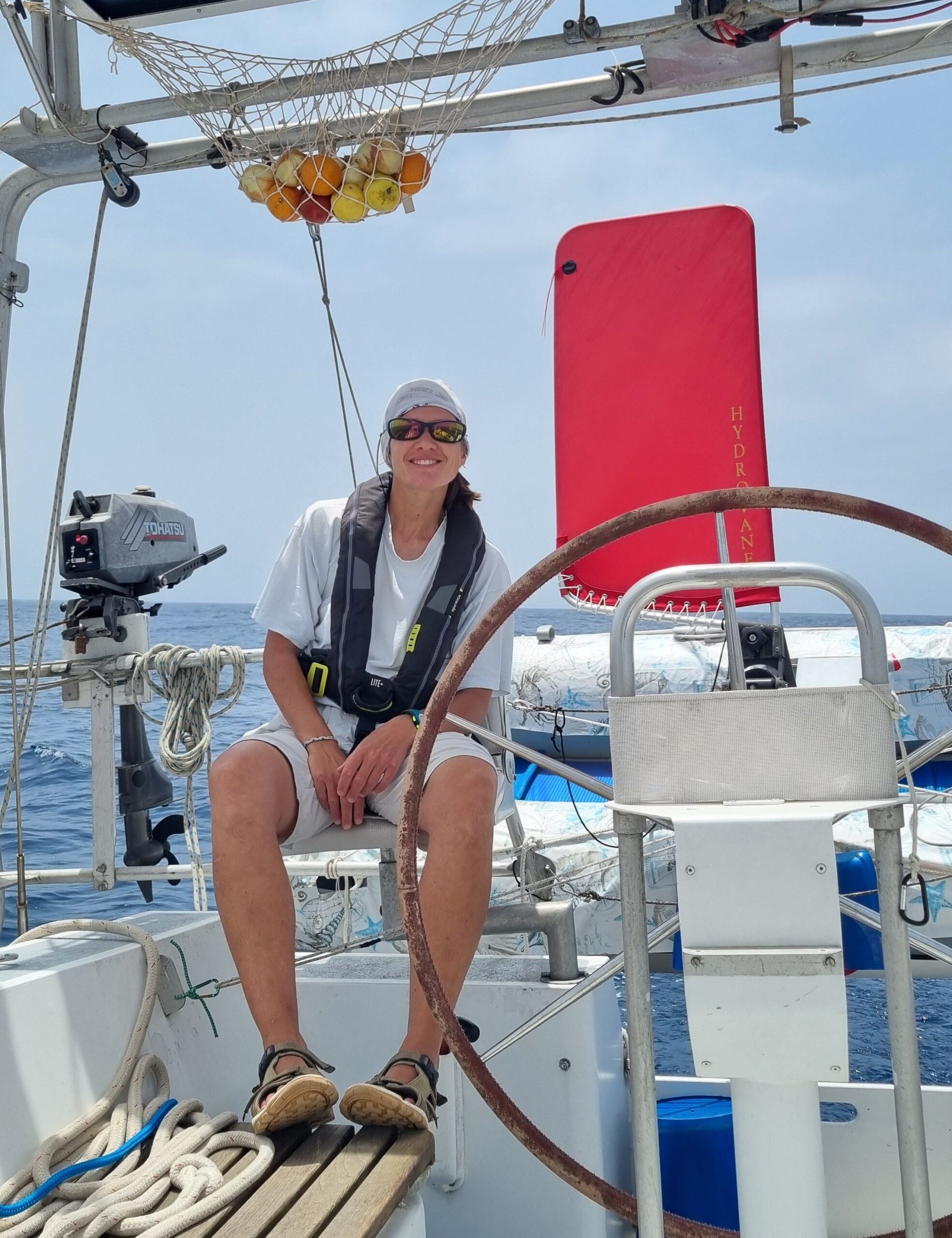
Light winds under the sun are actually quite nice!
We leave Sal, a land of contrasts, for its southern neighbour, Boa Vista. The sailing goes smoothly, across the wind in a very light trade wind; it’s also pleasant when there isn’t too much wind. We even catch a small jack fish along the way, yum!
The anchorage near the village of Sal Rei is located south of a small island, in the most turquoise waters and pristine white sand; it’s absolutely gorgeous…
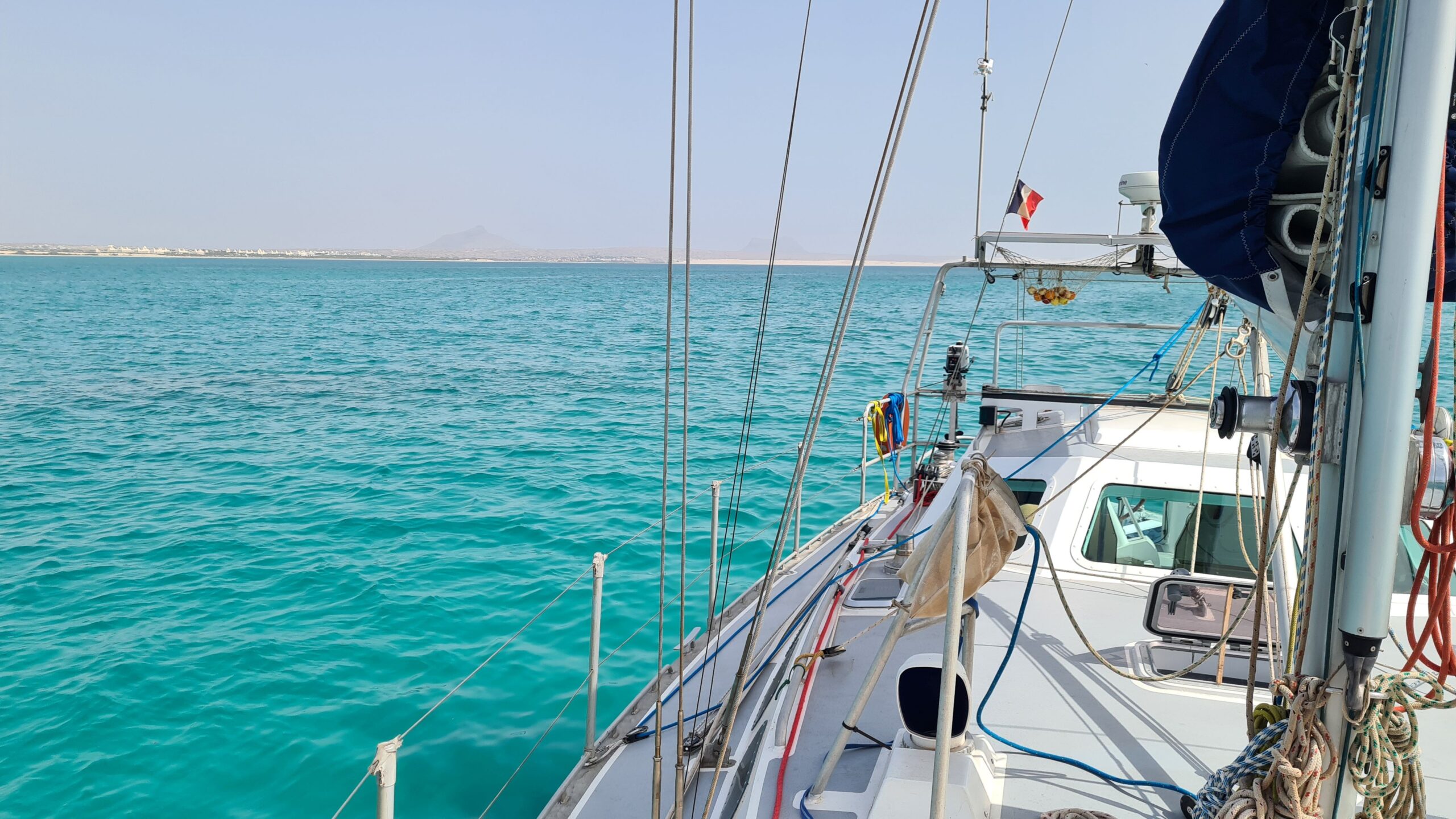
UtPåTur on the turquoise waters of Sal Rei
We spend the afternoon making the most of the anchorage, with Camille swimming with the fishes and Laure trying out the wing. She makes a few promising runs, but her main progress is definitely paddling upwind…
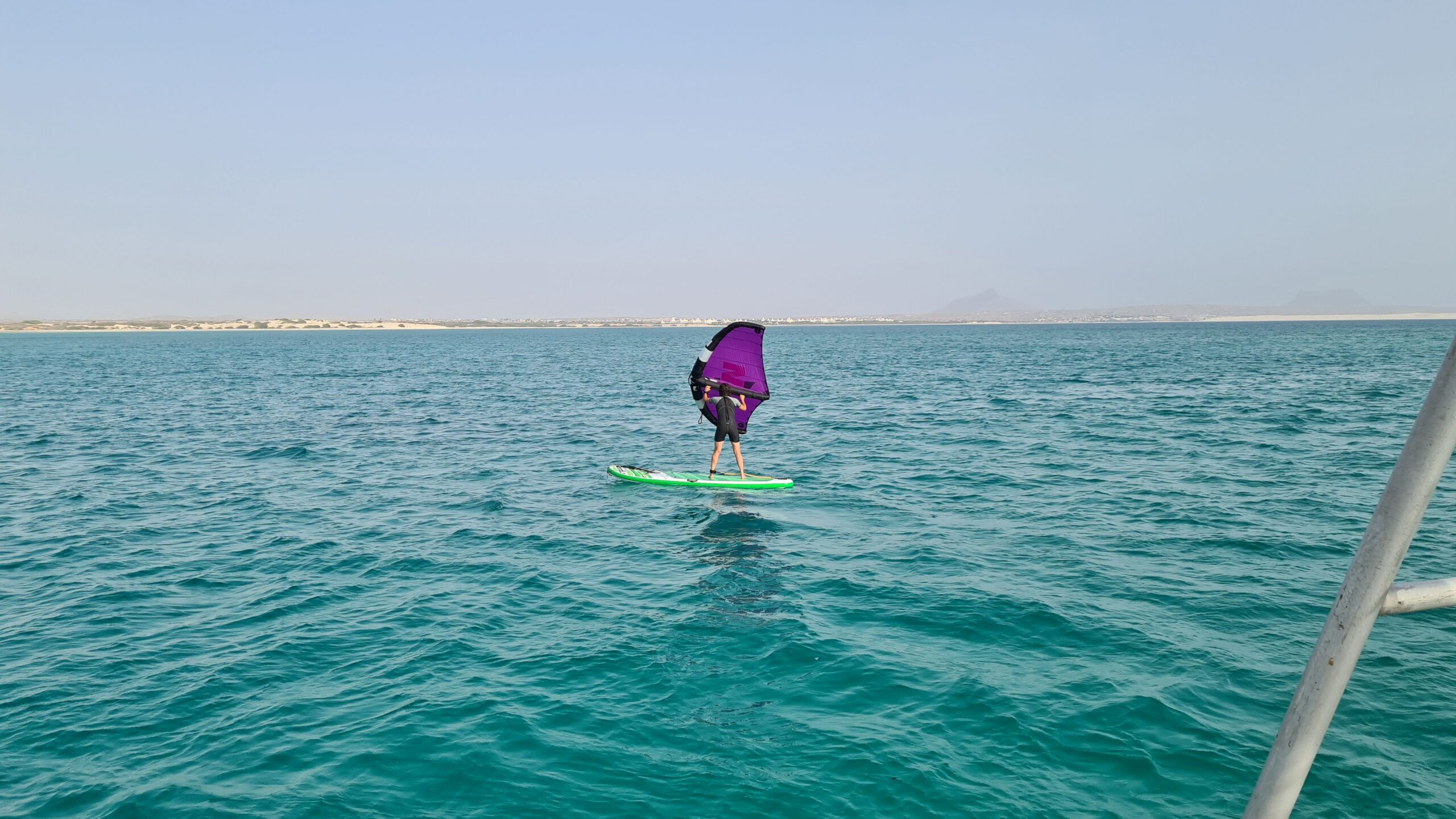
Wing session, heads…
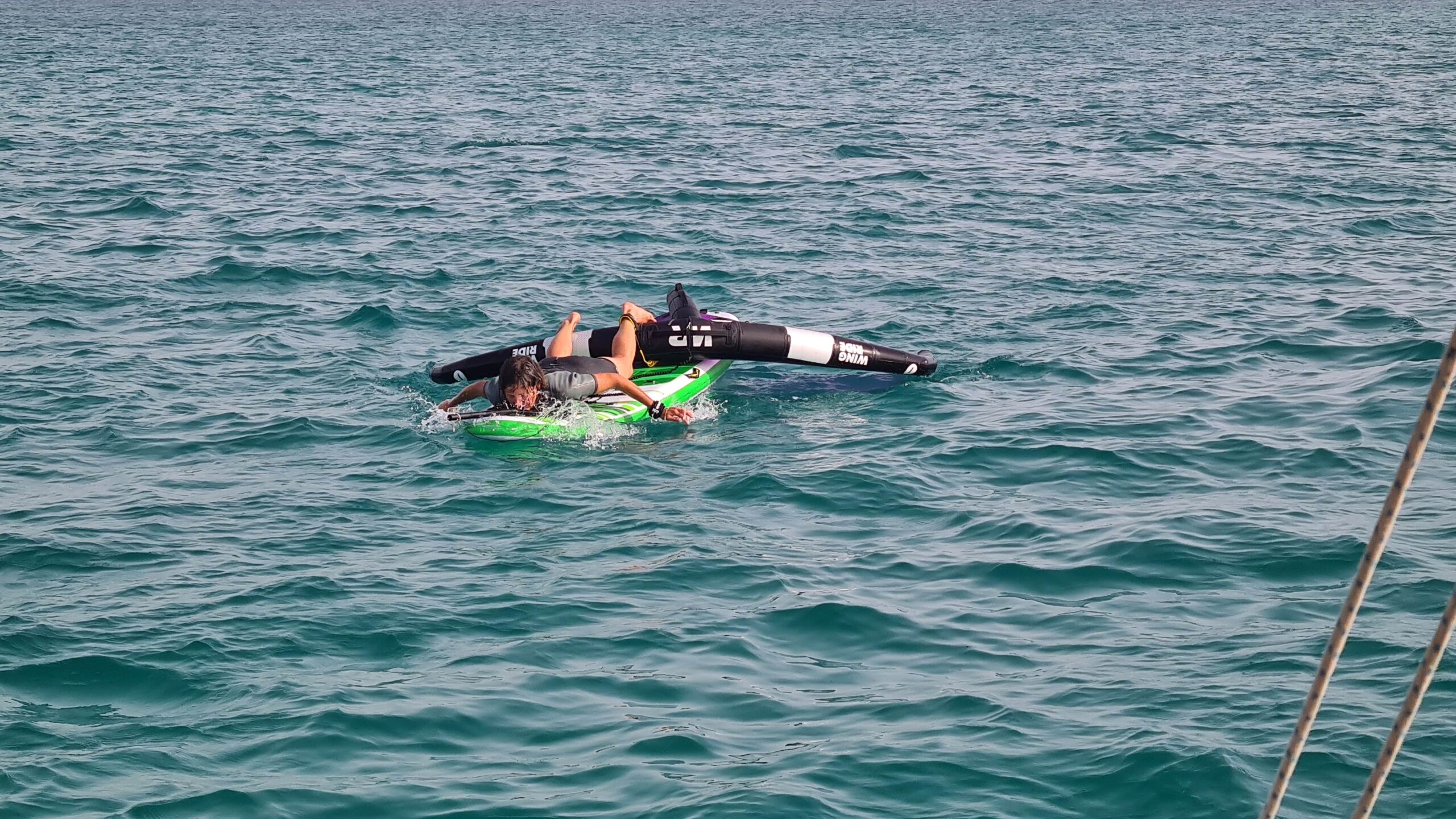
… and tails !
We end this idyllic day with a lovely aperitif in the cockpit, without even being bothered by mosquitoes!
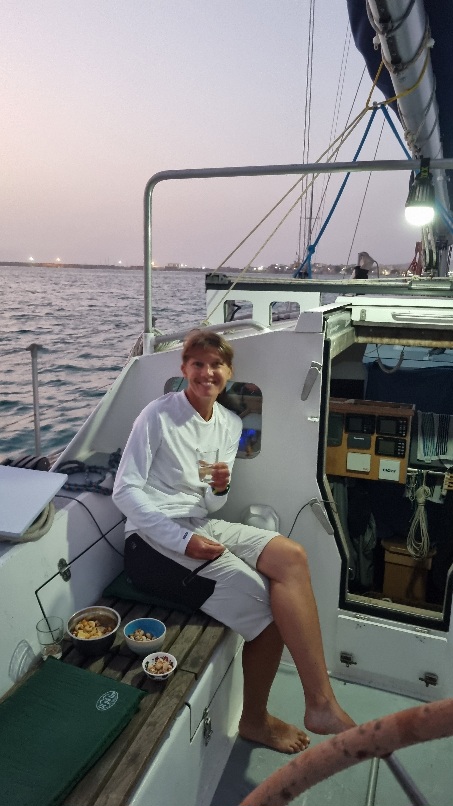
The highlight of this beautiful day
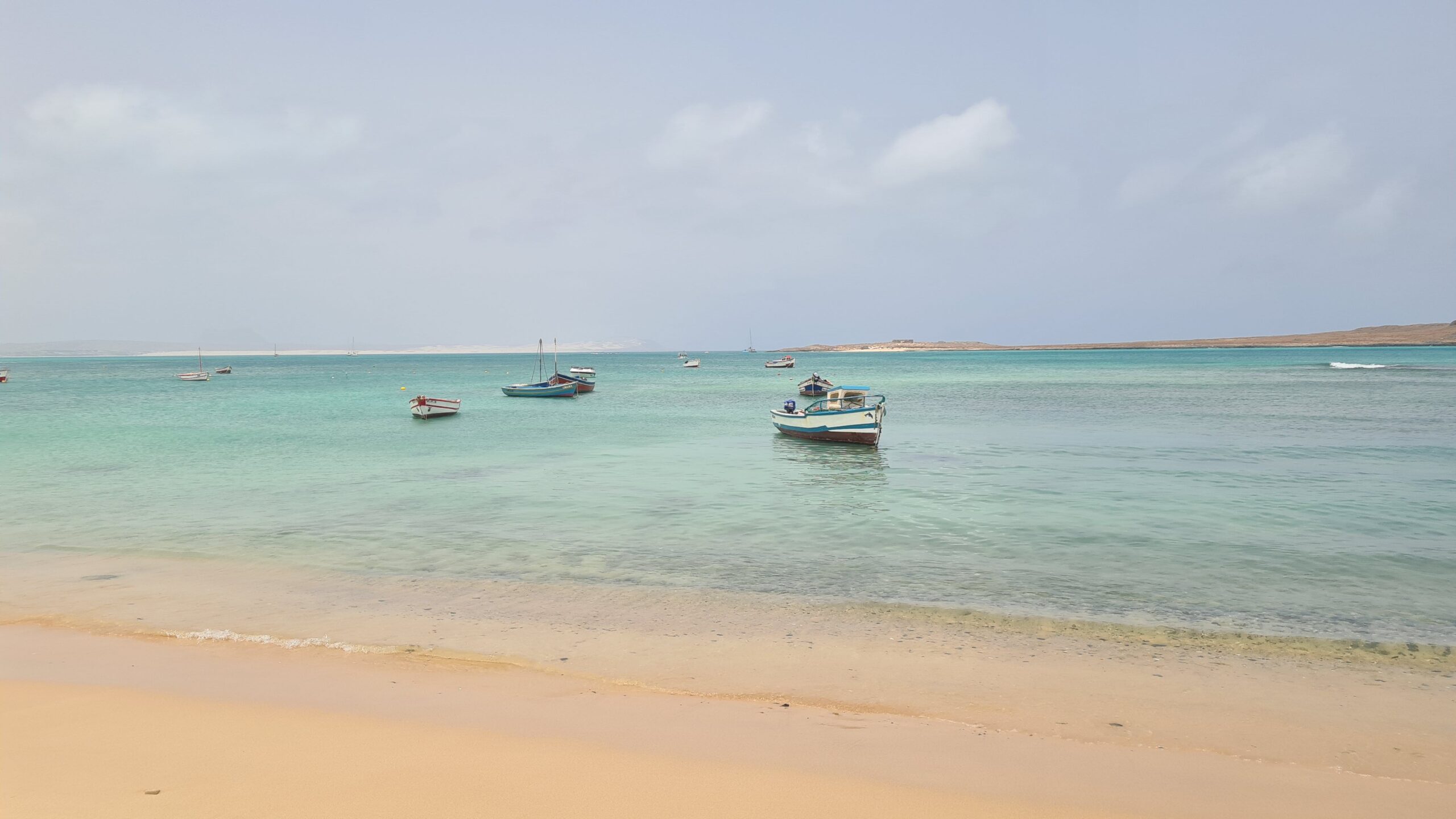
Beach in Sal Rei
The anchorage is superb, but we have to go ashore to complete the entry formalities for the island. The village of Sal Rei is just a mile from the anchorage, a short leg for UtPåTur, but a giant crossing for her tender, especially in our usual 20 knots of wind (force 5). The engine is running well this morning, and we dock without incident on the magnificent beach in the town centre.
While Sal attracts 60% of national tourism, 35% is owned by Boa Vista. But here, the hotels seem a little more spread out and better integrated into the town.
After completing our entry and exit formalities for the island in one go (we plan to leave the following evening), we make our way to the so-called Shipwreck Museum. Part museum of shipwrecks, part museum of Cape Verde, with a good number of very nice works of art, the tour is given by a French-speaking guide just for us. We take the opportunity to ask many questions about life here. For example, what people do for a living (answer: those who can leave do so, tourism is hiring, but all the commerce is in the hands of the Chinese), how they got through the Covid pandemic (answer: it was very, very hard), an idea of salaries (answer: ~350 euros/month on average, ~180 euros for small shop employees), the insecurity in the capital, Praia (which we won’t be visiting for this reason), etc. We leave delighted with this experience.
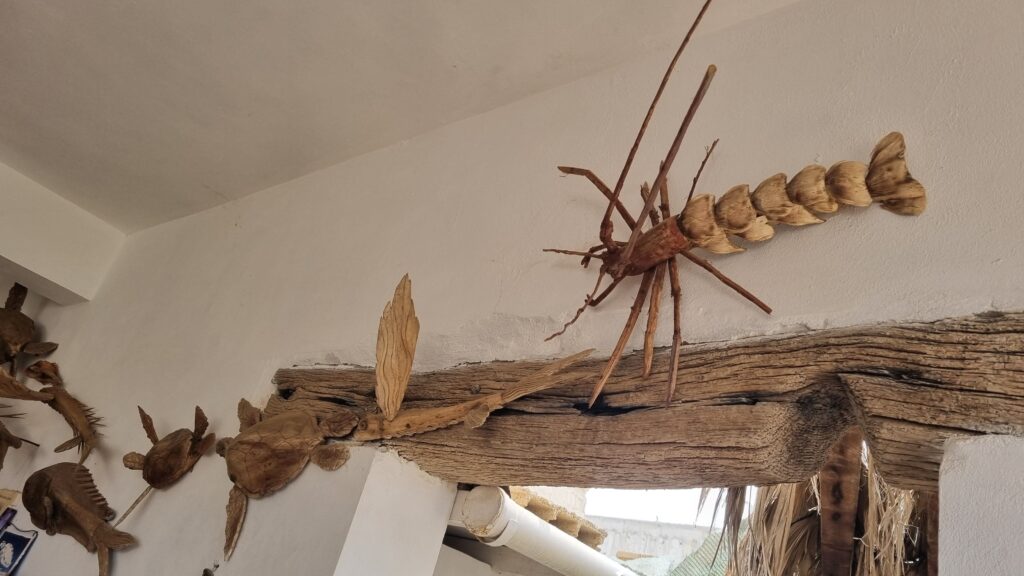
Sculptures made from branches of characteristic trees or palm trees
After a delicious tuna steak at a local restaurant (for €4), we set off on foot towards a small church on the coast. The walk was far more worthwhile than the destination itself! We first walk alongside modern holiday apartments, then a large private resort, before finding ourselves alone again on the dusty path.
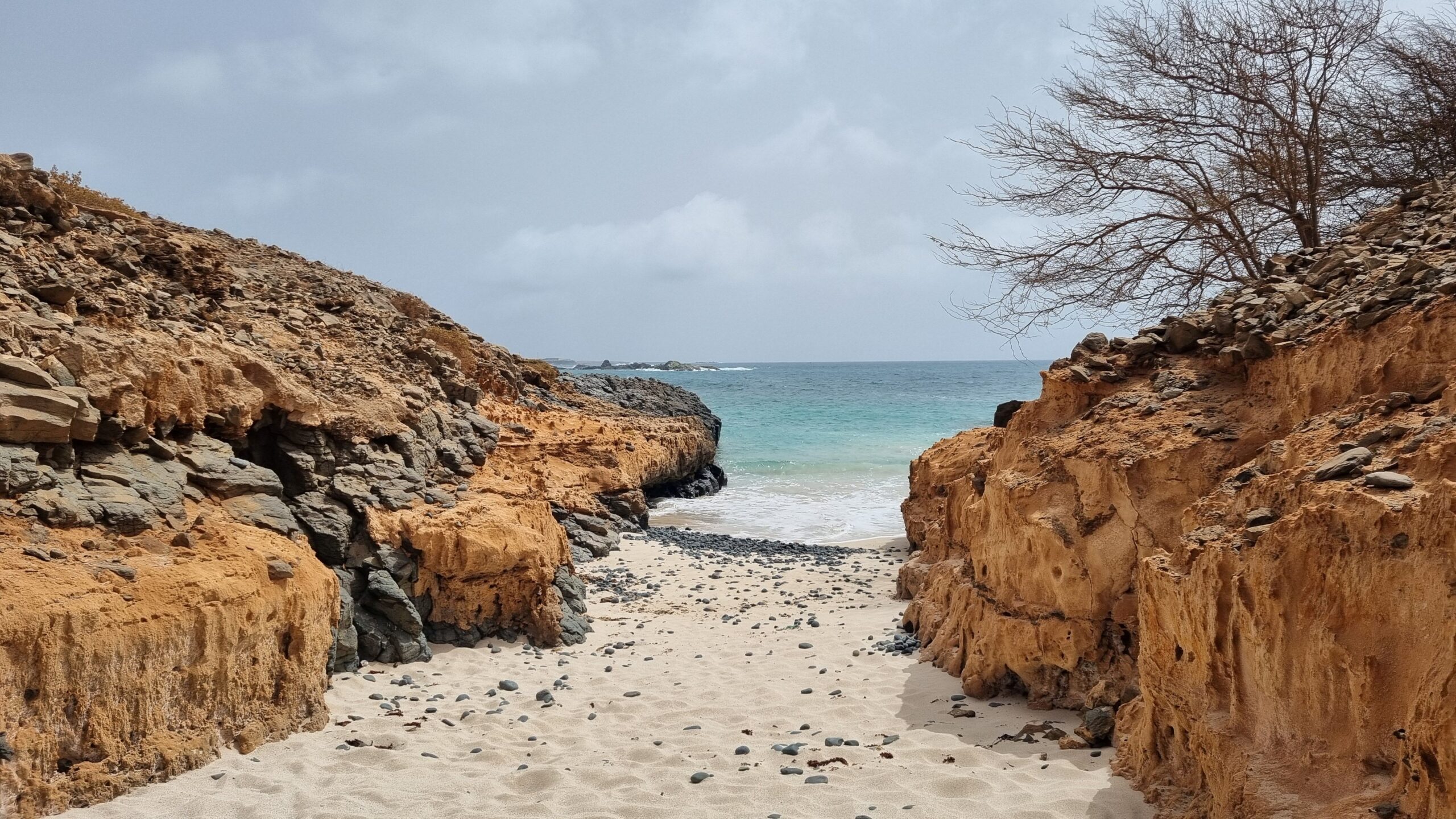
Our private beach!
It’s extremely hot, a tongue of white sand at the bottom of a basalt fissure calls for us… Shall we? Oh yes we shall! Splash, it feels better after a little dip in our birth day suits!
We walk back via one of the island’s countless beautiful white sand beaches, where many turtles come to lay their eggs. From the boat, we watch one narrowly escape being captured by a local canoe. Turtles, although protected by law, are still considered a delicacy here…
Before heading back on board, we have one last little visit to pay… As it happens, we know a boat currently moored to one of the buoys in the downtown harbour. This boat is our beloved Saltimbanque… We surprise Fabien, the new owner, who seems very happy aboard! Saltimbanque hasn’t changed, perhaps a little older, with another fifteen thousand miles under his keel. It’s still rather strange to see him in the hands of someone else, however beloving he may be: there is so much of our lives is in this boat, and we prefer not to go aboard. We part ways like this, happy to have seen each other again in this lovely spot, and we paddle – yes, engine stopped cooperating… – back to our proud UtPåTur.
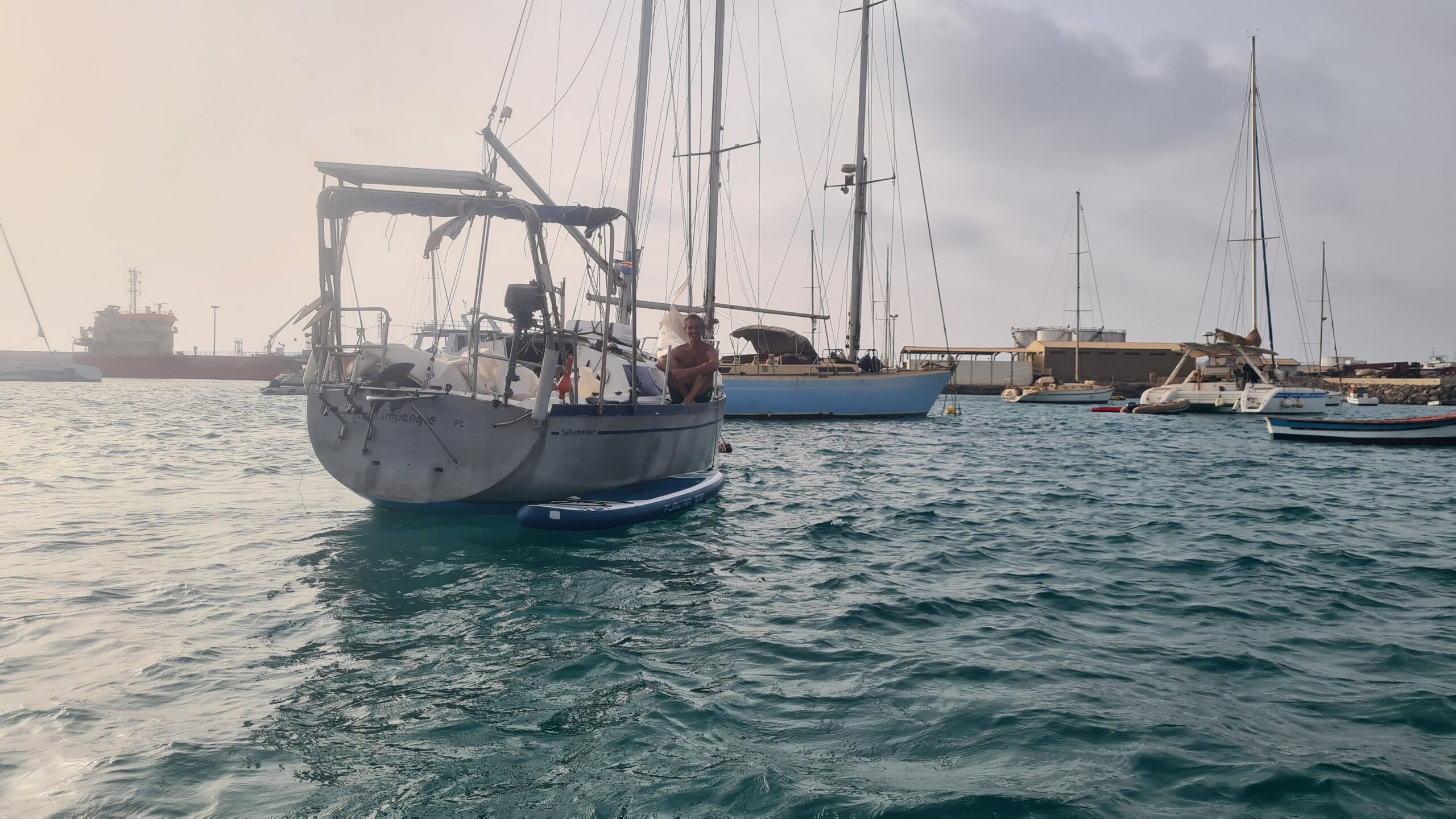
Saltimbanque and Fabien in Boa Vista
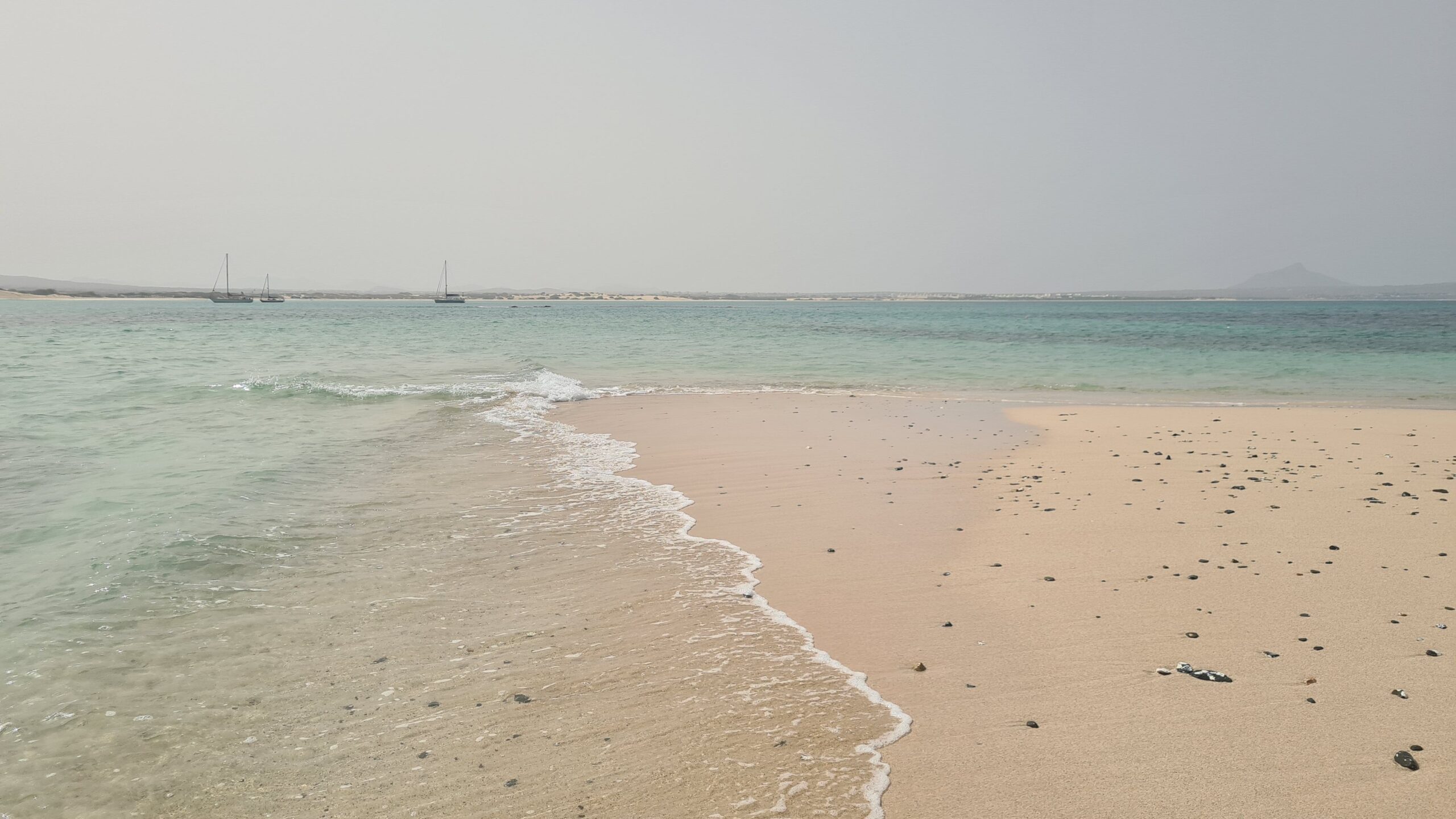
View onto the anchorage from the small island
Last day in this splendid anchorage, we visit the small island which offers us – rather poor – protection from the swell (and it gets the dinghy’s engine running again, yay!). Once again, it’s the tropics as we dream of them… it’s been a long time! Unfortunately, the weather is deteriorating in the coming days and we’re preparing to leave this enchanting anchorage, delighted with our stopover in Boa Vista!
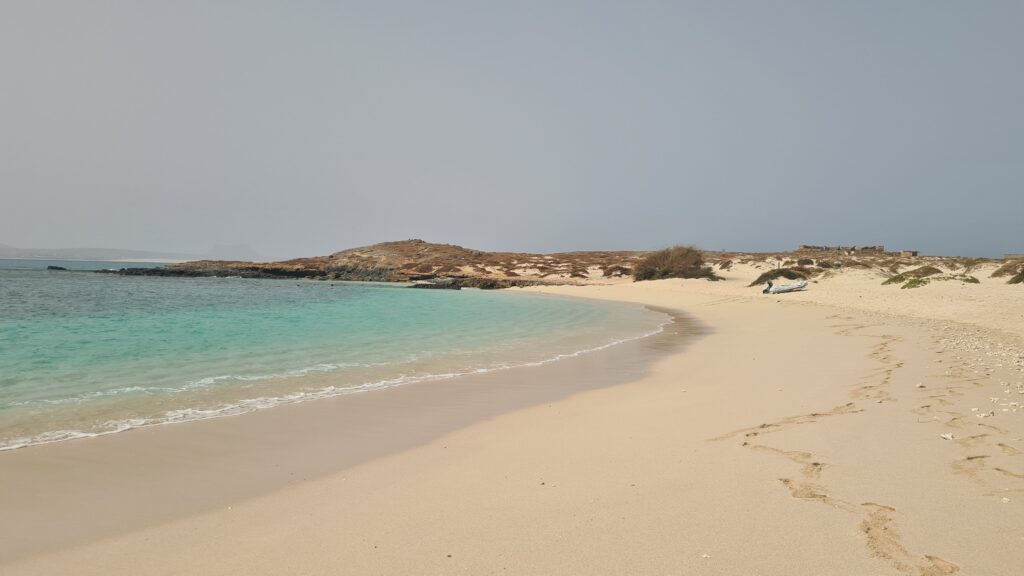
The perfect tropical anchorage: white sand beach…
… and colourful fishes!
28-31 May : Boa Vista – Palmeira, via São Nicolau (230NM)
We don’t want to go to Mindelo with the forecasted wind because the port is located in a strong Venturi effect that will accelerate the already quite strong trade winds. But the anchorage at Tarrafal in São Nicolau is, if memory serves, well sheltered from the swell, as well as from the wind, even though it can be swept by short but intense gusts.
So, off we go to São Nicolau, leaving in the evening in fairly calm conditions, then very calm: we even have to do a few hours of motoring in the morning.
Arriving at the northwest tip of the island around 2 p.m., we reef in anticipation of the headland effect, which is sure to intensify the light trade wind. We remember it being quite strong but only lasting a few miles. Indeed, as soon as we reach the cape, the wind picks up. 30 knots, 35 knots (force 7 to 8)… well, that’s the downside of having an anemometer; you can get quite scared seeing the wind speed… But we are sailing under a triple-reefed mainsail alone, which should be fine for a short distance. However, the further we progress, the stronger the wind becomes… the anemometer starts reaching 40 knots (force 8 to 9) far too often for our liking… we start the engine to push ahead and head towards the anchorage. But the closer we get to the coast, the more violent the gusts become… a steady 35 knots (force 8), Camille sees a gust of 48, Laure can’t remember if she saw or dreamed her gust of 50… (force 10, over 90 km/h wind). The wind is scorching, the island is like a giant hairdryer…
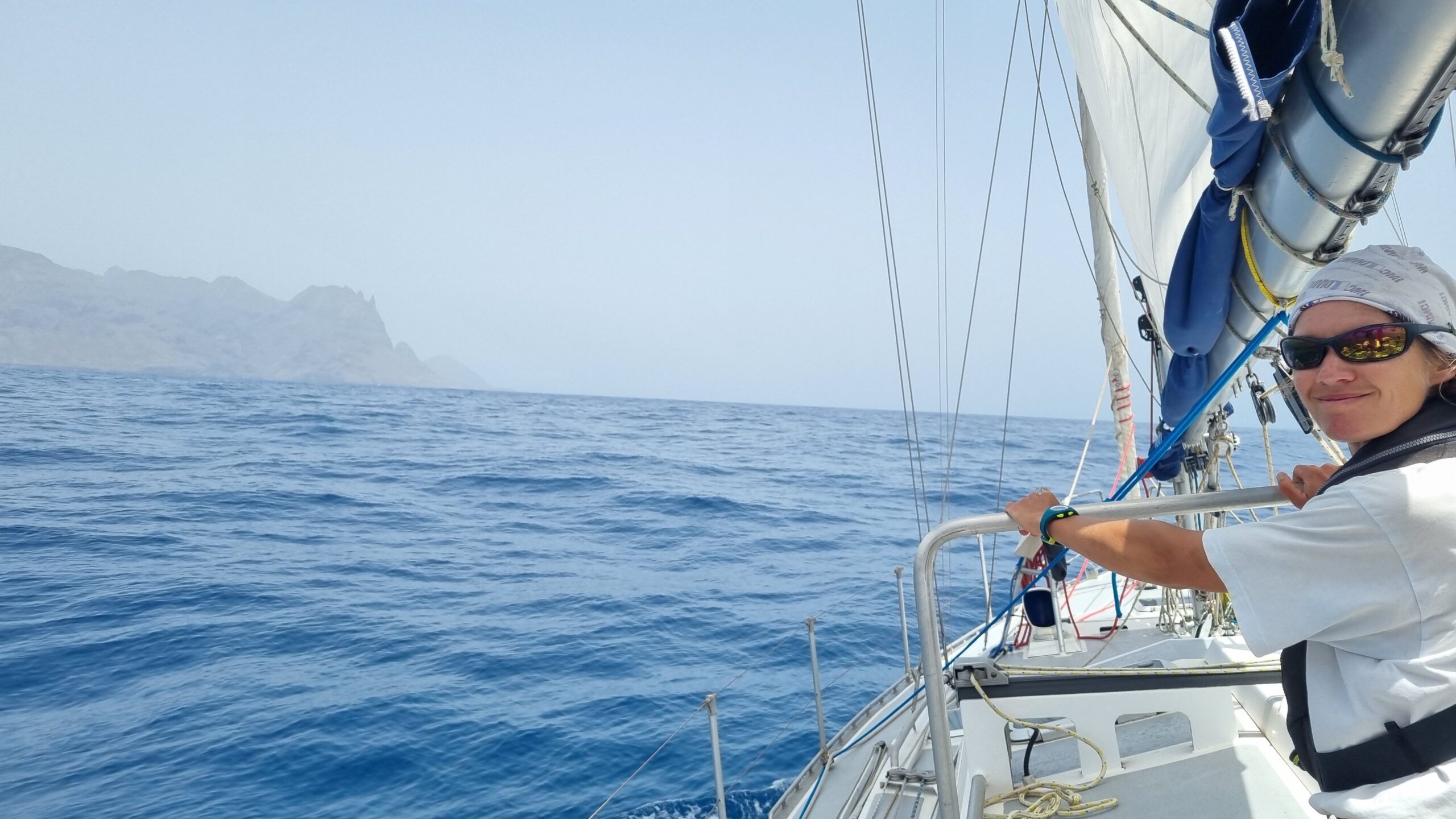
Approaching São Nicolau, last miles with a smile…
On board, it’s a war zone… We’re fortunately sheltered from the swell by the island, but we’re still regularly drenched by torrents of sea that sweep across the deck. The tender, in its davit behind the boat, is being lifted vertically, pressed against the blade of the windvane which we’re urgently removing. Its pretty oilcloth cover is turning to shreds. The wind generator is making worrying noises in the gusts, and part of the rotation-locking mechanism has broken, threatening to get tangled in the blades. The mainsail, which we have to ease in the gusts, is flapping against the shrouds; we really don’t like seeing the boat suffer like this.
The conditions have been very rough for almost an hour now, we are only two miles from the anchorage, but the sea seems to be white with foam all the way to the beach, Tarrafal offers no shelter whatsoever from this crazy wind! We decide to cut our losses and bear away to leave this cursed island.
The wind has calmed down to a gentle 30 knots (force 7), which feels like a light breeze, and we take the time to stabilize the situation on board. But now a question arises… where shall we go? Mindelo is only 50 miles away, but with the wind picking up, the approach—at night—risks being just as awful as it is here. We decide to aim for a safe haven, even though it’s 80 miles upwind: Palmeira!
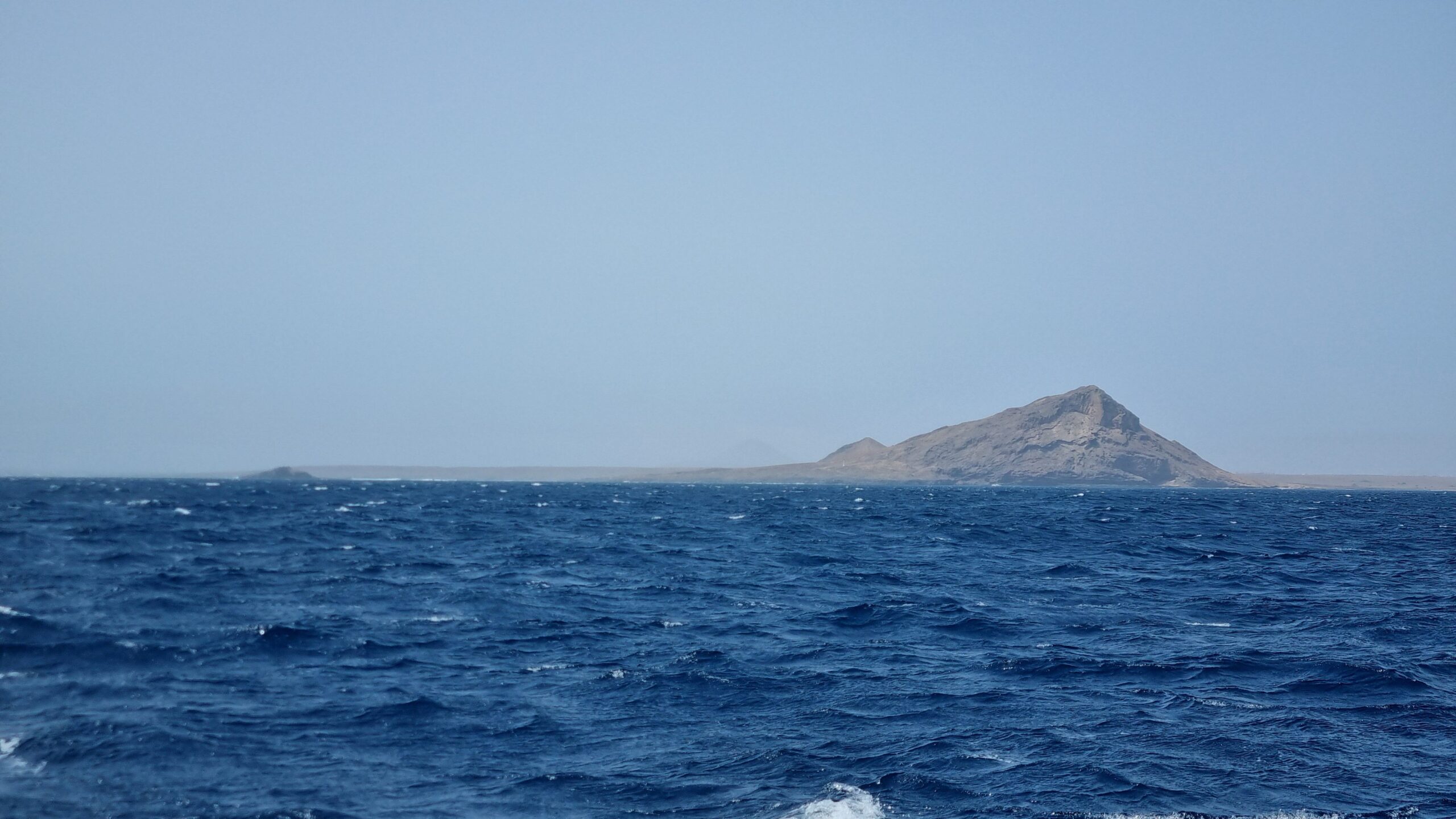
Passing by Monte Leão, Palmeira is not very far away…
Fortunately, we’ll have a favorable tack and a providentially favorable current, but the conditions downwind of São Nicolau remain very strong. With the anemometer reading over 35 knots close-hauled (force 7 true wind), we’re making good progress with three reefs in the mainsail and the staysail partially furled. It’s only around 10 p.m. that we find some more decent wind, a trade wind of 20-25 knots (force 5 to 6), which is already quite sporty enough! We’re pretty exhausted after these eight hours of battling the wind…
We reach Palmeira late the following afternoon and anchor in the same spot as a few days earlier, feeling as if we were returning to our home port. What a joy to rinse off the salt that had clung to our clothes and skin for the past 36 hours! We take a full day to rest and fix all the little problems we have encountered on the boat during the strong winds, before enjoying a drink at Arminda’s with the Gwerelaouen.
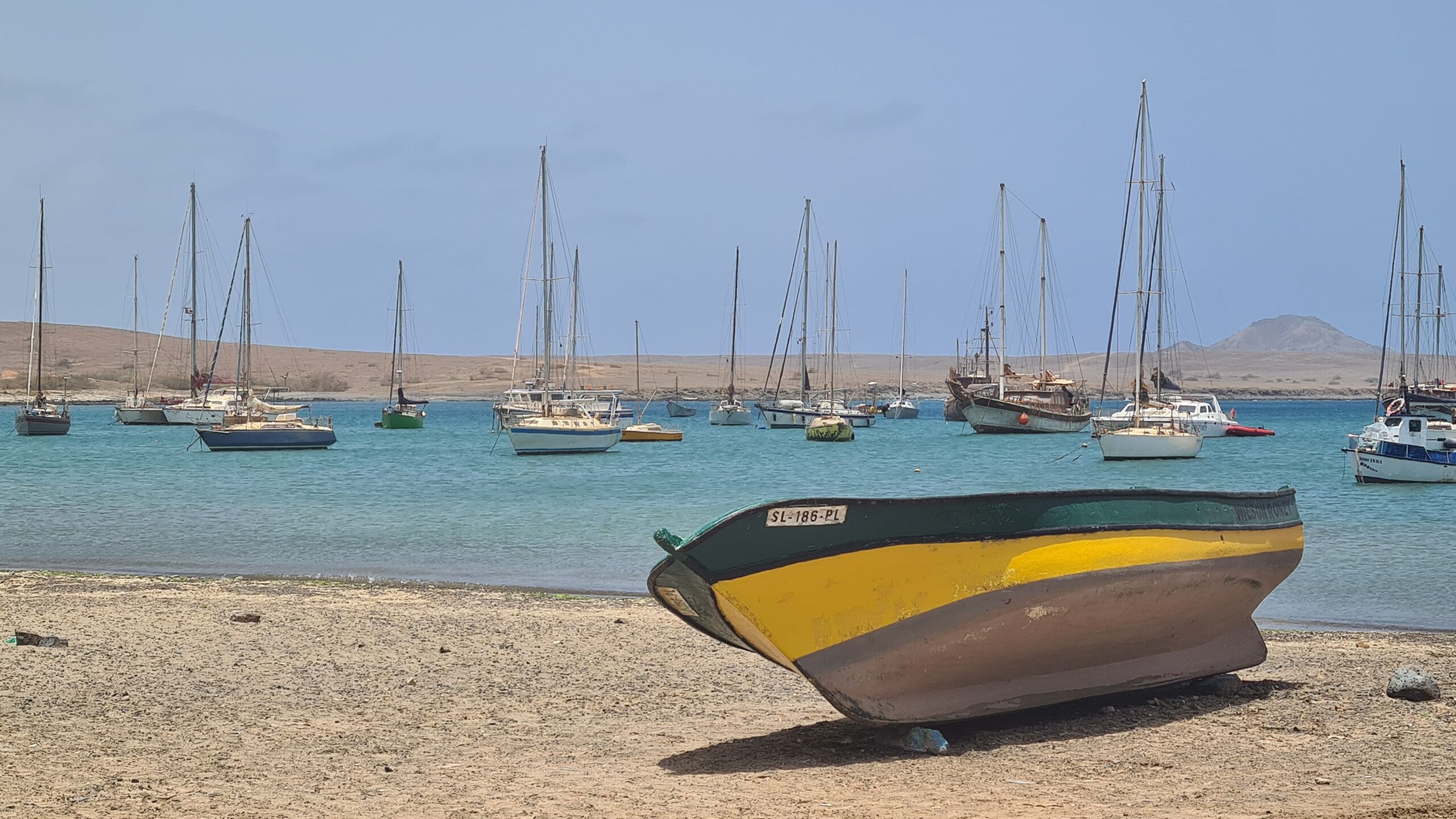
Back to good-old Palmeira!
1- 2 June : Palmeira – Mindelo (124NM)
We’ll have to head back towards the western islands and their dramatic coastal effects if we want to reach Mindelo. Easier said than done, we’re still a bit traumatized from our last attempt… But hey, we can’t stay in Palmeira forever!
To maximize our chances, we aim to arrive at first light, when the katabatic effects are supposed to be weakest. The sailing goes well, close-hauled in moderate trade winds under the moonlight. We rediscover the joy of sailing in these latitudes, which can also be quite pleasant.
Once near the islands, we reduce the mainsail to the third reef and unfurl the staysail, ready for strong gusts. These finally arrive at the very last moment, and we are propelled by a good 30 knots of wind (force 7) into Mindelo Bay.
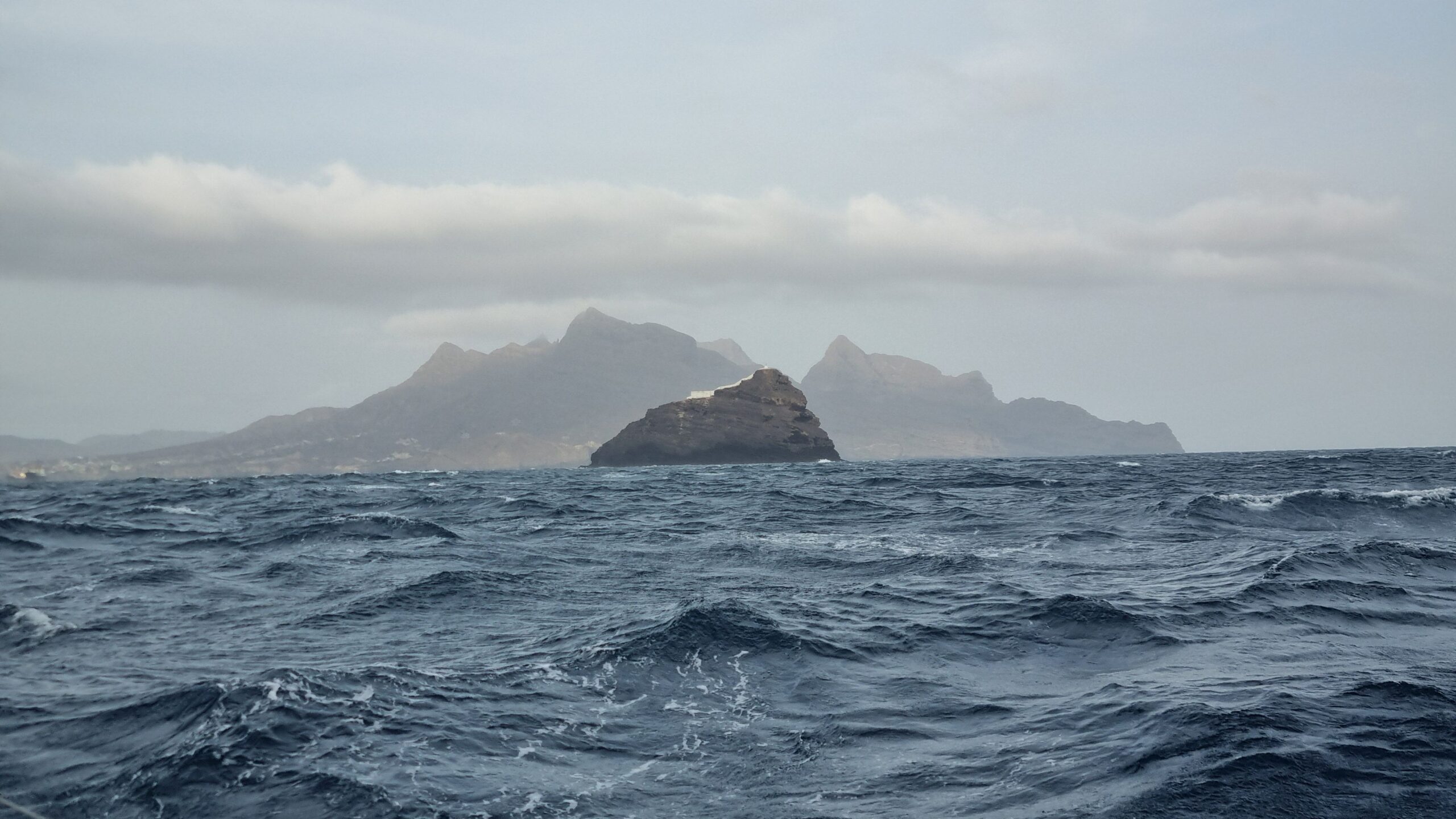
Approaching Mindelo bay
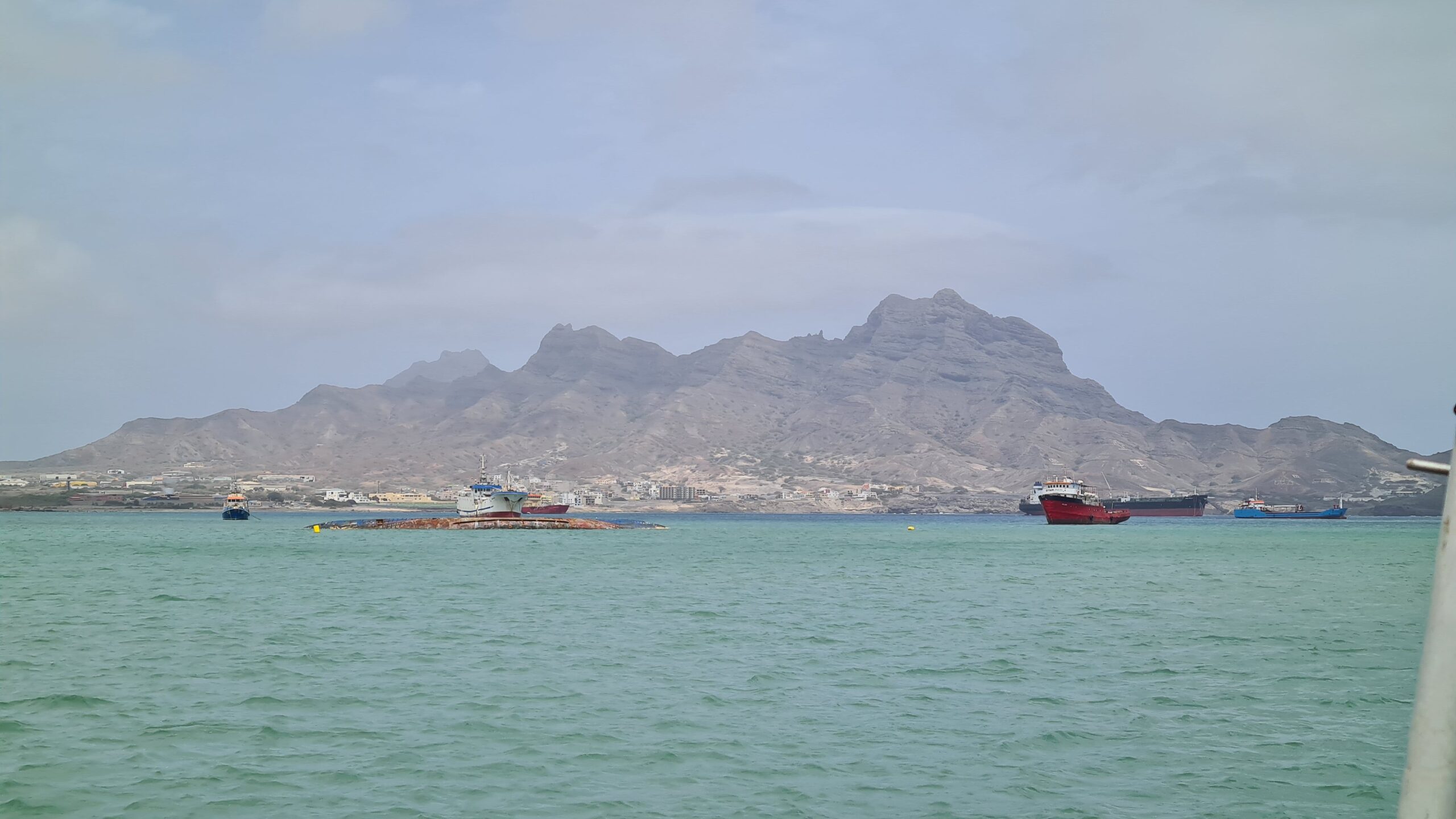
The view at the anchorage
The bay itself is well protected from the swell and the wind is moderate… with occasional short, violent gusts. The anchorage is practically empty, out of season… We anchor near three ketches that seem to have been here for a long time, between the marina and a large wreck..
Here we are at the end of the diving board, the last stop before crossing the Atlantic. But before that, we need to carry out a serious technical check of the boat, as well as a complete provisioning, while trying to enjoy a little of the cultural capital of Cape Verde.
 PDF