
Back to the water after a major winter refit, UtPåTur continues her journey south, slaloming betwen numerous winter gales. What were we thinking, leaving in February?
The full photo album here.
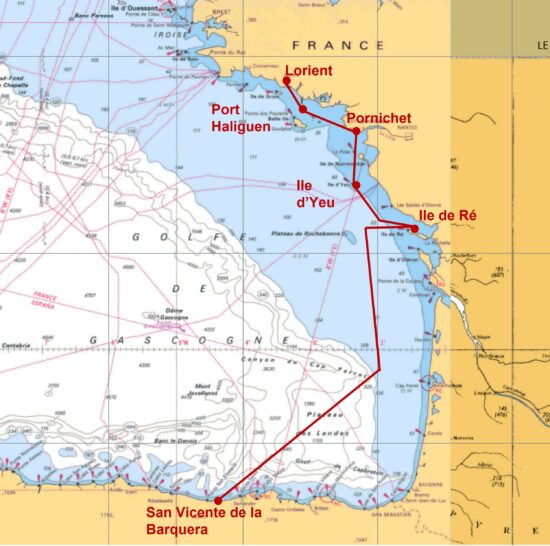
422 nautical milles sailed – 5762 NM in total on UtPåTur
4–13 February: Stopover in Lorient (12NM)
What a joy to be back afloat on our own boat! After three months in the yard, we’re finally able to breathe again. The first few days aboard are… not exactly action-packed. The weather is utterly foul—pouring rain and full-on gales as far as the forecast can see—so we’re quite happy staying tucked up under the duvet with zero pressure.
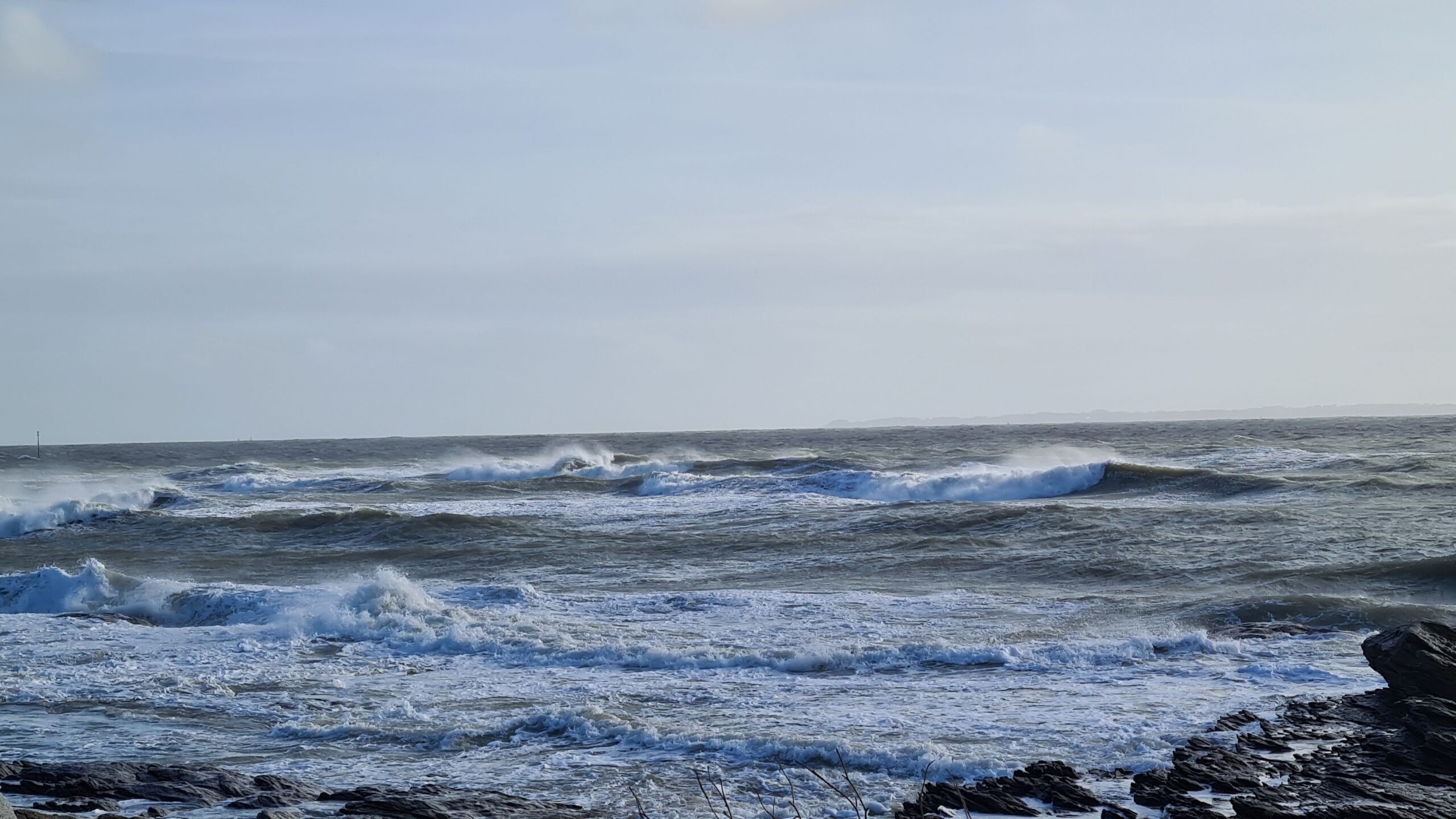
Monday: there’s a storm, Tuesday: there’s a storm, Wednesday: more storms on the way!
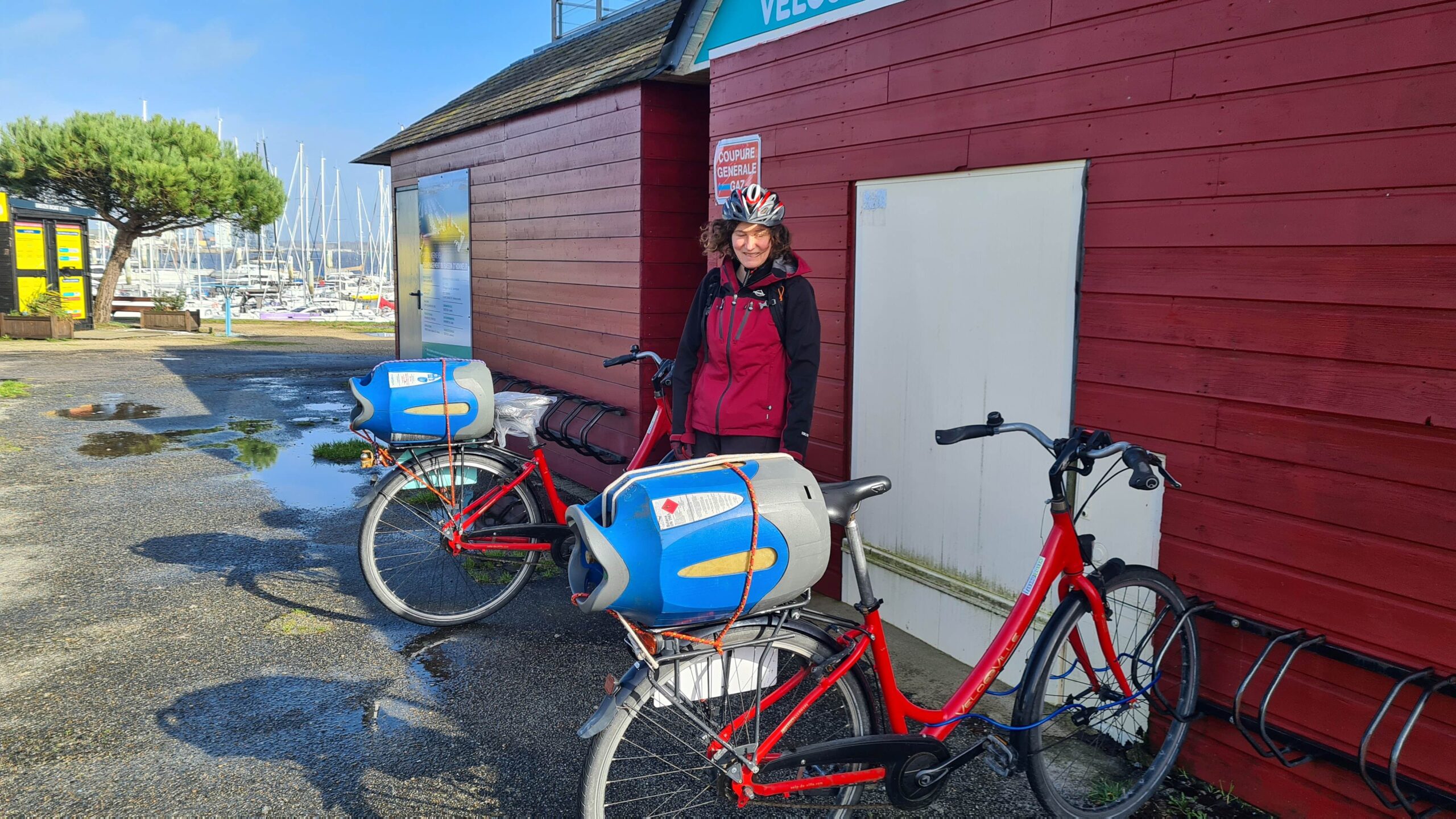
Let’s go shopping!
There are still a few last errands: some shopping, a final parcel of spare filters to collect, a phone battery to replace, and a handful of small jobs and checks on board. It keeps us busy enough, but still leaves time for friends. This time it’s the girls from Djinn (ex-Sweety) who come to visit for a brilliant evening aboard UtPåTur. After more than a year chatting online, we finally meet in real life—and we’re still huge fans of their drawings.
On Sunday, the wind briefly eases between two lows—perfect for stretching the sails. A short hop between Lorient and Groix to check everything is properly rigged and that we still remember the basics: tacking, gybing, changing headsails, reefing. Excellent call, because we quickly discover our big starboard winch is jammed—not ideal for trimming the genoa! Easily fixed back at the pontoon, and now we’re truly ready to go… as soon as the wind calms down…
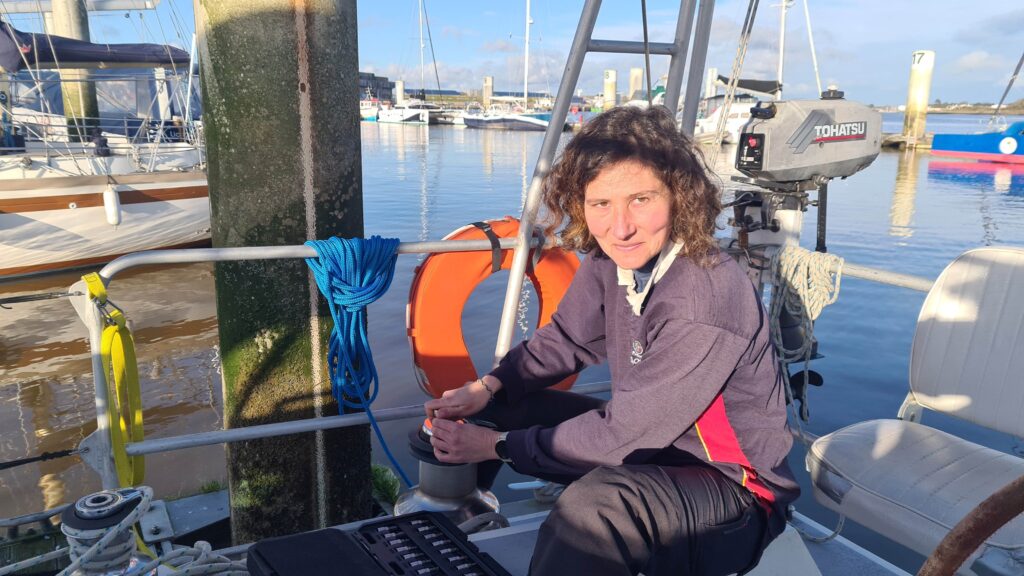
Groumpf, the winch is stuck, but not for long!
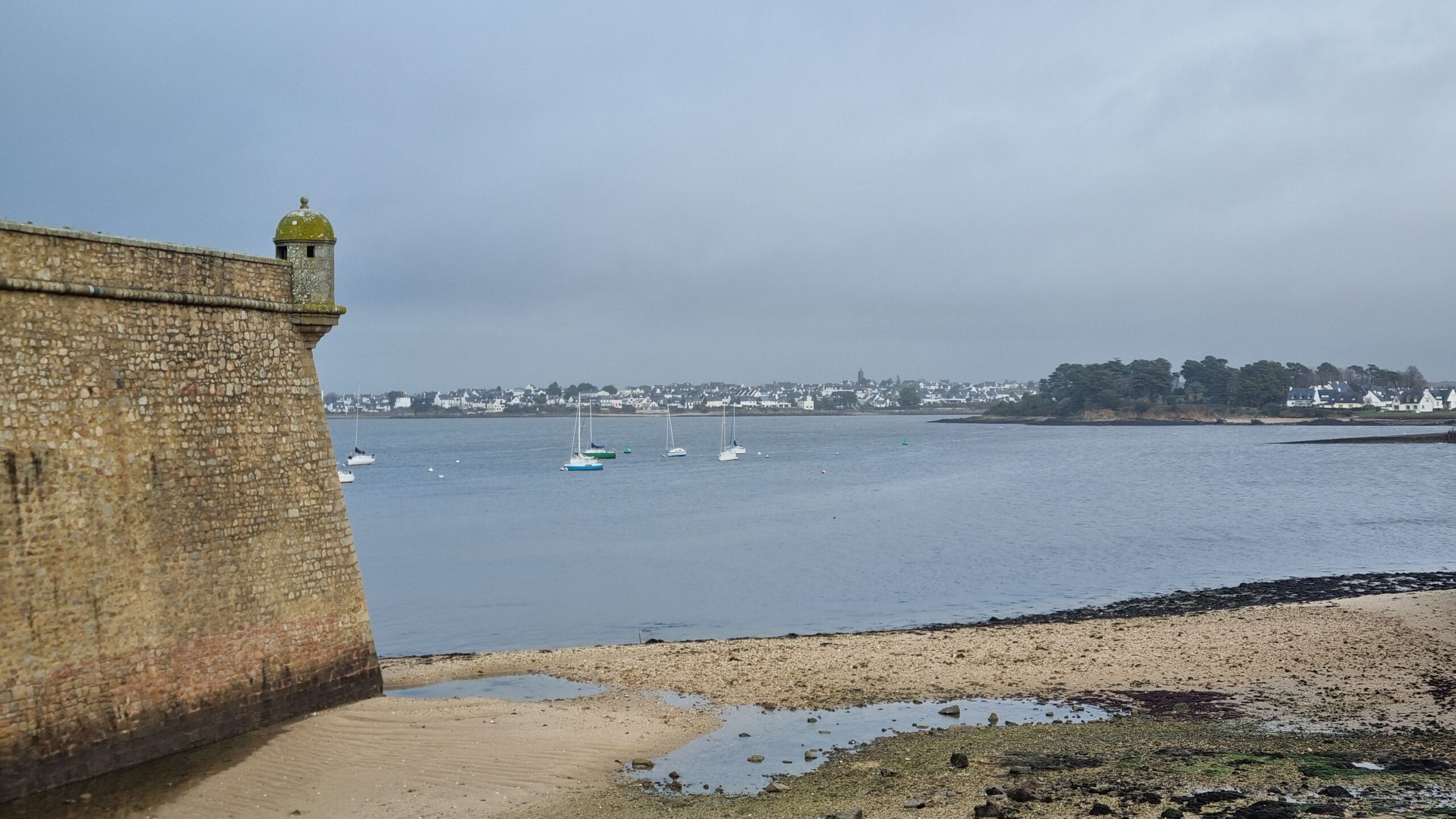
On the way, we visited the very nice East India Company Museum in the citadel of Port Louis
…which it absolutely refuses to do. Storm after storm rolls through, rivers are in flood, and it’s definitely not weather to poke a bow out. What were we thinking, leaving in February? In desperation, we set off on a small road trip along the Atlantic coast—a social tour: the inevitable Dibonas in Nantes, Laure’s godfather in Montaigu, friends in Bordeaux, and a visit to Djinn in the yard at La Roche-Bernard. Hundreds of kilometres to the rhythm of windscreen wipers, and back on board just in time for the week’s big blow. Force 10 forecast—but we’re snug and safe in Kernével.
A lull is finally expected on Friday—all hands on deck! Last provisions, laundry dropped off with the ever-lovely Anouhés (who return it clean and folded, far too kind!) and come aboard for drinks in the evening. We’re deep into departure prep when Jean-Marc asks, “Have you checked the NAVTEX warnings?”
Er… no… let’s do that now… and—oh no. The whole area between Groix and Quiberon is closed for live firing exercises. No way to go through before Saturday morning… and the wind’s already building back to Force 7 tonight. Are we doomed to stay in Lorient forever? Is sailing in February even possible?
14–16 February: Lorient – Port Haliguen (32NM)
Thankfully, Friday night’s blow dies down by late Saturday morning, giving us a precious 10-hour weather window. Military exercises resume Monday—time to get out of this… mined zone!
A lively start with a following wind Force 5–6, but with two reefs in and the genoa set, UtPåTur surfs along at over 7 knots towards the south-east, weaving between guillemots and gannets. And it’s sunny! A whole day without rain—unbelievable luxury.
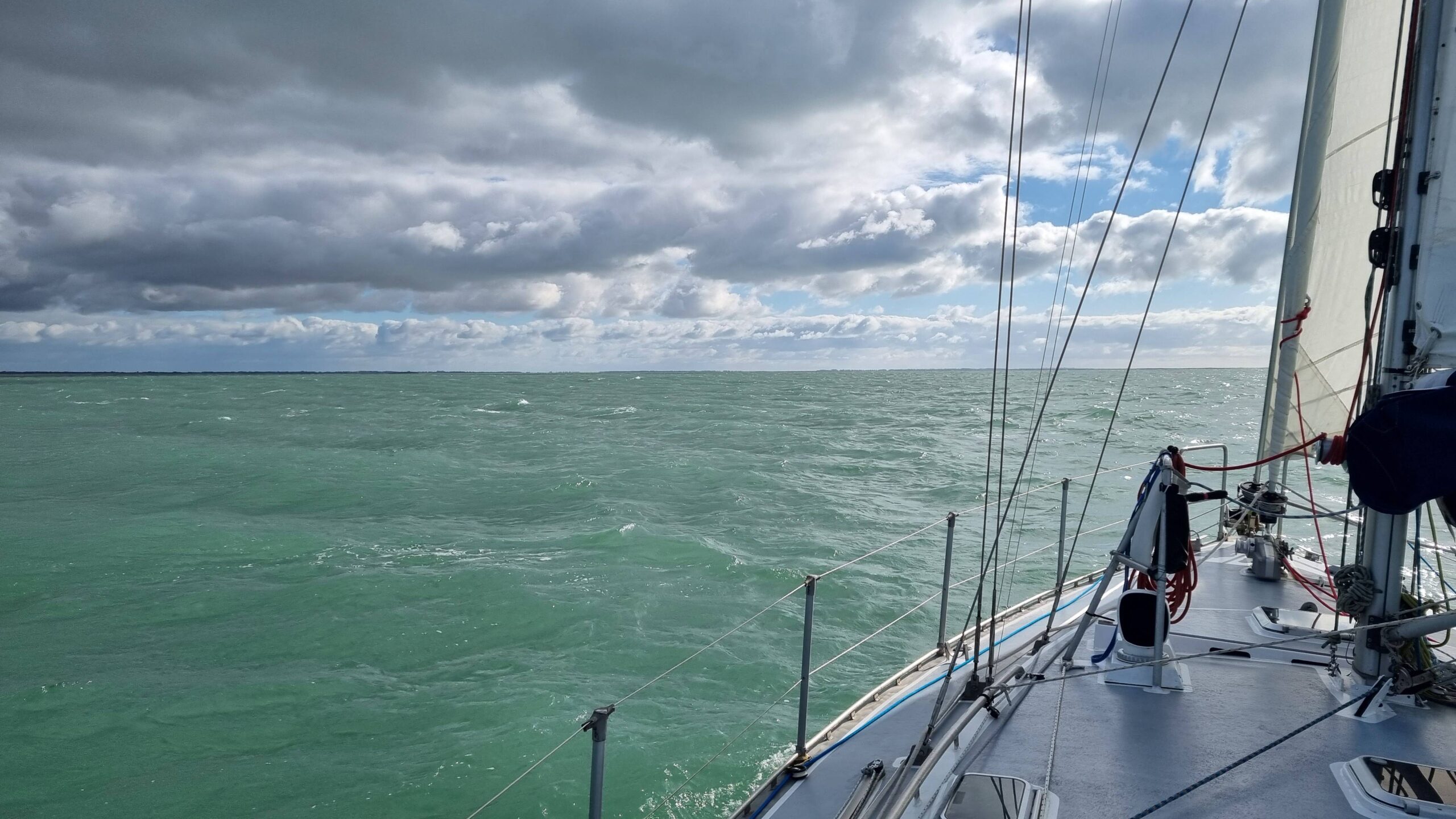
We’re leaving Lorient for new horizons.
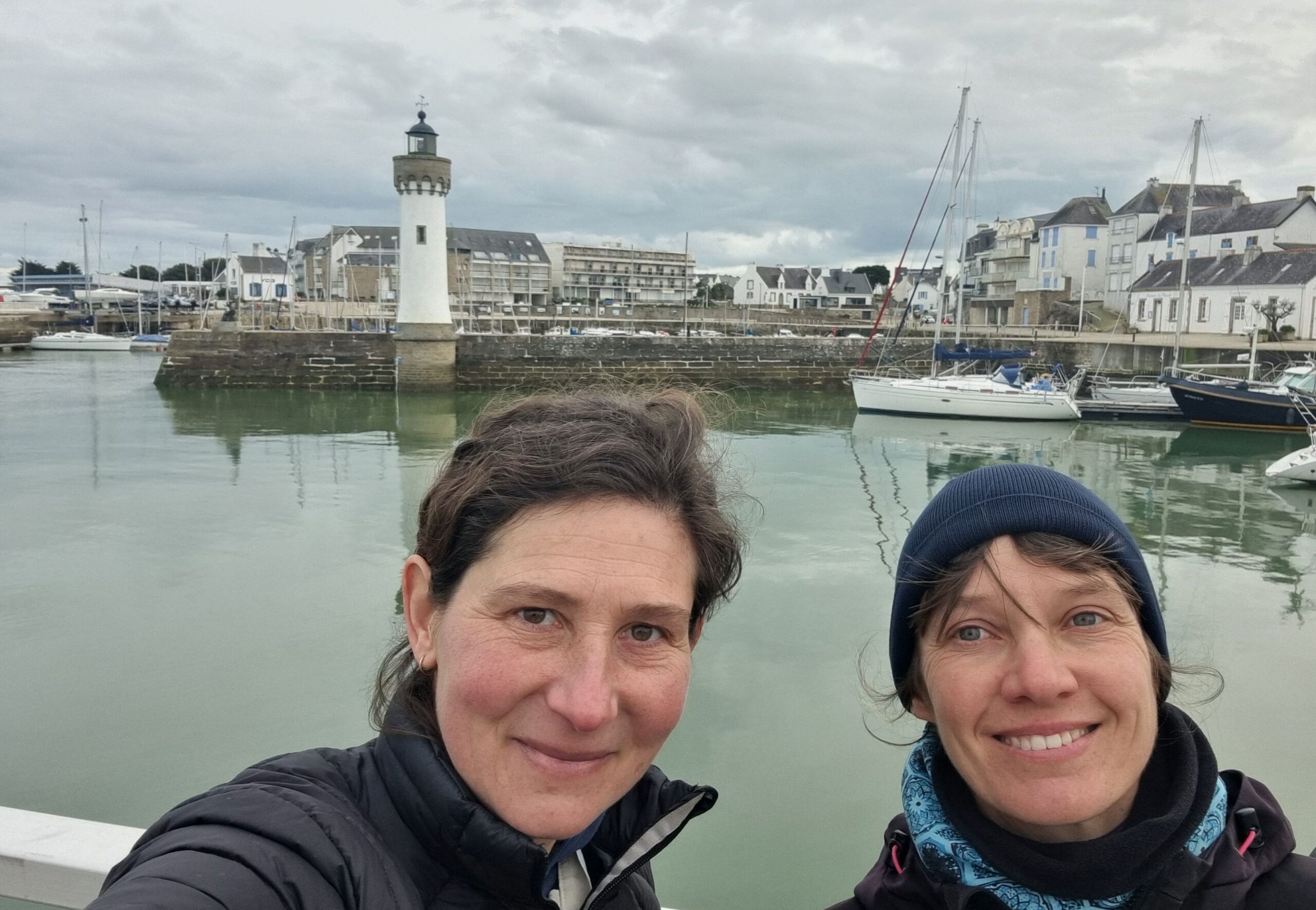
Here we are in Quiberon, far South!
The wind eases in the afternoon as forecast, and we round the Quiberon peninsula and the notorious Teignouse lighthouse without trouble. Welcome to Quiberon Bay—the southernmost point we’ve sailed since June 2012. Exotic stuff!
We berth in Port Haliguen just ahead of the big Canadian Ovni 430 we cheekily overtook leaving Lorient. Her name is Foundation, owned by Gary and Hiromi—our first fellow cruising boat of the year. We’ll hopscotch along the coast together for a few days, taking pictures of each other, sharing stories and plenty of nice sailing and travel talk.
Quiberon is also home to our friends Eric and Sandrine (met around the Atlantic 15 years ago), who show us around during a classic February day—restaurant and a rainy drive around the peninsula. It’s brilliant having friends in every port 🙂
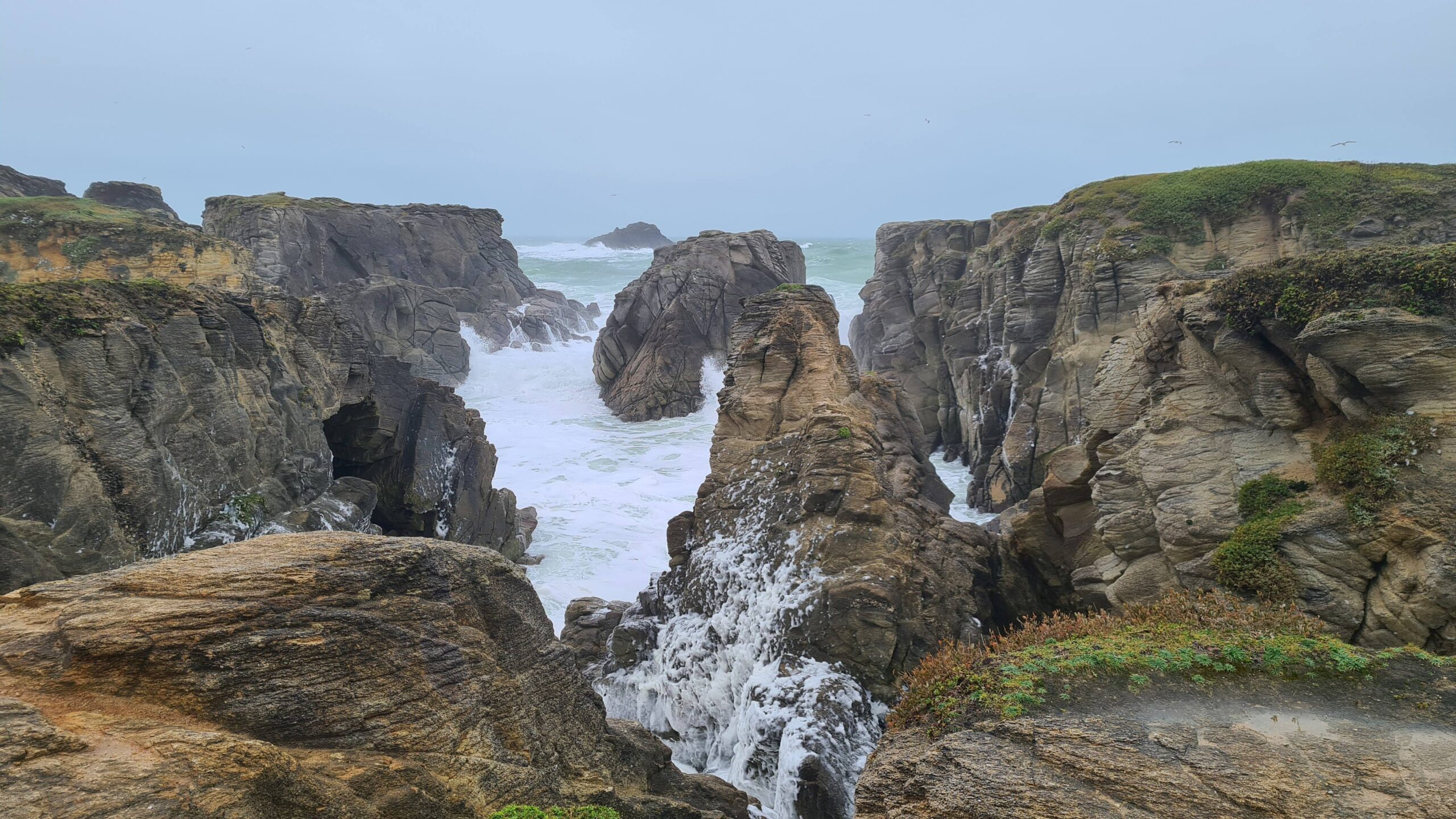
Walking the wild coast of Quiberon
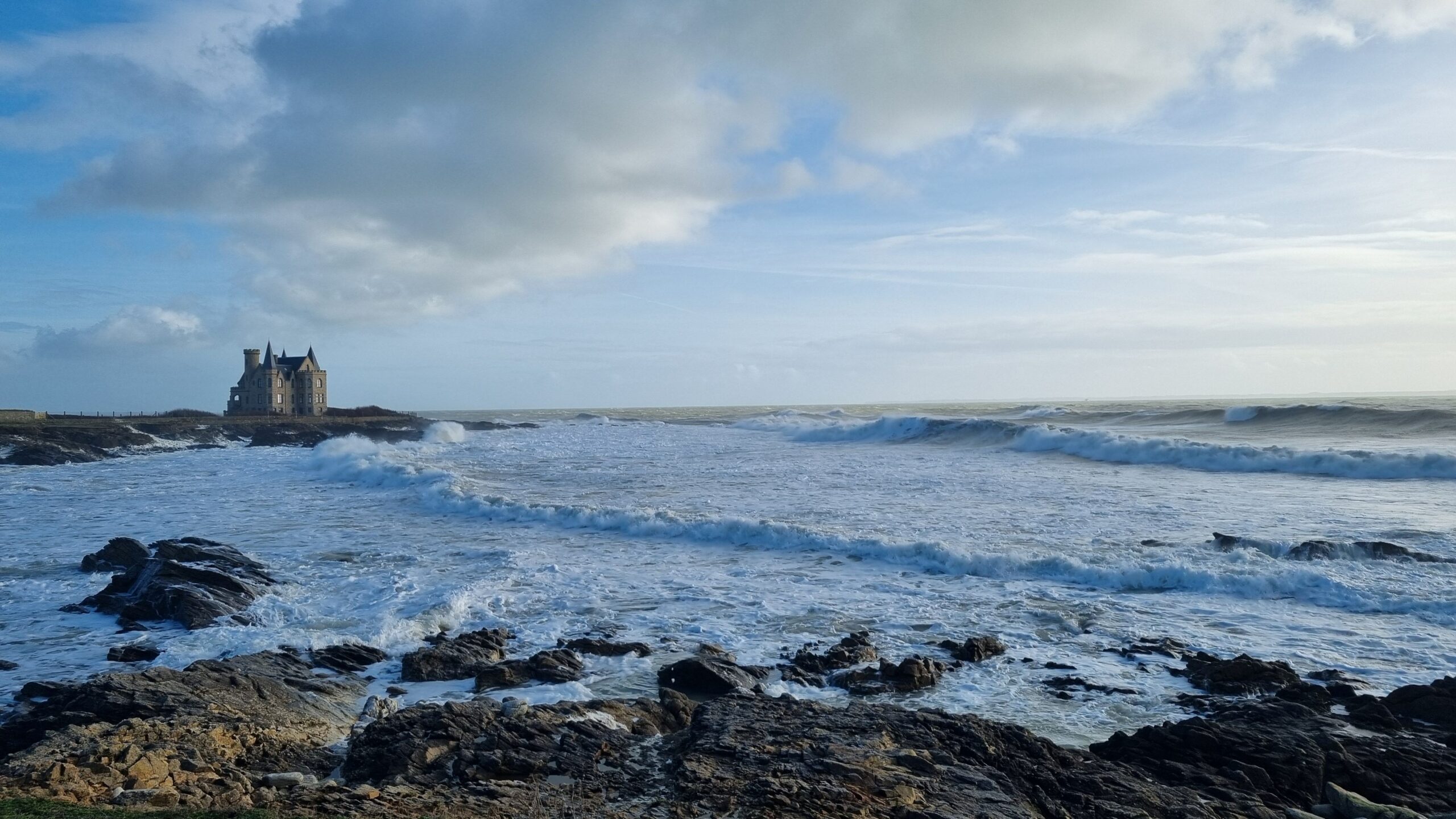
A much welcome ray of light
Barely time for all these social engagements before the wind pipes up again—Force 7 for another 48 hours. Luckily, we kept a few jobs in reserve: diesel filter changes and testing our Starlink antenna. Verdict? Works brilliantly—fastest internet we’ve ever had in Brittany. We’re getting more and more ready for the big trip…
17–19 February: Port Haliguen – Pornichet (35NM)
Another brief lull—just enough to move one step further south.
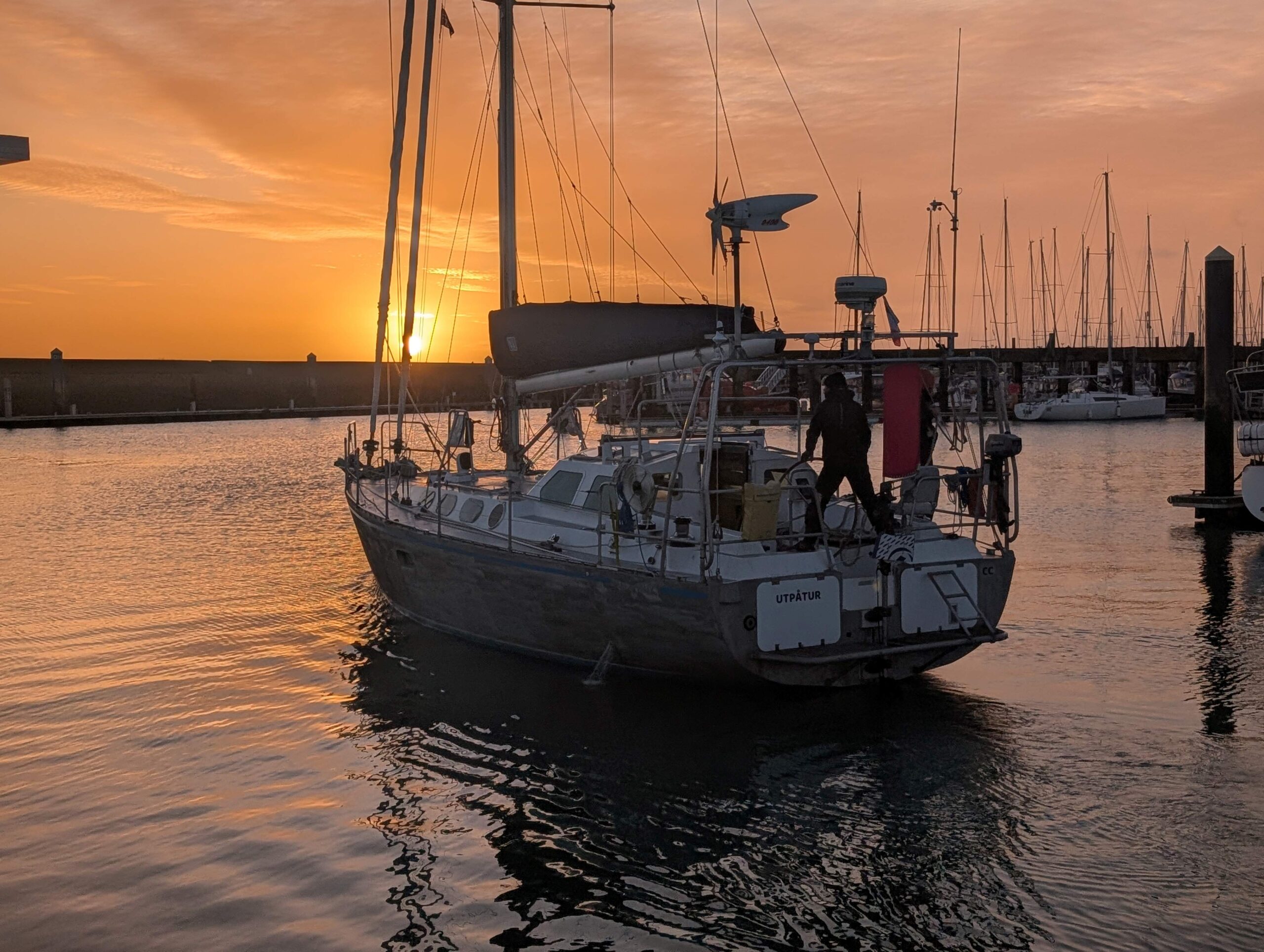
Leaving Port Haliguen, thanks to Foundation for all the photos of the day!
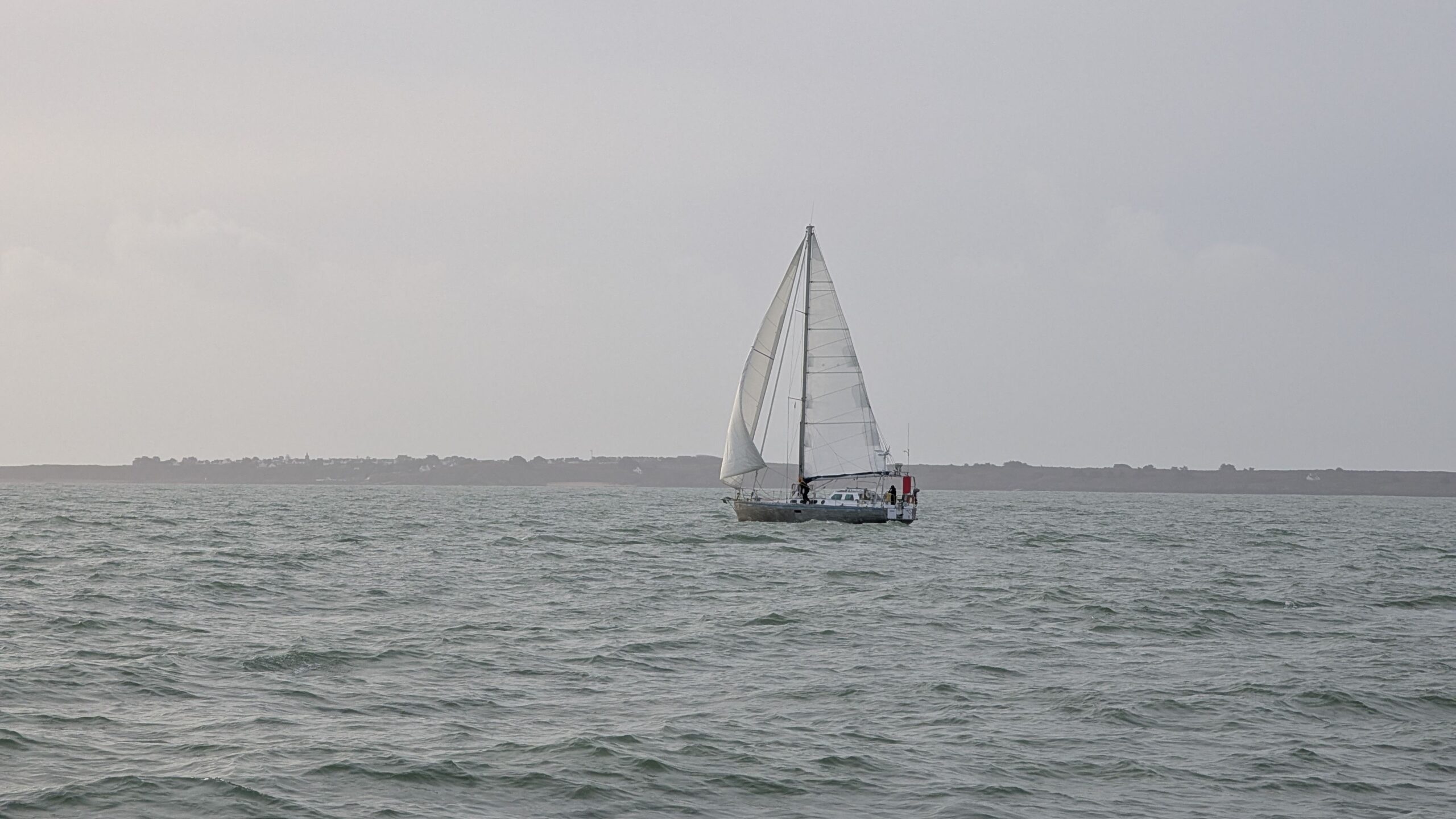
Running along Houat
We start with a gentle run, practising goose-winging the genoa, before the wind completely dies. Time to call on trusted Musclor to finish the leg under the heavy winter sky of this “fine” February day.
As we watch the islands of Houat and Hoëdic slip away in our wake, a line of foam bars the sea ahead of us: on the Brittany side, the water is blue and calm; on the Pays-de-Loire side, the water is beige, stirred by current and scattered with pieces of driftwood. It is already the Loire estuary, the largest river in France! Currently in flood, its influence is felt beyond the point of Le Croisic…
Motoring through this soup is slower and less comfortable, but we’re nearly there… and then—Pornichet. The visual contrast is… striking. Instead of rugged coastline: a wall of apartment blocks rising straight out of brown water. Yep, we’ve definitely left Brittany.
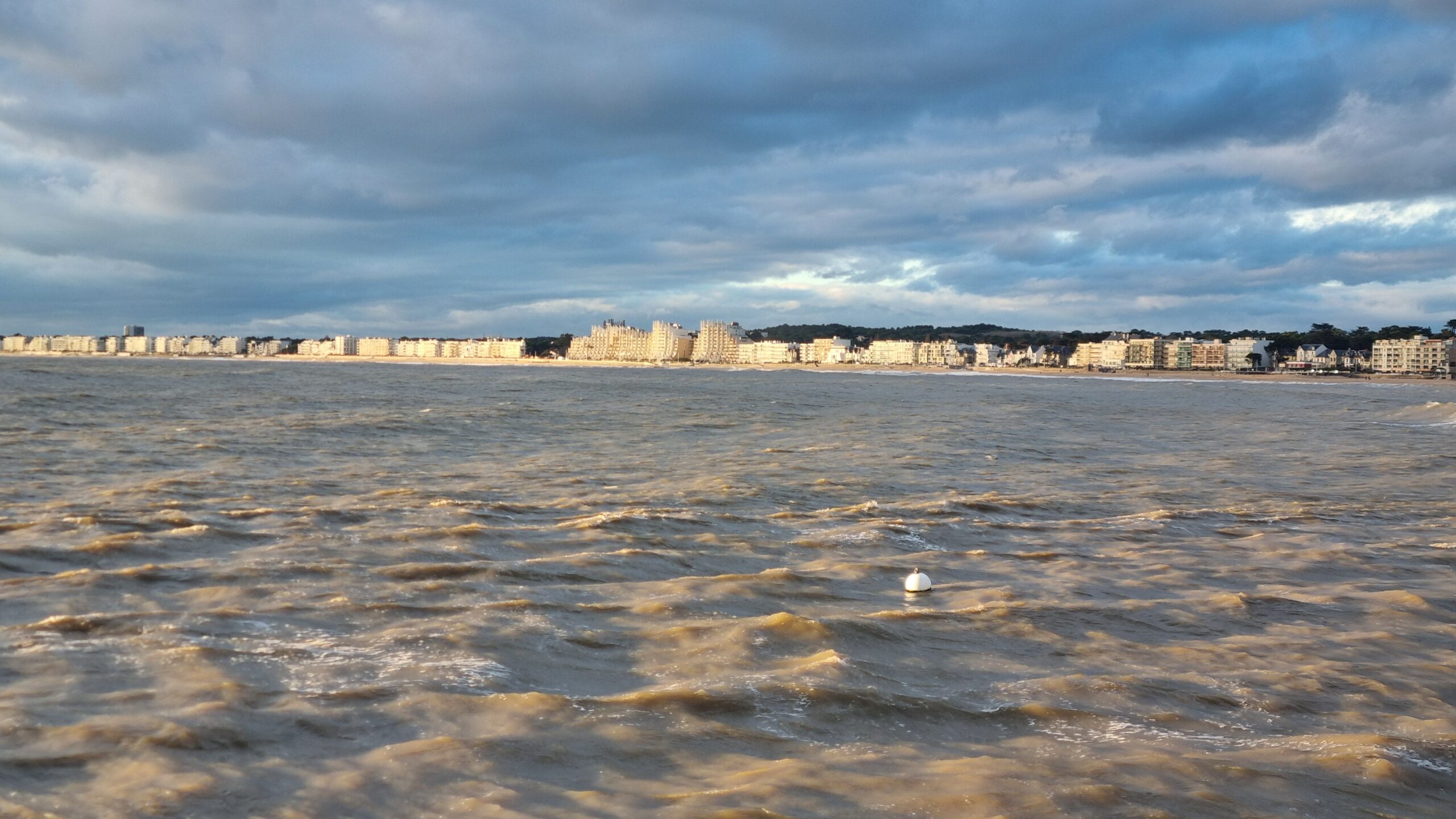
Charming Pornichet …
The stopover is anything but restful. The marina, entirely man-made, offers good shelter from swell but none from the wind. When the next blow hits—30 knots, gusting 45—it howls for hours, making even sleep exhausting. February sailing, really?
And of course, the usual chain of technical hiccups: a 12V socket dies, a door slider breaks (UV damage), which leads us to discover our angle grinder is dead (problematic—it’s our emergency rig-cutting tool), then a lazy jack block snaps in the blow… Meanwhile, the freshwater gauge has been “full” for a week, and now the pump keeps losing prime. When will it end?!
Eventually, we fix the door and lazy jack, replace the grinder (warranty claim underway), and solve the water mystery in one go: the aft tank valve was partly open, draining into the forward tank—hence the “always full” reading. Once empty, it sucked air and broke the pump prime. Elementary, my dear Watson!
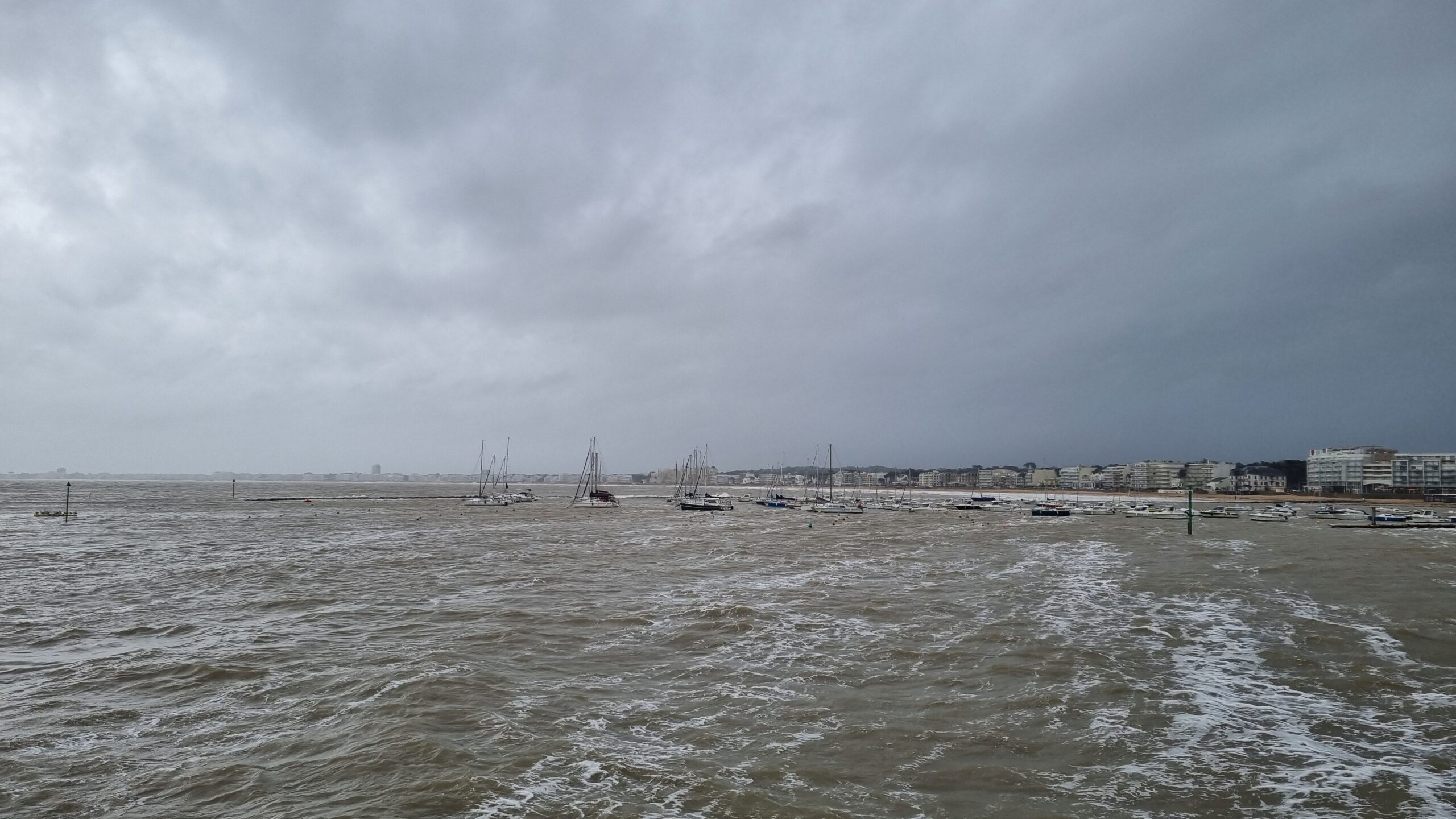
Supposedly, conditions will soon improve…
But mostly, our minds are on the weather. Since leaving the yard, we’re on a new mission: Be in the Canarias by 9 April. Storms have slowed us down, but a high-pressure system might settle over the weekend… Could a Biscay crossing be on the cards?
20 February: Pornichet –Yeu Island (34NM)
Not for today—but a good westerly gives us another step in the right direction. We cross the Loire estuary, leave Noirmoutier to port, and head for Yeu Island. A pleasant sail in dry weather, with even a hint of pale winter sunshine.
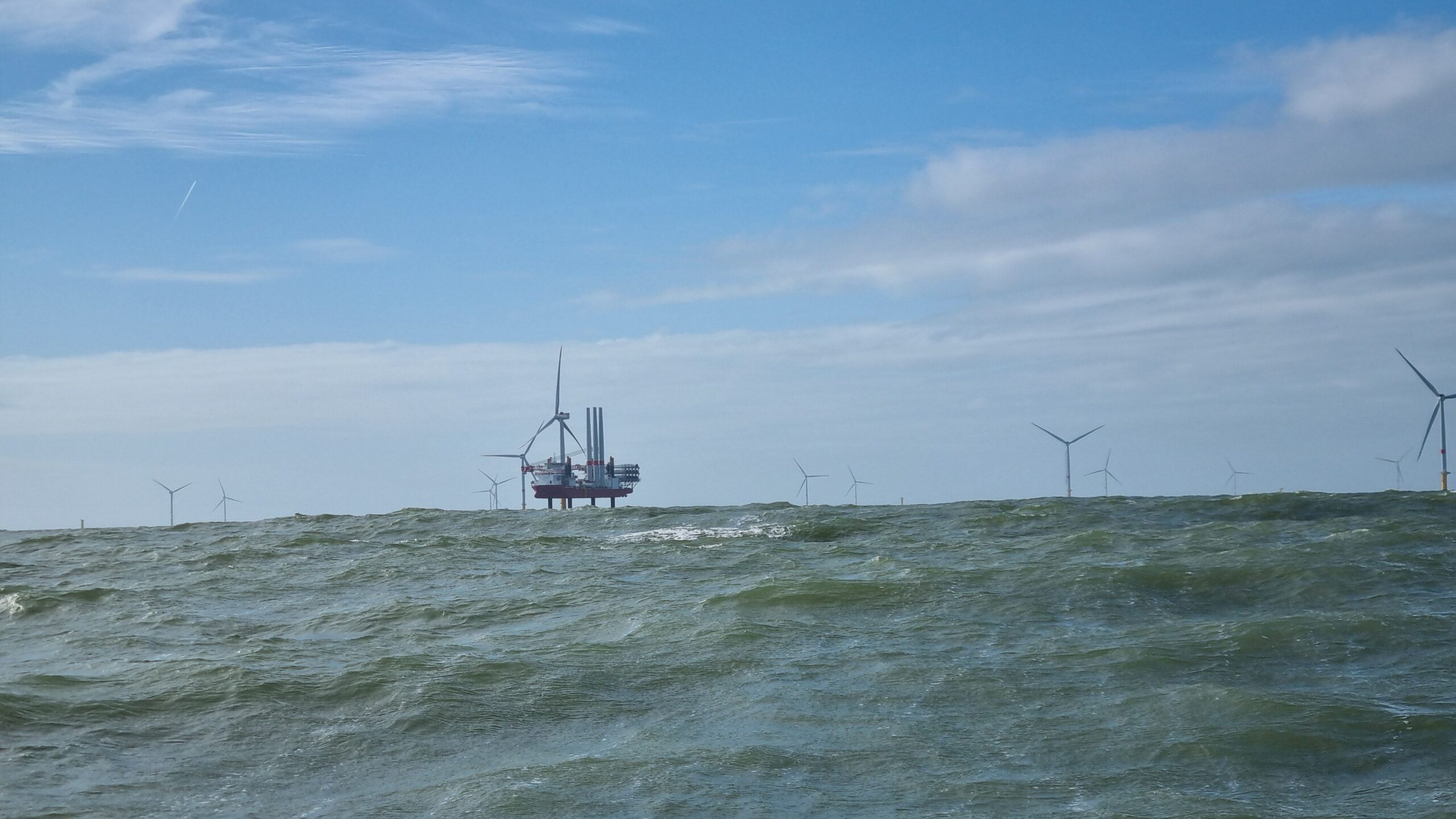
Passing by a wind farm under construction
Port-Joinville, usually packed in summer, is two-thirds empty. Easy berth, very reasonable price—even for a boat our size. February does have its perks!
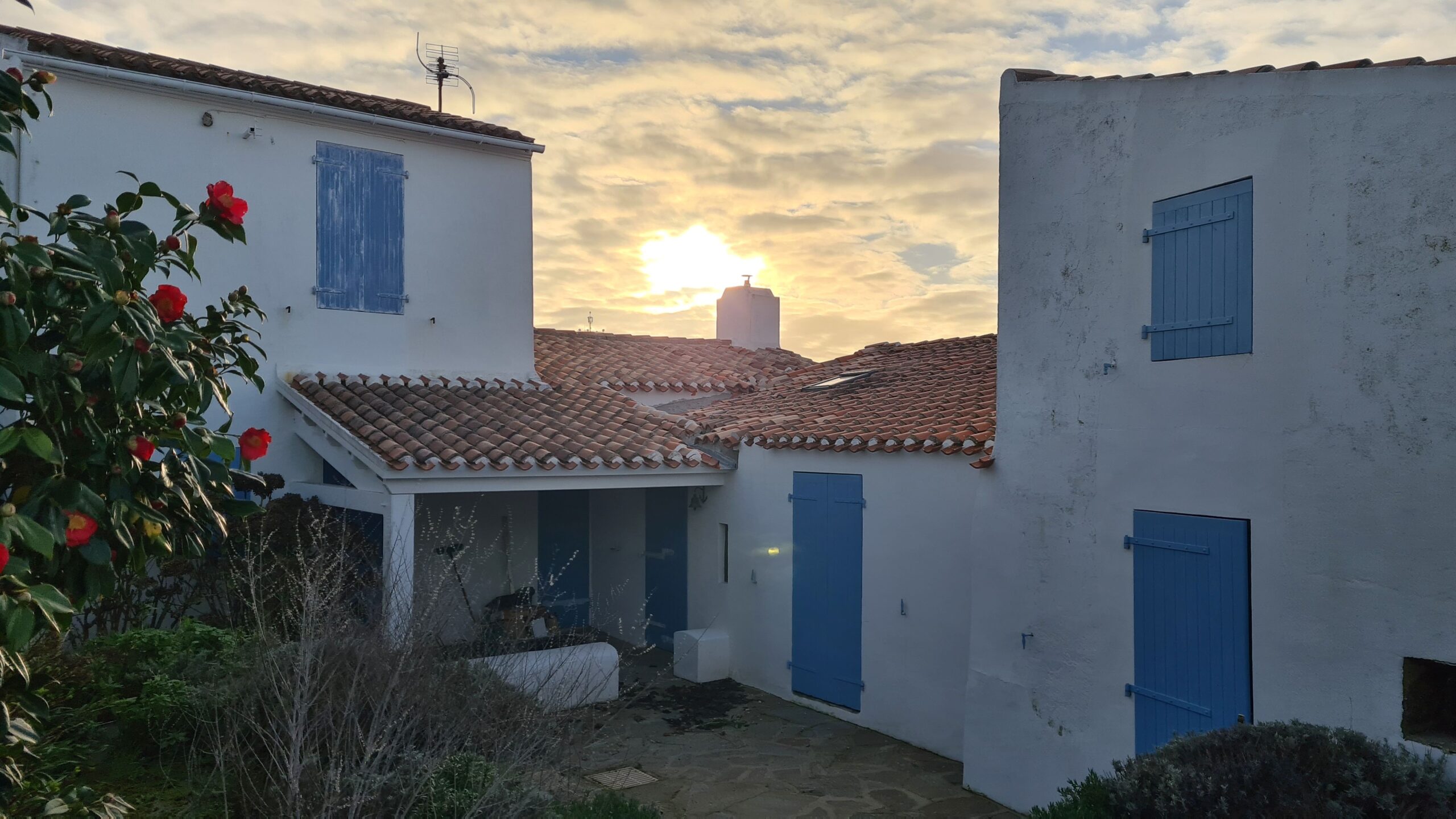
The small houses on Yeu island
After dealing with a small diesel air leak and studying weather files, we force ourselves ashore for a walk, and what a delight. Low white houses, orange tiles, blue shutters (closed), flowers already blooming… It feels almost southern. After 13 years in Scandinavia, this is exotic enough!
Back aboard, more weather routing (including on qtVlm, our first time using this software). The conclusion? It is urgent to… not decide. Tomorrow we head towards the Charente islands, keeping offshore to preserve the option of turning south if a window opens. February sailing is all about seizing opportunities.
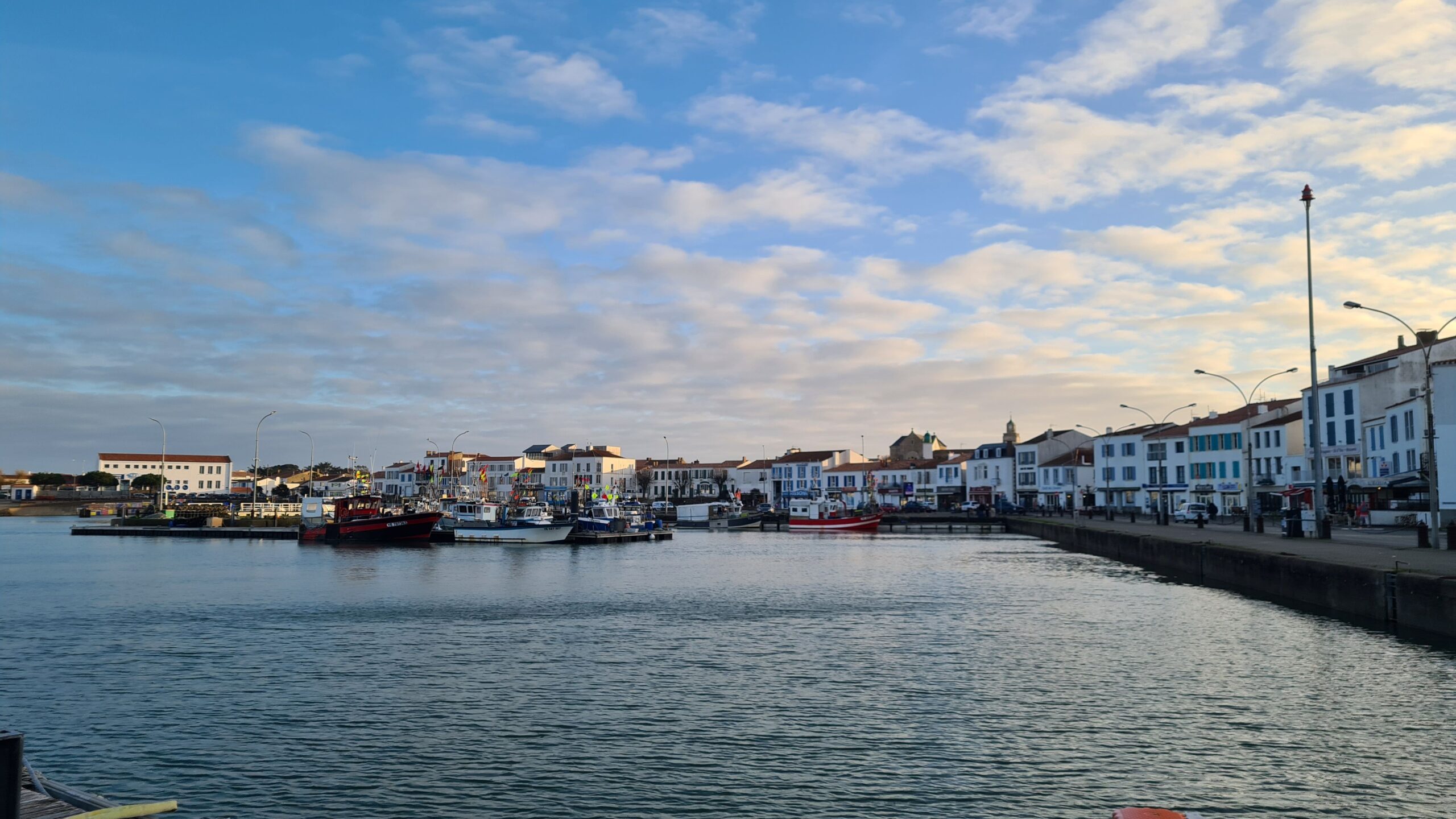
Back to the harbour to prepare the next steps
21–24 February: Yeu Island – San Vicente de la Barquera (309NM)
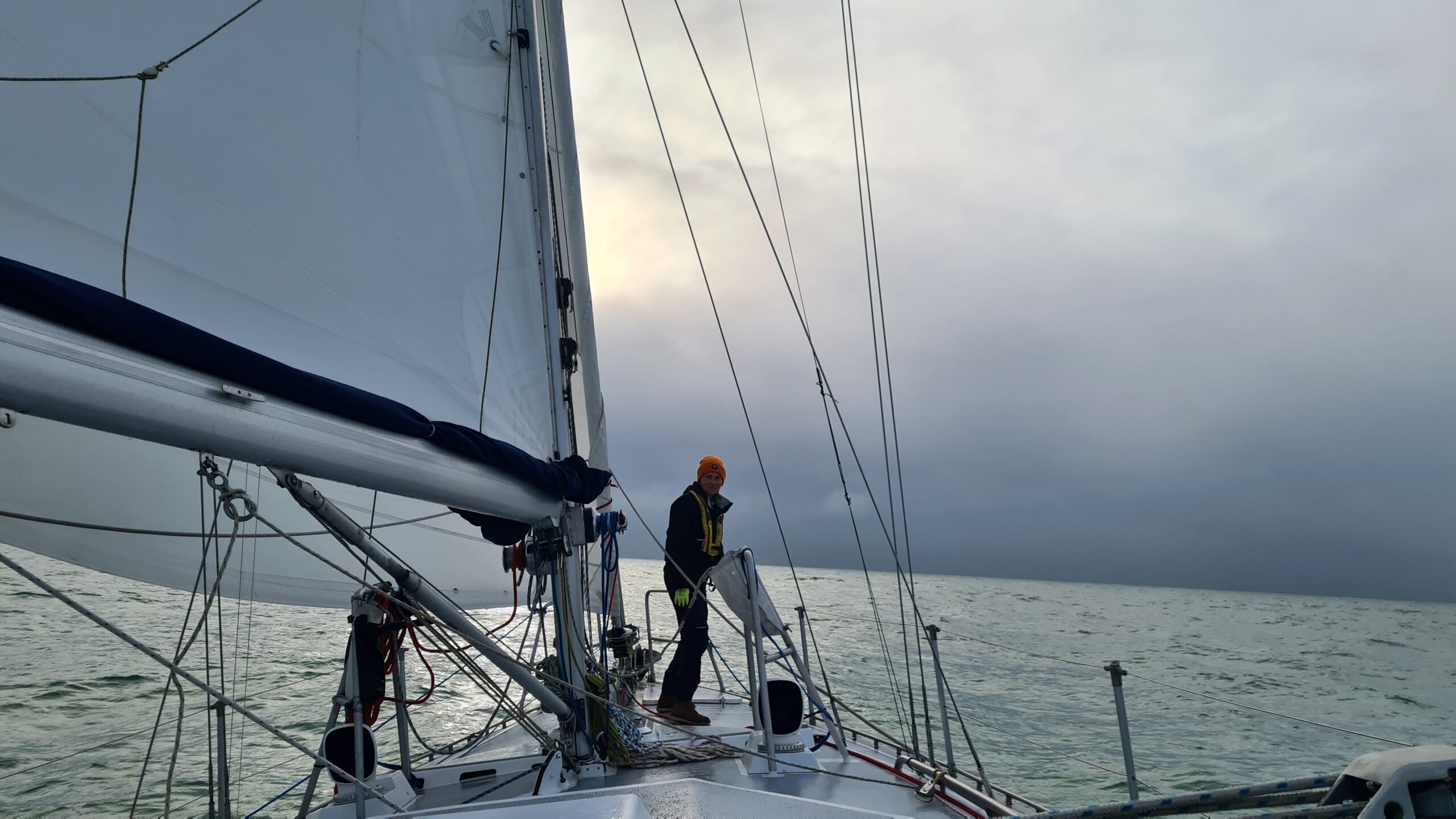
Racing to the South!
We leave at sunrise, close-hauled on a south-westerly. UtPåTur runs over milky green seas —shallow, sandy waters—with gannets and guillemots hunting all around. Sadly, we also pass several dead puffins, victims of the winter storms.
We approach our decision point: do we continue towards Spain, or do we go and sleep ashore? It’s time to take out the Starlink antenna which allows us to receive internet even far from the coast. For the moment it works wonderfully and it is with a 300 Mb/s connection that we download our 150 Kb GRIB wind files! Their conclusion is clear, the night promises to be very (too…) calm, so we decide to go and sleep ashore and postpone departure until the next morning.
We bear away towards the island of Ré, and UtPåTur accelerates further in the ease. We arrive under the (relative…) shelter of the island at the end of the afternoon after having logged 50 miles at 6.25 knots average, not bad! We pick up a rather rolly mooring buoy off Ars-en-Ré: there seems to be permanently three metres of swell in the Bay of Biscay in February, but at least it will keep us well acclimatised for the crossing the next day…
One good night of preparation for the crossing tomorrow!
Morning update: the window holds. Not a downwind sleigh ride (this is February remember) but manageable: south veering west, then east. Crucially, no gale in sight. Time to go!
First leg westward, working our weather strategy. Close-hauled in a gentle Force 3 against a long swell, the boat settles into rhythm. The coast fades astern. Goodbye France, next time we see you, it’ll hopefully be in Polynesia… Last visual contact with the tall building in Les Sables d’Olonne… we may not be leaving for the Vendée Globe race, but we are starting on a round-the-world trip… We’re really doing it… We’re sailing around the world… Six words, six simple words of a dream which suddenly is becoming very real…
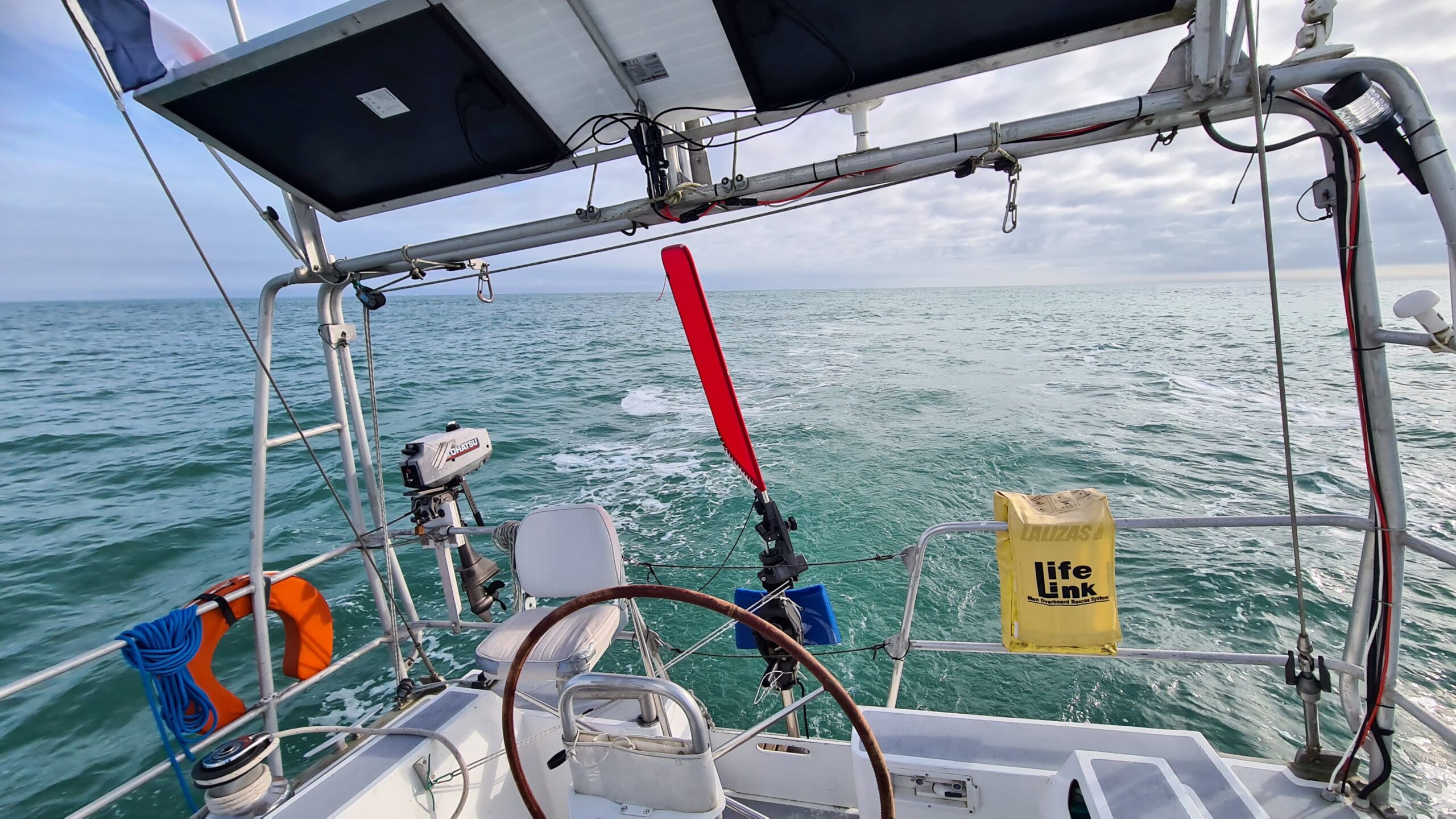
The coasts of France are fading away
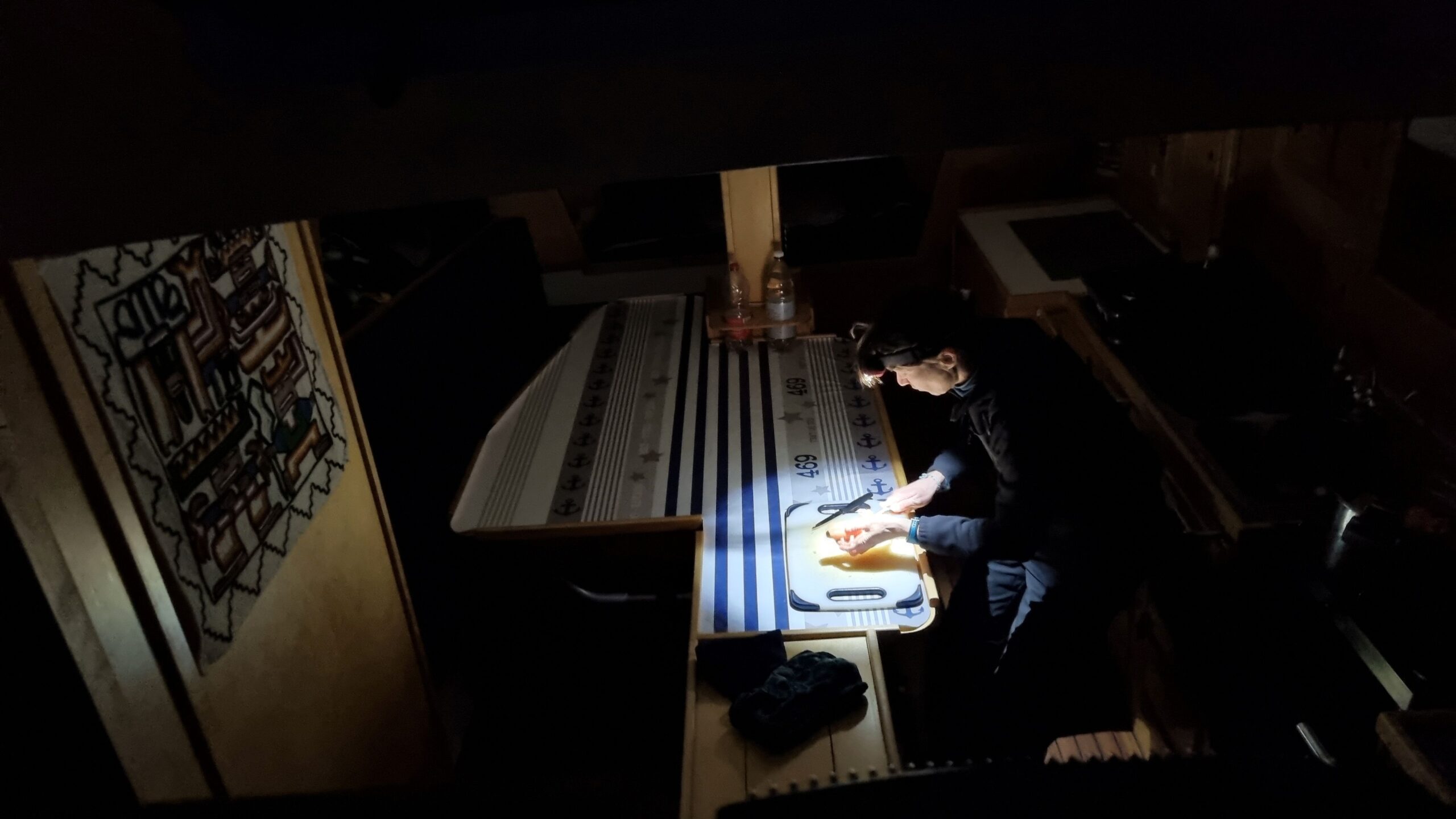
Preparing dinner
But before the whole world, we have the Bay of Biscay to think of first: after lunch we tack in the header. Course south now, still close-hauled in very manageable wind. It is pleasant too to sail in Force 3 to 4! Life on board settles into place, with its alternation of naps and watches, all comfy and warm in the deck saloon… The sea is still very green, we pass many fishing boats. At the end of the afternoon a pod of dolphins comes to wish us a good voyage… How good it feels to be at sea, even in February!
Night passes under a star-filled sky. Morning brings lighter, head-shifting wind—just as forecast. Another tack west while waiting for the easterly to gently bring us back on a direct course. We feared having to motor all the way, but in the end we keep 3 knots under sail—much more elegant.
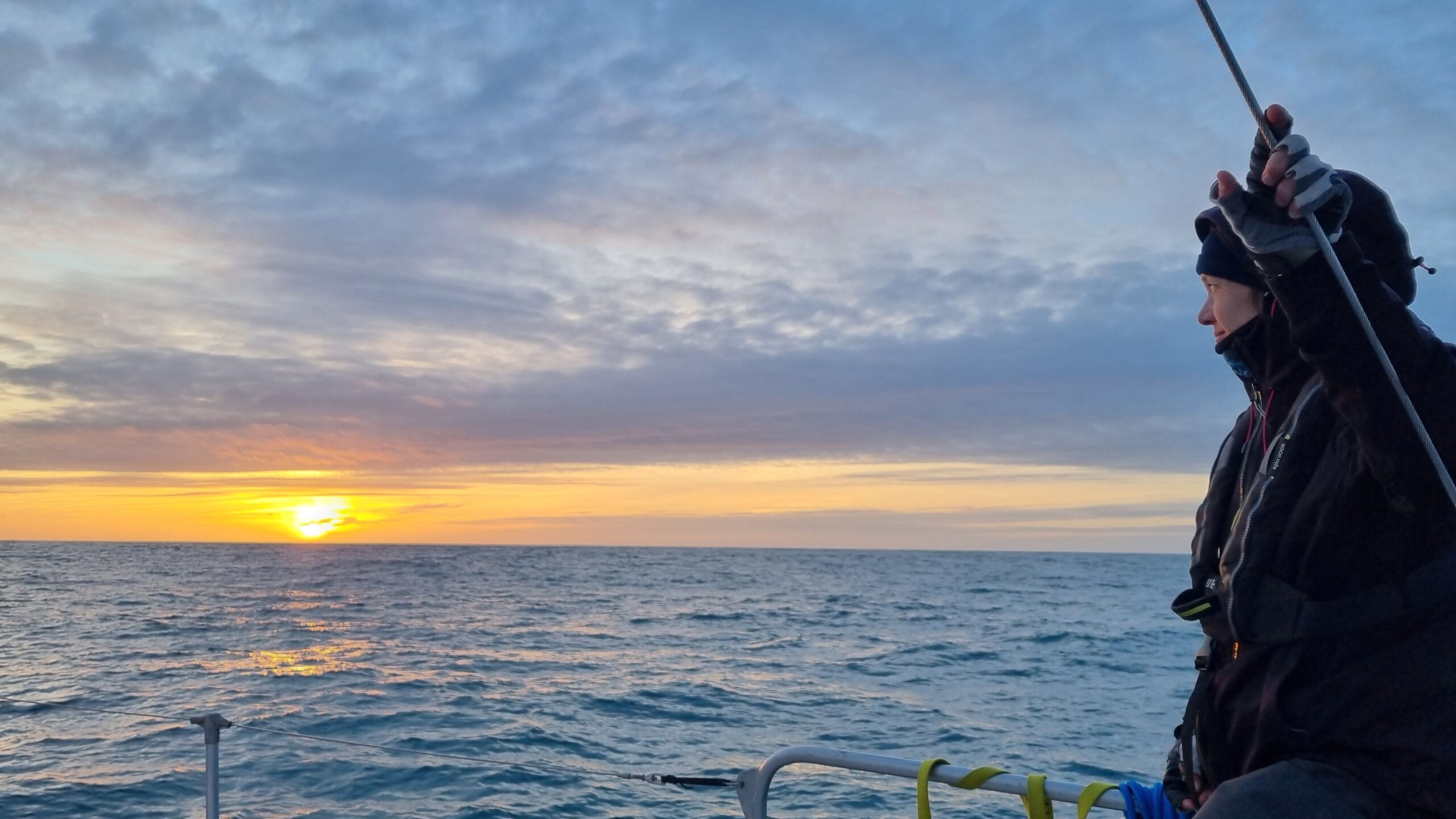
Ready for our first night at sea this year
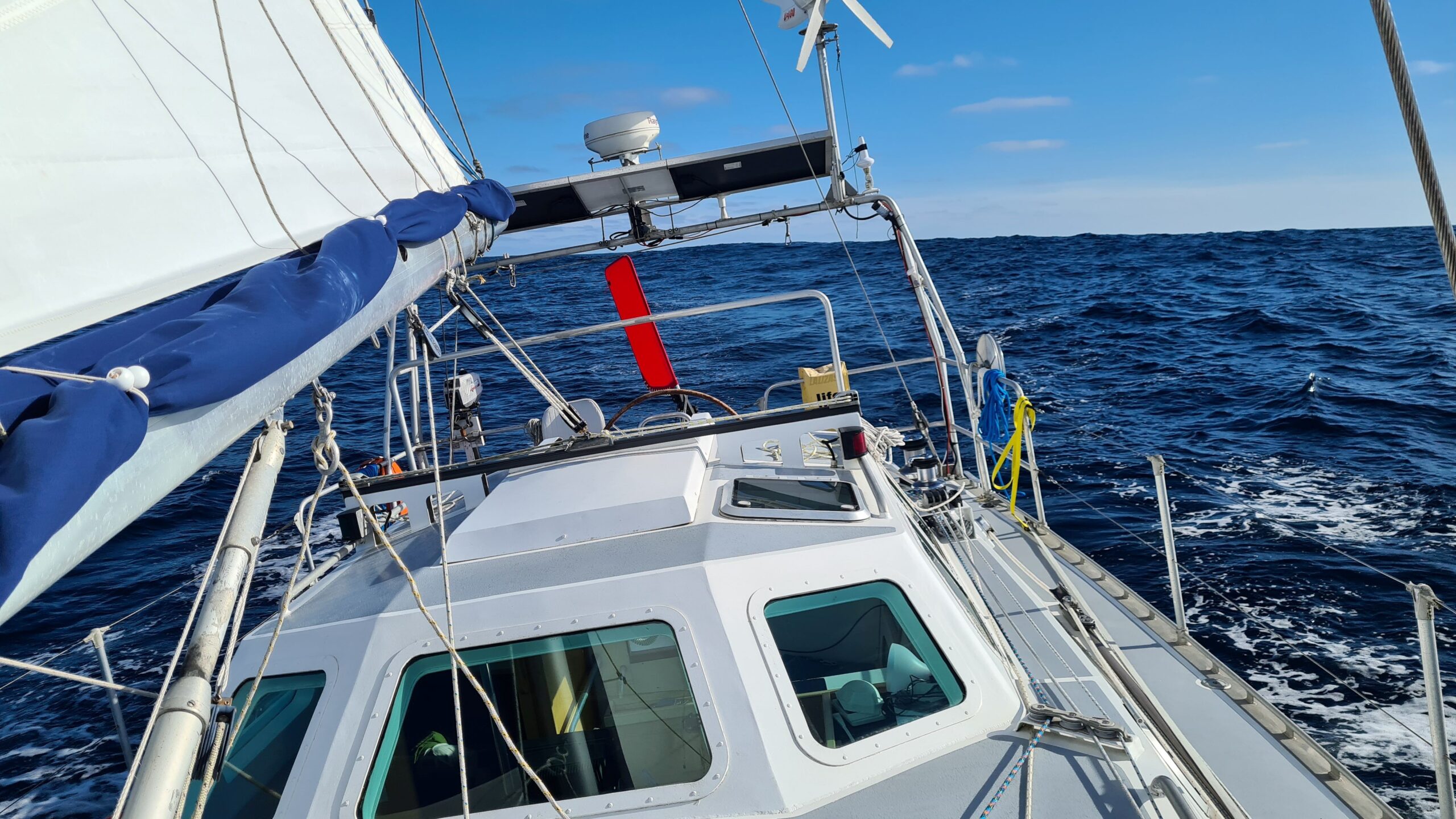
So happy to be at sea
Then the sun appears in the bright blue sky. We enjoy the forgotten pleasures of dry and warm air. UtPåTur glides smoothly on the long swell, like the ocean breathing. We leave the continental shelf and now sail over abyssal depths. The sea takes on that unique colour, both dense and transparent, found only offshore… How beautiful it is… Two gulls come to circle the boat, try to land on it, then a curious pilot whale charges towards us to see what we look like. It leaves again, apparently satisfied.
A few minutes later, strange whistling noises catch up with us… More birds? No, three pilot whales this time coming to swim right alongside the boat… They are enormous and swim in tight formation, making only one giant animal with three fins… Magical… What happiness to be at sea, even in February!
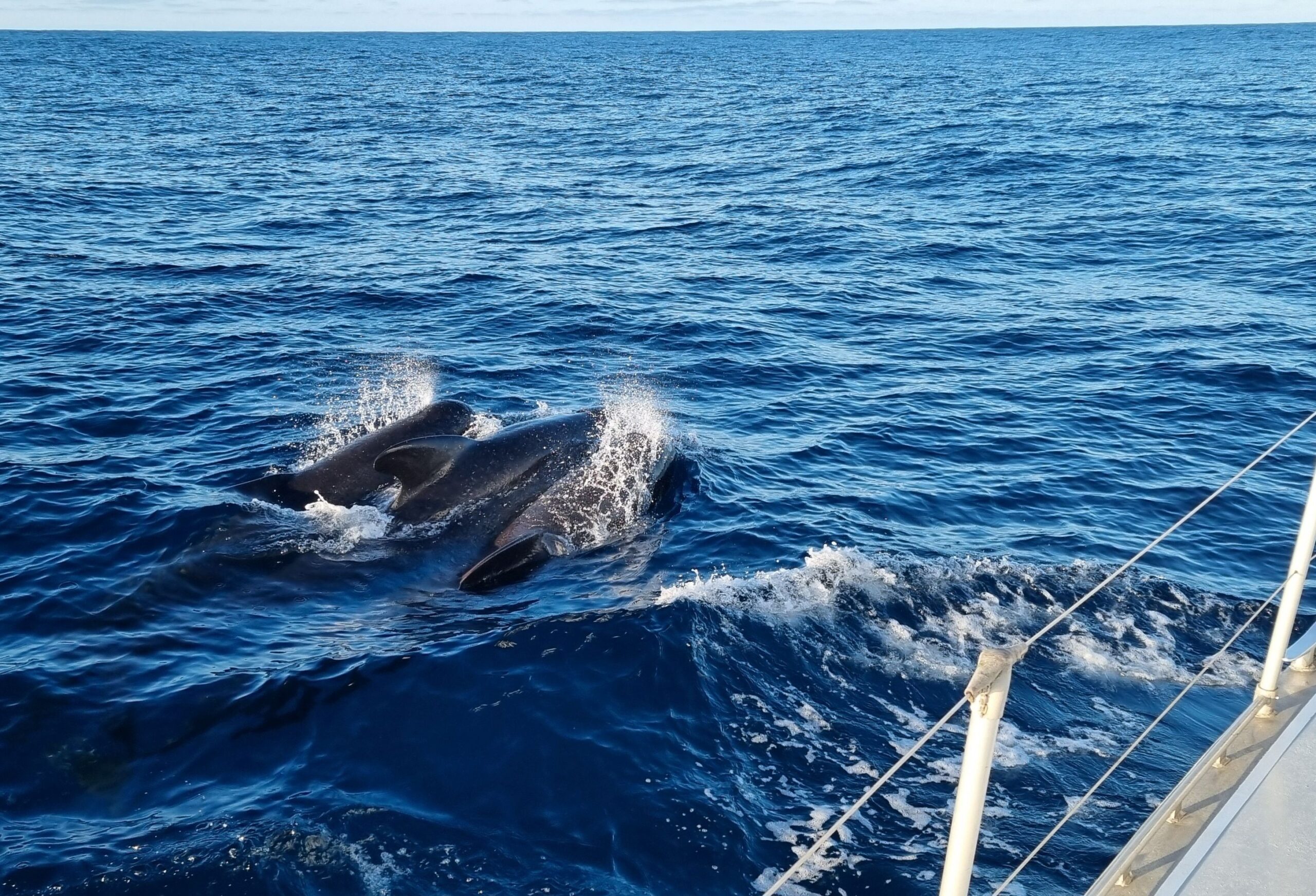
Our triple pilot whale
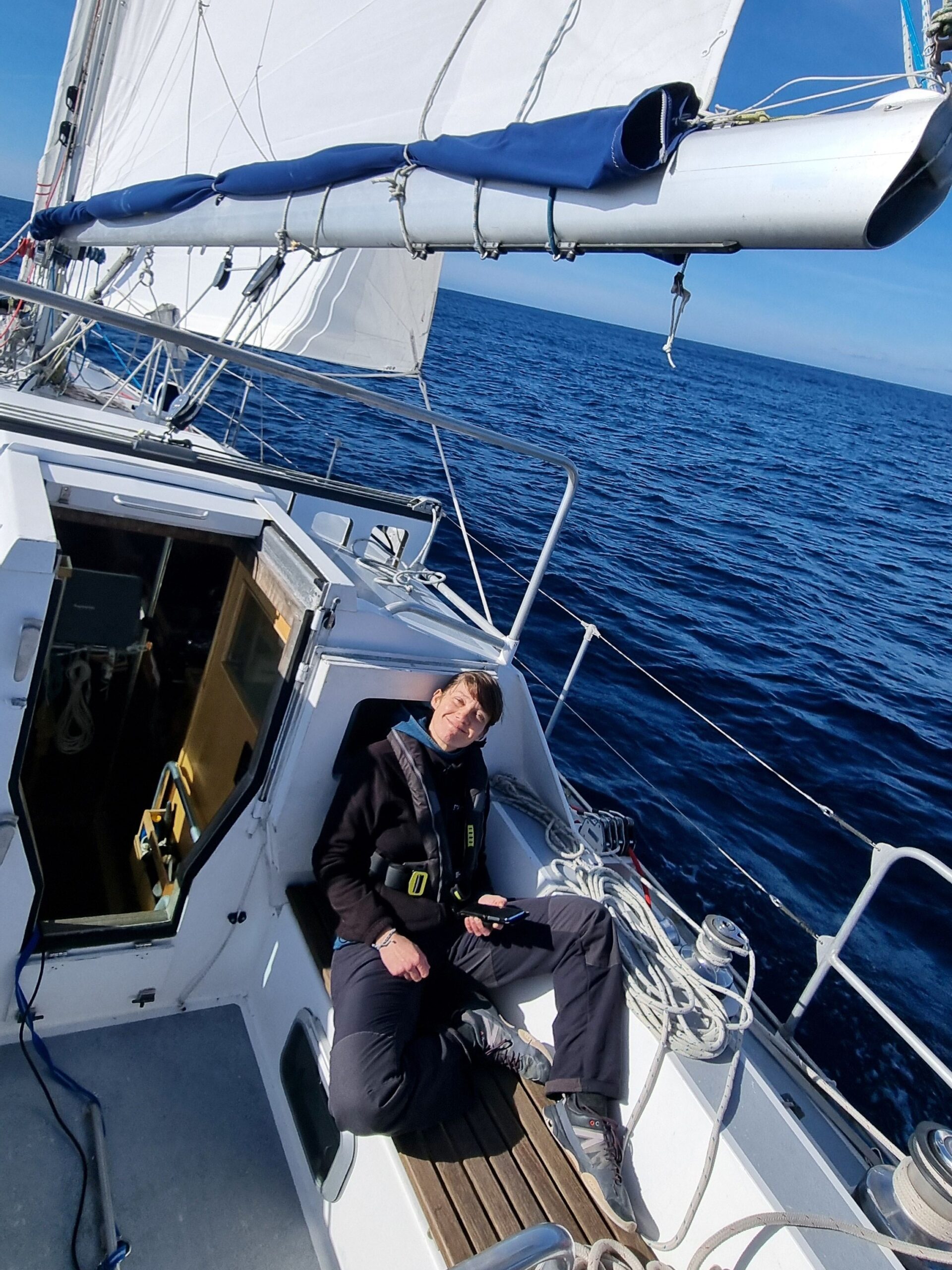
Hard crossing in winter conditions
After a spring-like day reading in the cockpit and making (unsuccessful) attempts at trolling, the sun rewards us with a magnificent sunset, while UtPåTur runs straight on in finally steady wind. We know it will not last and rush to log as many miles as possible at 7 knots average.
Indeed the wind collapses in the middle of the night while we are about ten miles from Santander. Mission accomplished, we could head directly into this large urban centre and claim victory. But we have spotted on the chart a few miles further a small haven where we could anchor: San Vicente de la Barquera. We will arrive there exactly at high tide with a few hours of motoring.
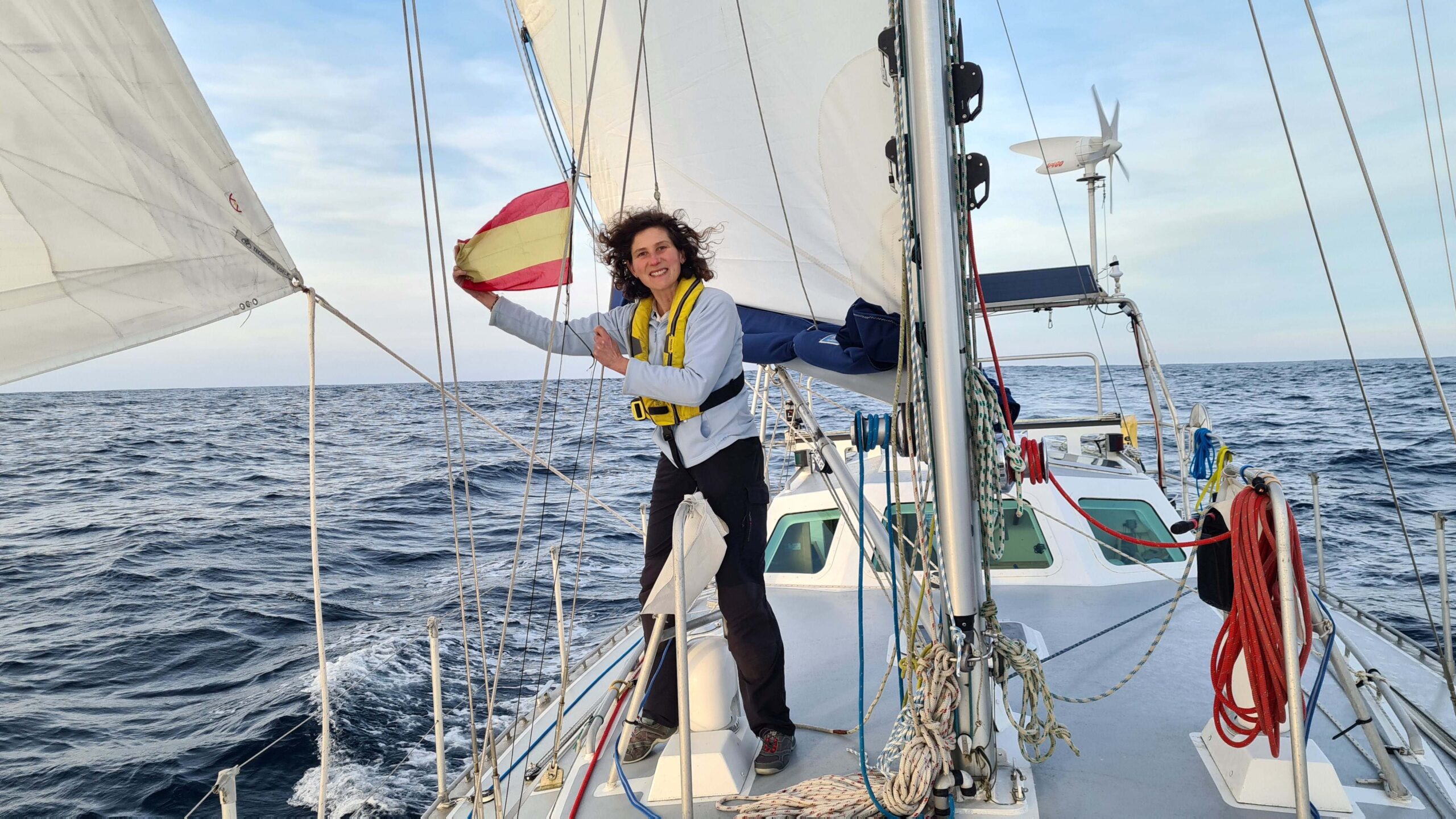
The courtesy flag is in place; we are ready for arrival.
This time the sun rises not over the horizon but over Spain, a new terra incognita! It slowly pierces the light mist of the end of the night, the coast seems quite high and indented, very high even, and completely snow-covered! Well, that is a surprise, we were not expecting at all this enormous alpine range (2,600m altitude nonetheless), the Picos de Europa, majestically overlooking the coast. Wow, it is breathtaking! After this magical crossing (ranked among our best passages), the landfall is undeniably one of the most beautiful… What a brilliant idea to sail in February!!
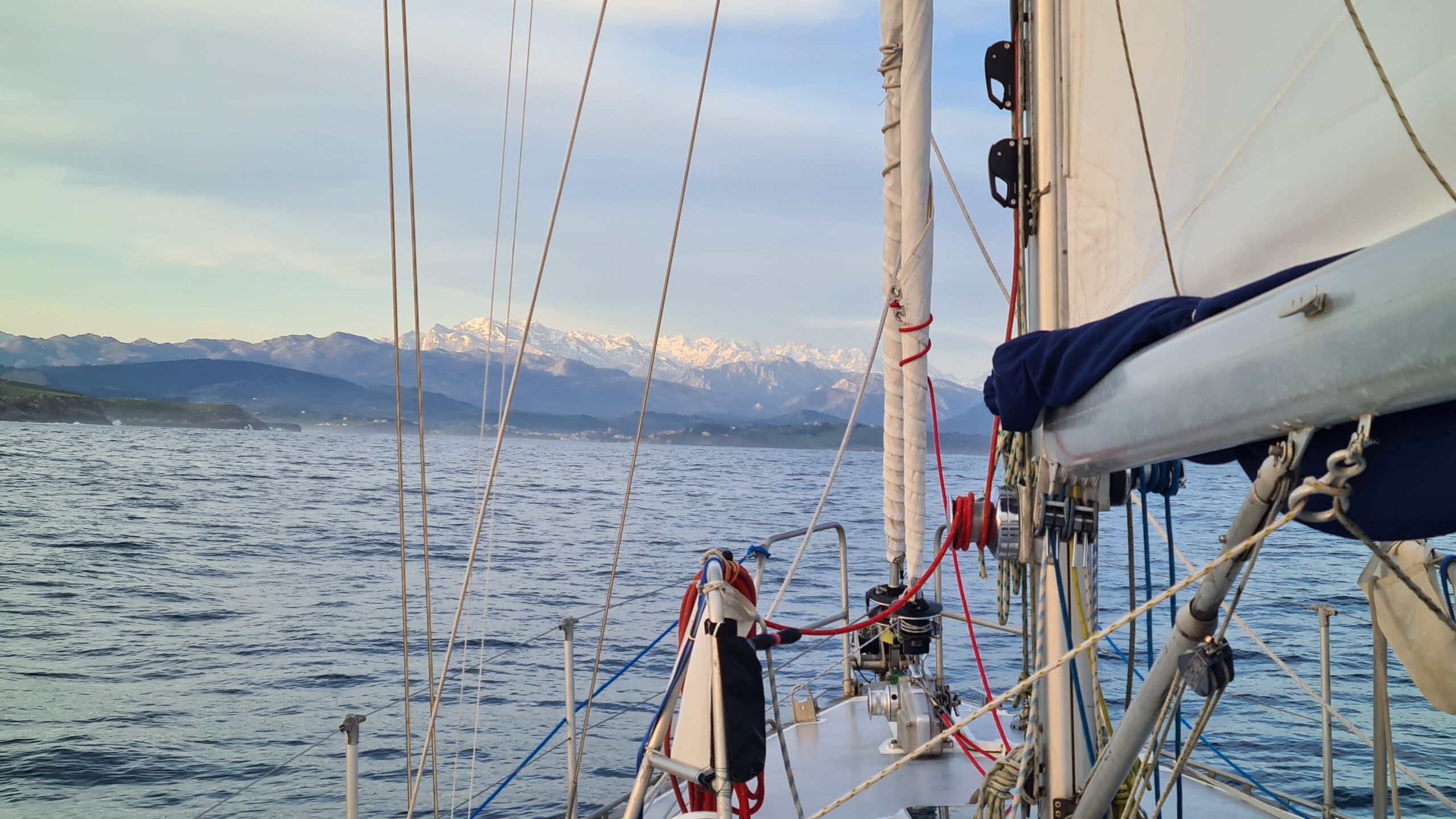
Arriving in Cantabria is absolutely stunning…
We approach the entrance to San Vicente de la Barquera, the channel is calm despite the heavy swell breaking on the beaches and rocks around. We slip between the boats on moorings and the sandbanks that will uncover at low tide, and find a small spot to drop our anchor. There is little water and we are very glad to have a boat that can take the ground!
The setting is superb, opposite the green hills bathed in sunshine, to starboard the little village overlooked by the mountains, here palm trees, new scents… the warm wind! We are impatient to go and explore, but before that we take a good shower and have lunch in the cockpit in the sun. It is certain, sailing in February is the best idea!
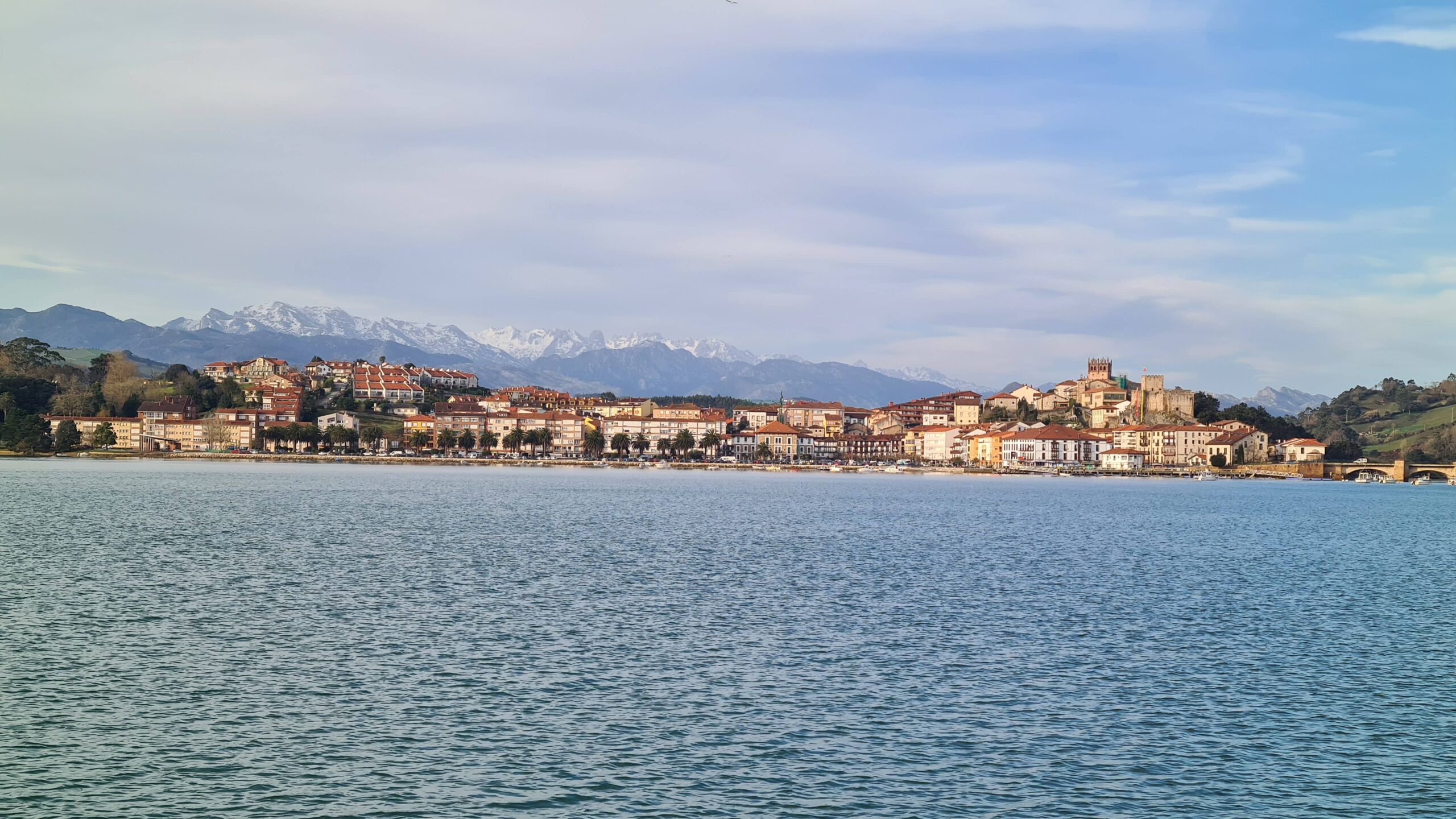
San Vicente de la Barquera, our first contact with Spain. Great discoveries ahead!
 PDF
Wishing you lots of great memories on your upcoming journey! Enjoy the sail with your new boat to new waters, countries, cultures, people.